


Embrace God's truth with our new book, The Lies that Bind

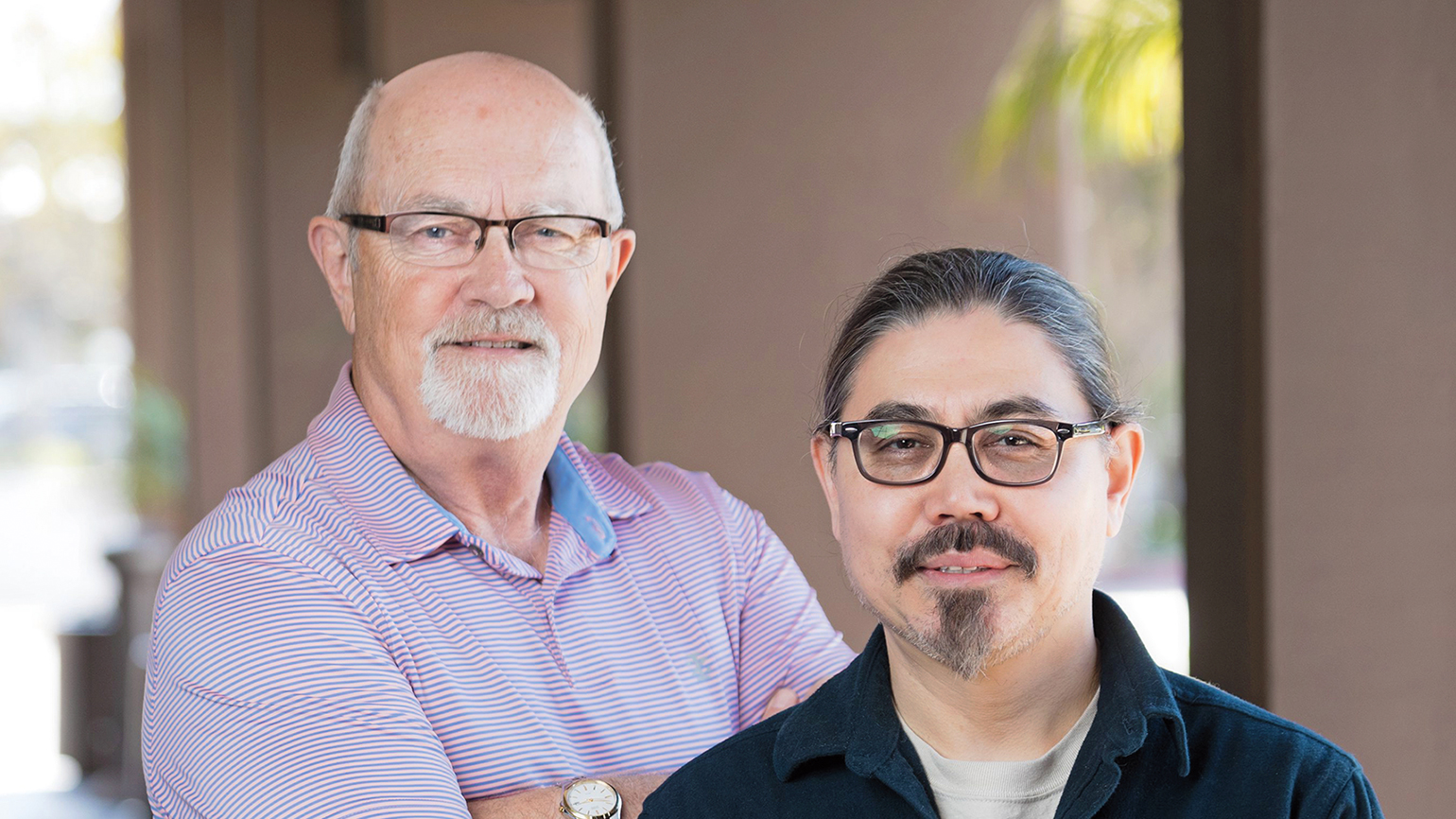
How This Veteran Discovered the Son He Left in Vietnam

I scooted up to my computer desk that April afternoon in 2016 and logged on to Ancestry.com. At 66 years old and retired from my job as an engineer, I figured I could use another hobby besides golf. The previous year, I’d mentioned to my wife, Debbie, that I was curious about my family tree. She’d hopped on that idea (apparently I’m hard to buy for) and given me a DNA kit for Christmas.

I’d sent in a small vial of saliva. The initial results showed I had British and Nordic ancestry. I wasn’t surprised. Dad’s heritage was Scandinavian, and Mom’s was mostly British. Now I had new e-mails, automatically generated, showing who else on Ancestry .com might be related to me. I scrolled through the results.

Journey With Jesus in article ad

Most of the people listed were distant relatives—cousins I’d never met who’d also submitted DNA samples. But one message knocked the breath out of me. We have found a very high probability of a father-son relationship between you and Son Vo.

I stared at the monitor and reminded myself to breathe. A name like that could mean only one thing: Vietnam. A time in my life I’d spent the past 46 years trying to forget.

I’d done well enough in high school to earn a scholarship to North Dakota State in the fall of 1967. But I wasn’t mature enough to handle the freedom of being away from home for the first time. I partied too much, studied too little and blew my scholarship. My hardworking parents couldn’t afford to pay for my education.

The draft was in full swing. I thought about signing up. Dad had been a Marine, and I had three uncles who’d served in World War II. A cousin of mine had been killed in Vietnam earlier that year. I could enlist in the Army, then go back to college on the G.I. Bill. If I volunteered to serve in Vietnam, the Army would knock five months off the tour. So in January of 1969, I went to basic training at Fort Lewis, Washington.

I wanted to be on the front lines and thought I’d signed up to be a medic. Somehow I marked the wrong box and ended up as a preventive medicine specialist. I did my advanced training in San Antonio. We flew out to Vietnam in July 1969, the day after Neil Armstrong took his first steps on the moon. My first six months in country, I was assigned to Bien Hoa Air Base. Conditions were usually primitive on the Saigon-area firebases, where the Army set up artillery in the jungle to support infantry patrols. During the rainy season, we tried to make it better for our troops by flying missions to spray the bases for flies, mosquitoes and other disease-carrying insects. I became known as the mosquito man, examining bloodsucking pests in the lab and determining whether they carried malaria. I was proud of the work we did.

Then I was transferred to Long Binh, the main Army post, some 20 miles outside Saigon. My assignment was on the night shift, inspecting retrograde cargo going back to the U.S. I hated it. I felt dead tired all the time, and it was stressful dealing with other soldiers who were dead tired.

News from the States filtered to us troops. We heard about demonstrations and rioting, how so many Americans objected to the war. We soldiers began to feel that people back home didn’t support us or appreciate how we were putting our lives on the line for our country. In my case, depression took hold.

My only escape was Saigon. Sometimes I was lucky enough to make a delivery there. The city was alive. I had every third or fourth weekend off, and my buddies and I would go to our favorite haunts. We blew off steam, drinking, partying, doing our best to try to forget the war.

Thirteen months later, I was back in North Dakota. There was no hero’s welcome at the airport or anywhere else. Dad gave me back my old job as a laborer and truck driver for his house-moving company. After a month, I moved out of my parents’ house so I could be alone. A few months later, I moved away from my hometown altogether. I just didn’t fit in anymore. Being around people made me jumpy. I had panic attacks. Was I losing it?

I’d joined the Army as a confident young man. Watching peace rallies and protesters on the nightly news, I lost my self-assurance, my conviction that I’d done the right thing by enlisting. I’d given up almost two years and risked my life only to discover that the general public thought this was a war we shouldn’t be fighting. My parents and family were proud, but I had a sense that they too wondered if the war was worth the price.

My brother tried to get me to start a band with him. We both sang and played a couple of instruments, a talent that came from our dad, who could play anything with strings. We’d had a band in high school. Now I was too nervous to even get onstage.

Hoping a change of scenery would help, I moved to Kansas to work in the oil fields. I met a woman and we married. I returned to North Dakota State to get a degree in engineering, then landed a job in Alabama, where we settled down. We had four wonderful children, but things fell apart. We divorced after 13 years.

My depression deepened. Suicidal thoughts scared me into seeking help. I was diagnosed with PTSD and got treatment. Slowly I began to feel like myself again. Then, in 1988, I met Debbie. Like me, she was divorced and had children. We fell in love and married. These 28 years I’d had with her and our blended family—my four kids and her two sons—had been the best. I had put Vietnam behind me: a dark, wasted time in my life.

Now a simple DNA test showed I’d left not only memories behind me but a son. I stood up from my computer desk and paced, trying to picture the streets of Saigon, the people I’d met. I’d been only 20 back then and single. So young. So naive. I’d had a few brief relationships. But there was no one whose name or face I could remember.

I found Debbie in the kitchen. “You need to see this e-mail I got from the ancestry site.”

I sat at my computer desk again, Debbie peering over my shoulder.

“How do you feel about it, Bob?” she whispered.

I was an engineer. I trusted science. “DNA doesn’t lie.”

We looked up the name Son Vo on Facebook. There were several. A 45-year-old professional musician in California caught my eye. Is that him? I stared at the profile photo of a dark-haired man on stage with a guitar. I checked the birthday listed on his page. He was born in 1971, five months after I’d come home. It was entirely possible he was my son. But how did he end up in the U.S.?

My mind swirled with questions. Should I contact him? He would have gotten the same automatically generated e-mail that I did about a father/son connection. Had he looked me up on Facebook too? Did he want to meet? To have a relationship? Was he angry? Would he understand about the circumstances, that I didn’t even know I’d gotten someone pregnant?

Debbie and I talked about it. We decided to let Son Vo make the first move. If he wanted a relationship, he could e-mail me through Ancestry.com.

A few weeks went by. I heard nothing. But there wasn’t a day that passed that I didn’t wonder about the son I never knew.

Then in May, I got an e-mail. Son wrote that he was surprised “about our DNA match and my high likelihood of being your child (son) from Vietnam…I just want to say hello and welcome you to contact me anytime you please. Or not. I’m not looking for anything. I do think it would be very interesting to communicate.”

I responded immediately, my fingers flying across the keyboard. “I wasn’t sure you’d want to hear from me. I am just as surprised as you are but eager to find out more about you.” I told him a little bit about myself and what I’d done in the years since Vietnam, then signed off: “I truly hope that you’ve had a good life.”

We e-mailed back and forth. Son told me his mother had married an American in 1973 and they’d emigrated from Vietnam when he was four—just two weeks before the fall of Saigon. Three years later, his mom had died of a brain tumor. Son went into the foster care system. He said he’d yearned to find me his whole life but didn’t have enough information. About a year before, he’d finally given up the search. His wife, Julie, had bought him the DNA kit. He never dreamed he’d actually stumble upon me.

After a couple weeks of e-mailing, I suggested a phone call. We both were extremely nervous, so there were a lot of awkward silences. Then Son mentioned that he played the bass. I told him that I used to play the bass too and that my dad had always wanted to be a country singer. From there, the conversation flowed.

I invited Son and his wife to come to Huntsville for Fourth of July weekend. That Friday, July 1, 2016, Debbie and I sat in the car, waiting in the arrivals lane at the airport for Son and Julie. What if we don’t hit it off in person? I wiped my sweaty palms on my pants.

I recognized Son right away from his photos on Facebook and from the guitar slung across his back. The moment I saw him, I was flooded with joy.

I got out of the car. Though I’m normally a pretty reserved guy, I opened my arms wide, and we hugged right there on the sidewalk.

“I’m so sorry I wasn’t there for you when you were growing up,” I said. “I missed out on having a son, and you missed out on having a dad.”

“I understand,” Son said, looking me right in the eye. “There wasn’t anything you could have done about it.”

I took Son to meet his half-siblings—Mandy, James, Audrey and Justin—and their families. With his easygoing nature and great sense of humor, Son hit it off with everyone.

“Oh my goodness, your noses look like they’ve been cloned,” Audrey exclaimed, looking at Son and me.

“And you both have the same cadence to your speech,” Mandy said.

A little later, Son pulled out his guitar for an impromptu jam session. I marveled at his confidence and talent. I’d always wished that my kids shared my love of music. I was so glad that here I had one who did. We even sang harmonies together, and Son said he could hear his own voice in mine.

All these years, I’d thought of my service in Vietnam as a dark period, a negative experience. But sitting next to my newfound son and hearing my voice join with his, I was finally able to lay those feelings to rest. Something good had come out of my time in Vietnam, something amazing.

“This is nothing short of a miracle” is how Son puts it. Even though I’m not particularly religious, I have to agree. Getting to know and love my oldest child, my son Son Vo, is an unexpected blessing God has bestowed upon me, for which I am eternally grateful.

For more inspiring stories, subscribe to Guideposts magazine.
How This Service Dog Came to Comfort Crime Victims

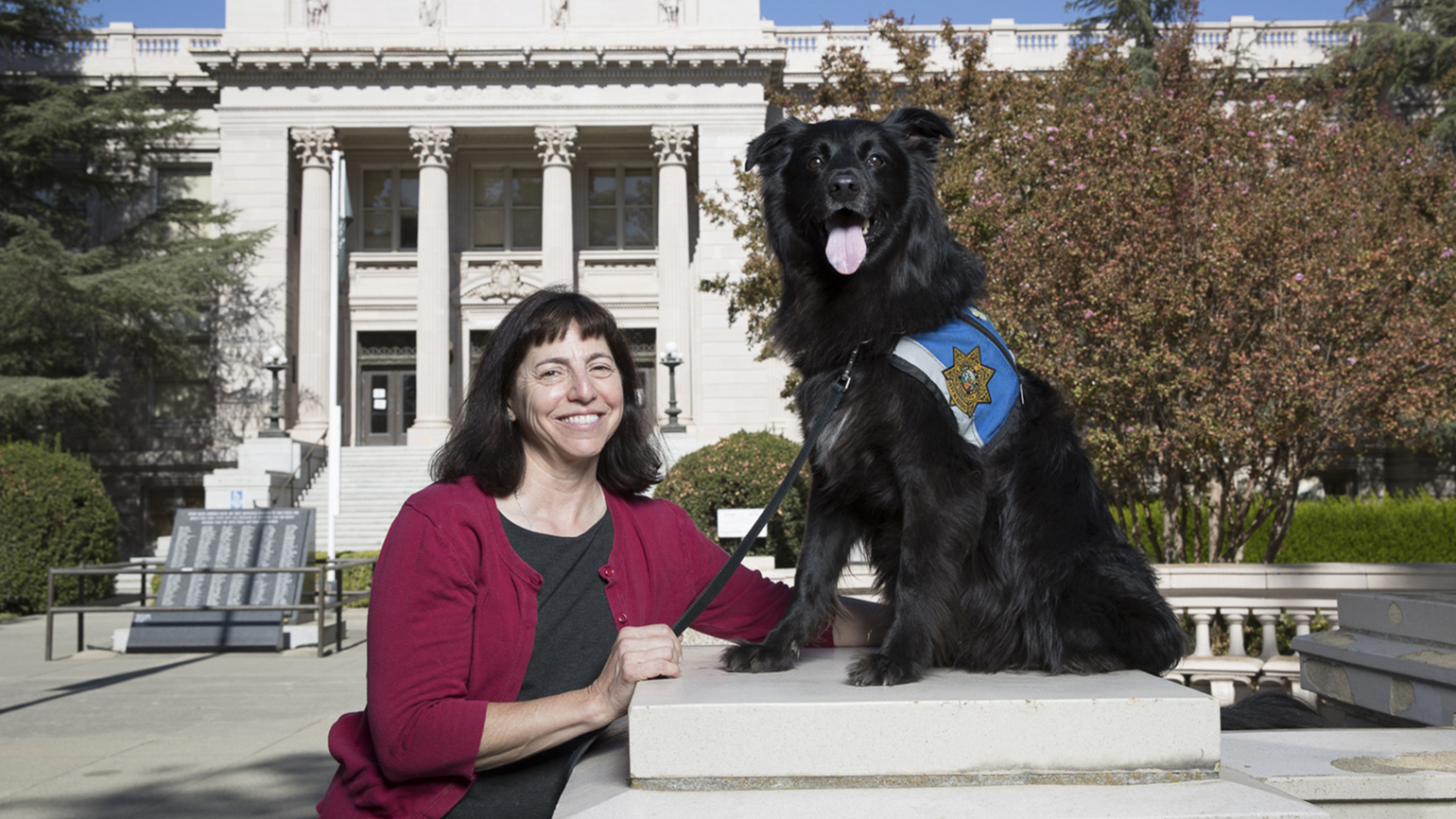
There’s a Jewish concept that Lori Raineri tries to live by: tikkun olam. It means repair the world, do what you can to make it a better place. Lori’s a doer. Type A squared. So even picking out a new puppy at the shelter that day in 2006, she was looking for more than a pet to keep her company.

The Davis, California, resident is single. No kids. When her two senior dogs died, she couldn’t help but think of how their lives had touched only hers.

New Every Morning Journal In Article Ad A

“I want a dog that helps other people,”  she told a friend who’d come with her.

VISIT OUR SHOP FOR MORE BOOKS ABOUT HEALING ANIMALS!

“Have you heard about the therapy dogs they use in hospitals?” her friend, who’s a nurse, said. “They comfort patients. Children especially love them.”

Wonderful. Tikkun olam.

The shelter manager led them to a pen where six puppies, Border-collie mixes, were tumbling about. Except for one. She sat alone in a corner. Lori reached into the pen and lifted her up.

“Hey, baby girl,” she cooed. The pup stiffened. Lori had never seen one so shy.

“You might like this other puppy better,” the manager said. “See how playful he is?”

Lori looked down at the pup in her arms. She seemed like Lori’s opposite in every way, but there was something about the way her eyes took in everything. “No, this is the one,” she said. The puppy’s expression reminded Lori of the dog in the Blondie comic strip. “I’m going to call her Daisy.”

READ MORE: HOW SERVICE DOGS SUPPORT OUR VETERANS

Lori threw herself into raising her new dog. She has a small consulting firm that works with public agencies like school boards to issue municipal bonds that fund new buildings and other public infrastructure. She works 70 to 80 hours a week and always has one or two volunteer gigs—coaching youth sports, teaching Sunday school, community work.

She took Daisy with her everywhere and arranged her schedule to give her blocks of time for bonding and puppy classes. For the first six months, she fed Daisy only out of her hand as a reward for good behavior. The puppy quickly learned that the surest route to a treat was to be calm and patient.

Lori wondered how well Daisy would do with people in the hospital since she was so reserved around strangers. She was determined to make it work. A friend at synagogue recommended a therapy-dog training school run out of an Episcopal church.

There Daisy learned how to approach a person in a wheelchair, to ignore food dropped on the floor, not to react when people were yelling, rushing around or behaving erratically. Soon she’d be ready to work in a hospital.

READ MORE: OUR HEROIC MILITARY WORKING DOGS

One night Lori was talking dogs with a business acquaintance when the woman mentioned a magazine she really liked. “It’s called Bark,” she said. “You should check it out.”

Not long after that, Lori’s assistant came into her office. “You should see this,” she said. “It came in the mail.” She held up a copy of Bark.

Lori couldn’t resist glancing through it. Her eyes landed on a story about how therapy dogs were used in a courthouse in Seattle to help comfort crime victims. How amazing!

She contacted the district attorney, Jeff Reisig, one of the few local officials she’d never met. “I read an article about dogs working in courthouses,” she told him. “I have a dog trained to do therapy, and I think we should have this in our county.”

Long silence. “Funny, I’m just now reading an article about courthouse dogs in my prosecutors’ association magazine,” he said. “Can we meet?”

A few days later, Jeff ushered Lori and her dog into his office. “I’m interested in Daisy working with children, victims of sexual assault,” he said.

“I’m guessing that would only be an occasional thing,” Lori said.

“No,” Jeff said. “Sadly, we see children every day.”

READ MORE: GINGERBREAD FOR DOGS

The enormity of what he’d said hit her. This was serious. Daisy had been training to work with hospital patients. What if she wasn’t ready for this?

“Let’s go and meet everyone,” Jeff said. He led them to another building. “This is our Multi-Disciplinary Interview Center,” he said. “Sexual assault victims go through in-depth interviews here. They also come for therapy sessions and other meetings.” The name sounded familiar. Then Lori remembered. She’d helped arrange the building’s financing.

There were several people waiting in the spacious lobby. Jeff and Lori went over to a cozy array of couches, where he introduced her to Cameron Handley, the director of the MDIC.

Daisy lay calmly at Lori’s feet, observing everything around her. Lori explained how the dog was trained not to react even in stressful situations. “She’s been around children a lot at my synagogue.”

Cameron nodded. “We’d see this as being a kind of pilot program,” she said. “A lot of our children are very fearful. It will be important that Daisy not do anything that might frighten them.”

A woman and a young girl came into the lobby. Even from across the room, Lori could see that the girl was nervous, her steps tentative, her head down. Then she looked up and saw Daisy.

READ MORE: COMFORT DOGS BRING HOPE TO SANDY HOOK

“Would you like to meet my dog?” Lori asked. The girl nodded.

“Her name’s Daisy,” Lori said. “She shakes hands.” Daisy extended a paw and the girl shook it. Lori showed the girl how to get Daisy to do more tricks.

Then another child came in with her parents.

“Would you like to meet Daisy?” Lori asked, moving closer.

“No,” the child said, stepping back.

“I like Daisy,” the first girl said. Unprompted, Daisy returned to her, lay down and rested her head atop the girl’s foot.

Lori looked at Cameron, whose eyes were fixed on the scene unfolding in front of them. In the space of a few minutes, they had witnessed the possibility of what Daisy could offer along with evidence that she wasn’t for everyone. The children would decide if they wanted Daisy’s company.

Soon Daisy was on the job. The DA’s office had planned to spend several weeks acclimating her to the center and its investigators and therapists before putting her to work. But shortly after she began, an eight-year-old boy came in for an interview and refused to be separated from his aunt, who had brought him.

Children are only allowed to be interviewed alone. The boy clung to his aunt with one hand; with the other, he petted Daisy. The investigator decided to bring Daisy into the interview room. The boy agreed to go without his aunt. Daisy spent the entire time leaning against the boy’s leg, comforting him as if she’d been doing it for years, while he described his experience.

Each morning, Cameron would pick Daisy up at Lori’s house. Lori would tell Daisy where she was going the moment they awoke. The dog sprang from her bed fully alert, as if she was saying, “I’m ready to work.” One night, when Cameron brought Daisy back home, she said, “I want to tell you how great Daisy was today. There was a girl who—”

READ MORE: DOGS IN THE OFFICE — MORE HELP THAN YOU’D THINK

Lori stopped her. “I’m sorry,” she said. “It’s too hard for me to hear about what these children have gone through. But I’m glad Daisy can be there for them.”

In time there was no way for Lori to avoid hearing about what her dog was doing. There were stories in the newspaper. Lori and Daisy made appearances at community events to raise awareness. People would come up to them at the mall and tell Lori they knew Daisy, what she meant to them.

She couldn’t help but be moved by the stories she heard. Like the two siblings who were so traumatized that they couldn’t sit for an interview or therapy. They’d cry and scream uncontrollably. Until they met Daisy. They’d pet her and give her treats, and she loved them back. Slowly, they opened up.

It’s not only children that Daisy comforts. One day a man whose child had been assaulted brought the child to the center. The man was extremely upset. This time Daisy stayed with the father in the lobby. He sat and stroked her, settling down some. Then he stretched out on the couch. By the time the interviewer returned with the child, the man was asleep, Daisy right next to him.

The investigators all spend time with Daisy. She comforts them as much as she does the children. She’s become an indispensable part of the center’s work. Lori had her trainer customize Daisy’s lessons to focus on children, teaching her to lay her head in the lap of someone feeling stress.

READ MORE: A DOG’S NOSE KNOWS HOW TO SNIFF OUT DISEASE

Not to move away if a child is crying or trembling. But really, Lori believes that Daisy, with her cautious, observant nature, was made for working with abused children. Daisy senses their boundaries and their need for the comfort and affection only a loving dog can give.

For several years, the two of them visited the hospital on weekends. That’s when Lori got to see Daisy in action with patients. They perfected a skit in which Daisy answered questions and did impressions. “If we go to Lake Tahoe, what might we see?” Lori would ask. Daisy would stand up on her hind legs. “That’s right, a bear,” Lori would say. “What does Lady Gaga do?” Daisy would sing. And everyone would laugh.

It’s been eight years now since Daisy began working as a therapy dog. She’s touched the lives of thousands of people in ways Lori could never have imagined. Looking back, Lori says there was a reason she was drawn to the puppy whose first instinct wasn’t to play with the others but to try to figure out what she was supposed to do.

Lori and Daisy have figured it out together. Daisy is a gift to everyone she meets. And a reminder to Lori that the world is being looked after—and made better—by someone way busier and, of course, far wiser, than even she is.

Did you enjoy this story? Subscribe to Guideposts magazine.

How This Dog Rescues People in the Alaskan Wilderness

Eleven moves in 18 years—each time I received permanent change-of-station orders. As a military officer, I ask a lot of my family. My wife, Elizabeth, has had to give up jobs she loved. Our three daughters have had to leave behind wonderful friends. I think that’s why our cat, a tortie named Wembley, meant so much to us.

Elizabeth and I had adopted her right after I’d come home from a deployment to Iraq that was tough on both of us. Elizabeth pulled a tiny tortoiseshell kitten out from under a box at a pet adoption event and knew she was the one. It was early in our marriage, and Wembley was our first baby. Her love helped us heal the pain of that deployment. In 15 years, she had seen us through many moves, one more deployment, many separations and the births of our children. She had traveled with us to 25 states and three countries. A true military cat. 

NIVFLB Inarticle ad

She was great with the girls, patient and protective. When they were babies, Wembley would sprint into their rooms to check on them if they cried. If anyone pulled into our driveway or rang the doorbell, she would growl loudly in warning: This is my family, and you’ve got to go through me first. The girls, in turn, adored her.

Wembley was a source of comfort and stability in a life full of change. In January 2017, she got sick. Our veterinarian ran tests, we tried different medications, but two weeks later, on January 20, her kidneys started to fail and we had to put her down. We were devastated. Wembley’s death was the first major loss for our children. It was hard for Elizabeth and me too. Our cat had been through it all with us and now she was gone.

Our twelfth change-of-station move was coming up—we would be relocating from Virginia to Texas in seven months—so Elizabeth and I decided we would not adopt another cat until we were settled in our new home. Our daughters didn’t want to wait. They launched a determined campaign. Every day someone would say, “Can’t you reconsider? Seven months is a long time.” Or “Wembley wouldn’t want us to be sad.” Or “I’m ready to love another cat.”

Truth was, I wasn’t ready. Neither was Elizabeth. Wembley had been more than a cat to us. She was Elizabeth’s companion all those times I was gone training or on deployment, her defense against loneliness. She was my exercise buddy, keeping me company when I ran on the treadmill. Elizabeth and I used the move to take time to grieve.

I went to Texas in April to assume my new duties. We wanted our daughters to finish the school year in Virginia, so my family didn’t join me until the summer. Immediately the questions started. “You said we could get a new kitty when we moved. Can we go get her today?” Elizabeth deflected the requests. “Maybe once the boxes are all unpacked!”

Our family hadn’t been in Texas long when we got an email from the Girl Scouts about a carnival and cultural fair. We didn’t have any plans for the weekend. Why not? I programmed the destination into our GPS, and we set off. But the GPS got confused. And even though I’d lived here for three months, I didn’t have a clue as to how the roads were laid out. I knew the way to post, the gas station and the grocery store, and that was it.

How long it takes me to figure out where things are after we relocate is a big joke with Elizabeth and me. That’s because I usually have to leave with my unit, so it’s up to her to learn the way around town.

But it didn’t seem so funny as I was trying to match up street signs with what was on the GPS. Morgan, our oldest, said from the back seat, “Momma, I think we’re settled. You have most of the boxes unpacked. Can we please get a kitty?” I bristled. The loss of Wembley was still too real. “We aren’t settled!” I said. “I don’t even know where I’m going! What makes you think we’d be able to find the animal shelter in this place?”

“Turn left,” the GPS instructed. We popped out on what looked to be a main corridor. As we crested a hill, we saw a large sign that read ANIMAL SHELTER with an arrow.

“I knew you’d find it, Daddy!” Morgan said. “Can we go? Now?” I groaned. “If we can find our way back after the fair, maybe we’ll stop. Maybe.

Before the girls could erupt into cheers, I added, “But we aren’t adopting any cats!”

Elizabeth chuckled, then whispered to me, “I know the way back.”

At the fair, the girls kept talking about their new cat. “We aren’t getting a new cat,” I said. “I only want another tortie. They aren’t going to have one, so don’t get your hopes up.” Even balloons and carnival rides couldn’t distract them from their mission. After one ride, our youngest, four-year-old Hadley, tumbled out of her seat and said, “Daddy, I’m ready to go get our new cat.”

“Fine, we’ll stop on the way home,” I said. “But don’t be sad when we leave without a cat.” The kids couldn’t run to the car fast enough.

We pulled up to the shelter, and I reminded them of the rules—only a tortie! “Go on ahead,” I said. “I need a minute.”

My heart was heavy with the pain of losing Wembley, but that wasn’t all. Like I said, as a career soldier, I ask a lot of my family. I wanted this shelter to give them hope. I didn’t want just any cat. I wanted…no, it was more than that. I needed a cat that could fill an important role, taking my family from duty station to duty station and from deployment to deployment, supporting them the way Wembley had, with the love only a pet can give. I needed the right cat. I took a few moments to pray that this shelter would hold our new hope.

I walked inside and didn’t see my family. The front desk attendant asked, “Are you with the group of girls looking for cats?”

“No, we’re looking for one cat! A tortie.”

“Your oldest daughter told me the rules,” she said, laughing. “I’ll take you back.”

She led me to the cat overflow room. I saw Elizabeth, Morgan, Brynn and Hadley through the window, hovering over a cat, their backs to me. The door creaked as I opened it, and their heads turned. Tears ran down all their faces. Then I looked at what was in their arms. They were holding a beautiful tortie. A kitten whose coloring was shockingly similar to Wembley’s.

“She’s available for adoption,” the attendant said. “She was brought in at three weeks, and she’s about five months old.”

“No one wanted her?” I asked.

“We can’t figure out why she hasn’t been adopted. She’s very friendly and likes to snuggle. She can be protective and growls when someone opens the door,” the attendant said. “But I didn’t hear her growl when you all came in.” My jaw dropped. “I’ll go get the checkbook to pay the adoption fee,” I finally said.

I knew why this tortie hadn’t been adopted. She was meant to be ours, and she was just waiting for us to find her. The girls named her Nina Gato. She is very patient and protective. She growls at the mailman and sits at the door of the kids’ bedrooms, howling when she wants to see them. We’ve taught her to sit up and shake for a treat and to come when we whistle. Our Nina, exactly the cat we needed.

Did you enjoy this story? Subscribe to All Creatures magazine.

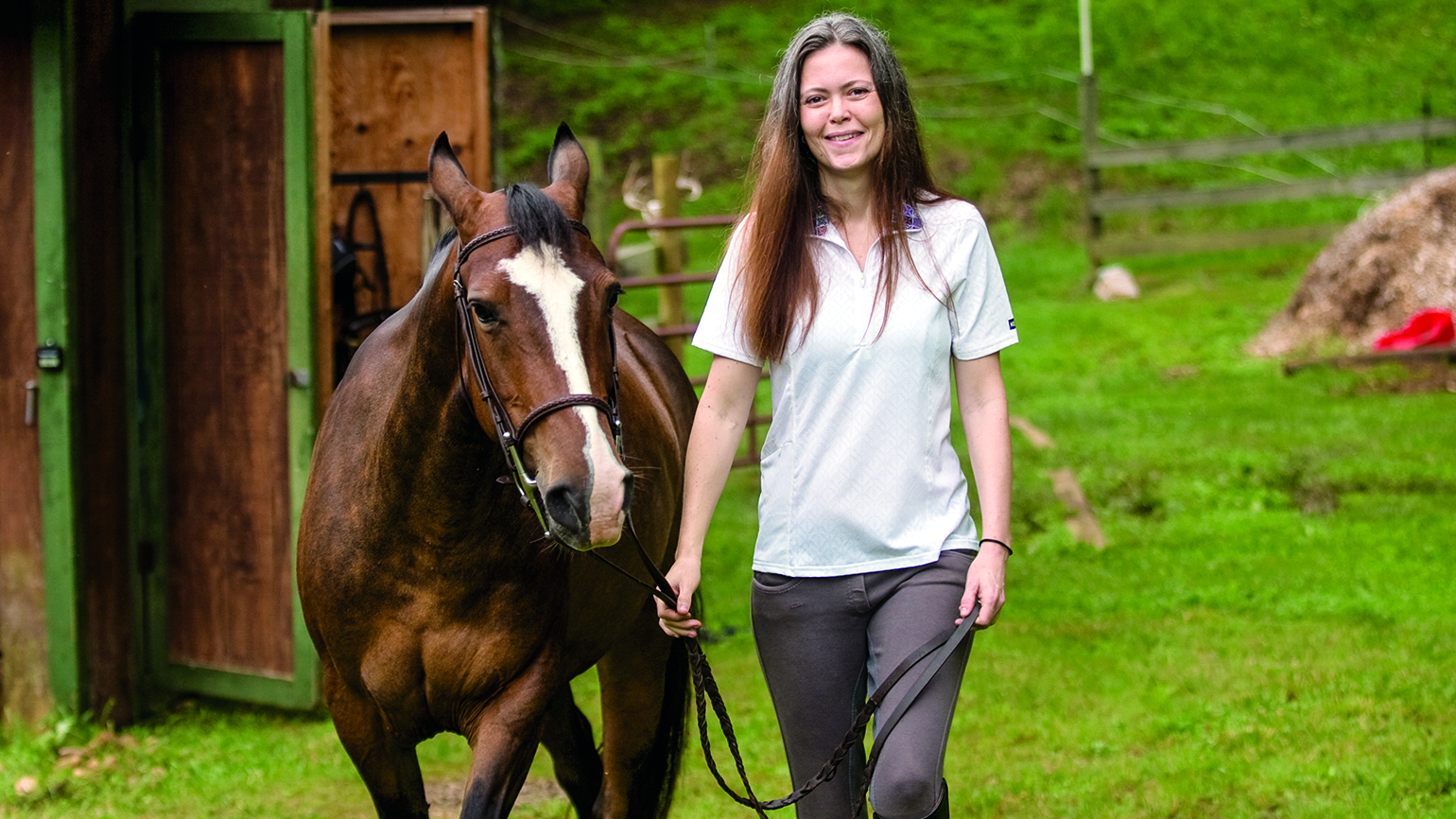
How the Horse She Rescued Helped Her Find Herself Again

‘‘Hang on,” I said to my seven-year-old. I pried markers from the hands of my four-year-old twins. “Please don’t color your bodies.”

The Saturday after Thanksgiving—another day in the life of a working mom. I loved my three boys, my husband and our life in the woods and pastures of Appalachian Virginia, but it wasn’t easy putting my passions on hold to raise a family. I’d been a distance runner and a psychology professor before we had kids. Now the runs were short—I had to get home to pick up the twins from preschool, my oldest from first grade—and I taught only one class a semester.

Light for Life NASB Study Bible in Article

And then there were the horses—Phoenix, who I had rescued in college, and a small pony, Harriet. They needed my attention too. We were diligent about rotating their pastures, bringing the vet around and changing their shoes. But riding? Who had the time?

Even more so than running and teaching, horses fed my soul. I still remember Shorty, the pony I’d learned to ride on as a kid, and all the horses my parents leased for me in the summers. Riding made me feel like I was flying, like I was free. I missed that.

If scientists analyzed my genome, I suspect they’d find bits and pieces of the DNA of the horses I have known and loved over the years. Not everyone can take care of these magnificent animals, though. Like the neighbors down the road. Somehow they’d gotten ahold of two mares—one older, one younger—and a stallion. Their yard, crammed with junk cars, old tires and scrap metal, wasn’t the ideal environment for their many dogs, let alone a small herd of horses. They mean well, I told myself. Maybe they don’t have the knowledge or money to raise horses.

I’d started going over there with hay for the horses, but as the days grew cooler, their ribs became more prominent. Sometimes the animal control truck came by, but nothing ever came of it.

The temperature had plummeted the week before Thanksgiving. The wind picked up, and sleet dripped from the sky, creating huge muck pits. Those poor horses, I thought.

“Can you drive me up the road?” I asked my husband, Paul, on Thanksgiving morning.

“Now?”

I nodded. “I’m worried about the old mare. She’s skin and bones. What if she doesn’t survive the night?”

We arrived at our neighbors’ ramshackle house. Carrying an all-weather horse blanket, I picked my way through mud and rubble to the front door. Dogs howled at my knock.

A woman stepped outside. “Yes?”

“Sorry to bother you so early on Thanksgiving,” I said. “But your old mare doesn’t look well.”

“Vet says there’s nothing we can do,” she said, her jaw set.

“She’s too skinny to stay warm on her own,” I said. I held up the blanket. “Would you mind if I put this on her?”

My neighbor’s face softened. “Thank you,” she said. “That would be fine.”

The mare didn’t object when I slipped the blanket over her. This is no place for a horse, I thought, scanning the pen—piles of manure, no food, no greenery. Her head hung low, as if the weight of the world was dragging her down. I tightened the buckles around her belly, and the second, smaller mare came over. She sniffed my fingers as I fussed with the buckles. I looked at her. She was a bay with a white blaze running down the center of her face. She looked back at me, her eyes alive with curiosity. And hope. She hadn’t given up. Not yet.

Later that day we sat down for Thanksgiving dinner, but I couldn’t get that young mare out of my head. How was it fair for us to feast when there were starving animals just down the road?

Now I wiped the marker stains off my twins and thought, as I had several times since Thanksgiving morning, Maybe I can still save her.

Armed with a 50-pound bag of alfalfa and some cash, I bartered with my neighbors for the little mare with no name. She was two years old but had never had her feet trimmed, worn a halter or learned to be caught and led. It took some time to walk her to our property.

“You did what?” Paul asked.

I surprised myself too. I was already exhausted from juggling too much. How was I going to take care of an untamed, malnourished horse? Yet something had pushed me to save this mare and I couldn’t turn back now.

“It’s temporary,” I said. “Just until we can find her a suitable home.”

Lisa, her dog and Francie

The next few days, I observed the wary mare. I used my most soothing voice to calm her. “Good girl,” I said as I brushed her. Her coat was dull and matted, but I could tell she was starting to enjoy her twice daily brushings. I decided to name her Francie. “Like the girl in A Tree Grows in Brooklyn,” I told Paul, remembering how the character had overcome adversity and thrived.

Our Francie faced more than a few challenges in her first weeks with us. One morning, I spied thousands of threadlike worms in her manure. I brought a sample to the vet, which revealed small strongyles, the most unwanted of equine parasites, because they can burrow into the intestines and migrate to different organs, making a horse very ill or worse.

“She also has roundworms,” the vet said.

I told him that I had already attempted to deworm Francie with a mild ivermectin.

“You’ll have to use something stronger.” He prescribed a broad-spectrum dewormer.

That Friday the vet finally made it out to our house to see Francie. He’d had emergencies and arrived four hours late. It was dark and bitterly windy, but I was thankful he’d come.

“She has the worst case of strongyles that I’ve ever seen,” he said. He recommended a double dose of the heavy-duty dewormer for five days and gave me some other meds in case she were to colic from the strong dose.

I’d hoped to move Francie into a shelter with Phoenix and Harriet before an ice storm hit. The vet said it would be best to keep her in full quarantine until she completed the deworming program. I looked at our newest horse, just as I had the day I met her. She looked back, her eyes still hopeful. “You can beat this, Francie,” I whispered to her, stroking her neck. “I know you can recover and thrive.”

I’d been so focused on trying to get Francie well that I hadn’t registered what I’d done. Here I was, almost 40, with three little boys and a part-time job, and I’d taken in a sick horse I had to start from scratch with. But this wasn’t just another thing on my plate—this mare needed me desperately. And in some way I didn’t quite understand, I needed her.

It took a while for Francie to get used to being handled, but it amazed me each time she let me slide the halter over her head. As the months passed, she learned to be saddled, to work on the lunge line, to accept the bit. Then one day I found myself sitting astride her as my husband led her around the riding arena. She spooked easily, so I talked to her as we rode. Sometimes I even sang to her (truthfully, she’s the only one who would care to hear me singing).

Francie’s personality emerged as she settled down. I had a small speaker for my saddle and discovered she liked riding to music, particularly movie theme songs. I’d put on music that made me think of horses charging across fields into battle, and she’d lengthen her stride and strut across the arena.

I never did go about finding that suitable home for her. The neighbors’ other two horses were cared for at cost by the vet, then re-homed. I hope their new owners feel as lucky as I do to have Francie.

I didn’t realize how much I needed this little mare until she grabbed hold of my heart. I had been caught up in my mom routine, caring for my boys, ignoring my own needs. Doing all I could for Francie was like coming home to myself. I took her in because I believed she could live a full life. Turns out, so can I. Now I make time to ride, to feed my soul. Francie’s got one of the smoothest trots I’ve ever known. Together we fly and feel free.

Did you enjoy this story? Subscribe to All Creatures magazine.

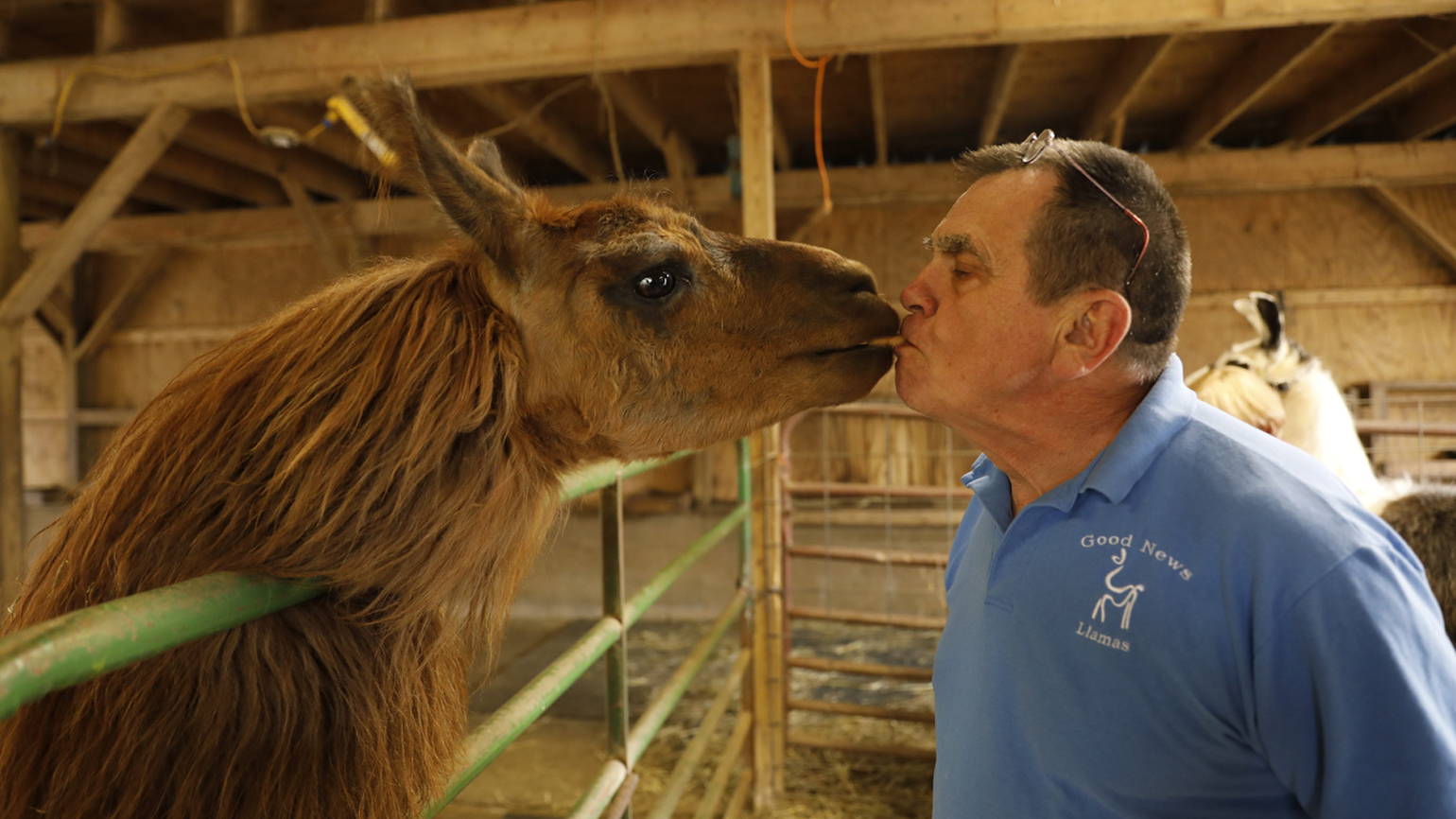
How The Good News Llamas Spread God’s Love

After spending an afternoon at a llama exhibition at the Ohio State Fair, Tom Ross was fascinated and he saw these creatures as a sign. He always felt like he and his wife, Judy, should be doing something more with their lives, so he decided to buy some llamas. Judy was skeptical, but when she saw how these animals helped others, it not only changed her view but their lives as well. Read the full story about the Good News Llamas ministry and find more stories like this in All Creatures magazine.

How the Boy With the Golden Horn Helped Him Comfort His Granddaughter

“Papaw, is Izzie going to die?” my seven-year-old granddaughter, Carolyn, asked, cradling her pet rabbit in her arms. Izzie was already full grown when she joined the family and had been Carolyn’s closest companion for the past four years.

Recently Izzie had stopped eating. We went to the veterinarian that morning, and the news wasn’t good. The vet told me the rabbit would most likely pass by the end of the day.

“I’m afraid so. She’s lived a good life, but it’s time for her to leave this world,” I told Carolyn.

She looked up at me, teary-eyed. “Will it hurt her when she dies?”

“No,” I assured her. “She’ll fall into a deep sleep and stop breathing.” It was hard to see my granddaughter feeling so sad.

Carolyn’s voice was no more than a whisper. “I don’t want Izzie to die. She’ll be all alone with no one to care for her. What will she do? Where will she go?”

Suddenly  I  was  six  years  old  again,  wondering about those same things  after  my  dog,  Champ,  had  died.  “If Champ isn’t here anymore, where is he?” I had asked my mother.

Now I told Carolyn exactly what my mother had told me. “She’ll go to the Rainbow Bridge,” I said, gently stroking Izzie’s soft coat.

Confusion clouded my granddaughter’s face. “What’s the Rainbow Bridge?”

“It’s where pets go when they die. There they have all the best food and clean water they want,” I said. “All the animals are friends, and eventually they’re reunited with the people who love them.”

Carolyn still looked troubled. Lord, I asked, help me comfort my granddaughter.

Izzie nestled deeper into Carolyn’s arms, taking short labored breaths, her eyes closed. “But what if she can’t find the bridge?”

“That will never happen,” I said, echoing my mother’s words. “There is a boy holding a golden horn who stands at the bridge to help the pets find their way.”

A faint smile crossed Carolyn’s face. “He must be an angel with a magic horn.”

That evening, instead of putting Izzie in her cage, Carolyn set a soft blanket next to her own bed for her rabbit. “Go to sleep, Izzie,” she whispered. “When you wake up, you’ll be at the Rainbow Bridge. Please don’t forget me.”

Sometime during the night Izzie left this world.

The next morning, with my granddaughter’s help, I built a small wooden box. Carolyn wrapped Izzie in her blanket and laid her inside. “I want to bury her under the oak tree that I can see from my window.”

Carolyn held the box and quietly watched me dig Izzie’s burial place. As I lifted away a shovelful of soil, she cried out. “Papaw, stop! There’s something in there!”

I peered into the hole, but I didn’t see anything. Carefully I removed more soil by hand. Then I found it—a small ceramic figurine of a boy.

“Look, Papaw!  The little boy is holding a gold horn!”

“He must have been placed here just for you,” I said.

Carolyn nodded. “Izzie found the bridge,” she said.

She keeps the little figurine on her nightstand, a reminder that she will see her beloved rabbit again one day, at the end of the Rainbow Bridge.

Did you enjoy this story? Subscribe to All Creatures magazine.

How She Prayed for Her Sons to Get Along

Oh, no. Our county had issued a stay-at-home order. This was necessary to help prevent the spread of Covid-19, but I dreaded it. For myself, for my boys. How would they handle being cooped up together for weeks on end? How would I keep the peace while still doing my job as a seventh-grade English teacher?

My 15-year-old twins, Breckan and Brennan, hated each other. I know hate seems like a strong word, a ter­rible word, but if they were in the same room for more than 10 minutes, there was going to be a fight. Contemptuous remarks, yelling, even physical blows.

A Journey of Faith In Article Ad - Avail Now

I was 35 when the doctor announced that I was pregnant with not one but two babies. What a blessing! I’d wanted two children, and I knew getting pregnant would be more dif­ficult as I got older. How fortunate that I’d be having both my children at once!

My sister had twin toddlers, a boy and a girl. I knew from watching her that raising twins was tough. Double diapers and feed­ings. Two times the tantrums. Still, I be­lieved what everyone said: “Your boys will have a built-in best friend for life!”

Then Brennan and Breckan were born. As babies and then toddlers, they played in the same room but never with each other. What’s going on? I won­dered. Maybe they’d become friends later. They started school, and Breckan quickly established himself as asser­tive and action-oriented, while Brennan was quieter and more contemplative.

At about age five, they began to fight. Fighting was foreign to me. Even as children, my sister and I would resolve our conflicts with words. We were dif­ferent but good friends. My parents, married for 52 years, had never yelled at us or each other. I’d had such a har­monious upbringing. How could I have produced such adversarial offspring?

“They’re boys,” my husband would say. He had grown up around brothers. “Boys fight.”

My husband was definitely a yeller, raising his voice over things big and small. The dishes! The finances! When my husband left our marriage—the boys were six and a half—I thought we’d finally know peace.

Not for long. Breckan channeled his energy into sports, and everything be­came a competition. Brennan was drawn to music and arts. When I heard voices raised, I’d jump in and try to mediate. “Please, be kind to each other,” I’d say. “Just ignore your brother if you have to. He’s trying to push your buttons.”

By the time the boys turned eight, they’d had enough. Bickering escalated into blows.

“I hate him!” screamed Breckan.

Brennan yelled right back. “He’s the worst person I ever met! How is he my brother?”

I was heartbroken. How could I help them see the value, the joy, in being brothers? I held family meetings. Con­fiscated electronics. Tried counseling. I asked God to bring them together. They didn’t have to like each other. I couldn’t control that. But somewhere deep in­side, didn’t they love each other? As brothers? Wasn’t that what God wanted?

For years, our house functioned best with the boys in separate spaces—Breckan in his bedroom, Brennan up in the game room with his drum kit. At school, they ran with different groups: Breckan with the jocks, and Brennan with his musical theater and commu­nity service friends.

I lowered my expectations. The boys’ relationship wasn’t ideal, but they un­derstood what family meant. They were so sweet to me, and both adored their older cousins. They had each found their friends in the world and were thriving in their own separate corners.

I tried to tell myself that was enough. But sometimes I’d imagine holidays with two adult sons. Brennan and Breckan with their families around a table, barely speaking to one another—or worse, at each other’s throats. And my heart would break all over again.

That was why the stay-at-home order filled me with such dread. I set up my classroom in the dining room, preparing to finish out the school year from home. And steeling myself for the battles that would inevitably erupt between my boys.

For eight hours a day, I planned and posted assignments, and e-mailed or Skyped with students. Brennan and Breckan finished their schoolwork within three hours, then filled the rest of their time with electronics, skate­boarding, basketball and naps. Bren­nan played drums and had lessons with his teacher over Zoom. Breckan even got out his guitar.

On the ninth day, I heard voices and laughter coming from Brennan’s room. That sounds like both my boys, I thought. Impossible. Maybe it was the TV. I put dinner on hold and went down the hall to investigate.

I knocked on the bedroom door. “Brennan, it’s me.”

“Come in, Mom.”

I opened the door, and my breath caught in my throat. Both my sons were sitting on the edge of Brennan’s bed, video game controllers in hand, grins on their faces.

“What’s going on here?”

“Just having fun,” Breckan said.

“Together?”

“Yeah.”

“That’s great!” I said, trying to mask my surprise. I shut the door.

Please, God, I prayed. Let this be the beginning of a new relationship for my boys. Let them learn to love each other!

The next afternoon, after their schoolwork was done, I found the two of them in the front yard with baseball gloves, tossing a ball back and forth. Brennan let Breckan join an online video game with his group of friends.

Was I imagining things? Were the boys…getting along? A week later, I looked out the window and saw the twins showing each other how to do tricks on the trampoline. They start­ed knocking on each other’s doors to share funny YouTube videos: “Dude, you gotta see this!”

I was shocked—and delighted. This was what I’d always hoped for! I felt a lit­tle guilty feeling so joyful when so much of the rest of the world was suffering. In our house, there was more peace than we’d ever known. I wasn’t sure why. Had sheer boredom driven my boys to­gether? Had fear of what was going on outside our home made the twins appre­ciate what they had inside it?

One evening, I stopped by Breckan’s room for our nightly chat before I went to bed. “Hey, what do you think has been happening with you and your brother lately?” I asked him. “Why are you getting along?”

Breckan shrugged. “I don’t know, Mom. We’re maturing, I guess. I don’t want to talk about it.”

Leave it to me, their mushy English teacher mom, to try to analyze what had happened and put it into words. But the how or the why doesn’t matter, really. What does matter is that there’s love between my sons at last. And the best word for that is miracle.

For more inspiring stories, subscribe to Guideposts magazine.

How She Let Go of Worrying About Her Daughter

I woke early. It was still dark. The house was quiet. Where was Kahrin? Was she okay? I reached for my phone, then remembered. It was useless. Kahrin didn’t have her phone.

My 19-year-old daughter was on a 10-day service trip to Guatemala organized by her university. Kahrin and I were close. We talked and texted every day. I had two sons; Kahrin was my only daughter. I was all too aware of the vulnerabilities of being a woman. It was my duty to keep her safe.

Sweet Carolina Mysteries In Article Ad

When Kahrin was in fourth grade, she announced she wanted to play football. Tackle football. Kahrin was tiny. I was anxious about letting her play.

Still, my husband and I decided to let her give it a shot. Kahrin was so small and fast, she became the team’s quarterback. I gritted my teeth through each game. Each time she got tackled, my heart stopped. Then came a moment when she was tackled and stayed on the ground. Enough was enough. Her football days were over.

In high school, I refused to let her go to the mall by herself.

“Mom, all my friends have been going by themselves for ages,” she said.

“That’s beside the point,” I said.

“It’s ridiculous that you think I need a buddy to buy a pair of jeans!”

After weeks of pleading, I relented.

When she was a senior in high school, she wanted to drive to Ohio University to visit her brother.

“You want to drive more than three hours by yourself?” I said. “On a highway? What if you break down? What if your phone dies and you can’t call 911?”

“Mom!” she said, sounding exasperated. “Didn’t you ever go on a long road trip at my age by yourself?”

“Yeah. But that was different.”

“How?” Kahrin asked. “Because you didn’t have a cell phone or any way to communicate with anyone?”

I kept my phone with me the entire time she was on the road, checking constantly to make sure she hadn’t called.

I should have been thrilled when Kahrin chose to go to college only 40 minutes away. My sons were hours away. But there was still plenty to worry about.

“Don’t walk alone at night, ever,” I reminded her on the way to her dorm.

“Mom, please,” Kahrin said.

“And whatever you do,” I said, “don’t ever get into an Uber by yourself.”

“Okay,” Kahrin said. “No need to freak out.”

Halfway through her freshman year, she called me early one Saturday.

“Mom, don’t freak out,” she said.

“What happened? Are you okay? Are you hurt? Do I need to drive down?”

“I’m okay,” she said. “Last night I went to a party. My friends wanted to go somewhere else after, but I was ready to go home. I didn’t want to walk home in the dark, so I took an Uber.”

“By yourself?” I shrieked.

“At least I didn’t walk home alone.”

“You got in a strange car at 2 a.m.!”

“And I’m perfectly safe,” she said. “I wanted to tell you because I knew you’d worry.”

I was glad she’d told me. But I was still horrified that she’d gotten into a car alone with a stranger.

In March of her sophomore year, Kahrin called. I picked up immediately, excited to chat about her week.

“Mom, guess what? I’m going to Guatemala for 10 days on a mission trip!”

She sounded excited. But didn’t Guatemala have serious gang problems? What if Kahrin got separated from the group? What if the water made her sick?

“Wow!” I finally said. “How exciting! I had no idea you were interested in doing a trip like this. Is it a sure thing?”

“Yup!” She was exhilarated. “I had an interview last week and just heard that I’m in.”

“I’m so proud of you,” I said. It’s fine, I told myself, she’ll have her cell phone. I’ll be able to check in with her.

“There’s something you should know about the trip,” Kahrin told me a week later. “When I get to Guatemala, the leaders are taking our phones so we aren’t distracted. I think it will be a good thing. We can unplug and really focus on the purpose of the trip.”

I mumbled something about how I understood. As if! I’d been clinging to that phone for peace about this trip.

On Day One, my first instinct upon waking up had been to check on her. But I couldn’t call. Our last conversation had been the morning before.

“Hi, Mom! We landed in Miami. We’re getting ready to board the plane to Guatemala. Just wanted to say I love you.”

“Be safe,” I’d said. “Stay with the group. I’m praying for you. I love you!”

What if that was the last time we ever spoke? What if she never made it home? I sat up and turned on the light. No way would I be able to go back to sleep. I couldn’t talk to Kahrin about my worries. But I could talk to God.

I got out of bed and went to the kitchen. Made a cup of chai tea and settled into my recliner, facing the picture windows. I spent many mornings praying there, waiting for the sun to come up. That morning, I opened my prayer journal and started writing.

God, I’ve spent her entire life begging you to keep her safe.

I catalogued all the dangers she’d faced in her short life. I’d worried about her playing football, but secretly I’d been proud of her. I’d wanted to play when I was a little girl. And she’d been the quarterback! One of the reasons I’d been so nervous for her to drive long distances was because I remembered how I used to speed from college to my parents’ house. Kahrin was a careful driver. All of my fears had been unfounded. The moments that had filled me with fear turned out to be opportunities for Kahrin to grow.

Lord, please let this Guatemala trip be another growth opportunity. And help me trust you to keep her safe.

I woke early every day and wrote in my prayer journal. I asked for peace, for God to let Kahrin feel my love. I took in the beauty of the sunrise, sipped my chai and filled pages with prayers.

Ten days of morning prayers and numerous journal pages later, the phone call I had been waiting for finally came.

“We just landed in Miami,” Kahrin said. “The flight to Ohio leaves soon.”

A few hours later, we picked her up at the airport. She hugged me, but her smile didn’t reach her eyes. When we got to the house, she was quiet. In the past, I would have worried and bombarded her with questions. This time, I let her have her space.

She came downstairs later in the evening. She was holding a small notebook.

“What’s that?” I asked.

“My journal,” she said. “I kept one on the trip.”

“You won’t believe this,” I said. “But I kept one too.”

“Do you want me to read some of it to you?” she asked.

“Of course!” My heart swelled. “Let me grab my journal. I’d love to share some of it with you too.”

Kahrin curled up on the couch, and I took my normal spot on the recliner. She read about her experience in Guatemala. She was one of the few students who spoke Spanish well enough to translate for the others. She made friends with her host family and was using an app to keep in touch with one of the girls she had bonded with there.

I feel like I’m at home here, she read. I’ve never experienced faith like this before. There were even a few notes about me. God, please hold my mom extra close today. I know how she worries.

“I prayed that God would be extra close to you too,” I said.

“I want to change my major to international business,” Kahrin said. “I don’t want to be an accountant. I might join the Peace Corps after graduation.”

Old habits die hard. I heard Peace Corps and thought of danger. But I knew my worries would only hold Kahrin back. “That sounds like a great idea,” I said.

I still have a long journey ahead, but little by little, I’m learning to let go and let my daughter grow.

For more inspiring stories, subscribe to Guideposts magazine.
How Roaches Help Her Cope with a Debilitating Disease

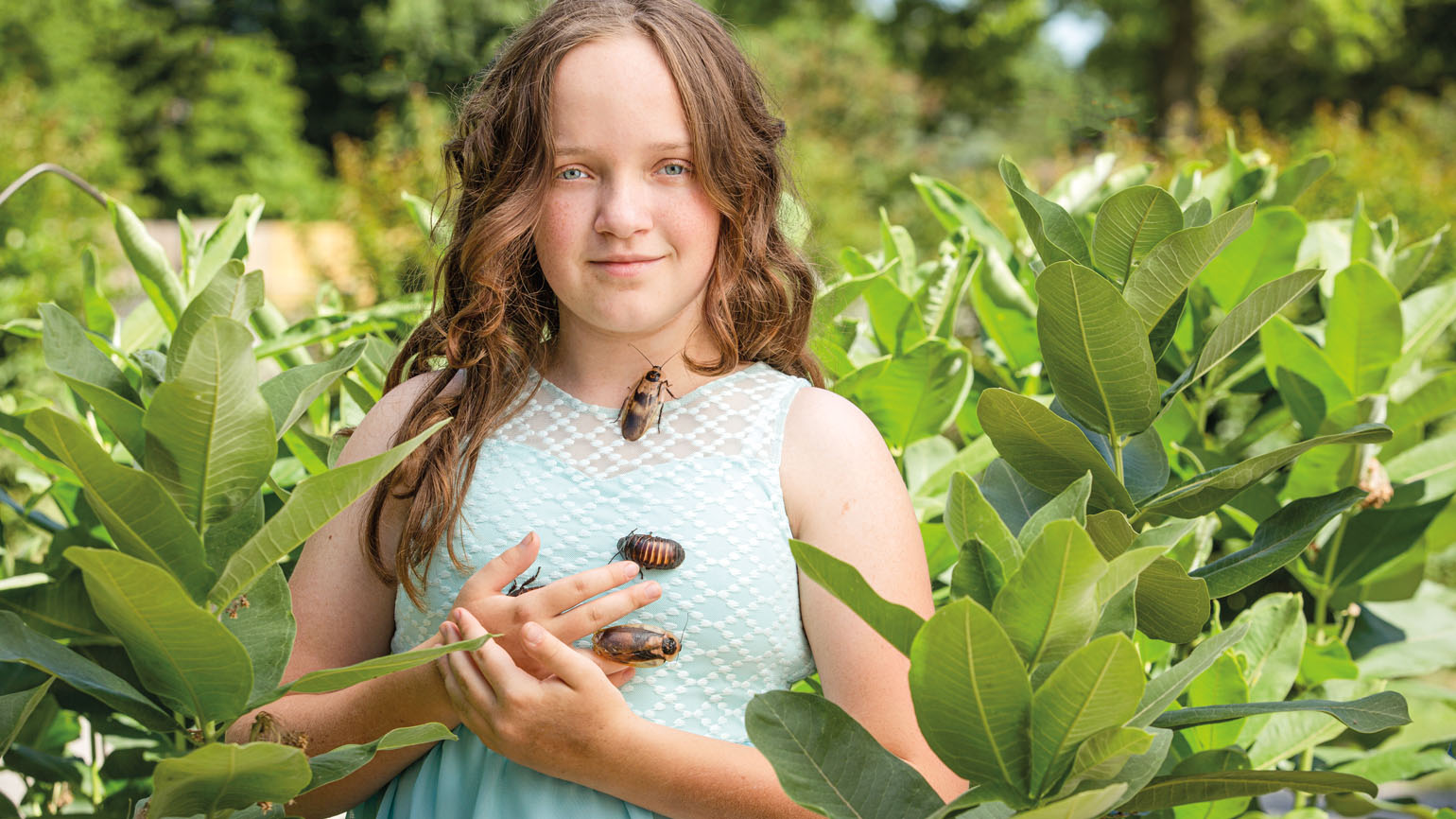
Most people would not be thrilled to spot a cockroach in their home—or anywhere, really. But 12-year-old Shelby Counterman has thousands of them in her bedroom. And that’s just the way she likes it.

When Shelby was only 18 months old, her mom, Meg, took her to the conservation district near their home in Claremore, Oklahoma. “Shelby spotted the tank of roaches, and she just lit up with excitement,” Meg says. 

Daily Strength for Women in Article ad

Around the same time, little Shelby received a diagnosis of neurofibromatosis, a genetic disorder that causes tumors to grow on nerves. Her leg became so bowed that she had to wear a brace. Everyday life became challenging, and as Shelby grew, Meg could see how her daughter’s condition frustrated her, despite her happy disposition.

But on Shelby’s third birthday, things changed. Her parents gave her an unusual gift: five Madagascar hissing cockroaches. Shelby was ecstatic. “They were all males,” Meg says, “so it wouldn’t get out of hand.” Interacting with her new pets took Shelby’s mind off her condition. She devoted herself to caring for these creatures that were often misunderstood—she knew how that felt. 

The roach population in her bedroom didn’t stay small for long. “When I was five, we got some female roaches and I started breeding them,” Shelby says. “We went from five to 200 pretty quickly.” Meg says, “I thought her affinity for bugs would be a phase, but her interest in them has only grown.”

Today Shelby’s collection is made up of about 5,000 roaches, including 17 different species. She keeps them in tanks in her bedroom. “My favorite is the Simandoa cave roach,” Shelby says. “They were discovered in a cave in Africa in 2004 and are now extinct in the wild, so they’re really unique.”

Not all of Shelby’s cockroaches have names, but one of her favorites is a death’s head cockroach she named Shadow. “Shadow is calmer than some of my other roaches, and when I hold him, his legs are not as prickly on my skin,” she says. 

Shelby knows that most people don’t understand her passion. “When someone says they’re gross, I explain that there are 4,500 roach species in the world and only a handful of them are bad for humans,” she says. “I want people to understand that roaches actually help us and play an important role in our ecosystem. They are decomposers. They eat garbage and other waste. They have a job to do.”

Shelby’s insects continue to help her cope with her condition. Two years ago, she began having severe back pain. X-rays revealed that, because of her neurofibromatosis, Shelby’s spine was now shaped like a Z and she would need surgery. Doctors also discovered that she had a brain tumor. Thankfully, the growth was benign and could be removed. Then just a month later, she needed ankle surgery. “When I feel down or I’m sick, my roaches make me feel better,” Shelby says. “I like to rub their bellies with my finger and watch them move their feet.” She also likes to sit by them while she reads.

Shelby has other animals too. “I have taxidermy beetles, a tarantula, two dogs, a cat, two lizards and a snake,” she says. “And my brother has a bunny.” You might think she’s on the path to becoming an entomologist. “I want to become a lawyer because I like to argue with my brother,” she says. “But I’ll always love all animals, especially roaches.”

Did you enjoy this story? Subscribe to All Creatures magazine.

How Parenting Changes Us

I will never forget the day my daughter, Christine, was born. When I saw her for the first time, I thought, “How will I care for her?” Until then, I hadn’t thought much about the responsibilities of being a dad or how it would change me as a person. But thanks to that little baby girl and the woman she is today, my life changed for the better.

Whether they are biological, adopted or stepchildren, our kids have a profound impact on our lives. When we begin the journey of parenting, we only know what we have learned from observing our parents. In some cases this serves us well and in others it does not. When a child enters the world, he or she doesn’t come with a parenting manual. Yes, there are many books and articles about raising, disciplining and teaching children, but we truly learn what it means to be a parent on our own. No book or article can fully prepare us for the many seasons of life; we must learn as we go.

Pause & Pray In Article Ad

As our children grow, we learn that our words and actions matter. The best way to raise a child is to lead by positive example. They are always watching and learning from us. We are on display 24/7. And while we may not always be right in our actions, we must try for our children’s sake. Most importantly, we must always remember to express our love for them. Yes, we must tell our children we love them, but if our actions don’t align with our words, then our love has no power.  

Parenting also shapes our character. With children, life is no longer just about us. Our children are now an important part of the equation that requires time, sacrifice and resources as well as physical, emotional and spiritual care. The role of being a parent deepens our character and teaches us humility, patience, perseverance, courage and joy.

The responsibilities of being a parent are significant and taxing at times, but the joys outweigh the challenges. As parents, we never stop growing and learning no matter what age our children are. I like to thank both of my children for making me a better person and wish my daughter, Christine, a wonderful birthday. What is it about being a parent that you love most? Please share with us.

Lord, thank you for bringing children into our lives and allowing us to be better because of them. 

How One Couple, and Their Beloved Dog, Ditched the Big City for Farm Life

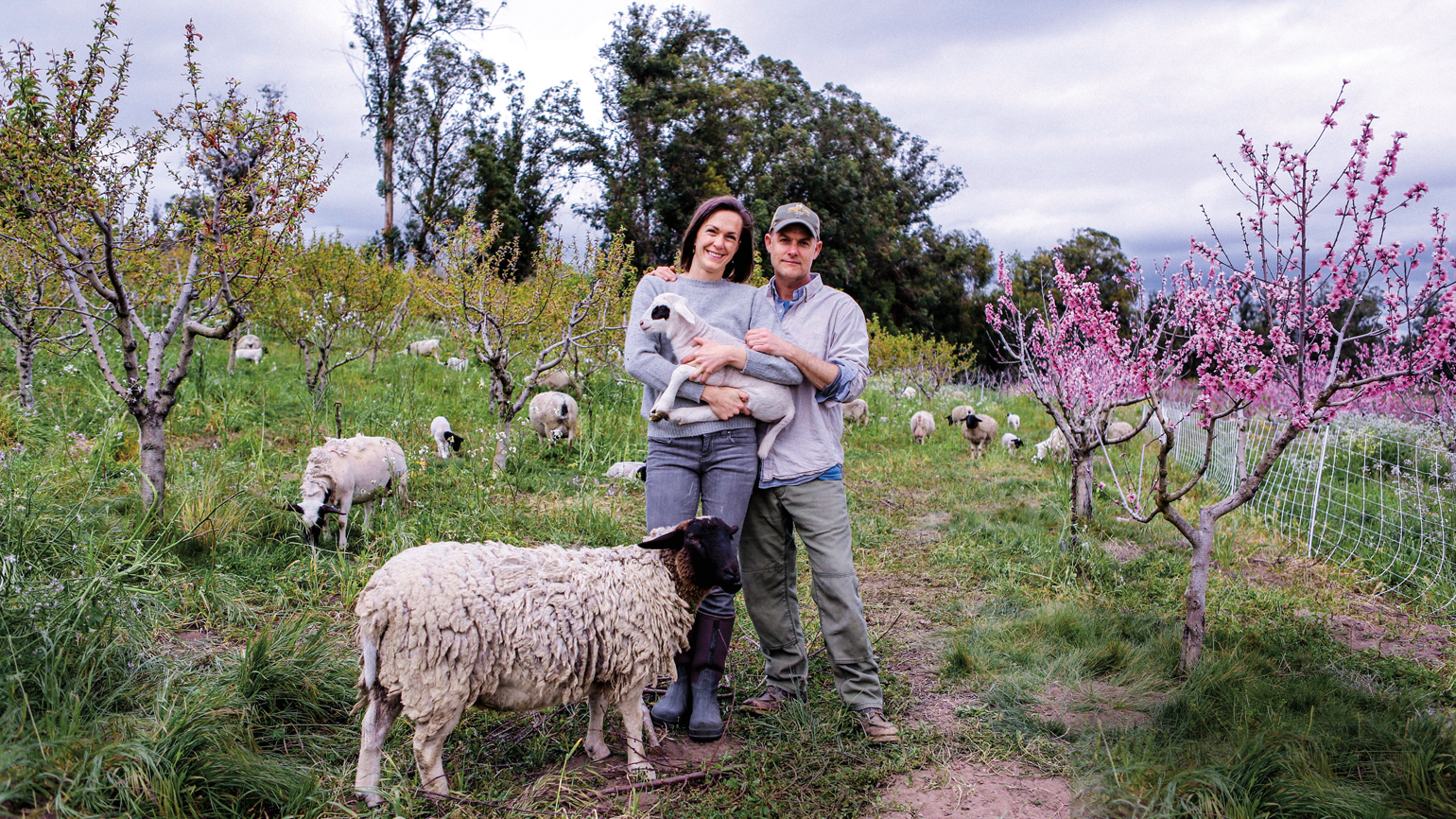
It’s hard not to despair over climate change. A recent United Nations report revealed that human-fueled global warming is destroying habitats and species at an alarming rate, but many of us wonder how we can help beyond using the recycling bin. In 2011, John and Molly Chester decided a radical change was the only way for them to have an impact. They paused their careers, found investors and volunteers, and bought a farm an hour north of Los Angeles, trading traffic and show biz for manure and manual labor.

Their eight-year experience is unsparingly presented in the just-released film The Biggest Little Farm. We caught up with John to hear about how the pair turned 200 barren acres into a thriving regenerative farm that, despite pests, wildfires and hungry coyotes, is sustaining orchards, plants, animals and a simpler way of life.

The Daily Bible Large Print relaunch with digital free gift in article ad

Did you have farm experience or animals growing up?

I was around farm animals as a kid. In my late teens and into my twenties, I worked on corn and soy farms, repairing fences and mowing. I loved being around animals and felt a deep connection to nature. Molly grew up in the Pittsburgh suburbs, but her grandma had a farm, so she spent her childhood going there.

A pig and a rooster relaxes on John and Molly's farm.
A pig and a rooster relaxes on John and Molly’s farm.

How do you feel those experiences affected you?

I definitely think they had a ripple effect. I saw how life could be simple, and that stayed with me. It made me more connected to something purposeful.

What were your original career paths?

We lived in L.A. for four years, and each of us got to the top of our games. I earned Emmy Awards for films and documentaries. I filmed everything from nature and wildlife for Animal Planet to short films for Oprah’s network to rock and roll documentaries. Molly was really busy as a private chef for celebrity clients, specializing in traditional food. Her spare time was spent sourcing locally, learning ancestral methods and researching how food was being grown.

Though your jobs gave you both a hand in the natural world, a big nudge toward your new life came from an unexpected source, right?

I was making a show that involved filming a hoarder and stumbled upon a beautiful black dog. I connected with him instantly and begged the owner to give him to me. Surprisingly, she did. I made the dog a promise that after everything he had been through, I would never give up on him. His name is Todd. Viewers will see in The Biggest Little Farm how Todd’s barking became a problem in our L.A. apartment. Although we tried everything, we eventually got evicted. Our commitment to not giving up on this dog drove us to a solution.

So you decided to move for Todd’s sake. What other needs ended up being fulfilled with this change?

There were other pressures. We had offers to do fun things, but they didn’t seem meaningful. We felt a disconnection from purpose. We realized that moving to a farm not only solved our Todd problem but also was the path that would reconnect us with purpose and living in a more environmentally conscious way. It made sense: Molly loved food; I loved farms and animals.

What was your first challenge when you bought Apricot Lane Farms?

An aerial view of the lush fields on the farm.

We didn’t know how depleted the soil was. For 45 years prior, an extractive method was used to grow food cheaply. So it was not biologically diverse; there were no worms. We had a soil bank that was bankrupt.

But you found a guide, who is also such a fun character in your film.

Yes, we’re so grateful for Alan York, one of the world’s most respected soil, plant and biodynamic consultants, who advised us all the way through. Molly had such an optimistic view of his consulting; I was more skeptical. It’s easy to think this way of farming won’t work, but if you love the complexity of nature, then you have to believe in it. As Alan would say, “We’re trying to mimic a mutualistic biological diversity through the enhancement of biodiversity as a way to regulate the farm against epidemics of pests and disease.” That is, growing food of depth and density, the health of trees and crops, all depended on the health of that soil, and bringing it back to life. And all the tools of nature are there if you take the time to observe and innovate.

In the film, the challenges that you and Molly, the orchards and the animals faced seemed relentless. How was the process of discovering the solutions?

Innovation comes from boundaries we set for ourselves. When it’s hard and you feel lost, believe in your ideas. They can open doors, force some innovation. I think that’s a beautiful thing. This work is for someone who wants to be on their farm, walk it and observe it. Once I realized that was a big component, the complexity and diversity wasn’t scary.

It seems as if you’ve not only found purpose but also happiness in leaving city life.

Where there was nothing, we now have 75 varieties of orchard fruit, a garden, cows, sheep, chickens, ducks and a pig named Emma, who nearly died after giving birth. She is best buds with Greasy the rooster. Their friendship has made us see other special aspects of farm life. Greasy was the company Emma needed after her piglets grew up and moved on. And Emma was the protection Greasy needed from those hungry coyotes.

It’s all been eye-opening. It’s about more than just recreating a native habitat. It’s about rebuilding the soil that is the basis for all life. And, for us, doing that is as good as it gets.

Find out more at biggestlittlefarmmovie.com and apricotlanefarms.com.

Did you enjoy this story? Subscribe to All Creatures magazine.

How My Dog Inspired Me to Renew Old Friendships

It’s funny. Sometimes a good, new habit finds you, right out of the blue. Something you wouldn’t have thought of on your own but suddenly you know you must do and must make it a new habit going forward. In this case, to renew old friendships.

Today was an unusually warm day for the week of Thanksgiving. I was in the city with Gracie to see a few friends for the holiday. I had the afternoon free and promised Gracie a long, aimless walk through our Chelsea neighborhood after we did errands at the post office and the bank. She loves errands.

Rejoice in All Things in article ad

Visiting Old Haunts

My golden appreciates the bustle of the city as a change of pace from the solitude of the country. We stopped at a few of our old haunts we hadn’t visited since before the pandemic. Amazing how Gracie still remembers all the business owners who have a treat behind the counter for her. “Hey, it’s Gracie! Welcome back!”

We ended up at the Chelsea Waterside Dog Run, along the Hudson River. By now the sun was skipping rays off the water after having made its ever briefer appearance in the sky. Winter loomed.

To our surprise, the dog run had undergone a big reno since our last visit some four years ago. A nice soft surface, some colorful artificial hillocks, a little plastic stream. It was now divided in two, with an area for small dogs and one for big dogs, designated by weight. We accidentally blundered into the wrong area where all the little dogs gathered around Gracie like she was Gulliver. Finally, I got her into the big dog section.

Finding an Old Friend

Gracie politely but perfunctorily greeted the few dogs that were present. I wondered if any of her old friends, the ones she had bonded with so closely as a puppy, were still around. Things had changed so much in the last few difficult years. I sat down and stared at a tour boat gliding upriver, Gracie at my feet.

The dog run gate clattered as a new dog and his owner entered. Gracie sprang up. Across the space the two dogs’ eyes met. Could it really be? Was this really Jazz, a Great Pyrenees that Gracie had gown up with? Jazz, her old dog run pal?

They bounded toward each other and met atop the hillock in the middle, bumping and wrestling, then they were off, running and chasing and barking gleefully.

Starting in the New Year

I watched as they played and renewed their friendship. It struck me then. Why couldn’t I do that? Renew old friendships that had fallen by the wayside. I thought about it. I would start in the new year. Easily at first. I’d commit to just finding one old friend and restarting the friendship, whatever the reason it ended. I’d make a yearly habit of it. Imagine the goodness that would be brought back into my life over time. Making new friends by reaching out to old ones, friendships I’d let lapse.

God brings people into our lives for a reason. Renewing those lapsed friendships renews God’s gift. Watching Gracie and Jazz cavort, I couldn’t imagine a better habit to form. The habit of friendship.