


Embrace God's truth with our new book, The Lies that Bind

How Marriage Counseling and Communication Revived a Relationship

Are you generally happy?

“NO!” I printed boldly on my rheumatologist’s patient questionnaire. Maybe too boldly. I added a note to explain. “I’ve lost my joy.”

God's Constant Presence In Article Ad

Of course my doctor questioned me about it. “What’s going on, Marion?” he said.

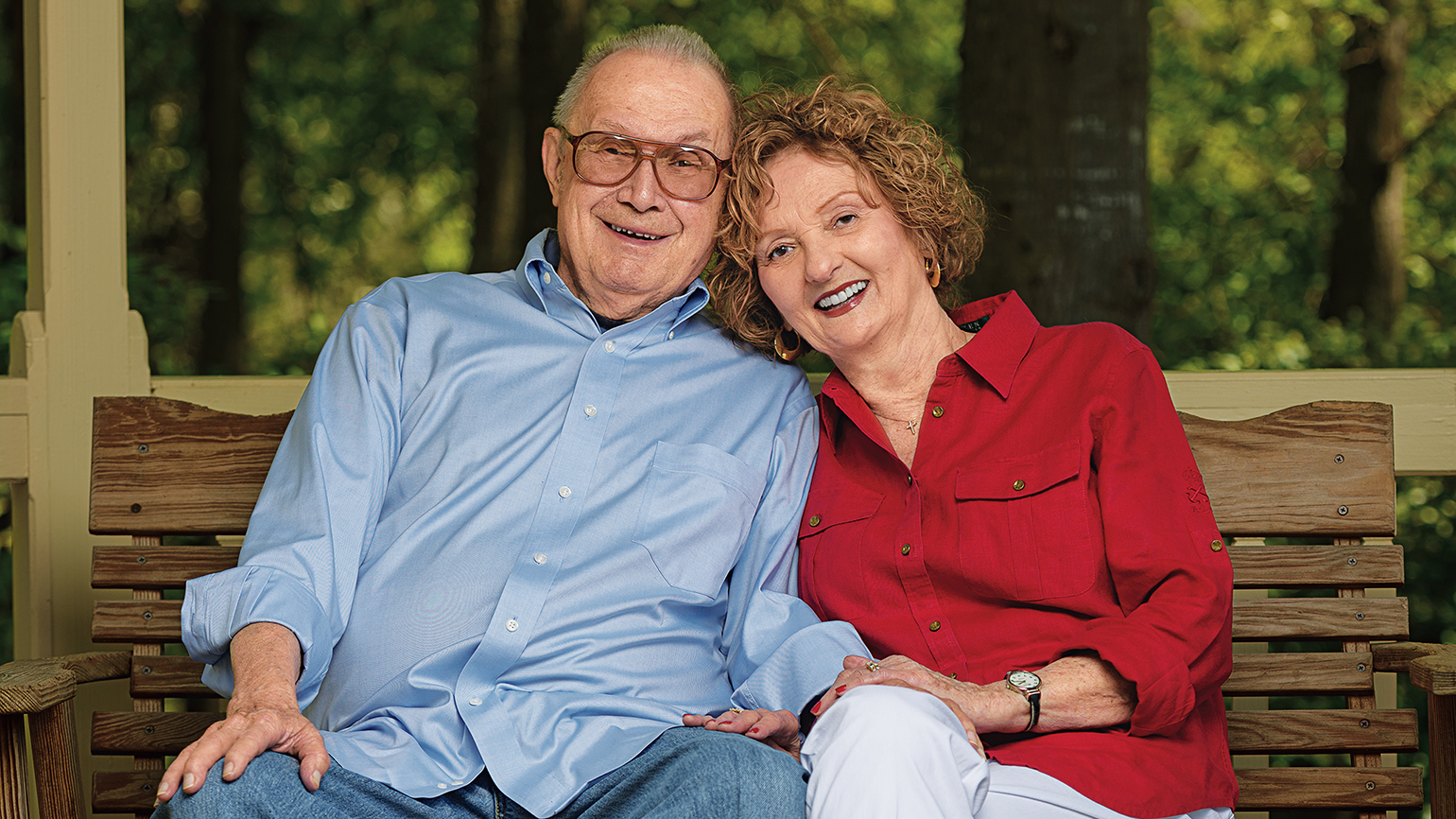
I told him the truth: “I don’t feel cherished anymore.” My husband, Gene, and I didn’t talk much. Didn’t leave the house much. Didn’t do much of anything. We used to be vibrant and active. Now we were in our eighties, both of us coping with chronic pain. I have a trio of autoimmune diseases. Gene had just recovered from a bad fall that left him with a broken leg and hip, and he was still dealing with the depression that came after the accident. Gene watched television. A lot. He slept a lot too. Most of the time, we sat in our respective recliners, stiff and silent as store mannequins, and watched the news. Well into the afternoon, we’d still be in our pajamas. Why not? There was no reason to dress.

BROWSE OUR SELECTION OF BOOKS ON POSITIVE THINKING

My doctor didn’t seem troubled by all the things I’d told him. “That can be easily fixed,” he said. “You and Gene should get some counseling.” Counseling? Gene’s doctor had recommended that he see a therapist for his depression. Gene had finally agreed to go, but only if it could be with our friend Jimmy Bamberg, who was a church counselor. I doubted Gene would want me to tag along.

“Just ask him, Marion,” my doctor said.

I drove home wondering how to do that. We’d had quite the romance, Gene and I. We’d met in our fifties, after we’d both lost our spouses, and we would talk on the phone for three or four hours at a time. He’d wooed me with long letters written on legal-size yellow paper in his distinctive chicken scratch. Now, however, Gene barely made eye contact with me. I missed our conversations. I missed the laughter too. If marriage counseling was what it would take to get us back on track, I had to give it a go.

I walked in the house and, before even putting down my purse, announced, “My rheumatologist thinks we should go to marriage counseling. He said to ask if I could go with you to your therapist.” Please, dear God, let him say yes!

Gene looked up from the television. “Sure,” he said. “I’ll call Jimmy and let him know you’re coming to my appointment tomorrow.” Well, this was a surprise. Maybe just the thought of counseling would be enough to snap us out of our funk. Then again, maybe not—we spent the rest of the afternoon in silence.

We arrived at Jimmy Bamberg’s office at church the next afternoon. Jimmy greeted each of us with a hug. Maybe it was strange to hug your therapist, but Jimmy and his wife, Susan, had been our friends for 25 years. Once we’d even driven to their house at 6 o’clock in the morning so Jimmy could counsel us in the middle of a big argument. Gene and I had always been as transparent as plastic wrap around them. Was it only with each other that we’d run out of things to say?

We sat in Jimmy’s office in pretty tapestry chairs that faced each other. Jimmy led us in prayer, then turned to me.

“Marion, what do you need from Gene?” he said.

I took a deep breath. “He’s stopped calling me honey,” I said. “Rarely makes eye contact. Ignores my comments sometimes. Sleeps a great part of the day…”

Jimmy turned to Gene. “What do you need from Marion?” Typical of a retired professor and minister, Gene thought long and hard before answering. I was certain he was going to talk about food. I don’t cook much anymore. My joint pain makes standing at the stove difficult.

“To be affirmed,” Gene said finally. I wanted to sink through the floor. How terribly sad. “Marion, has Gene done anything to let you know he loves you?” Jimmy asked.

“Well, last night I was lying in bed and Gene walked by,” I said. “He grabbed my foot.”

Both men stared at me. “That’s it?” Jimmy said.

I nodded. It was a tiny thing, but it had made me feel as though Gene was still there for me.

“Okay, I’m giving y’all an assignment,” Jimmy said. “I want each of you to list some things the other does that demonstrates their love for you. Nothing big. You can bring in the lists with you next time.”

I left Jimmy’s office feeling hopeful. But it didn’t take us long to fall back into our usual routine. Back at home, we sank into our recliners and clicked on the TV. I attempted conversation. But Gene was absorbed in some disturbing news report he was watching. Our cats wandered through the family room. They ignored me too.

I escaped to my home office and sat at my desk. There was a fresh piece of paper in my typewriter. I contemplated our homework assignment from Jimmy. I’m not a list maker. I don’t make grocery lists or Christmas lists. A list seems cold and clinical. I’d rather talk about my emotions.

There was only one list I ever recalled making. A list for God. I’d made it after my first husband had died. I was only 46 at the time, and I wanted to love someone again. To be a wife again. So one night, propped up in bed, I wrote down what I wanted in a husband and tucked the list in my Bible. If there was someone who fit my list, God would have to send him to me. Otherwise, I’d remain single.

I wasn’t sure if anything would come of the list. Four years later, though, I received a telephone call from a man named Gene Acuff, a minister and professor of sociology out in Oklahoma. He’d read a story I’d written for Guideposts about depression. He too had lost a spouse. That phone call started a correspondence. I’d stand at the mailbox and wait for his letters. He’d read mine under a sycamore tree. Four months into our letter writing, we met in person and it was love at first sight. He even sang to me, “Have I told you lately that I love you…?” We got married three weeks later.

I glanced at the photos scattered around my office. I had way too many, to the point of being tacky. But I knew my list had to be around there somewhere. I found it stuck to a photograph of Gene and me on our honeymoon.

For the first time in years, I read it: “1. God must be first in his life. I want to be second. 2. He is well-read and loves books. 3. Further along than I am spiritually. 4. I’d like to be a minister’s wife, but I’ll leave that up to you. 5. He has a deep sense of humor so that we can laugh a lot. 6. He’s able to communicate and have long conversations. 7. Cares about people, especially people who are hurting. 8. He will allow me to write and speak as long as you want me to. 9. He needs me. 10. There must be romance. Sparks!”

God had sent me the one man who met every requirement on my list. Gene and I had been so in love, so in tune. Could we find our way back to each other? I stared at the blank piece of paper in my typewriter. Then I began to type. “When he winks at me for no reason. Touching me when walking by. Making me laugh. Going to sleep holding my hand. Letting our cats sleep with us. Praying with me. Squeezing my foot when he walks by the bed. Talking about old times. Bringing me ice cream or a Pepsi when I’m watching something I really like on television.”

On the ride over to our next appointment with Jimmy, Gene asked, “Did you make your list?” I pulled it out of my purse and waved it around. “You?” I said. He removed a folded envelope from his shirt pocket and held it up. He’d scrawled on it in that chicken scratch I’d grown to love, long before we actually met.

Jimmy had Gene read his letter first. The words were comforting, like chocolate when nothing but chocolate will do. “Holding you at night in bed. When you come in from the hairdresser and your hair is very curly. When you cook a roast. When you cook soup. When you let me read letters of encouragement from your Guideposts readers. When you complete a writing assignment and let me comment on it. Your letting me comfort you when you are hurting. When I pray for you.”

Then it was my turn. I found my voice and shared my list. Gene’s smile made his eyes crinkle.

Afterward, Jimmy punched us in the computer for another appointment in two weeks. We had no intention of stopping our meetings with him.

We hugged Jimmy goodbye and headed for Gene’s big white truck. Holding hands. I looked up for a long time at the bold, blue sky. It looked like hope. Gene gave me a lightning-quick wink, then opened the passenger door for me. I hopped up in the seat like some sweet, young thing.

We were quiet driving home. But it was a good quiet. After a few miles, Gene started singing. I sing off-key, but I joined in too. He knows the tunes; I know most of the words.

“Have I told you lately that I love you…?”

Down the road we drove. A couple in our eighties, singing a love song to each other on the way home from marriage counseling, living a much better life already.

How to Talk to Your Doctor about Depression

For more inspiring stories, subscribe to Guideposts magazine.

How Kindness Can Save a Life

Be kind to one another, tender-hearted, forgiving each other, just as God in Christ also has forgiven you. (Ephesians 4:32) 

There’s a lot to be said for kindness, an often an underrated quality in today’s competitive world. But kindness saved my life. Or to be completely accurate, it was a simple act of kindness that saved my emotional life.

Faithful Paws and Purrs In Article Ad

It had been a rough week. Our military son was deployed in the Middle East, and for four nights I’d been awakened by nightmares about what he was facing on the front. I had visions of him being mortally wounded or captured and always crying out for me to help him. 

Those tortuous images stayed with me during the day. I didn’t know how to get rid of my fears, and I spiraled down into a pit of despair.

Read More: Why Kindness Always Wins

On that fifth morning I walked outside to check if the mail had come. Inside our mailbox was a small square envelope, addressed in spidery script to me. I squinted at the return address and finally placed the name. It was an older woman in our church. I didn’t know her well, but we’d often exchanged pleasantries in the hallway.

I tore open the card and immediately my torment was erased:

I wanted you to know that God has had your son on my mind the past few days. He’s awakened me at night, prompting me to pray for his safety. I felt like I should let you know that God hears the cry of your heart and has others praying with you for his safe return.

I clutched the card to my heart, tears streaming down my cheeks as I sent up a prayer of my own, thanking God for hearing my cry.

That precious woman’s prayer for my son was a big thing, but sending a card to let me know was an act kindness in its purest form.

I could share story after story detailing the small acts of kindness I experienced during our son’s time in the military. But the point I want to make is that kindness isn’t a small thing. It’s a big deal to those who receive it. We should never forget that no matter how little a thing it is to us, it may save the lives of those we touch. 

How Her Sons Taught Her To Embrace Change

I woke to pounding. Bam, bam, bam. What was that racket? I got up and looked out the window. My husband and the two youngest of my five boys were in the side yard, working under the canopy of our Norway maple. Tools lay scattered on the ground.

They were taking apart the boys’ wooden swing set.

The Daily Bible Large Print relaunch with digital free gift in article ad

I ran to the porch door. “What are you doing?” I shouted.

My sons stopped working, and my husband, Lonny, walked over. “I guess I should’ve given you a heads-up,” he said. “I’m sorry. The boys haven’t used the play set for a long time.” He tugged at the bill of his baseball cap. “We decided it was time to take it down.”

I’d known this would happen sooner or later. Little boys grow into bigger boys, and bigger boys have so many other things to do. Swim club. Baseball and soccer. My youngest, Isaiah, was 10, and the next youngest, Gabriel, was 12. But I wasn’t ready. “You’re right,” I said. “We should have talked.”

Lonny tried to hug me, but I pulled away. He understood that taking down the swing set was hard for me. Maybe it was hard for him too. But a mama’s soul is different ground, and this meant the end of an era. Change was happening and would continue fast and hard.

I followed the path that cut through the side yard to get a better look at the destruction. The sight of the discarded wood planks made my hands close tight. “How could you?” I whispered.

As frustrated as I was with my men for not letting me in on this project, the true, deep frustration was with myself. How many times would I fall into this same chasm? I thought I’d learned to deal with the children growing up—with a fair amount of strength and grace even. After all, my oldest was in law school. My next was well on his way out of the nest too. I’d set my boys free to go to a public school after years of home teaching. Yet here I was again. Wanting to freeze time, to box and store the days as if there were no expiration date on their childhoods.

The swing set had come to us on the back of a flatbed truck more than a decade ago, when my older sons were 12, 9 and 2. We’d just moved from a tiny cottage to an old Victorian, and the wooden play set was the first thing we’d unpacked. Whatever adventure they tackled on it became my own: pirates who hauled loot to the top platform with a bucket and rope. Cowboys wielding wooden rifles. We’d draped bedsheets over the tower to make a canopy tent and scooped sand in the box below. A baby swing was hung from the center bar when two more sons were born. Then came the big-boy swings and a trapeze. Next, a set of rings. I’d spent hours behind those swings, pushing babes and toddlers and boys while we sang made-up songs and the sun browned their skin and turned their hair a summer white.

I missed those times as my boys grew. No more afternoons playing or reading books together in the tower. Instead we spent hours in the family van, running here and there from one activity to the next. There was no way that the future could be as sweet as the past, was there?

The boys stacked the timeworn wood. I couldn’t watch anymore. I went back to the house. Maybe a run would help me sort through my emotions.

My oldest son, Logan, stood on the porch. He was home for a rare weekend visit from law school. “I’m leaving for a run too,” he said. “Want to go together?”

I nodded. A few minutes later, we ran behind our house. City blocks gave way to country roads and farmland.

“The swing set,” Logan said. “It’s hard for you, right?”

“It is.” Logan knew how I resisted change. I’d kick and scream to keep things the same if it would make a difference. I’d asked God, over and over, to help me live with my hands open, to release the memories I clung to so I’d be ready for what he planned next. But it didn’t take long for fear to creep in again. To make me feel as if the ground were crumbling from under me.

“You’re really good at this, Mom. Raising boys,” Logan said. I looked at my grown son. Slim and strong. Kind to slow his pace to mine. Kind to know my struggle and to meet me where I was emotionally.

“Thanks, Logan,” I said. I wanted my boys to grow into the people the Lord intended them to be. Why couldn’t I just roll with things?

Because taking down the swing set was more than dismantling ropes and wood. The empty space in the yard made room for a question: After the wild beauty of raising kids, could life ever hold the same luster?

Our yellow Lab barked in greeting when he saw Logan and me coming down the hill toward home. I could see, from this vantage point, that the activity in the yard continued. “I think I’ll run down the block and go in the front door,” I said. I could look the other way as I ran past the wrought-iron fence that had once held my children safe, away from the road. But as I came closer, my two youngest yelled for me.

“Mom! Look! Come see!”

That was the last thing I wanted to do. I imagined the dirt patches in the yard—bare brown from years of sneakers scuffing the grass under the swings. I thought about the joy of those little boys, years ago, when we first anchored that swing set under the outstretched arms of our Norway maple.

For more inspiring stories, subscribe to Guideposts magazine.

Isaiah called again, and Logan nodded in encouragement. I walked over the drive and opened the gate. Took the five steps down to the patio, careful to look at my feet and not at the side yard.

“Mom! See?” Gabriel grabbed my hand. “We finally did it! We’ve wanted one for so long! Look at Isaiah!”

I let my gaze settle on the side yard. My chest tightened at the reveal of the empty space. But then there was my youngest—in the tree. Isaiah stood on a platform that had been built into the lower branches of the maple. His smile shone with pride. The wooden ladder that once led to the tower of their play set leaned against the trunk. Though Isaiah stood on just a few narrow planks of wood, I caught the vision: a tree house in the making. A tall, high, hidden place for growing boys.

The swing set was being transformed into something different. Something new. Though the structure wasn’t the same, the wood was.

And this tree house—it held fresh promise. I could imagine the boys having sleepovers up there—sleeping bags rolled out and flashlights glinting like fireflies on a summer night. I imagined them playing games and reading books and shooting slingshots under the cover of leaves. The best part? They couldn’t wait to share their joy with me. They were talking a mile a minute as they climbed the ladder and jumped down and then climbed up again. As they dreamed bigger-boy dreams out loud, I noticed Logan pick up tools to help. I remembered his words of encouragement—the kind of love and wisdom that comes from a grown-up heart.

“It’s beautiful,” I said.

“Beautiful?” Isaiah said, scrunching up his face. “It’s a guy place, Mom.”

But I wasn’t talking about the tree house. I was thinking about life. About how it can’t stay the same. Ever. But if only I’d let it, all that was old and outgrown can be transformed into something exciting and new. Something wonderful.

I looked up at my sons in their new tree house. This time my smile matched theirs.

For more inspiring stories, subscribe to Guideposts magazine.
How Her Pets Helped Carrie Ann Inaba Heal


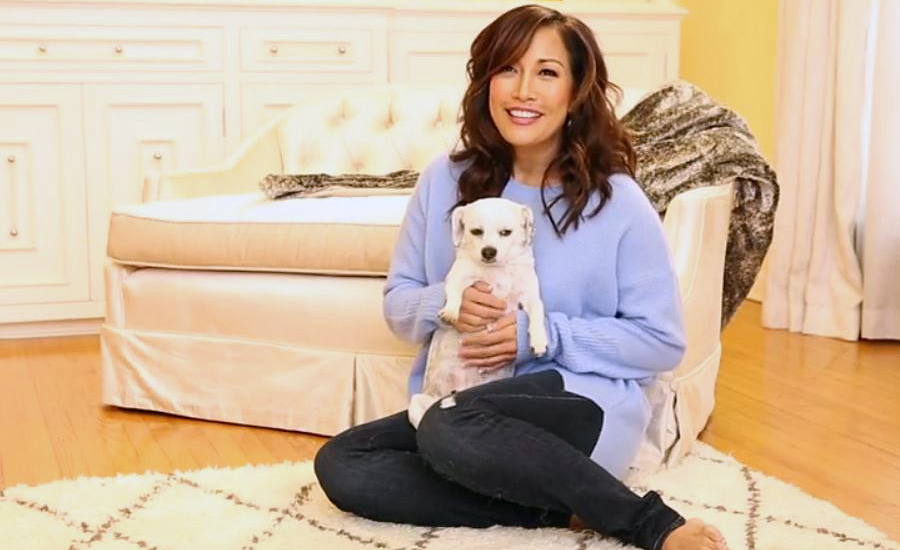
Hi, Guideposts. I’m Carrie Ann Inaba. You know me from Dancing With the Stars, and I am also a huge animal lover.

This is Lola, my little munchkin. I have three dogs and three cats. I remember reading about a celebrity that was really famous and she had an animal sanctuary, and ever since I was young, I was, like, “I’m going to become a celebrity, so I can save animals.” I kind of did it backwards, but now I’m able to help animals, and I started my own foundation called the Animal Project Foundation in 2012, when my first rescue, Shadow, passed away. He was a cat.

Inspiration from the Garden in article ad

My three dogs are just incredible. I have today with me Lola and Buddy and Peanut, and they’re wonderful. Animals love you no matter what, and it’s the most beautiful thing in the world. It’s the most healing thing in the world, because life is filled with ups and downs and trials and tribulations and when you come home to an animal, they just are always the same. They love you no matter what you do.

I was actually doing a television show and I was promoting animals, and the rescue put her in my lap because we were trying to get them all homes. The rescue was Best Friends Animal Sanctuary, which does great work and I work with them all the time. They put Peanut in my lap, and we’re trying to get them adopted out and no one adopted Peanut. This is what happens a lot with black dogs and black cats, actually. It’s something that people don’t know about, but black dogs and black cats have a harder time getting adopted out because it’s hard to catch their expression in their face with the photograph, so people aren’t as interested in them and people are sometimes still afraid of them.

I was diagnosed with an autoimmune condition a few years back. It started with my back. I was diagnosed with spinal stenosis and I had to have a little surgery to take care of it. At that time, my health just went downhill. Now, I was a dancer my whole life, so health was never a problem. I guess I kind of took it for granted.

When all of these things happened, this is when I brought all the animals in. They helped me through it in so many ways that it’s hard to describe, but one of them was, every morning I had to get up and take care of them because they needed me. They taught me that I was stronger than I thought I was.

The way they loved me on the days that I had to stay in bed all day, as well as the days that I was out and about and wild and having fun with them, it was always the same. Their love for me and my love for them never changes. To me, that’s what God’s love is.

They teach me things. Sometimes they’re challenging, just like life is challenging, and yet I always know that everything that happens is for a better life. A happy moment. Or not a happy moment, but like a happy ending. I think life is really just the journey to a happy ending, and that’s the way I like to live and that’s the way I hope everybody likes to live.

How God Transforms Our Anger

I was furious with my husband. It was the sputtering kind of anger that (fortunately) made it impossible to put feelings into words. As I stormed out to burn off my adrenaline with a bracing walk, a Scripture verse popped into my head. “‘My thoughts are not your thoughts, neither are my ways your ways,’ declares the Lord” (Isaiah 55:8).

Hmmph! I thought, Well that’s obvious! The odds that God would be thinking what I was thinking about my spouse were exactly zero. 

Go For It In Article Ad

I strode down the street at a vigorous pace. By the time I’d walked two miles my head was notably clearer. 

The Bible verse came back to me. “‘My thoughts are not your thoughts, neither are my ways your ways.” I wondered why this particular passage was on my mind. I asked God to tell me.

Not coincidentally, it then occurred to me that if God could look at the upsetting situation from another perspective, so could I. 

I sighed, and asked Him to point me in the right direction. As I replayed the sequence of events with a more open mind, my perspective slowly shifted. It was clear part of my anger arose from how my own fears and expectations played into the situation. I began—or at least tried to begin—to see my husband’s actions from a viewpoint of love and compassion. It was possible.

I turned around to go home. Without all that anger keeping me warm, the freezing air suddenly felt cold. Home seemed like a good place to be.

How God Gave Me a Grateful Dog

This being Thanksgiving week, I’ve been wondering if dogs possess the capacity for gratitude. When your dog snatches a treat from your outstretched fingers, is she thankful or does she simply think she is getting her due? One expert I consulted was skeptical. Most canine emotions, he maintains, are connected to their primal drives, like fear, contentment, anger, jealousy and happiness. Being grateful is an abstract leap dogs can’t quite manage.

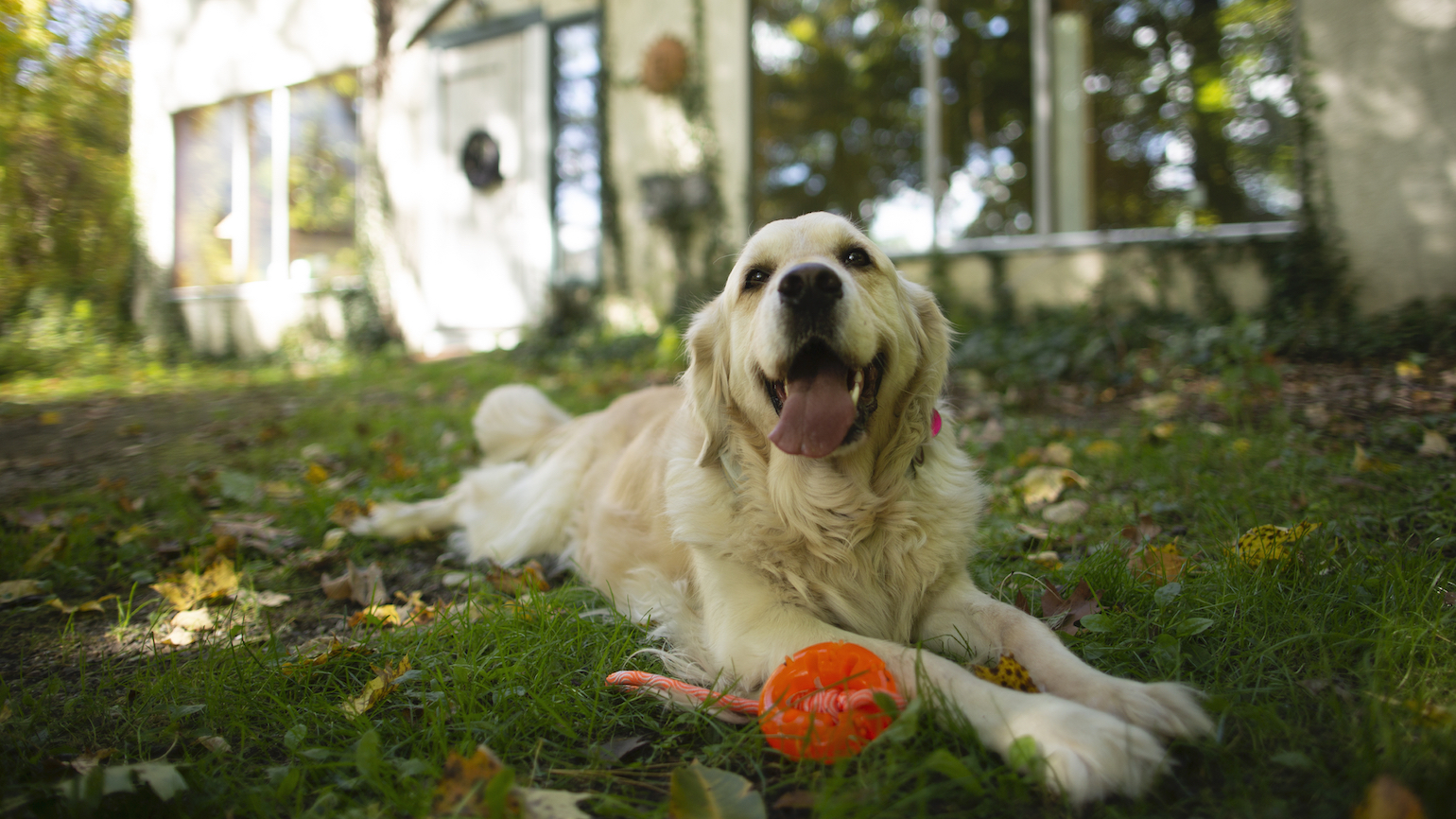
Well, I beg to differ. God gave me a grateful dog. Gracie may live in the moment but that doesn’t mean she isn’t grateful for the moment, that her awareness lacks that astuteness. Today, for instance, we were on a trail when we reached a section where I liberated her from her leash. Before rocketing up ahead, she paused and looked back. That look said only one thing: Thank you for the freedom. Then she was off, kicking up her hind legs like a colt and disappearing into the trees.

Journey With Jesus in article ad

I have one more example for those naysayers who claim a dog can’t be thankful. At mealtimes, my wife Julee sets a place for Gracie on the floor next to her chair—a bowl waiting to be filled with bits of lean protein Julee dispenses from her plate. I do not share with our dog from the table but that’s another story.

At the end of every meal before I get up from my chair, Gracie lays her head on my thigh. This is not begging since she knows it would be to no avail. No, this is what Julee calls a hug. You see, I do most of the shopping and cooking. Gracie is well aware of this. She watches me intently, carrying in the groceries, grilling the meat, tossing the salad and serving the meal. She understands my role. After the meal is concluded, she lays her head gently on my thigh and looks up at me. More often than not she erupts with a guileless little burp. I know she is saying thank you.

This week I am grateful to Gracie—and to God for giving me such a demonstrably grateful golden retriever—for being a reminder to focus on my blessings in the wake of this heartless year when it would be too easy to surrender to pessimism and even despair. Gratitude is an experience of the moment, an instant when God’s grace becomes visible in your life. May you all, my friends, find much to be grateful for this Thanksgiving.

How Former NFL Player Rashad Jennings Connected With His Dad

Presidents’ Day weekend in my third semester at the University of Pittsburgh, I went home to Virginia to see my folks. I couldn’t wait to show them what I’d been awarded. Only four freshmen had ever started as a running back for Pitt, and I was one of them. “Look, I got a letterman’s jacket!” I said. I pulled it out of my duffel bag and held it up so Dad could see the golden P stitched on the chest.

“Shad, that’s fantastic!” Mom said.

New Every Morning Journal In Article Ad A

Dad barely took his eyes off the TV. “So?” he said. My heart sank. Dad had earned a full scholarship to play college football. My brothers, Butch and Bryan, 14 and 10 years older than me, played in the NFL. Dad knew what it meant to letter at a Division I school. “What do you want me to do?” he muttered. “You still ain’t in the pros.”

My whole life, I’d wanted my dad to be proud of me, but nothing ever seemed good enough. I used his taunts to push myself—overcoming weight issues, asthma, a learning disorder. I’ll show him, I told myself. My brothers mentored me athletically, academically and spiritually. From them and from the Bible, I’d learned about the love of my Heavenly Father—a love that I didn’t have to earn, that was freely given. But it didn’t stop me from longing for my dad’s approval.

Dad spent the rest of the weekend watching his TV shows and guzzling beer. I shook off my disappointment and went back to Pitt.

A month later, Mom called, her voice strained. “Are you okay?” I said.

“I am,” she said. “But Dad isn’t. His diabetes has gotten worse. The doctors are amputating his leg next week.”

“I’m coming home,” I blurted out. “You’re going to need help.”

“No,” Mom said. “Butch and Bryan are here. You stay focused on school.” I hung up. I thought of all the times Dad had laughed at me, dismissed me. When I was 13, I’d confronted him about how his smoking aggravated my asthma. “You honestly think you can make it to the NFL without smoking or drinking?” he said.

“Dad, to prove you wrong, I’m never going to drink or smoke,” I said. I weighed 265 pounds then and was riding the bench for my school team. But none of that mattered. Butch had played for the New York Giants. Bryan was a tight end for the Tennessee Oilers. I was going to be like them. Nothing was going to stand in my way.

Now, six years later, the NFL was within reach. But the idea of my family caring for Dad while I chased my dreams didn’t feel right. Even if it cost me a shot at the pros, I was going home.

I transferred to Liberty University, a Christian college near home, in the fall of 2006. Its football program was a huge step down from Pitt’s, but football was no longer my top priority. Every Sunday and a few times during the week, I went home. I helped Dad in and out of the wheelchair-accessible van they’d bought. I brought him food. I helped him exercise his good leg.

He criticized everything I did. Never thanked me. Never acted glad to see me. Couldn’t he at least acknowledge my sacrifice? When Butch or Bryan was around, he was different, making jokes, asking how they were doing. “How’d you get to be Dad’s favorite?” I asked Butch. “What do I need to do?”

“It’s not you,” he said. “It’s what happened to him. Dad never got to play college ball because he joined the Air Force to support himself, Mom and me. Some stuff he saw in the military…affected him. He had a breakdown and got a disability discharge. He couldn’t get a job after that. At first, with Bryan and me, he seemed okay. But he got depressed. Started drinking. Got diabetes. And now his leg. When he sees you succeeding against the odds, I think it makes him feel worse about himself.”

I was stunned to hear that. I’d known bits and pieces of Dad’s history, but I’d never thought about what he had lost, his dreams, his self-worth. I’d been focused only on myself.

Now I saw his pain went beyond the physical, and that made me try harder to engage him.

One day we were watching the Redskins-Cowboys game. “I’ll bet you $2 million Dallas wins,” I said.

Dad looked at me. “You don’t have $2 million.”

“What, you afraid to bet?”

He laughed. “You’re on,” he said. After that, every game we watched we made ridiculous bets. It became a running joke between us.

Dad changed too. He didn’t get all warm and fuzzy, but the edge wasn’t as pronounced. He laughed more easily. Was more accepting of my help. Our relationship was growing, and I was sure this was where God meant for me to be.

On the football field, I set conference records for most rushing yards and touchdowns. I played in the Senior Bowl, a chance for top collegiate players to show their stuff in front of NFL scouts. I killed it in that game and was named MVP. I breathed a prayer of gratitude, hoping I’d made enough of an impression to get to the pros.

That spring, a week before the 2009 NFL draft, we had a party at the house, a great day of eating and playing spades. But the draft was all anyone could talk about. That night, after everyone had gone, Dad and I were sitting in the living room watching reruns of Sanford and Son. Dad caught my eye. “It doesn’t matter if you make it or not,” he said. “I’m proud of you.”

I was 23, but I felt like a little boy again, and that boy pretty much melted. All my life, I’d waited for those words.

A week later, I was drafted in the seventh round by the Jacksonville Jaguars, the 250th player chosen. Before I left for training camp, I bought a white T-shirt and asked everyone in my family to sign it. Dad signed in big bold letters. I wore that shirt under my uniform in every game.

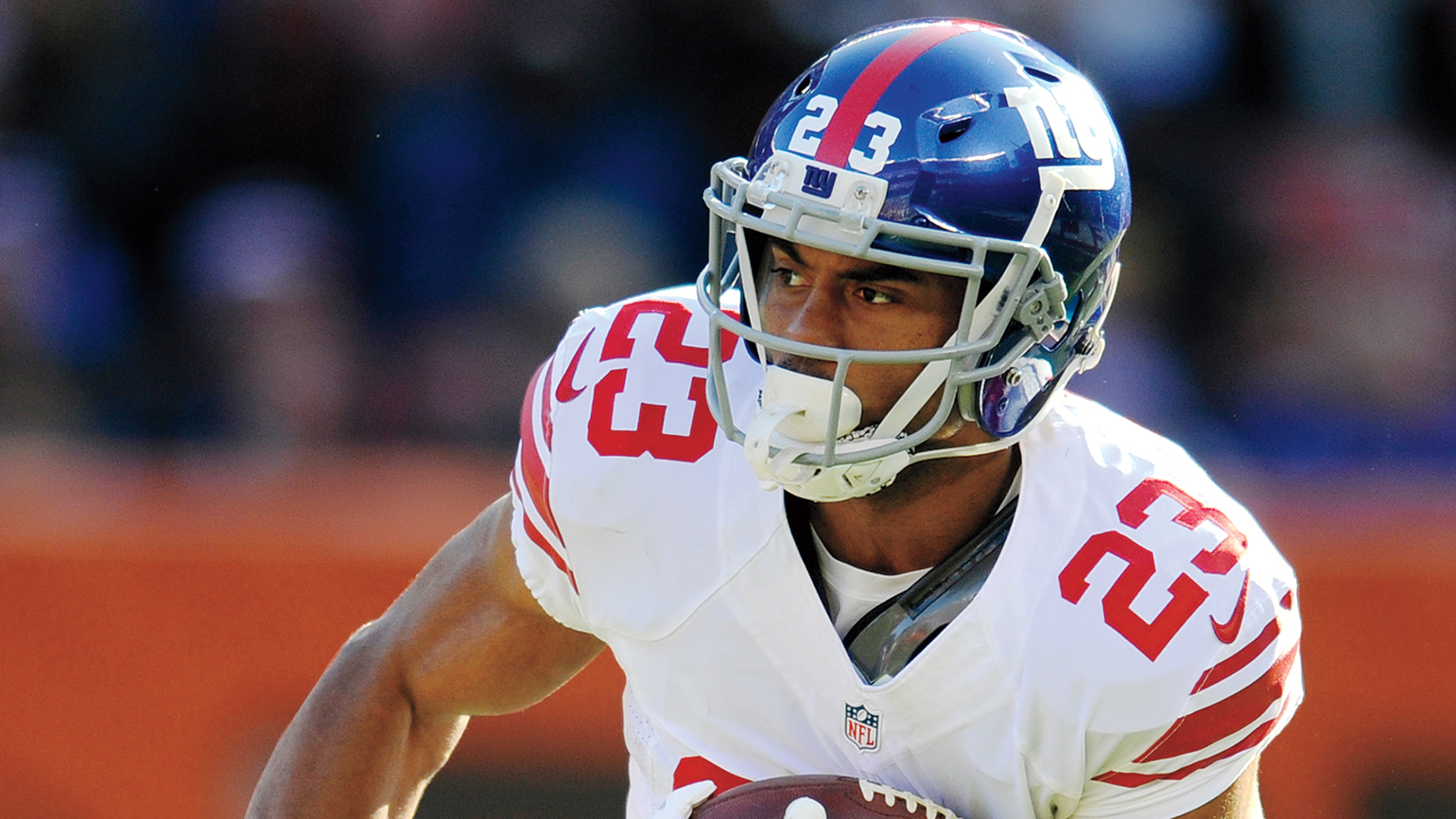
My first four years in the NFL, I was hindered by injuries and had to work harder than ever to keep my job. In the end, the Jags didn’t renew my contract. I signed a one-year deal with the Oakland Raiders. Finally the pieces came together. I was named the team MVP, my 700 yards rushing getting the attention of other teams. In 2014, I was signed by the New York Giants.

I was living my dream. But with his health issues, Dad had made it to only one of my games. It seemed like the connection I’d made with him after moving back home was slipping away.

The Saturday before our third game, our team gathered for meetings, meals and chapel. At dinner, I asked my teammates, “Why do you play?” One by one, the guys answered. For the physical challenge. For love of the game. For a coach who’d inspired them.

Then it was my turn. I took a moment before answering. “I play for my dad,” I said. The other guys looked at me intently. “We haven’t always gotten along….” I told them everything, how we’d both changed with God’s help, how important it was for me to feel his pride in me. I wished there was some way for Dad to know how much he meant to me too.

Before the game, my family called. I asked Mom to put Dad on the line. “I’m dedicating this game to you,” I said.

“Aw, thanks, Shad,” he said.

“I mean it, Dad,” I continued. “Every down, you’re going to be on my mind!”

Dad chuckled. “Go kick butt,” he said.

That day, I rushed for 176 yards, a career high. After the game, the ESPN interviewer asked me what my secret was. “I played this game for my dad,” I said. I told about her about him losing his leg, how I wanted to use my body to honor him.

When I left the stadium, I called Dad. “Rashad, I’m so proud of you,” he said. Maybe our relationship would never be perfect, but I would never doubt that he wanted the best for me.

ESPN was so inspired by my interview that it arranged to bring Mom and Dad to a game to surprise me. One of the greatest moments of my career.

My final year in the NFL, Dad’s other leg was amputated. He called me every day from the nursing home where he was staying for rehab. He was in a lot of pain and struggling emotionally. I felt helpless, not being there physically.

“Dad, I know how hard this is on you,” I told him one night. “I’d like to pray with you every night before you go to bed. Would you like that?”

“Yes, Shad,” he said.

Every night I called him. I prayed for him, his caregivers and our family. At the end of our calls, Dad would say, “Love you, man.”

And each night, from the bottom of my heart, I’d say, “I love you too.”

For more inspiring stories, subscribe to Guideposts magazine.

How Counseling and Faith Helped Heal Meredith Andrews’ Marriage

It’s been three years since Christian artist Meredith Andrews has put out new music but her latest album Deeper may just be her most personal yet.

That’s because the two-time Dove Award winning singer was writing the record while in the trenches of one of the most difficult seasons of her eight-year marriage to husband Jacob Sooter. The pair, who have three children and teamed up to write songs for Deeper, found themselves at a crossroads in their relationship just one year ago.

Witnessing Heaven In Article Ad 827x123

Stress from adding two babies to their family, moving from their home base of Chicago to Nashville and the demands of Andrews’ music career had the couple questioning whether they would actually be able to make “happily ever after” work.

“There were days when I was like ‘I don’t even know who you are’ and he would say the same thing about me,” Andrews shares with Guideposts.org. “There was some brokenness and hurt in our past that we never really dealt with.”

They reached their breaking point just a few days before Valentine’s Day last year. Contemplating spending time apart and fresh from a fight that morning, Andrews received a call from her husband, asking her to meet him for a lunch date at Whole Foods. She was greeted with flowers and a proposition – a weekend getaway to reconnect as a family. Sooter had planned everything, booking a cabin in Tennessee and canceling her scheduled worship talk at a church in Chicago.

“He looked at me with tears in his eyes and said, ‘I’m not going to lose my family,’” Andrews recalls. “He was like, ‘let’s just go away and remember why we are family and why we love each other.’ That was the turning point.”

Old wounds didn’t miraculously heal over night. Andrews says the couple had to unlearn how they treated each other in the past.

Find Hope, Inspiration, and More in our Free eBooks

They leaned on friends and family for support, speaking with leaders in their church and eventually making the decision to go to counseling, something the singer admits they should’ve done much earlier.

“Going to counseling was just like hitting the reset button for us,” Andrews says.

She thinks it’s something every married couple should do, whether you’re going through a rough patch or not.

“The thing is, we waited until we were on life support to go to counseling. We should have gone to counseling when everything was fine,” she says. “Granted, the Lord used everything that we walked through but for anybody else, save yourself some heartache and just go to counseling as a preventative measure.”

She also wants couples to know that the idea of a “perfect marriage” is just another harmful image fed to us by the media.

“The picture we get from our culture is not a picture of real love,’ Andrews says. “It’s ‘infatuation’ or it’s ‘you make me happy’ when in reality, relationships are meant to make us holy. They pull out the best and the worst in us.”

She’s also learned that saying “no” is sometimes the best thing she can do for her family.

“I was wrestling with something inside of me that felt the need to say yes to everything,” Andrews says. “Whatever I’m giving my ‘yes’ to, I’m giving my ‘no’ to my family. The last three years especially the Lord has been showing me what it means to be healthy and be able to say ‘no’ when I need to say no so I that I can give my best yes, my sacred yes [to my family].”

Try These Self-Help Books to Reach Your God-Given Purpose

Now happily on the other side, Andrews hopes Deeper can help other couples struggling with some of the same issues that once plagued her own marriage.

Every valley made me lift my eyes up/Every burden only made me stronger/Every sorrow only made Your joy go/Deeper and deeper, deeper, and deeper, are the lyrics to the title track she wrote with her husband, and a testament to the couple’s newfound strength.

“I believe these songs are gifts to us just to carry us through,” the singer says. “Just to get us a step further down the road and give us hope in the midst of those hard seasons.”

How Chickens Brought Her Closer to Her Teenage Granddaughter

I checked my phone again. Still nothing from my 13-year-old granddaughter, Noelle.

Why won’t she return my text messages? I wondered.

A Journey of Faith In Article Ad - Avail Now

Noelle—I called her Noe—was my youngest grandchild. From the moment I laid eyes on her as a newborn and she gazed back at me, Noe captured my heart.

For years, Noe and her family lived close by, and she and I spent a lot of time together. It made my day to see Noe’s face light up whenever I arrived. She parted her long blonde hair straight down the middle. A perfect frame for her adorable grin.

Then my husband and I moved to a different part of the San Francisco Bay Area. Mileage-wise, it wasn’t an impossible distance. But with traffic it now took up to two hours to drive to Noe’s house.

Combine that with the pandemic and my regular visits with Noe came to an abrupt end. The last time I saw her, she was beside herself with excitement about the latest addition to her life: Golden, a baby chick her mom bought for her to raise in the backyard. Golden was just like her name, a fluffy ball of bright yellow down, soft as a dandelion.

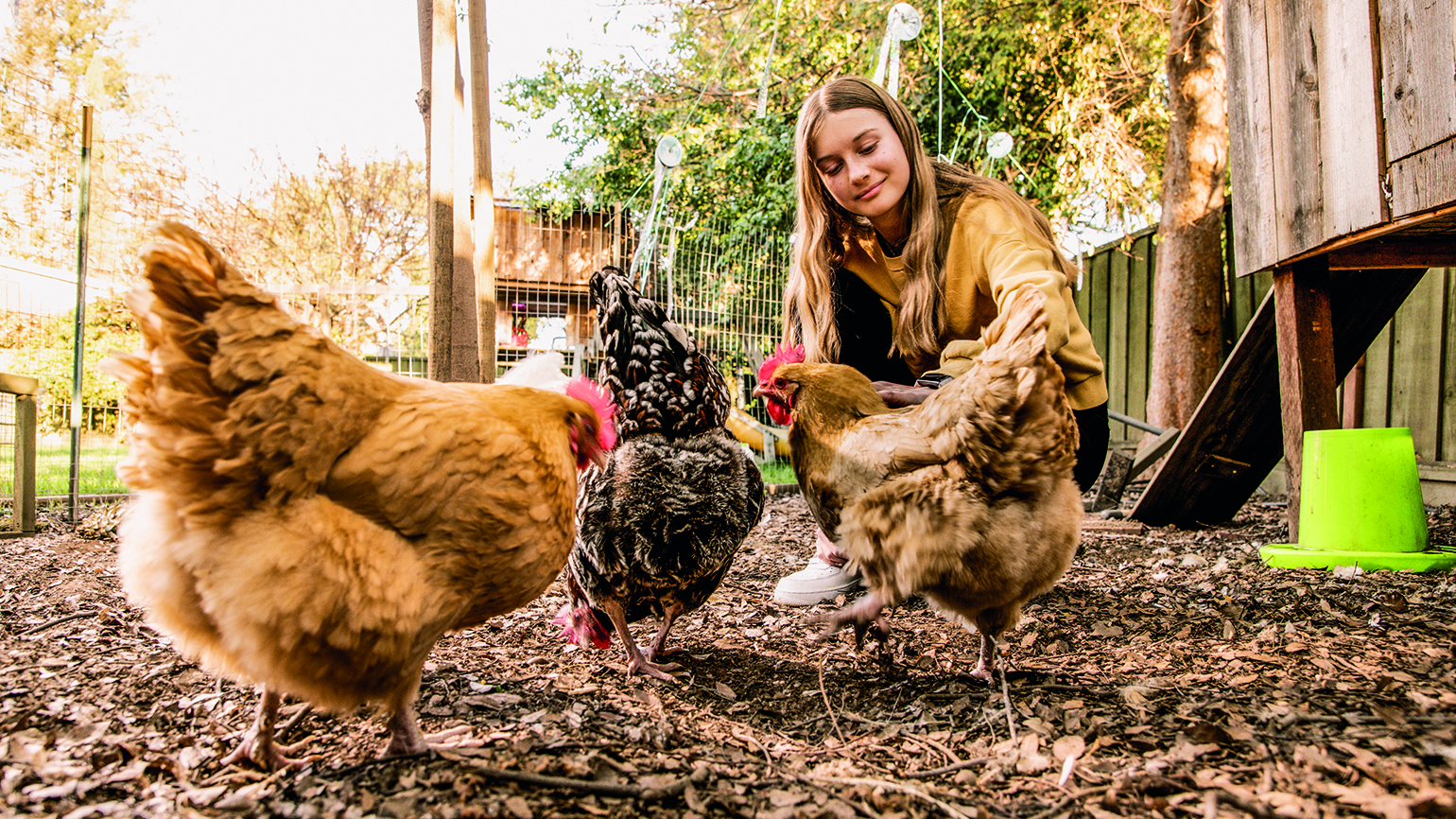
   Sandi and her grandaughter, Noelle. 

For a while, Noe and I kept up via text messages and occasional phone calls. Gradually, her text replies took longer to arrive. Phone calls became brief and a bit awkward.

“How’s online school going?”

“Okay, I guess.”

“What’s your favorite subject?”

“Dunno.”

Nothing I tried seemed to break through Noe’s sudden wall of indifference. What was I doing wrong? Was she okay? Did she even miss me?

Noe got five more chickens during lockdown. I asked about them every time we talked. But caring for the chickens seemed more interesting to her than talking to me. She was often busy with them and didn’t come to the phone when I called the house.

Was I being supplanted in my granddaughter’s heart by a bunch of…chickens?

My cell phone pinged. Noe! But there were no words in the text. Just photos. Noe on her bike with a chicken in her lap. Noe on her scooter with another chicken. Noe and a chicken watching TV on the couch.

Humph. Those were all things she and I used to do together. God, I prayed, I don’t want to be jealous of a flock of chickens. Show me how to connect with my granddaughter.

Months passed with barely a word from Noe. At last, everyone in our family was eligible for a Covid vaccine and my husband and I could schedule a visit to Noe’s house. I couldn’t wait. I pictured scooping up my beloved granddaughter in my arms like I did when she was little.

Then I remembered the chickens. She would probably be too busy with them to bother giving me a hug.

We pulled up to Noe’s house. Out she came with the rest of her family.

Who was this girl? My eyes widened. Last time I saw Noe, she was 11. Nearly two years later, she was a teenager on the way to becoming a young woman. She was taller. She looked older. Her face wore an expression that somehow seemed to combine independence with acute self-consciousness.

She reminded me of her mom, my daughter Kris, when she entered adolescence. Overnight it seemed Kris switched from sitting by my side and sharing her thoughts to keeping everything to herself and telling me to butt out. She was present yet absent, her mind elsewhere.

All at once it was clear. I hadn’t been replaced by chickens. Our relationship had not been severed by the pandemic. I hadn’t done anything wrong.

Noe was a teenager. Her lack of communication with adults was totally normal for someone her age. It was me who’d been holding on to unrealistic and outdated expectations. I needed to let go and embrace this new stage in my granddaughter’s life.

“Show me your chickens,” I said to Noe. She promptly led me to the backyard, where the henhouse was.

“How in the world do you tell them apart?” I asked when I saw the half dozen fluffy birds pecking contentedly around the yard.

“Easy, Grandma,” she said. “They all have different personalities.”

One by one she introduced me to her feathered friends, giving detailed descriptions of their preferences and antics. It was more words than we’d exchanged in a year.

“That’s Beep Beep,” she said as an especially friendly chicken bobbed its way to my feet. “She’s the sweetest. Bock Bock over there is the leader and likes to strut the coop and boss around the other hens. Missa here gets jealous. That one’s Golden. She’s my favorite but she’s kind of fearful…”

Noe went on. Suddenly she said, “I know, let’s take the chickens for a walk. I’ll let you walk Golden.”

I looked at her curiously. Chickens go for walks? Apparently they do.

Noe draped halters over the chickens and handed me a leash. Golden cocked her head at me as if to say, “I’m ready.”

We walked through the neighborhood, attracting a few quizzical looks. Noe watched over the chickens like—well, a mother hen. The longer we walked, the more she opened up about the rest of her life. How boring it was attending online school. How much she missed seeing her friends spontaneously.

“This is fun,” she said, flashing one of those Noe grins I so loved.

It sure was. I said a silent thank-you to God. And to the chickens. You never know who’s going to teach you a lesson in letting go and accepting change. I looked forward to many more walks and talks with my granddaughter—and her adorable, feathered friends.

For daily animal devotions, subscribe to All God’s Creatures magazine.

How Boundaries Can Set Us Free

No one wants to intentionally hurt their dog, least of all me, I like to think. I never use harsh discipline. Never hit. Most of what I need to communicate, positive and negative, I do with tone of voice and the occasional lecture. But this weekend I had to deliberately administer corrective pain to my sweet, one-year-old golden retriever, Gracie. Believe me, now I know what parents mean when they say to their misbehaving kids, “This hurts me more than it hurts you.”

Except Gracie wasn’t misbehaving. I was setting her up and putting her in a situation where she would be punished by a jolt of electricity through no fault of her own.

You Got This In Article Ad

Read More About the Dogs in Edward’s Life in His New BookAlways By My Side

It was time to train her on the underground boundary fence that we’d put in for our late golden, Millie, eight years ago that delivers an electric shock through a special collar if your dog wanders too close. It defined about an acre or so of land where Millie was allowed to roam free. Back then the fence guy did the training as part of the installation. He had no emotional investment. He went around test-shocking dogs all the time. It was his job to show them their boundaries. I just watched. And still it was difficult when Millie yelped. It only took once but I couldn’t bring myself to even look. Now I would have to do it myself, and I wasn’t sure I could. It felt like a betrayal of Gracie’s trust in me, hard-won trust as any dog owner knows.

I kept telling myself it was the right thing to do, a small price to pay if it meant keeping my dog from dashing out in the road and being hit by a car or roaming up into the woods and having a nasty run-in with a porcupine or a pack of coyotes. Gracie is so innocent. She’d assume a skunk would just love to play with her. Still, I was beginning to feel more and more like a coward when it came to taking the final step.

Paws from Heaven: True Stories of God’s Amazing Animal Angels

First I had to restore all the marker flags along the fence line, about a hundred and fifty of them, a number of them way up in the thorny thickets in the wooded hillside above the house. There were stretches where the old flags were completely gone and overgrown. To locate the fence line in those areas I brought along the dog collar with the battery pack and prongs that transmit the shock. When I felt the shock I knew where to put a new marker flag. I must have shocked myself a dozen times—it hurt—finding the wire, a kind of pre-penance, I suppose. In a perverse way it felt good. I deserved it. It felt just. I felt like behaviorist B.F. Skinner himself.

Then came the first part of training. This involved putting Gracie on a leash (but not the electric collar) and then charging a group of flags and yelling “No! No! No!” as we got up close to them and rushing her back. I then hugged her and praised her to the skies. I liked this part of the training so much I kept doing it long after Gracie got the point, which was after maybe three times. Finally she refused to charge, looking at me as if to say, “I get it already. You don’t like the flags. Now I’m bored.” I believe dogs often think we humans are crazy but I think Gracie thought I was crazier than usual that morning.

That was enough for one day, I decided magnanimously. Gracie and I hiked up East Mountain and had a late lunch at the top. I imagined I could see the little red flags fluttering down on our property and thought about boundaries that are placed on us…by our parents, our teachers, our families and communities, our jobs and professions, our marriages and friendships, the boundaries we place on ourselves. And especially the boundaries God imposes on us. What are the Ten Commandments if not a definitive set of boundaries for our behavior? Where would we be without boundaries? And that jolt of guilt when we cross them, isn’t that our conscience sending us a corrective reminder, a little zap? 

I knew where Millie had gone without boundaries, by the way. The underground electric fence worked like a dream with her, and I assumed she had fully internalized the limits of her yard. She had a GPS map in her head. She never had a problem. Smart dog. Good dog. Perfect dog. I always put the zap collar on her anyway and checked the system before letting her out. The whole thing seemed like a formality, though. Until one day when she was a mature seven, and I ran into a neighbor from down the road who couldn’t wait to tell me how nice it was that Millie was coming to visit her new puppy in the evenings.

I marched right home and confronted my golden. “What are you up to?” I demanded.

I called the fence guy who said the battery in the collar was probably dead so I put in a new one. That night we let Millie out as usual. A few minutes later I heard a distant yelp. A few minutes after that Millie stalked into the house with what I swear was a look of supreme indignation on her face.  So even the sainted Millie had a sneaky and deceitful aspect to her, perfectly willing to test limits and break boundaries…and doing it at night so we couldn’t see her! I couldn’t have been more surprised yet it pleased me no end that Millie had a mind enough of her own to explore the status quo in secret. I was glad she wasn’t perfect. I respected her for it though she was never going to get away with it again.

The day after flag practice it was time to apply the “correction.” I hated the word because Gracie hadn’t done anything wrong that required correcting. I put the collar on her, adjusting it so the prongs made contact with her skin, apologizing like a fool and promising many treats. I led her up to the flags near the driveway. She looked at me like, “Not this again.” I moved her closer, closer. She didn’t yelp. Instead she leapt up in the air, this 70-pound pup, about a foot off the ground, like a startled cat. I caught my breath. She shot me an urgent look, a knowing look, rushed to my side and pressed hard up against me, tail swishing slightly, as if to say, “Oh, that’s what the big deal is about the flags!”

No anger. No fear, even. Just this kind of understanding, as if all the pieces had fallen into place, as if she had been wondering about this flag madness all along. I took her leash off and set her free. She glanced at me a couple of times questioningly—what, no leash?—then took of flying around the yard in joyous circles, running, running, running.

I sat in the weathered seat of an old wooden swing attached to a high branch of an ash tree and began to swing. Gracie gamboled around the yard. At one point she veered a little close to some flags and changed direction quite athletically in mid-stride. Beautiful, simply and utterly beautiful to behold. I swung higher and higher, perhaps pressing my own boundaries, seeing her turn circles from above, delirious to be running wild. Only then, as I kicked my legs and reached the upper limit of the arc of the swing, did it finally strike me that it is sometimes boundaries that set us free.

How Becoming American Helped Her Honor Her Past

I stood in my bedroom closet, searching for the perfect outfit. The big day was coming, and I wanted to look my best. Did I own anything red, white and blue? All of my most colorful outfits were Indian. I didn’t want to look too Indian. Then again, I didn’t want to turn my back on my heritage either.

I was born and raised in Tamil Nadu, India. In 2002, when I was 18, my father, a diplomat, was assigned to the United Nations in New York City. I moved to New York, married an American and settled in Oklahoma, where my husband, Destry, had been raised.

NIVFLB Inarticle ad

After 16 years in America, I was about to make my relationship with my adopted home official. In just 48 hours I would become an American citizen.

I’d been preparing for this moment for a long time. I applied for my green card soon after marrying Destry. More than a year ago, I began the naturalization process, sitting through interviews with immigration officials, undergoing background checks and filling out forms. I felt certain this was what I wanted to do.

So now that the ceremony was just two days away, why was I so nervous? Why couldn’t I even decide what to wear?

In many ways, I was already American. As co-leader with Destry of an on-campus ministry at Oklahoma State University, I was learning the American culture of college students. Destry and I lived in a two-story house on one and three-quarter acres, surrounded by pecan trees and a cotton field. Our son, Obadiah, almost a teenager, rode an ATV for fun. Among his favorite foods were hamburgers and macaroni and cheese.

Destry and I had made a good life here. And yet, as I tried to pick out an outfit for the citizenship ceremony, my eyes kept lingering on my Indian, not American, clothes. I held up a red and white churidar flecked with blue, a traditional outfit combining a knee-length dress with tapered leggings.

The colors were American. But I cherished this churidar because it reminded me of India. It was a Christmas gift from my father. The fabric was embedded with tiny flashing mirrors that reflected my skin, which was dark even by Indian standards. Staring at the churidar, at my skin, I realized that, no matter how American my life was now, in many ways I would always be Indian.

Was I ready to give that up? Was I really an American? When I took that oath in two days, would I be abandoning my Indian family and culture?

Suddenly I had no answer to the most basic question: Where is home?

This shouldn’t be so hard, I told myself. Compared to friends who’d become American citizens, I’d had it easy. I’d never had to endure financial struggle, job discrimination or separation from a spouse. I’d always felt welcome.

I thought back to my first visit to an American grocery store, near the diplomatic residence in Manhattan where I lived with my father, sister and stepmother. I’d been mesmerized by the store’s giant cheese section. I couldn’t believe the options!

Growing up in India, I had been raised not just by my parents but by members of my large extended family. My paternal grandmother, who lived with us after we moved to New Delhi, often took me with her in the morning to buy produce from the vegetable seller’s rickety four-wheeled cart. At most the cart held 10 kinds of vegetables.

Granny taught me how to check the firmness of an eggplant, the ripeness of a tomato, the freshness of coriander. The choices were few, but the smells and textures were rich. My favorite was the mangoes. So juicy, bursting with flavor.

I had no idea how to approach the grocery store’s wall of shrink-wrapped cheese. I clutched the shopping list my stepmother had given me. Bewildering!

“Can I help you?” a store employee asked. She patiently explained the different cheeses and guided me through the market. She seemed just as curious about me as I was about her store.

That set the tone for my life in the United States. Mostly I have found Americans to be friendly and inquisitive. Spontaneous conversations about my clothes, my accent or my food have led to lifelong friendships. I’ve met people from all over the world and enjoyed my first tastes of Mexican, Thai, Peruvian and Italian food.

I’m not naive. I know many immigrants to America face hardship, even hostility. I can only thank God my own path has been so smooth.

Indeed, in many ways, America has offered me more—not less—freedom and cultural opportunity. In India, my dark skin was discussed frankly as a barrier to a good marriage. My status as a woman also presented challenges.

India is the world’s largest democracy, and a woman became its prime minister in 1966. My mother was highly educated and worked as a magistrate until she died when I was 12. I was encouraged to pursue high academic goals. But I also understood that it would be awkward culturally for my future husband if I had more education than he did. So a graduate degree would limit my choice of partners. Though I have always yearned to serve God in everything I do, there were few leadership opportunities for women at the churches I attended growing up.

I met Destry at the on-campus ministry he was starting at my Manhattan community college. I volunteered to help with the ministry, and I was stunned when, at the second meeting of our Bible study, Destry asked me what I planned to teach.

“Me?” I asked.

“Sure,” Destry replied. “We’re co-leading this thing. I figured we’d trade off teaching sessions.”

Destry and I married in 2005. Our first and only child, Obadiah, was born three months premature. By that point, my father had been called back to India. Destry and I needed lots of support from extended family as we cared for a premature infant. We moved to Destry’s hometown in Oklahoma.

I grieved over the distance from my Indian relatives. But Destry’s family welcomed me warmly. Every Sunday after church, we went to Destry’s grandmother’s house for lunch. She fed us a home-cooked American meal and told me stories about growing up in Oklahoma. Her tales of eating wild blackberries reminded me of plucking mangoes straight from the tree.

Obadiah’s premature birth forced me to abandon my college education a few months shy of my bachelor’s degree. The Christmas after Destry and I arrived in Oklahoma, his aunt Tanya took me aside and said she felt as if God had told her to help me finish school.

For almost a year, she drove me an hour each way to the nearest public university. Aunt Tanya looked after Obadiah while I was in class. In 2009, I graduated with a degree in molecular and cell biology and went on to earn a master’s degree.

So many wonderful American memories! Those experiences had fortified my desire to become a citizen. Were they enough to compensate for everything I was leaving behind? I walked out of the closet, unable to settle on an outfit.

Over the next two days, my sense of loss only increased. Who would teach Obadiah to pick fresh vegetables from the vegetable cart? He still didn’t know what a real mango tasted like. No offense, but American mangoes just don’t compare.

Destry and I couldn’t manage regular trips to India. We saw my dad whenever work brought him to the U.S. But it wasn’t the same as being surrounded by relatives at Granny’s house. When Destry, Obadiah and I finally did make the journey to India, I would have to go through customs as a foreign citizen.

The day of the ceremony, Destry, Obadiah and I woke early for the 65-mile drive to the U.S. immigration office in Oklahoma City. At last, I settled on a compromise outfit: a pink dress neither too Indian nor too American. Exactly how I felt!

I lined up with the other prospective citizens. Hearing my name shouted, I looked over to a large group standing in the visitors’ line. Aunt Tanya was there. Destry’s mom and her best friend. Leaders at the campus ministry. Some people had driven three hours to get there.

I was ushered into a room with 47 other immigrants, and an official explained the oath-taking procedure. Then we filed into another room where the ceremony would take place.

It was a plain room with an American flag and a replica of the Statue of Liberty. Our friends and family were seated in back. Immigrants stood at the front and recited the oath of citizenship in unison. Then everyone recited the Pledge of Allegiance.

An official called each of us forward by name to collect our naturalization certificates.

“Cynthia Dobbs,” he said. The room erupted with cheers. I stepped forward, received my certificate and before I knew it I was back in my seat. As an American!

I was still sorting through my feelings when I suddenly remembered four words from the pledge. I had recited them countless times at school events, rodeos and Fourth of July celebrations but had never noticed how remarkable they are: One nation, under God.

I was now a citizen of a country that envisioned itself under God’s protection.

Maybe the distance I was traveling wasn’t so great after all. I had been living under God’s protection all my life. That was as true here in America as it was in India. As long as I remembered that, I would always be at home, no matter where I lived.

I glanced down at my dress, laughing at myself for all the agonizing I’d done. I let myself relax and joined my family smiling and clapping.

I was Cynthia Gandhi, born in Tamil Nadu, India. And I was Cynthia Dobbs, an American citizen. I was home!

For more inspiring stories, subscribe to Guideposts magazine.
How a Shelter Dog Became a Life-Saving Hero

My new dog, Honey, trotted after me as I walked to my Toyota 4Runner that fall morning. I’d had her only a couple of weeks, but we’d become nearly inseparable. I’d gone through heart surgery a few months back. I figured taking care of a dog would keep me active. Besides, my wife’s job took her out of town a lot, and I could use the company. So I went to the local animal-rescue center. The little cocker spaniel quivering in a cage caught my eye right away. I leaned over to get a closer look. She had scared eyes. I could tell she longed to be picked up and hugged.

I went to talk to the shelter worker. “She just came in,” the woman told me. “Her name is Honey. Five months old. The owner said she couldn’t take care of her anymore.”

The Lies That Bind In Article Ad

The worker opened Honey’s cage and let me pick her up. I stroked her silky fur and cooed. She stopped shaking. The two of us went to the side yard, where I picked up a ball and tossed it. I sat down to watch Honey race after the ball, ears flopping all the way. She came flying back toward me, ball in mouth, and leaped right into my lap. That was that. I filled out the paperwork and took Honey home.

She followed me like a shadow from the very first day. She loved to snuggle on my lap while we watched logs crackle in the fireplace. The only thing better was when she kept my feet warm by sleeping at the foot of the bed.

That October morning last year I decided to take Honey with me while I ran some errands. My wife was away for a few days and I hated the thought of leaving Honey alone. I grabbed my keys and made sure I had my nitroglycerin tablets. I opened the 4Runner’s door. “C’mon, Honey. Let’s go.” She jumped into the cab and settled down on the passenger seat. I got behind the wheel and started the SUV.

It’s always tricky turning around. We live in a remote area up in the hills outside San Rafael, California, surrounded by towering redwoods. You have to drive up the mountain in low gear to get to our driveway, which is barely wide enough for one car and ends at a steep drop-off.

I twisted around and backed up slowly. Just then, a flash of sunlight blinded me. I put my hand up to shield my eyes. I felt a jolt as the left rear section of the SUV dropped. Oh, no! The edge! The car slipped in the soft soil, and rolled. I hadn’t put on my seat belt yet; I was waiting to finish turning around. Now I tumbled inside the SUV as it somersaulted down the ravine. Branches snapped. The 4Runner rolled faster. Four, five, six rolls until I heard a horrible crunch. A giant limb plunged through the roof, hit my leg and chest, then embedded in the dash. We landed upside down. I felt a searing pain in my chest. I was pinned. I looked over to find Honey. She was still in the passenger seat and, thank God, she was okay. Shook-up, though.

“Sorry, girl,” I gasped. I tried to see if I could unpin myself from behind the wheel. I cried out from the pain. It was no use. Something was wrong with my leg. I grabbed my cell phone and dialed 911. Please, God, let the call go through. The phone beeped twice. Just as I’d feared, I couldn’t get a signal at the bottom of this ravine. Now what?

I figured we were at least 50 feet down. Robin, my closest neighbor, lived a quarter mile uphill from me, and had her own driveway. There was no reason she or anyone else would drive up to my house. And even if someone did, they wouldn’t see the wreck.

My chest hammered. Calm down! I told myself. I had stents in my heart, after all; I couldn’t afford to panic. I groped in my shirt pocket and pulled out the nitro tablets. I took one out, slipped it under my tongue and took a deep breath. My heartbeat slowed. But I still had pain in my chest.

Must’ve busted some ribs.

Honey whimpered. At least I could get her out of here. There was a hole in the driver’s side rear window. It was small, but just maybe…“C’mon, girl,” I said. Painfully, I reached over and picked her up. I gently put her head through the hole, careful not to get her too close to a jagged edge. I got her fanny through and gave her a pat. “Go home, baby.” She jumped to the ground and raced up the side of the ravine.

My heart pounded like a jackhammer, so I took another pill. Maybe the horn. I tried, but couldn’t reach around the tree limb. I shouted, but knew that wouldn’t make any difference. No one would hear.

I sat there for hours. My ribs throbbed. By now I knew for sure I’d busted some. The pain was so bad. And I couldn’t feel anything in my left leg. If I ever got out of this mess, I’d probably lose it. I’d be a one-legged guy with a bum heart. And a cocker spaniel. Honey. Had she made it up the ravine safely? Had she found her way home? She hardly knew the area. What would happen to her?

The last bit of light filtering through the leaves faded away. Now, with the sun set, the air turned cold. I shivered. Maybe Honey will get help. Who was I kidding? Stuff like that only happened in the movies. “What is it, Lassie? Is Jimmy in trouble?” Honey was probably lost in the woods. And I’d gotten her into this mess! I felt my heart start racing again. Help me stay calm, Lord. You’ve given me a good life. A great wife. A great little dog. Watch over them if it’s my time. And, if not, please help me out of this. So tired. My pulse was weakening. All I had to do was close my eyes and…

Slam! I jolted awake at the noise. Was that a car door? “Help!” I shouted with all my strength. “Help!”

A voice answered, “Who needs help?” It was Robin. My neighbor!

“It’s me, Mike,” I yelled back. “Down here. Call 911!”

It seemed only minutes later I heard the throb of helicopter blades overhead. The rescue crew landed and made their way down to me. It took them 45 minutes to cut me out of the SUV and get me up the ravine. We flew to the hospital in the helicopter.

I got all sorts of tests, X rays, an IV. I’d broken five ribs, and there was internal bleeding and some serious muscle damage in my leg. “It’ll take a while to recover,” an ER doctor told me, “but you’re going to be okay.”

“What about Honey?” I asked Robin.

“She’s fine,” Robin said before they wheeled me off to my room.

I wouldn’t be going anywhere for a while, so the next day a friend brought Honey to the hospital. She got right up next to me on the bed and snuggled close. With her there, it was like my pain disappeared. “It was the strangest thing,” Robin told me later. “I got home from work and Honey was waiting for me. She got all agitated and ran in circles, like she was trying to tell me something. She was frantic.” Robin figured she’d bring Honey back to my house, and that’s when she heard me yell. How that little dog knew what to do and where to go is beyond me. She’d never been over to Robin’s house.

And here’s the kicker, maybe. One day not long ago I was looking through her papers, which the shelter had sent to me. She had a different name originally. Can you guess? Angel. But I already knew that.

Did you enjoy this story? Subscribe to Guideposts magazine.