In this inspiring informative webinar, we will be joined by caregiving experts with professional experience working with Service Members and Veterans. We’ll also address self-care for caregivers including physical, emotional,…
It’s a typical Tuesday for Cristina Zenato. She ducks below the surface of the water, the Bahamian sun alighting on the slow stream of bubbles emerging as she exhales. She’s grinning through her scuba mouthpiece, her eyes serene behind her mask. This is the place where she’s truly at peace—despite being circled by dozens of sharks.
Life has always been an adventure for Zenato. Growing up in the Congo cemented her love for animals and the outdoors. But it was her dad’s work as a military diver that ignited her passion for the ocean. Zenato fell in love with sharks at age eight and dreamed of becoming an underwater scuba ranger. “I wanted the sharks to be my friends,” she says. “I never thought it could be a real job, but here I am!”
Zenato took a trip to the Bahamas to learn how to scuba dive. Right away she knew: This was where her dream could be fulfilled. She moved there, thinking it would just be for a year. Twenty-five years later, she’s still working as a diving professional in the Bahamas. She uses a variety of skills in her daily dives. But the one that leaves people awestruck is her ability to remove hooks from sharks’ mouths.
Sharks follow fishing boats, trying to snag some of the catch. They often end up with hooks caught in their mouths, which leads to discomfort, difficulty eating and infection. Removing the hooks can be a long and dangerous process. The benefits outweigh the risks for Zenato, who believes she was meant to help these creatures. “I love being with the sharks. I’m never scared.”
Part of that ease stems from what Zenato calls “dive-site fidelity.” She has worked with Caribbean reef sharks for years. “I watch and adapt to them; I feel when they are having good days or bad days,” she says. “I’ve built a connection based on repetition and conditioning. The sharks know that I’m safe and they can relax.”
Hook removal is just one facet of Zenato’s shark conservation efforts. Sharing her knowledge—with the public, several Bahamian organizations and others—is an ongoing task. She was instrumental in convincing the Bahamas to make their waters a shark sanctuary in 2011 and has helped promote shark tourism by training local divers and leading her own dives and diving courses. “I hope that by allowing people to come close to sharks and surface with a new understanding of them, they share their positive experience with others,” Zenato says.
She will continue to remove hooks one by one, because each shark she helps affects the future of our oceans. All 500-plus species of sharks are part of a complex food chain, each part dependent on the others. “There are no shark-infested waters, just like there aren’t bird-infested skies,” Zenato says. “Sharks live and belong in our oceans, and shouldn’t be viewed with myth and fear, but love and understanding.”
Did you enjoy this story? Subscribe to All Creaturesmagazine.
David Sharpe was enjoying a quiet evening at home in 2009, his dog Cheyenne curled up on his lap, when he turned on the television and saw something that would change his life.
“Cheyenne saved me,” Sharpe says. “I don’t have any missing limbs, but something was wrong and she saved me.”
When Sharpe joined the Air Force in 1999, he became a sixth generation vet. He served in the Air Force security forces and was deployed to Saudi Arabia and Pakistan. When Sharpe was 21, two friends in his unit died by suicide. One was married and had a small child. Sharpe found himself in a downward spiral he didn’t know how to stop.
“I was really upset,” Sharpe says. “I blamed God for allowing [him] to take his own life when he had a kid and a wife. Why didn’t God just take me? At the time, I didn’t think I had anything to live for.”
Sharpe, who was still serving in the Air Force, masked his pain the only way he knew how. He drank heavily and picked fights at bars. He struggled with depression and anxiety attacks and couldn’t see a way out of his pain.
“I was doing whatever it took to mask my condition,” Sharpe says. He wasn’t diagnosed at the time, but in hindsight recognizes he was manifesting symptoms of Post-Traumatic Stress Disorder (PTSD).
Things began to change for Sharpe when he accompanied a friend who was looking to adopt a dog to a pit bull rescue. There was one dog, a two-month-old brown-and-white pit bull who didn’t give Sharpe the time of day.
“I love a challenge,” Sharpe says. “I wanted to choose the one who was least interested in me and [get] her to love me.” He adopted the rescue dog and named her Cheyenne.
Cheyenne was a calming presence. When he had dreams of his time deployed in Saudi Arabia and woke in a panic, Cheyenne was there for him to talk to and hug. Nevertheless, Sharpe still struggled. A few months later, in a drunken depression, he took drastic action.
“I took a .45 pistol and put it in my mouth,” Sharpe says. “I started squeezing the trigger and in walked Cheyenne. She walked right up to me and started licking the tears off my face.”
Sharpe put the gun down on his lap. Cheyenne laid down on his hands, covering the gun.
A month later, in another depressive state, Sharpe finished a bottle of liquor and went to his bedroom to get the gun. This time he locked the door so Cheyenne couldn’t stop him.
“She threw herself against the door and busted through,” Sharpe says. “I took the pistol out of my mouth. I still remember the metallic taste of the barrel. Cheyenne sat down on my lap and gave me this look like, ‘What are you doing? You know better than this.’ God gave me an angel and it was her.”
It was this scene—Cheyenne saving him from his darkest moments—that came to Sharpe’s mind when he saw that news segment in 2009. His experience had taught him that dogs weren’t just helpful for physical disabilities. He was alive because of his dog.
An idea began percolating in Sharpe’s mind. What if he could create a program that paired rescue dogs with veterans? Did such a program exist? Were other veterans in need of this service? His first step was research. “I did a lot of research on the internet,” Sharpe says. “Then I met with a dog therapy expert from Walter Reed to establish if there was a need for this kind of program.”
Representatives from Walter Reed National Military Medical Center told Sharpe that the type of program he envisioned was exactly what veterans needed. They saw many veterans without physical maladies who were in obvious need of help, but most of their programs were focused on improving physical health. At the time, Walter Reed didn’t have a PTSD ward. Mental health often fell by the wayside.
Walter Reed gave Sharpe the opportunity to speak at their facility. Sharpe shared his story, opening up about his struggle with anxiety, depression and alcohol abuse, and how Cheyenne had helped him.
“Afterward, any veterans who were interested could sign up,” Sharpe says. “I picked them up after work and took them to shelters all over the D.C. area.”
Sharpe continued to work eight to 10 hours a day at his job in the office of the Director of National Intelligence. He spent his off-hours driving vets around D.C. and coordinating with shelters. It was a far cry from how he used to spend his free time—drinking with his buddies.
After speaking at Walter Reed, Sharpe developed a partnership with the Department of Veterans Affairs (VA). “I told my story at the VA in D.C.,” Sharpe says. “I told them, ‘I know what it’s like. You don’t know how to talk about it. You feel embarrassed. Well, who better to talk to than a dog? They won’t talk back.’ ”
Half of the veterans who attended his first speech at the VA signed up to get dogs.
As Sharpe continued to help veterans adopt rescue dogs, expenses began to add up. Sharpe spent all of his savings, around $2,500, on the program. It cost $750 to apply for 501c3 nonprofit status. Then there were legal fees, paying for brochure materials and hiring an accountant to look over the books.
Six months in, the program—which Sharpe eventually named Companions for Heroes—had grown to the point where Sharpe needed outside help turning his passion into a full-fledged business. “No one had taught me how to start a charity or grow a company,” Sharpe says. “It was all heart and determination.”
Sharpe’s first step in finding help was the same as his first step starting a nonprofit: research. He did an internet search and found the Institute for Veterans and Military Families (IVMF). He took the Entrepreneurship Bootcamp for Veterans course. IVMF taught Sharpe the difference between a lean business plan—a one-page summary for quick pitches—and an in-depth business plan, which could be hundreds of pages. They worked with him on selecting board members, building long-term goals and structuring his business.
“I wish I’d known how to target social media advertisements when I was starting out,” Sharpe says. He was connected to marketing experts at Syracuse University who helped him create a targeted $50 ad that resulted in 300 new “likes” to the Companions for Heroes Facebook page in just one week.
Nine years later, Companions For Heroes has helped pair over 1,000 shelter pets with veterans. The organization pays adoption fees, provides gift cards for pet food and supplies, and pays for training.
Sharpe quit his day job and dedicated himself to running his company.
Another realization led him to create a separate organization to help veterans. A VA study found that approximately 20 veterans die by suicide every day. “The VA doesn’t have a lot of vets or staff to handle everyone in the system,” Sharpe says. “And 14 of the 20 who commit suicide every day are not receiving services from the VA.”
Sharpe worked to develop a peer-to-peer system for struggling veterans, and in 2016, he returned to IVMF to learn how to run a new for-profit veteran-to-veteran counseling business.
“We build a recovery plan for them,” Sharpe says. “We’re vets helping vets.”
IVMF helped Sharpe structure his business.
“They provided a business attorney to look over our operation plan,” Sharpe says. “They’ve literally saved me thousands of dollars in startup costs.”
Sharpe now splits his time between both companies. Cheyenne passed away in 2015, but her legacy, and the assistance of organizations like those mentioned here, have helped Sharpe to become a successful business owner twice over.
“[Running a business] helped me see that I wasn’t the only one who was lost,” Sharpe says. “It helped me see that saving an animal’s life can also save a wounded warrior’s life.”
If you or someone you know is considering suicide, please contact the National Suicide Prevention Lifeline at 1-800-273-TALK (8255) or go to suicidepreventionlifeline.org.
Three months from retirement, I was anything but excited. All those hours to fill and no one to share them with. No place where I was needed. Retirement felt more like an end than a new beginning. For the first time in my life, I didn’t have a plan for where I was going.
From the time I was six, I’d known I was going to be a teacher. And a mother. That’s all I ever prayed for. The first prayer had been answered. I taught fourth and sixth graders in my hometown of Tuscaloosa, Alabama. But I’d long since given up on my dream of having a house full of kids. That just wasn’t meant to be.
Now I wouldn’t even be a teacher. After 15 years, with ever-growing class sizes and demands to teach to standardized tests, I’d left the public schools to teach at a children’s museum. It had been wonderful, but in time I’d grown restless there as well. In my early fifties, with a pension to support me, I’d decided to retire—what was I thinking?
“Why don’t you get a dog?” a friend suggested.
“Seriously?” I said. An animal to constantly clean up after? No, thanks. That was the last thing I needed. When I was growing up, my family had owned dogs. And they were okay, but I wasn’t crazy about them the way that some people are.
Still, the closer I got to retirement, the idea kept coming back to me. Would it really be so bad to have some company? I researched different breeds online. I didn’t want a yappy little dog. Or one so big it would pull me around on its leash. I didn’t want to do endless grooming. Honestly, I wasn’t sold on any breed. Until I saw an ad in the newspaper for an Australian shepherd puppy. Smart, fun, social. I knew that from my research. I called the number listed to see if I could just have a look. Within seconds of laying eyes on that tiny black-and-white fur ball, I was smitten. There was no way I was going home without her. I named her Kelly.
I introduced her to her food and water bowls. She seemed content, nosing about the house, and I busied myself making lunch. Until I heard growling from the bedroom. I ran back to find Kelly happily gnawing on one of my tennis shoes. “Kelly, no!” I cried. She looked up at me with those sweet dark eyes, then gleefully sank her teeth into my shoe again.
During the day while I finished my last month of work, I kept her in a crate, with some squeaky toys and a Kong toy stuffed with kibble treats. But when I came home, tired from the day, she was wound up tighter than a spring. She tore around the house. Wouldn’t stop jumping on me. Even after a long walk, she demanded attention and would bark until I’d rub her belly or play a game.
In desperation, I called a cousin in Alexandria, Virginia, who had dogs. “How long will it be before she grows out of this crazy puppy phase?” I asked.
“Oh, you’re looking at a couple of years,” she said. Really? Could I survive that long? “Get her into a good puppy kindergarten,” my cousin said. “A dog like Kelly requires mental stimulation. And take her to a dog park. She needs socialization with other dogs.”
I realized that dogs needed the same things my kids at school had. But Tuscaloosa didn’t have anything like that for canines. So I asked other dog owners if they’d be interested in having playdates.
It was amazing watching Kelly tear around a yard with another dog as if she’d been shot out of a cannon. Best of all, when the playdate was over, I couldn’t help but notice how well-behaved Kelly was. As they say, a tired dog is a good dog.
My friends and I took turns pet sitting for each other. One day, a woman I didn’t even know called. “Would you be able to watch my dog for the weekend?” she asked. “I’ll be happy to pay, of course.” Word spread until I was making money from dog sitting, sometimes more than one dog. Kelly loved the company, and—I had to admit—I did too.
My mom was visiting when I read an article in the paper about a Florida woman who’d converted a school bus to pick up dogs for a doggie day care in her backyard. “Now that I’m retired, I might like to do something like that someday,” I said, imagining Mom would tell me I’d lost my mind.
She thought for a moment. “Amy, that would be fantastic.”
A few days later, I called the woman in Florida. “Join the Association of Pet Dog Trainers,” she said. “They have all the information you need.”
That’s how I learned about Peaceable Paws, a weeklong program in Maryland that teaches people to be dog trainers. But did I really want to make that kind of leap? I prayed on it but still wasn’t sure. So I called Mom.
“When things feel as if they’re falling into place, sometimes that’s God’s answer to a prayer,” she said. “He’s trying to nudge you.”
A friend watched Kelly, and I flew to Maryland. I came home certain I knew what God wanted me to do—open a doggie day care.
I did more research, studying all I could about the business. I learned how to design the grounds to give the dogs a stimulating environment. I searched for property—a place big enough to contain separate areas for large and small dogs—and found a house with an expansive yard that was perfect. A friend came up with a name: Hot Diggity Doggie Camp. Playful, fun and nurturing. Everything I wanted my new business to be.
I opened the doors in 2007. At first people didn’t quite understand what I was doing. They knew about boarding animals—but day care? Word got around that you could drop off your pup at Hot Diggity Doggie before work and have them be happy and tired when you picked them up. Business was booming. I moved into the house so that I could be with the dogs who needed boarding or whose owners worked nights. Kelly loved having fulltime playmates, though I made sure to still give her lots of personal attention. I’ve never had fewer than a dozen dogs. I begin each day with a prayer: “Lord, please help me do the best job I can with these animals I’ve been entrusted with.”
All my experience teaching school was the perfect preparation for caring for dogs. Like children, they need a predictable routine. That’s why I run my day care like a classroom: play, nap, play again. And like children, dogs love to get grungy. During my research, I’d visited facilities that were entirely indoors. I wanted mine to have a big outdoors space for running too.
The biggest way that dogs are like children is that they both need to be nurtured. I stay with them. My regulars are like my children. I know who their best friends are, and I know them well enough to realize when they’re having an off day. If I have a “problem child,” I get to know them better, just as I did in the classroom. Like people, dogs want to be understood. Sometimes I’ll borrow a friend’s dog if I think she will be a good playmate for a dog that needs a friend.
God answered my prayer of wanting a family, though not in a way I could have ever dreamed. I didn’t fully appreciate just how much my canine children meant to me until a few years after I opened my business.
My parents’ health declined. Mom was diagnosed with Alzheimer’s. Dad died in 2011, followed by my younger brother a year later. My sweet Kelly developed an aggressive form of cancer, and by 2014 I had to make the agonizing choice to spare her any more suffering. Mom died two months later.
I don’t know how I could have held up without my doggie family. Every day they were there to greet me, tails wagging, eager to play. I couldn’t wallow in my grief. They needed me. And I needed them.
It’s been 11 years now since I started Hot Diggity Doggie. Nowadays dog day care and puppy kindergarten (I teach that too) aren’t such novelties around here. In fact, I have quite a few competitors in town and I welcome them. The more happy dogs, the better.
People ask why I didn’t kick back and enjoy my retirement. My answer is that God had another plan for me. He led me to Kelly, and she showed me a second career every bit as fulfilling as teaching. I count my blessings in dog years now. Just like those first days with Kelly, they come faster than I can keep up.
For more inspiring stories, subscribe to Guidepostsmagazine.
Only one thing was missing that Christmas, but it was all that mattered.
My three grown children, their spouses and their kids crowded around the tree in the family room, opening presents. Laughter, conversation and the occasional shriek of delight from a grandchild filled the room. Soon the floor was strewn with wrapping paper. Just like Christmases past.
From my spot in the middle of the sofa, I gazed at my family. I was surrounded by people I loved, people who loved me. But without Shirley, my wife of 58 years, I felt empty. Joyless. She’d been my everything.
There was part of me that couldn’t wait until everyone left and I was alone. Alone with my grief and my memories. It had been seven months since I’d lost Shirley, seven lonely months. I’d tried to throw myself into my work, my writing and speaking, telling everyone—including myself—that I was okay, praying that God would make it so.
Come Christmas, sadness hit me like a shock wave. Feelings I didn’t know what to do with, how to even put into words. Shirley would have been able to help, to draw it out of me. There was no one I’d ever been able to talk to so easily. She had been the one person in my life that I could be completely open and honest with, totally vulnerable with.
I didn’t have that kind of relationship with anyone else. Not my closest friends, not my children. I didn’t want to burden them. Instead I withdrew into myself.
Layla’s portrait of Cecil’s wife, Shirley
Finally there were no more presents left to open except for one. The room got quiet. My granddaughter Layla, a budding artist, handed me a slim, beautifully wrapped gift. The littlest grandchildren crowded around to see what could be inside.
I tore open the paper. There, staring back at me, was Shirley. Layla had taken one of my favorite photos of her grandmother and done a line drawing. It was exquisite, but seeing it made me miss Shirley even more. “Thanks,” I murmured. I couldn’t think of anything else to say. I hugged Layla and awkwardly met the expectant faces of my family. Finally my daughter Cecile announced it was time for dinner.
I picked at the sweet potato soufflé and corn bread dressing my children had prepared. Shirley’s sweet potato soufflé was a favorite of mine, a dish she made at least once a month for me. Now it just didn’t taste the same. I couldn’t take it anymore. I excused myself and slipped out of the house, desperate to be alone.
My feet automatically headed for a park about a mile away. How many times had Shirley and I taken this route? Walking had been one of our cherished rituals, a chance to talk about our days and our feelings.
Shirley had grown up in a family that was matter-of-fact and didn’t delve into emotions. Sharing her feelings was completely new…and difficult. I was more open, more expressive. I was a minister and a writer. Words came easily. But there was a chapter from my past I’d kept buried for years. I’d been abused as a child.
I couldn’t bring myself to talk to anyone about the shame, the anger, I felt. Yet Shirley had that way about her, a look in her crystal-blue eyes, that made me feel safe and accepted. I didn’t want there to be any secrets between us.
“There’s something I need to tell you,” I told her one day. “But I’m worried it will change how you feel about me.”
“Impossible,” she said. “You can tell me anything.”
Once I began, the words poured out of me. Memories and emotional torment I thought I’d never be able to share with anyone. I saw her sadness and anger at what I’d suffered. Most of all, I felt her love, a love without demands or reservations. That allowed me to find healing, to truly know God’s love.
We had a routine of talking before dinner about everything that had happened that day, the highlights, the challenges and the mundane. Shirley would tell of a neighbor moving away or our baby’s first steps. Just the facts, at first.
“How does that make you feel?” I’d ask. I’d talk about a new book I wasn’t sure about. My worries in the early years of our marriage, when money was tight. She’d been there for me through it all: 14 years of pastoring, six years of mission work in Kenya, the nearly 140 books I’d written or cowritten.
Our talks brought us closer emotionally and spiritually. We spoke often about faith, the ways we saw God working in our lives. Even as our family grew and our lives got busier, we’d made time to talk. How I missed those conversations!
Shirley suffered from terrible spinal stenosis as well as kidney issues for the last seven years of her life. During her last six months, the pain was constant. The doctor said increasing her pain medication would cause further kidney damage. So she endured.
With the help of our children, I’d devoted myself to caring for her. “I don’t want you to be alone,” she told me. “Promise me you’ll remarry.”
“I have the kids,” I said. “I’ll be fine. Don’t worry about me.”
But she wouldn’t let it go. She even pushed our older daughter, Wandalyn, to find someone for me.
On our last day together, Shirley said, “I’ve not been good about telling you how much your writing has meant to me. Your words touch my heart because you try to live them.”
“I love you,” I said. “Always.”
Just hours later, she was gone. Now, walking in the park on Christmas, I thought about how insistent Shirley had been that I remarry. “You knew I’d be hurting, that I’d need someone to share my feelings with, didn’t you?” I said. Even at the end, her thoughts were on me.
I slumped on a bench, my arms hugging my torso, and rocked back and forth. “Lord, I’m so lonely without Shirley,” I said. “So lost.” The words came out more as moans, swept away by the wind rustling through the barren branches of the tree.
I looked up at the gray sky. I saw the image of a figure, his arms wrapped around a woman, like a huge cloak, so that only the woman’s face was exposed. It was Shirley! Enveloped in God’s loving arms. She looked joyous, free of all pain. “I’m so happy for you,” I said. And I was, even if it meant not having her here with me. She was with God. How could I not take joy in that?
I watched the vision melt into the clouds, and I knew what the message was. God wasn’t magically going to sweep away my grief. But he didn’t want me to isolate myself, to bear my pain alone any more than he’d wanted Shirley to bear hers.
There was only one path forward. I had to be honest with myself, with my family and friends, about my feelings. I needed to acknowledge the pain and not be afraid to feel it, to express my emotions. Just as I had all those years ago in opening up to Shirley.
It was time to get back to the house, to my family. My steps were lighter going home.
I walked inside. Everyone was in the family room again, the lights on the tree still aglow, carols playing softly in the background. Christmas in all its splendor. No one demanded to know where I’d been. They just made room on the sofa for me.
“I went out for a walk,” I said. I paused to gather myself before going on. “I miss your mother terribly. It’s important that I tell you that.”
One by one, everyone talked about how much Shirley had meant to them, even the youngest grandkids. Memories and feelings we hadn’t taken the time to share as a family since the funeral. “Remember, Dad, we loved her too,” said my son, John Mark.
He, Wandalyn and Cecile reminisced about one Christmas when we lived in Kenya, a time when money was tight.
“Mom made sure we got the presents we wanted,” John Mark said.
Cecile said she’d overheard Shirley and me talking about how we wouldn’t give each other gifts that year, so the kids could have nicer presents, such as the children’s sewing machine she’d asked for.
I’d forgotten the details of that Christmas. But now, looking back, what stood out to me was not the presents but the love. That was Shirley’s doing too.
I could still feel that love, and I was at peace with her passing. I looked up at the mantel, where someone had set my granddaughter’s drawing of Shirley so she would always be with us.
For more inspiring stories, subscribe to Guidepostsmagazine.
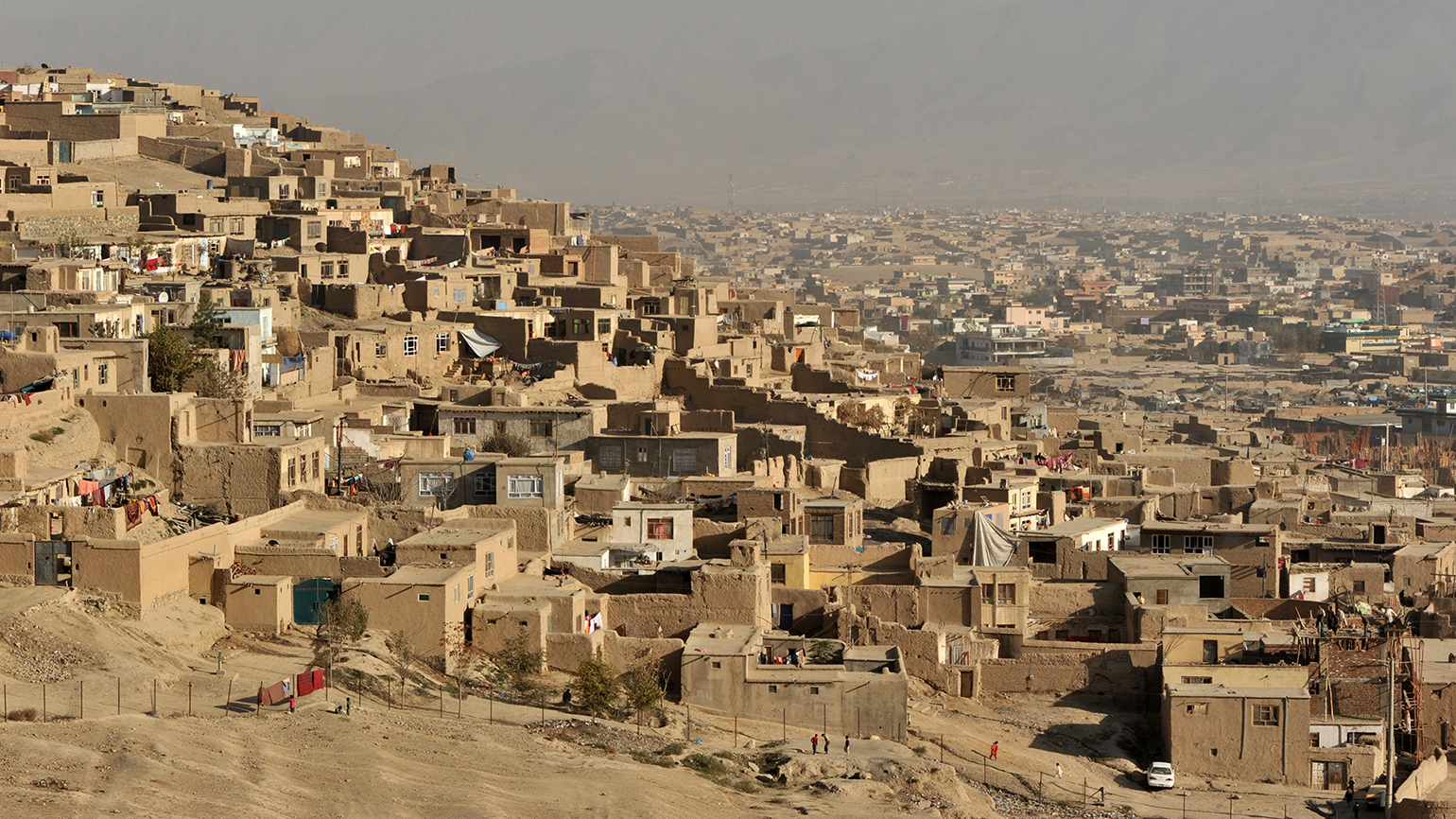
Afghanistan is a hard place. The collapse of the Afghan government and the events that have occurred in the past week because of it have left me irritable, hurt, deeply disturbed and unsettled. News of the fall of major cities—Kunduz, Kandahar, Jalalabad, Khowst, Gahzni, Kabul—awakened memories of sacrifice, aspirations for freedom and hope of a people that now seem shattered. The indignity and dishonor symbolized by the chaos of crowds mobbing our departing Air Force C-17 on the Kabul International Airport runway leave me raw.
From May 2003 to April 2004, I served as Combined Joint Task Force 180 Chaplain, with religious support responsibilities covering United States and Allied Forces in Afghanistan, Uzbekistan and Pakistan. At our Change of Command Ceremony on the Bagram Airfield tarmac on April 15, 2004, I prayed: “Almighty God, the Scriptures record, ‘those who wait upon You get fresh strength. They spread their wings and soar like eagles.’” Now, some 17 years later, I find myself needing some of that strength the prophet Isaiah wrote so poetically about. For me, it comes in the following ways:
Reach out. Life in the Armed Forces is all about relationships. Whether veteran, Active Duty or Reserve, civilian or contractor, family member or deploying spouse, we take care of each other. Extend a hand. Do a “buddy check.” Few things are as valuable as the email I received earlier this week: “…the recent horrors in Afghanistan. I imagine it is hard to reckon with since you invested so much there.” Acknowledging pain and camaraderie through email, text, call, social media, or card, with an Armed Forces member or veteran you hold dear can renew and enhearten.
Pray. I find myself “doubling down” on petitions to God for our soldiers and Marines who are now deploying, Air Force crews and manifests flying in and out of Kabul, departing State Department officials processing Afghanistan citizens desiring exit. Prayers for former Afghan President Hamid Karzai, who is reportedly staying in Kabul to promote dialogue rather than violence, seem especially appropriate. Additionally, following through on the Apostle Paul’s words in Romans to “…pattern our lives after the One who took on the troubles of the troubled,” we can pray in solidarity for and with the Afghan people. Distressing news accounts, photos and videos can be incentives for such prayer.
Process. Voice your heaviness. Vent frustrations. Share feelings of disappointment. Seeking out a trusted friend to serve as an emotional “shock absorber,” someone who can hear bitter, distressing, sorrowful or unproductive feelings, is essential. Battle buddies from the past; esteemed family members; a former coach, teacher, mentor or rabbi, imam, priest or pastor; medical center or Veterans Affairs personnel; all can provide safe, helpful, listening and process-enabling ears.
Take responsibility. Avoid pointing fingers in blame. Shrill, angry, self-righteous “I told you so” pronouncements serve too often to divide and depress rather than unite and enlighten. We are all in this together. Realizing our shared humanity as citizens and friends of these United States of America can promote a spirit of consensus and humility so needed in these troublesome times.
Strengthen resolve. Heavy, sad feelings. Asking, “Was it worth it?” Most of us experience this dismay. Yet, in broader analysis, our individual and collective efforts in Afghanistan have kept al Qaeda from staging global attacks; we’ve offered pioneering opportunities for freedom and development; and together we have shared resources, friendship, treasure, sweat and blood that the human rights of all Afghan people might flourish.
On a deeper level, the sense of calling enjoyed by our Forces to serve and protect with discipline, love and leadership, is a source of profound, healthy pride and respect. The camaraderie of shared hardship, and professional competence to “support and defend the Constitution of the United States…” give meaning to the cause we have embraced. The glory of spirit and nobility of purpose championed by the women and men with whom we’ve served are humbling. They’ve steadfastly stood on watch for us all.
I concluded the Change of Command Ceremony prayer those many years ago with additional words echoing the prophet Isaiah: “…may [those] who follow us experience similar fulfillment—at the end of their tour—as we do now…to possess a deep sense of gratitude to You…and to delight in the fruits of one’s labor and be satisfied.” May we be encouraged, even in these uncertain days, with similar fulfillment and satisfaction, and be blessed.
This past weekend, I returned to Blue Cliff Monastery, a mindfulness meditation practice center in upstate New York, for another short retreat. Each time I leave the city for an experience like this, I learn something new. This time, however, I wasn’t alone—my parents joined me.
They took some convincing, because they’ve never tried meditation. “I’m only coming to see you,” my mom repeated to me several times before the weekend, as if to remind me she had no interest in whatever the monastery had to offer.
I’d noticed that as they’ve grown older, my parents have become more and more fixed in their ways. If an activity doesn’t fall within their highly circumscribed range of habits, they decline to give it a try—missing out on things that they might enjoy or that could be good for them. I feel as frustrated as they must have been back when I refused to eat my vegetables.
On the first day of the retreat, I arrived late and was surprised to find Mom and Dad in the central tea room, yucking it up with a few of the monks and already making friends with the other visitors. My parents had no idea what they were doing, but they still went about the retreat with open minds and earnest spirits. My mom, in particular, was often confused about when silence was expected and when talking was allowed. I had to shush her a few times at the dining hall, but she took it well, and the monks and nuns just smiled.
The most meaningful moments of the weekend? Our silent sits in Blue Cliff’s big, beautiful meditation hall. I felt keenly aware of my parents’ efforts to meditate, wondering if their experiences mirrored mine. Were they comfortable? What were they thinking about? Did they find the all the bell-ringing and the gongs weird, or calming?
Later, my mom told me that those moments of silence convinced her she could use less stress and anxiety in her life, and that she would try to practice mindfulness while driving (which, I can assure you, is a time when she definitely needs it).
My dad said he became aware of his tendency to be too fixated on regrets or future plans: “It reminded me to savor and enjoy what I experience in the moment; to avoid judging and cherish my relationships with family and friends.” Their words offered a rare peek inside my parents’ heads. Their takeaways from the weekend were not so different from my own.
It was the first time I can remember sharing a truly spiritual experience with my parents, and I felt connected to them in a way I hadn’t felt before. Instead of the two of them peppering me with questions about my job, my friends, my relationships, my health—all those things parents obsess over endlessly—we instead focused on the present, enjoying the beauty and calm of Blue Cliff.
The silence may have taken some getting used to for my parents, but it forced us to change the way we related to one another. For the weekend, we were peers, equals, seeking the same connection with a power greater than us and, beyond our understanding. Everything else that typically defined our relationship was gone. This retreat wasn’t only good for them, I realized. It was good for us.
Maybe my parents aren’t so set in their ways after all. I don’t know how my relationship with them will change as we all get older, but I know now that it will change. There’s plenty of room for our relationship to grow.
Tricia Goyer is the author of Sweet Septemberfrom the Guideposts Books series Home to Heather Creek.
I love gardening. Well, let me clarify… I love writing about gardening. It seems both down-to-earth and oddly romantic to live on a farm like Bob and Charlotte in Sweet September. The idea of planting seeds, watching their progress and then eating of our labor delights me—which is why my husband and I planted a garden this year.
It was only our second attempt at a garden. The last one we had was more than 15 years ago. We had just moved to Montana and we’d bought our first home. Before the grass was in, I staked out a large spot and planted everything I could think of. Row after row after row.
The produce had come in thick, but so did the weeds! My kids and I would literally dig through the weeds to find the green beans and tomatoes. It was work! Maybe that’s why it took me so long to attempt gardening again.
This year my husband and I decided to be more realistic. We planted two types of tomatoes, squash and cantaloupe. And as we watched the small plants grow, we dreamed of the harvest. Every day we peeked at the growing plants and invited our new children to do the same.
Just like Bob and Charlotte, we opened our home to three little ones, children who came to us through adoption. We adopted Alyssa in 2010 as a newborn, and this year we added Bella and Casey to our family by adopting from the foster care system.
As summer days stretched their warm rays, our plants and our family took root and grew. Then reality set in.
Our squash got nibbled by bugs and some of our tomatoes got bud-end rot. Our children had struggles, too, with bonding, being able to trust and opening up their hearts. There were days I questioned if my hard work was going to produce anything good. Yet what I discovered is that both growing a garden and growing a family takes time, dedication and patience. Both are harder than one would think… but worth the effort!
I’m thankful that in both cases we turned to God for help, and he was gracious to do so. Our Creator designed the plants and growing seasons. He also designed our family.
As summer comes to an end I’m enjoyed many fine meals with our produce. I’m also enjoying the new smiling faces around the table and the family that God continues to grow!
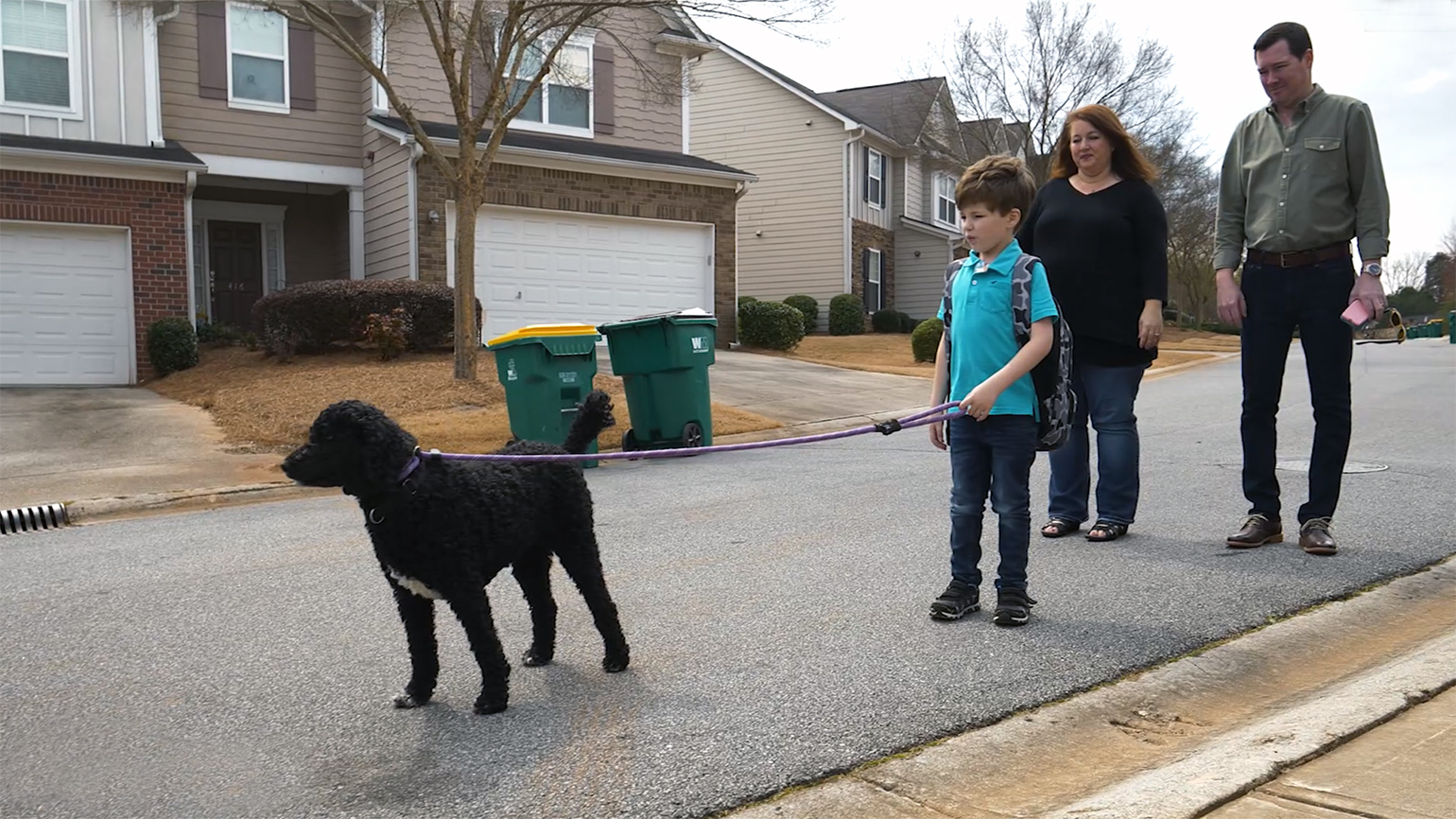
Hi, Guideposts viewers. My name is Rachel Turner and I live in Woodstock, Georgia. My story is about bringing a dog into our family to help with my son who’s on the autism spectrum.
I chose to get a dog for Wesley because, right after he was diagnosed, my one goal was to get through to him. He was spending a lot of time closing out the rest of the world, and really I was just trying to find ways to get his attention, and my first thought was, “Who doesn’t love a dog?”
Whether or not you get a dog as a pet or you get a service dog, I feel like introducing a dog into your home when you have a child on the spectrum is just a great part of their ultimate therapy package.
It took Wesley a while to bond with Josie. The rest of us bonded with her in about eight seconds, but it was about four months of him pushing her away and not really wanting her near him before we were driving home from the park one day, and I looked in the back seat and Wesley had fallen asleep with his head tilted to the side and Josie was sitting in the seat right next to him, and she had also tilted her head to the side to where she was almost touching his forearm.
Not only did it show me that Wesley and Josie were going to bond because Wesley was going to bond with Josie, but also, after four months have been pushed away from this little boy, it was Josie reassuring me that she was there and she was going to be there for us, and specifically for Wesley.
Initially, Josie helped us with Wesley because he was doing things like darting into traffic when we were on walks. He wouldn’t look and he would run into the street, or he wouldn’t answer me in the house. I would be looking for him and it would be just terrifying.
So we initially did things like put an extra leash on her and sometimes we would tether Wesley to the leash, or sometimes we would just hand him the leash and say, you know, “You have to walk Josie, that’s your job,” and it would keep him really focused.
I could also say to Josie, “Where’s Wesley?” And she would sort of help me locate him sometimes. Now, you know, Wesley’s grown out of a lot of his behaviors and so she’s really a social tool. She brings other children into our environment, so that Wesley’s forced to communicate with his peers. So, she’s contributed in so many great ways to our family, and specifically to Wesley.
My faith was a huge part of this journey. Right after Wesley was diagnosed, I remember driving home that day in the car, and just crying out to God and feeling like I was so inadequate as a mom and I wasn’t type A enough.
When someone hands you an autism diagnosis, it’s so hard to understand how that’s going to manifest in your future. It’s a social disorder that shows up in so many different ways, in every different kid that you see.
So I didn’t really know what all we were going to be dealing with now, or in the future, and there are so many schools of thought on how to address it as a parent, and how to address it with therapies, and I know God was a huge part of transforming me, as a mother, into somebody that made confident decisions, and understood that, you know, I can only make the best decisions I can make at the time with the information that I have. And a lot of those decisions that my husband and I made turned out to be good ones and it just transformed my confidence in myself as a mom.
Around the Fourth of July, Josie doesn’t particularly like loud noises and she actually has that in common with Wesley. When the Fourth of July fireworks started to go off, both Josie and my son were really overwhelmed by the experience, but my oldest son wanted to be outside. Our neighbors were setting off fireworks and, as a mom, I was going back and forth.
Josie usually hides when there’s something loud going on, and Wesley was sitting on the couch, and so I was trying to come back and forth and watch my other son and soothe Wesley and I finally realized that Josie was sitting on the couch next to Wesley, which she would have never done. She would have been upstairs under her bed. I’ve realized that she was sitting there and he had his hand on her fur, and that they were just sitting together.
About 10 minutes later, my husband got home, and he came in the house. I said, “Good.” I said, “You go outside with Sam. “I need to go inside with Wesley.” And the minute I came inside and Josie understood that we were all home, she ran upstairs and got under the bed. But she was so intuitive, that she understood he was freaked out. She was freaked out, but she wasn’t doing her dog instinct thing of going and hiding like dogs typically do.
But the moment she realized we were all home and that we could spread our attention between the two boys, she disappeared. And, it really just made me feel great about, just the decision, about having her. Wesley was calm. He was sitting there with her. He didn’t feel alone. But she makes herself available, which is what I think is really special about her.
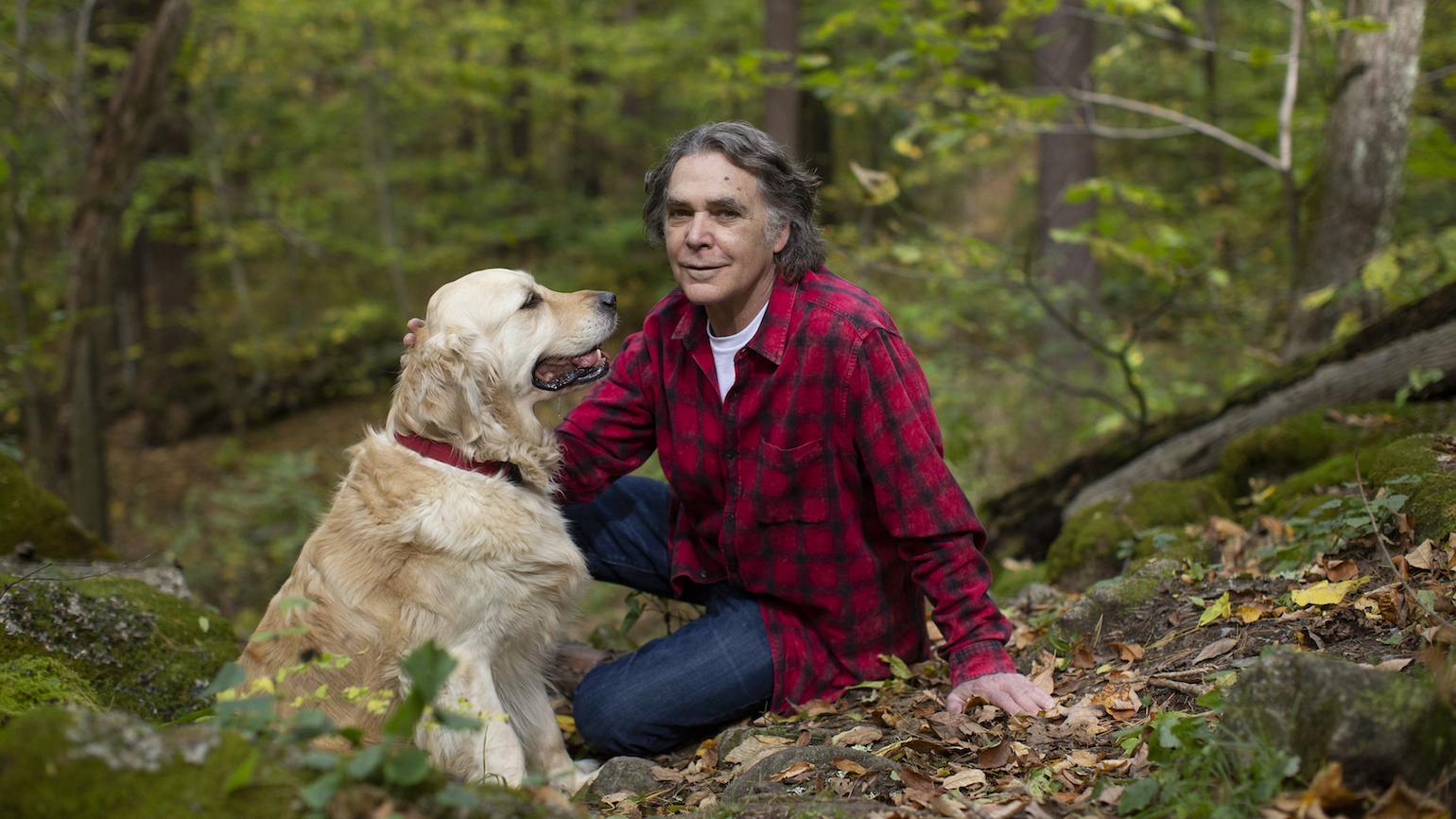
Gracie, my golden, is curled up sleeping on the couch while I work. Outside the wind sways the trees, causing the winter sunlight slanting through the west window to ripple across her. We just got back from a cold, snowy hike in the hills of Western Massachusetts. She plowed through drifts and vaulted over fallen trees. Plunged her snout into snowbanks, seeking out some scent I could only guess at. Raced up steep icy trails then paused patiently for me, slipping and scrambling, to catch up. At the summit she sat and leaned into me, panting steam, staring out past the tree line at the distant snow-covered checkerboard farm fields, fences half-buried.
I can’t help but stare at her now. She is so peaceful, so serenely relaxed. I doubt I have ever achieved such a state of complete rest. At least not as an adult. My mind is too restless, as if my brain paces even when I am sitting. I envy this dog and her gift of tranquility. What must it be like to feel so safe?
Deep, slow breaths rise and fall in her chest. It is hypnotic to watch. I try to breathe with her, syncing my breathing with hers. As the minutes pass, I feel a peace come over me, as if I am tapping into her serenity. I relax, internally and externally, body and soul. I experience something like spiritual equilibrium rippling through me.
Not everyone has a dog. Not everyone has loved one. For most of my life I have. For us dog lovers they teach us to live intentionally, to live with gratitude and optimism (is there a creature more optimistic than a dog?), to find peace in the stillness of the moment. Gracie reminds me that life doesn’t take place in the future.
In a minute, my mind will turn itself back on, and I will go back to work. For now, I want to breathe with Gracie, to achieve that state of being completely present, at peace in the moment.
“I’m assigning Pippy to you,” Mr. Shippy, one of the guards, said. Oh no, I thought. Pippy hadn’t been here long, but she already had a reputation.
I’d heard her snarls and barks echoing through the halls of the dog dorms of Indiana’s Madison Correctional Facility. I’d seen her from a distance, a hound mix with a droopy expression and a quick temper. She’d instigated every dog fight that had broken out since she’d arrived six months earlier. Several other trainers in the dorm—my fellow inmates—had attempted to work with her. They hadn’t made any progress.
Pippy was the worst dog in the prison’s program.
“Keelie, I’ve seen what you’ve done with your past dogs,” said Mr. Shippy. “You’ve got this.”
I wasn’t so sure. Some of Pippy’s trainers hadn’t lasted more than a few days.
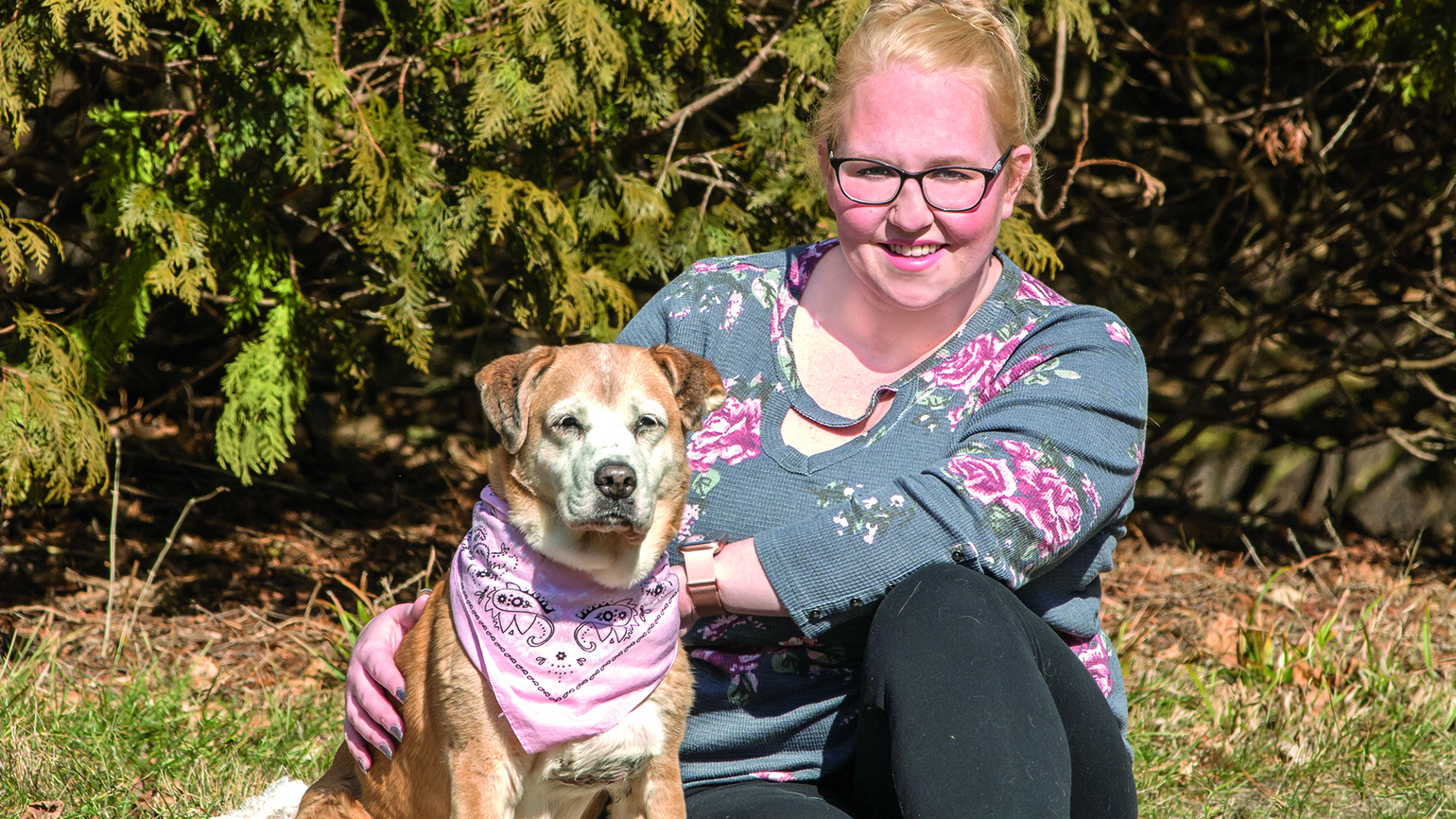
Mr. Shippy brought her to my cell and officially handed her over. I was surprised. Pippy wasn’t the angry, intimidating dog I’d been warned about. She was smaller and older than I’d expected. About 10 years old. The tumors on her body, which the vet said were benign, looked painful.
“Hey, girl,” I said, in a positive, friendly tone.
Her tail gave a hesitant wag, but she stood stiffly. Pippy wasn’t mean, I realized. She was just afraid.
I knew the feeling.
No one ever plans on ending up in prison. I certainly didn’t when I started abusing prescription anti-anxiety meds at 15. I was struggling with severe anxiety and depression. So many things scared me and stressed me out—school, social situations, my parents’ divorce. The pills numbed my feelings.
As I got older, I traded pills for heroin, then meth. I knew my mom was worried to death, but that didn’t stop me. By the time I was 22, my life revolved around my addiction. Work was just a way to support my habit. I hung out with other drug users. My party-hard lifestyle came to an abrupt end when the police raided my place and found my stash. I was sentenced to three years for drug possession.
Prison was a shock. Despite my years of drug abuse, I’d never been in trouble with the law before. But here I was in an orange jumpsuit, confined to an eight-by-eight cell. Alone and scared. I didn’t have drugs as a buffer anymore because I’d been forced to detox.
Madison Correctional Facility is minimum security. You can’t just sit in your cell. You have to work. Some inmates pick up trash along the side of the road. Others help keep the prison running, working in the kitchens or the laundry room.
I was assigned to the cleaning staff. My first day, I spent eight hours scrubbing the stairs with a toothbrush. That night I lay in my cot, aching and exhausted. I’d never given the future much thought—when you’re an addict, all you care about is your next high—but I knew I couldn’t do this every day. Not for three years.
After a few weeks, I was allowed to choose a new assignment. The only one that interested me was the ADOPT program—A Dog On Prison Turf. It paired inmates with sick, aggressive or shy shelter dogs that no one wanted. Here in the prison dorms, they were trained and socialized until they could be adopted out to their forever homes.
I’d loved dogs since I was a little girl, but I’d never had one of my own. Unlike other jobs, there was no time off —a dog was with its trainer 24/7. Could I handle this? Could I take care of a dog when I was no good at taking care of myself? My anxieties faded when I was assigned my first dog, Lady. I connected with her, the kind of connection I didn’t have with anyone else, human or animal.
We trainers spent every moment with our dogs—taking them for walks around the yard, playing, teaching them basic commands. They slept in crates in our cells. It was hard not to get attached. On adoption days, the dogs were transported from the prison to events outside. We couldn’t go with them, so we had no way of knowing which dog had been adopted until they didn’t return. It was nerve-wracking.
One day Lady didn’t come back. I called my mother in tears. “I’m quitting the program,” I said. “I can’t work with another dog, just to give them up. I can’t.”
“You’re doing good there, Keelie,” Mom said. “The dogs need you. And maybe the best way to help them is to learn to let them go.”
Was Mom right? Was I capable of doing something besides getting high? I didn’t really care about me, but if the dogs needed me, I had to be my best self to take care of them. I stuck with the program and trained two more dogs that got adopted.
Then I was assigned to Pippy, the program’s problem dog. She was reactive toward dogs. Standoffish with people. The shelter didn’t have much information on her, but I knew she must have suffered some kind of trauma to act this way. Evenings she’d curl up in her crate and I’d read up on dog behavior, trying to understand her better.
A few weeks into our partnership, it was the Fourth of July. Fireworks lit up the sky, close enough that we could see them from the prison yard. But Pippy was not having it. She cowered in her crate, terrified by the noise.
“Come here, darlin’, sit with me,” I said. But Pippy wouldn’t leave the safety of her crate. I sat right at the door, slowly reaching my hand inside and resting it at the base of her neck. “It’s okay, darlin’.”
Scared as Pippy was, she didn’t lash out. I gave her neck a gentle stroke. Then another. She let me pet her. By the time the fireworks ended, she was leaning into my touch. “That’s it, darlin’.”
Darlin’…Darlin’…Darla! The name fit her better. I had it changed in her records the next day.
From then on, Darla and I were inseparable. I saw a lot of myself in her. Driven to unhealthy behavior by fear. Low self-esteem. Someone people didn’t think well of or expect much from.
Over the next few months, Darla underwent several surgeries, one to get her spayed and a few to remove her tumors. The head of the program was too scared of Darla to take her to the vet alone so I accompanied them. It was embarrassing to be seen in public in my orange jumpsuit, my hands cuffed in front of me, but I did it for Darla.
On one of these outings something caught my eye. The vet’s office was in the middle of nowhere, nothing around but open sky and Indiana cornfields. Across the street, however, was a store: Darla’s Second Chance Furniture.
I believed Darla deserved a second chance. Here was confirmation from something greater than me, some kind of higher power in the universe. And if Darla deserved a second chance, maybe I did too.
Adoption days came and went. Some dogs found homes. Every time, I’d say goodbye to Darla. But she always came back. No one wanted her.
I was scheduled to be released in a few months. There was talk about what to do with Darla once I was gone. None of the other trainers felt comfortable taking her on. She’d have to be put down.
I couldn’t let that happen. I made a dollar a day as a dog trainer and I needed $60 to adopt Darla. I didn’t visit the commissary. I didn’t buy a thing. I saved every penny.
On Christmas Eve 2014, Darla and I walked out of prison. As we exited the gates, I looked back at our prints in the snow. We’d come a long way together. “Come on, girl!” I shouted. “Let’s go!”
Life after prison was hard. Broke and on parole, I moved back in with my mom. Without the structure of prison, I worried I would go back to using drugs.
Except Darla needed me. She trusted me. I could repay that trust only if I stayed clean. I enrolled in a voluntary outpatient rehab program. I worked at an animal rescue, which kept me focused on what I loved doing. I did an internship with a professional dog trainer. That gave me the experience and confidence to start my own dog training business—Click. Treat. Repeat. Canine Coaching. Soon business was booming. I married a great guy I met in rehab, someone as committed to sobriety as I was, and we bought a house.
Darla and I had eight wonderful years together before she passed away at 18. It might seem like I saved Darla. Really, I think she saved me. She taught me so much about trust. Perseverance. Love. And the power of a second chance.
My 13-year-old son, Anthony, jumped out of bed one morning in March 2020 and asked me the question he’d asked every day for the last eight weeks. “Are we going to pick up the dog today?”
Two months earlier, a couple from Texas had reached out to me on social media. Their goldendoodle was pregnant, and they wanted to give us one of the puppies as soon as they were weaned. I wasn’t sure. As a single dad, I had my hands full. I had been struggling with getting Anthony, whom I’d recently adopted, to trust that I was his forever family. Besides, I hadn’t grown up with pets. I hadn’t grown up with much of anything.
I grew up in Uganda. My family was so poor that there wasn’t enough food for us, let alone an animal companion. The extreme poverty wasn’t the worst part. My father beat my mother, my siblings and me every day. When I was 10, I ran away. I boarded a bus to Kampala, the capital city of Uganda, more than 300 miles from home.
For the next four years, I lived on the streets of Kampala. I spent my days at the produce market, offering to help customers bring purchases to their cars. As I carried their bags and boxes, I’d snatch a piece of fruit or two. One day, a family gave me some food in exchange for my help. They continued doing so a few times a week. They were the only people to ask my name since I’d left home.
After nearly a year, they asked me to live with them and offered to pay for me to go to school, I asked, “Why would you do that for me?”
The man said, “You matter, Peter. You are brave, and we don’t want you to be alone anymore.”
His offer—and his words—seemed too good to be true. Still, I said yes because I would no longer go hungry.
My foster parents enrolled me in a mission school that was affiliated with a Christian humanitarian organization. They taught me about a heavenly Father who loved me unconditionally. They not only told me I had value and potential, but they also showed me. Slowly, I grew to trust them. For the first time in my life, I felt seen and loved—like I belonged in this world.
After attending college in California on a scholarship, I accepted a job working as a translator and devoted my life to helping vulnerable children. For the next 11 years, I traveled to 101 different countries to help children in need around the world. My faith grew, and I prayed that someday I would become a father.
In 2016, I settled down in Oklahoma and bought a three-bedroom house. I got approved to be a foster parent and soon had kids filling the extra bedrooms. Now, here I was, four years later, with an adopted son who watched my every move, wondering if he could fully trust me. I hadn’t planned on adopting Anthony. He was the eleventh and oldest child I’d fostered, and I’d taken him in at the last minute.
“I’m taking a break from fostering,” I told the caseworker who called about the placement in 2018. Four days earlier, I’d had to say goodbye to the two brothers I’d been fostering for seven months. My heart was hurting, but the caseworker talked me into taking Anthony, just for the weekend. I purposely didn’t ask any questions about his situation because I didn’t want to get attached.
Anthony arrived in the middle of the night. “Can I call you Dad?” he asked.
“No, you can call me Mr. Peter. You’re only staying for the weekend, remember?” I needed to keep my distance and protect my heart.
Monday morning the caseworker came to pick up Anthony. I finally asked why he was in foster care.
“His biological mother abandoned him when he was two,” she said. “He was adopted, but it didn’t work out. His adoptive parents dropped him off at the hospital when he was 11 and never came back. They relinquished their parenting rights.”
“What will happen to him now?”
She shook her head. “He has no family, and foster homes here are full. I’ll have to take him to a group home.”
I looked at Anthony. Something in his eyes made me think of the scared, lonely boy I had once been, living on the streets of Kampala. “I’ll take him,” I said.
As the weeks went by, the more I saw of my younger self in Anthony. He read voraciously, helped around the house and asked me for very little. He was working too hard to please me—a clear sign that he didn’t trust my commitment to care for him.
One afternoon, I came into the kitchen and Anthony immediately started cleaning up.
I stopped him. Would he always wonder if I was going to give him up? “You don’t need to work so hard,” I said. “This is your forever home. You belong here. You can be yourself.”
He shrugged. “I just don’t want to mess this up.”
My heart broke for him. I was more determined than ever to adopt him and make him feel loved.
On November 12, 2019, Anthony’s adoption was finalized. Being a dad was the dream I’d prayed for, and it was finally coming true. There in the courtroom, I hugged my son, silently pleading with God, Help Anthony trust me. Help him feel seen.
In early 2020, we moved to Charlotte, North Carolina, where I started a new job. Not long after, the couple in Texas offered us this puppy that Anthony couldn’t stop thinking about. He had been asking about the dog ever since.
That morning in March, he asked again. There was such hope in his eyes that I set aside my doubts. The puppy was weaned now. “Yes,” I told Anthony, “we’re going to get the dog today.”
We drove 16 hours to Texas to pick up our bundle of fur and energy. We chose the name Simba—after the character in The Lion King—because Anthony wanted me to have a reminder of Africa. He was still trying to earn my approval.
Simba was adorable, but he tested my patience (as puppies do, I’ve learned). One day, he had an accident on the carpet. I sighed and reached for the cleaning supplies. Then I noticed Anthony was watching me intently. “It’s okay, Simba,” I said. “Mistakes are a part of life. You belong here and we still love you.”
Anthony’s shoulders relaxed. “Yeah, nothing you do can mess this up, Simba. We’re family now,” he said.
More and more, I saw how our goldendoodle was the answer to prayer, an answer I would’ve never imagined. Having this goofy pup around encouraged Anthony to relax, laugh, be silly. He was finally being himself. Even when Anthony was upset, Simba stuck by him, loving him no matter what.
Anthony came to see that not only in Simba but in me as well. People can truly care about you—a message he wanted to pass on to other foster kids.
In 2020, Anthony and I started an organization called Now I Am Known. The name comes from the affirming message my foster father gave me. Words that changed my life. You matter. You belong. You are seen and known. You are not alone. I made a yellow bandana with those words printed on it and tied it around Simba’s neck—a constant reminder for Anthony and the foster kids that stay with us. We designed a plush Simba wearing the bandana. For each plushie we sell through our website, we donate one to an organization that helps vulnerable children.
Last May, I realized that one dog wasn’t enough for our family. We welcomed Rafiki the labradoodle, who, like Simba, was a gift from someone who’d heard our story. I’m currently fostering three children. The dogs keep the kids occupied, encourage family walks and make the best cuddlers. Most of all, they show the kids what God wants all of us to know: You are loved.
At the Centre County Library in Bellefonte, Pennsylvania, Saturdays are now known as “Caturdays.” In 2014, Bibliographic & Patron Services Manager Lisa Shaffer wanted to boost the library’s online presence and promote their services to the public. Every Saturday, she snapped a photo of one of her cats sitting next to a book and posted it to the library’s Twitter account @centrecolibrary and later to their Instagram account @centrecountylibrary. Her #Caturday posts garnered some encouraging attention.
One Caturday, Lisa chose to feature a book because the author’s birthday was that week. For the photo, she put a birthday hat on Horatio, her ginger tabby. To her surprise, he seemed to enjoy it. “Horatio is very laid-back, and he took wearing the hat in stride,” Lisa says. A few weeks later, she made other hats for Horatio, and he happily wore those too.
Lisa wondered what would happen if she created simple costumes for the cats and used some props in the photos. She started with a post featuring Shakespeare’s works where the cats wore straws (later swapped for coffee filters) around their necks to look like Elizabethan ruffs. People loved it. Lisa took it up a notch, crafting wigs out of yarn and clothes out of felt.
She makes sure that the kitties are comfortable posing. Two of her five other cats—Marmalade and Jojo—tolerate wearing the costumes, but Horatio revels in it. “It’s his special thing,” Lisa says. “He’s so photogenic. He’s just a ham!”
Lisa particularly likes to re-create the covers of children’s books. Her cats have dressed up as characters from J.R.R. Tolkien’s The Lord of the Rings and A.A. Milne’s The Complete Tales of Winnie-the-Pooh. Other representations include The Princess Bride and Hocus Pocus.
Not all of Lisa’s posts feature a book or a movie. Sometimes they celebrate a current event. When Prince Harry married Meghan Markle, Marmalade and Horatio dressed up as a bride and groom to commemorate the occasion.
To date, Lisa’s most labor-intensive Caturday post featured the Iron Throne from George R.R. Martin’s novel series, Game of Thrones. Lisa spent seven-and-a-half hours making the throne out of cardboard. “I’ve used it three times now, so it was worth it,” she says.
While social media has been the main place for folks to get their Horatio fix, the library also publishes a Caturday Calendar, featuring the best photos from the previous year. It’s sold as a fundraiser, and people all over the country have ordered. There’s also a Dog Days calendar, featuring the library’s tail-wagging tutors who listen to children read.
Unlike these canine volunteers, Lisa’s cats don’t actually come into the library. But Horatio does have his own life-size cardboard cutout amongst the books. “Everyone loves seeing him,” Lisa says.
Now, half of Lisa’s closet is filled with cat costumes. Thirteen-year-old Horatio is a real clotheshorse and loves a fashion show. “Somehow, he knows when I’m working on a new costume for him, and he comes in my room to watch,” she says.
Caturdays have bumped the library’s Instagram account to nearly 10,000 followers. Lisa is thrilled but puts the focus back where it should be. “I want to promote the library as a place to connect with others and learn. So many wonderful services in libraries get overlooked, and we want to change that.”











 Her tail gave a hesitant wag, but she stood stiffly. Pippy wasn’t mean, I realized. She was just afraid.
 On Christmas Eve 2014, Darla and I walked out of prison. As we exited the gates, I looked back at our prints in the snow. We’d come a long way together. “Come on, girl!” I shouted. “Let’s go!”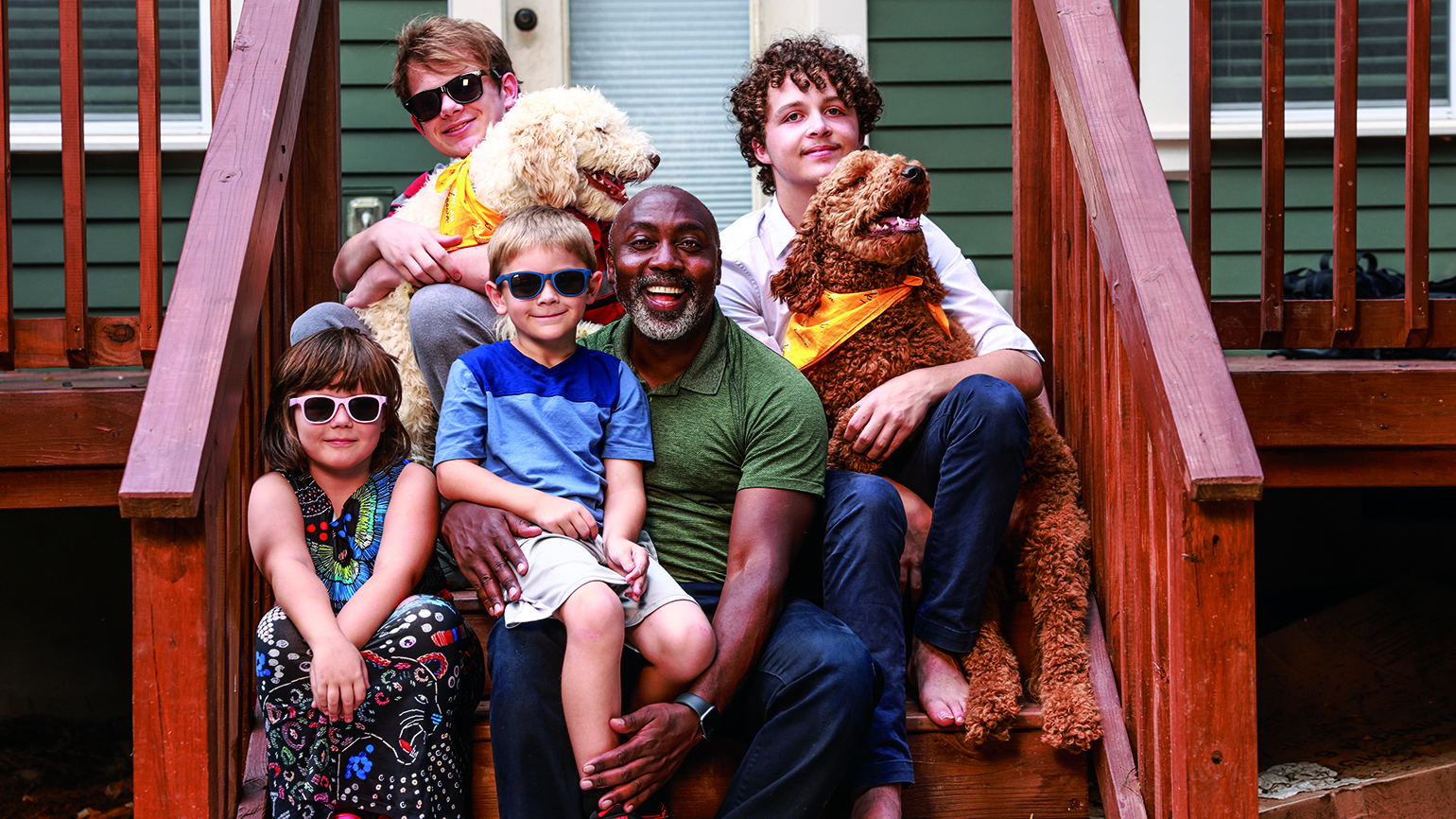
 Two months earlier, a couple from Texas had reached out to me on social media. Their goldendoodle was pregnant, and they wanted to give us one of the puppies as soon as they were weaned. I wasn’t sure. As a single dad, I had my hands full. I had been struggling with getting Anthony, whom I’d recently adopted, to trust that I was his forever family. Besides, I hadn’t grown up with pets. I hadn’t grown up with much of anything.
 Anthony came to see that not only in Simba but in me as well. People can truly care about you—a message he wanted to pass on to other foster kids.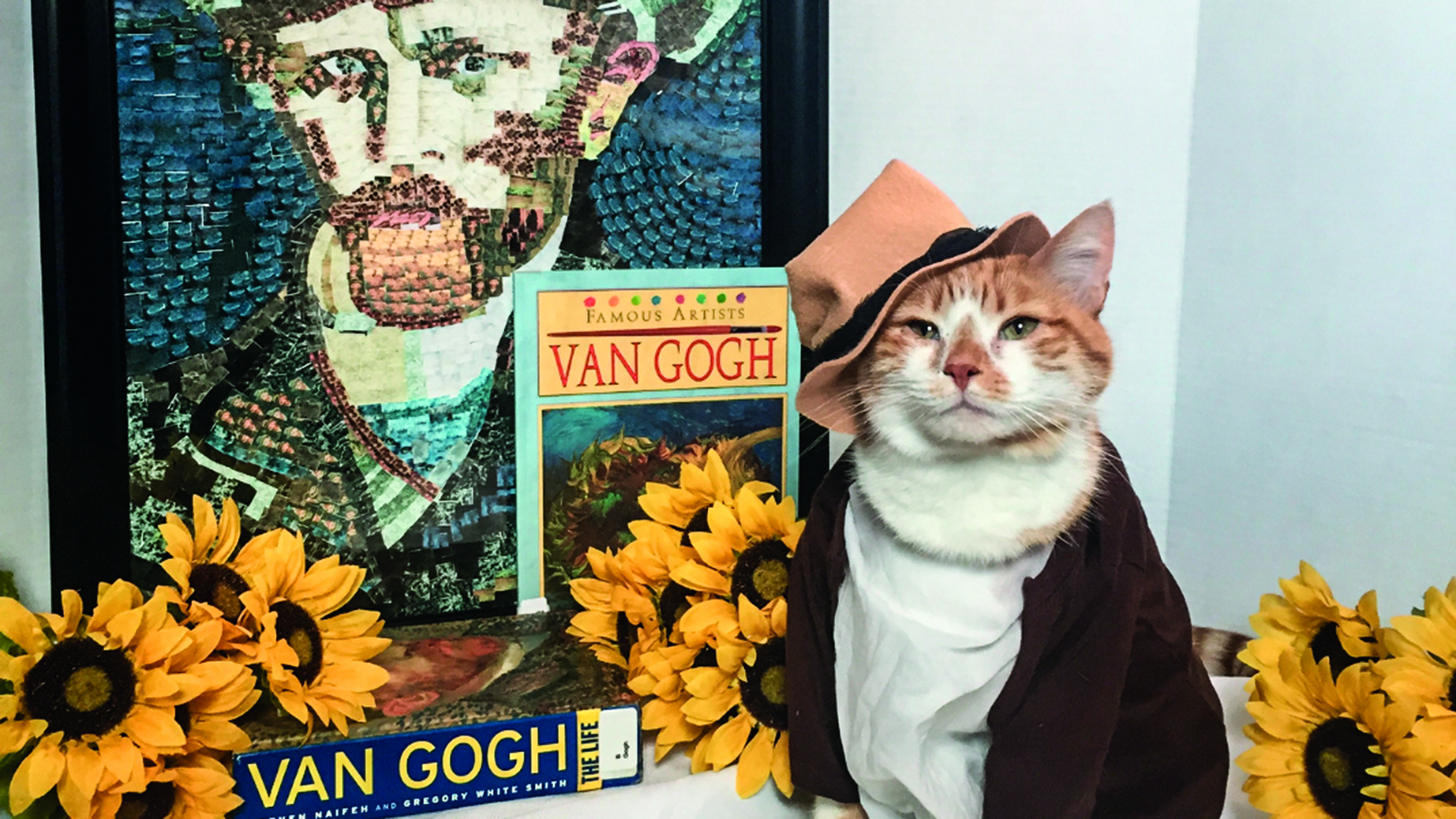

 Lisa wondered what would happen if she created simple costumes for the cats and used some props in the photos. She started with a post featuring
  To date, Lisa’s most labor-intensive Caturday post featured the Iron Throne from George R.R. Martin’s novel series, Game of Thrones. Lisa spent seven-and-a-half hours making the throne out of cardboard. “I’ve used it three times now, so it was worth it,” she says.