


Embrace God's truth with our new book, The Lies that Bind

How a Cat Helped Her Hold on to Her Faith

Thud…thud…thud. Then one unearthly yowl after another. My eyes snapped open. It was the middle of night, but I was wide awake now. So was my husband, Lou. Wordlessly, we leapt out of bed to investigate.

At the foot of the stairs was a dark, familiar shape. Our son, whom I’m calling Sam to protect his privacy. I turned on the hall light. He had a pile of bags with him, and in his arms was the ugliest cat I had ever seen. Like Sam, she was scraggly and gaunt, with a lost look in her eyes. She shrieked at my two cats, Baby Cat and Soda, who responded in kind.

Pause & Pray In Article Ad

Sam gave us a curt hello before shutting himself and his frightened cat in the guest bedroom I’d prepared for him.

It’s just for a couple of weeks, I told myself. I could tolerate a strange cat in the house, especially if it meant Sam’s continued sobriety.

He’d called a few days ago to tell us he was moving back home to Pennsylvania and needed a place to stay. “I’m bringing my cat,” Sam said. “Her name is Rippin. I hope that’s okay.”

Rippin? I thought. What an odd name. I didn’t ask about it, though. I just assured Sam that he always had a place here if he wanted it.

But I hadn’t expected him to arrive in the dead of night in such dramatic fashion—any more than I’d expected him to spiral into addiction. The trouble started at the end of middle school, when Sam was 13. He fell in with a bad crowd. First it was marijuana, then harder drugs, like heroin. Sam went from being a sweet, thoughtful boy to a closed-off, angry young man. We put him in a teen drug treatment program. He saw countless therapists, even spent time in juvenile detention. Nothing worked. He would go through periods of high-functioning sobriety—he’d graduated college with a degree in special education and had even been recognized for outstanding work as a student teacher—only to relapse.

Sam was 30 now, and I wondered if he would ever be able to break the cycle of chronic relapse. Or would the cycle end as it almost had two years ago, the last time he’d moved back into our house? I’d discovered him sprawled in his room one day, unconscious, surrounded by spent needles. I shuddered to think of what would have happened if I hadn’t found him in time.

For now, Sam was clean. He’d recently completed a drug rehab program in Florida, where he had been living with his girlfriend. They broke up and he needed a fresh start. Sam promised living with us wouldn’t be permanent but just until he found a job and an apartment. I prayed he was right, but you get used to broken promises when you love someone who’s an addict.

I tried to give him his space. That was easy enough—Sam hardly left the guest room. We had our first conversation a few days after he arrived. It was brief.

“Mom, can we get Rippin a scratching post?” he asked.

When I stuck my head in his room, I could see why. One side of the new mattress had been completely shredded by the cat’s claws. Well, that explains the name, I thought, glaring at the mangy creature. She looked at me blankly.

Where did Sam find that muddy-colored thing? Lou and I joked that she must have wandered into Sam’s apartment from the Everglades. I could imagine what really happened. Sam always had a big heart, especially when it came to animals. As a boy, he would bring home baby birds that had fallen from their nests, or bunnies he’d found huddled in the tall grass behind our house. He would always plead with us to keep them, and Lou and I would have to tell him no. Sam wouldn’t have been able to resist taking in a stray kitten, especially one as pathetic as Rippin.

As the weeks passed, Sam stayed distant, holed up in the guest room with his cat, only emerging to use the kitchen. I knew something was wrong, but I didn’t know what to do. Then one day, six months after Sam moved in, the police showed up at our door. They’d gotten a call from Sam’s ex in Florida. He had texted her, saying he wanted to kill himself. He’d also started using again. Because Sam had threatened suicide, the police had to take him to the emergency room. As they escorted him out of our house, Lou and I could only stand by and watch, helpless.

Sam didn’t come home from the hospital. He chose to go straight into another rehab program.

Lou and I were left to look after jittery Rippin, with her fingernails-on-the-blackboard screech. But once she came out of the guest room and settled into the rhythm of our family, she turned out to be a different cat. Her frantic cries mellowed into a gentle meow. The first time she jumped into my lap while I was sitting on the couch, I was so shocked, it took me a minute to start petting her. She leaned into my touch and regularly sought my affection after that. Even more incredibly—considering their rocky introduction—she began to get along with Baby Cat and Soda.

The changes in Rippin happened so gradually, I didn’t really notice until one spring afternoon when I found her napping on a rug in a patch of sunlight.

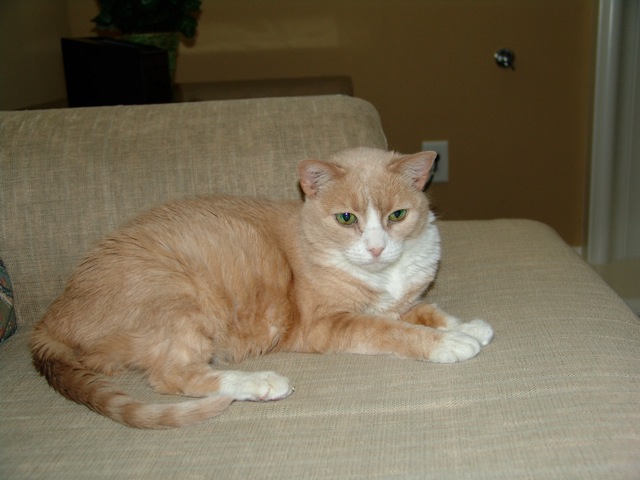
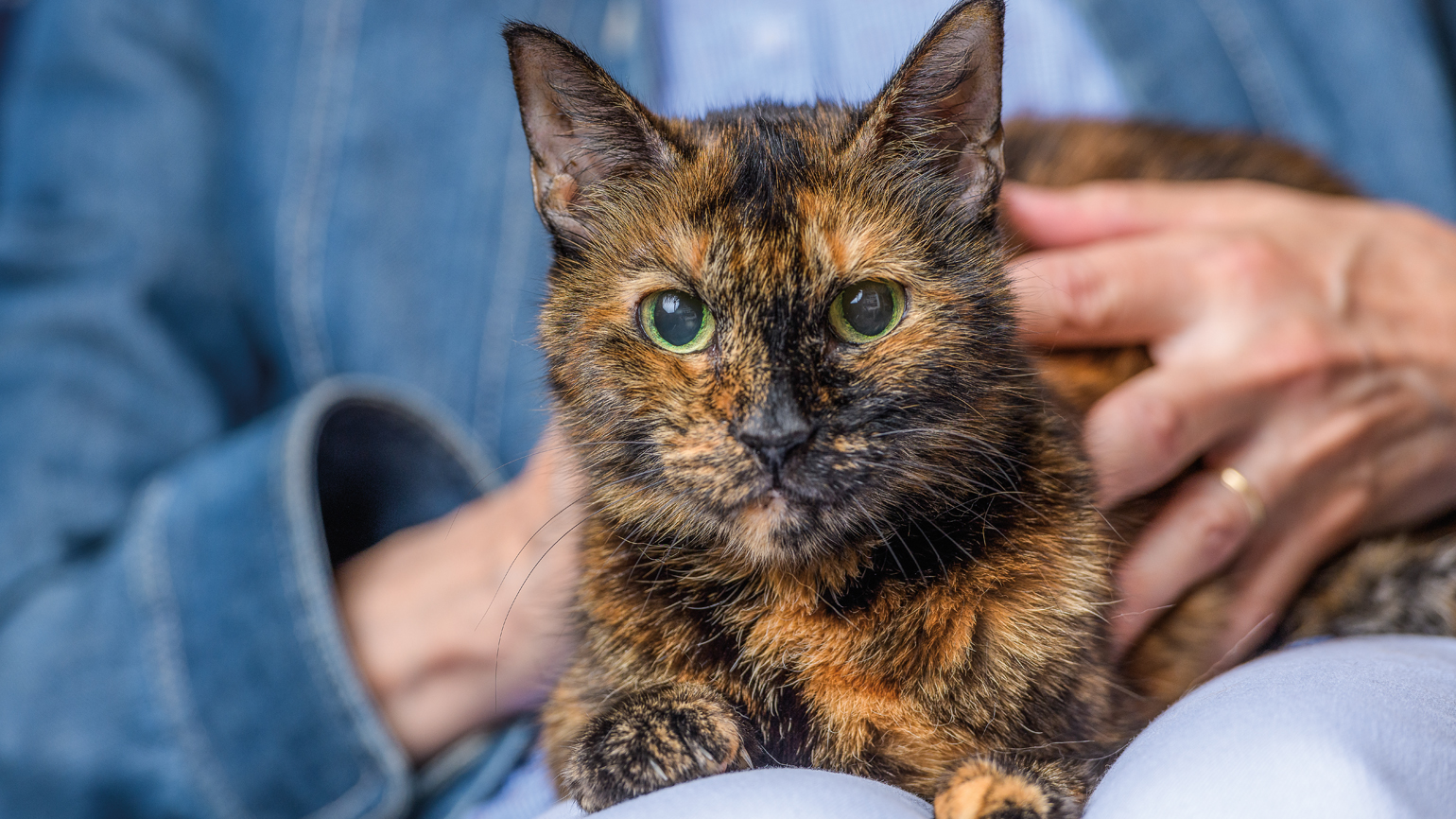
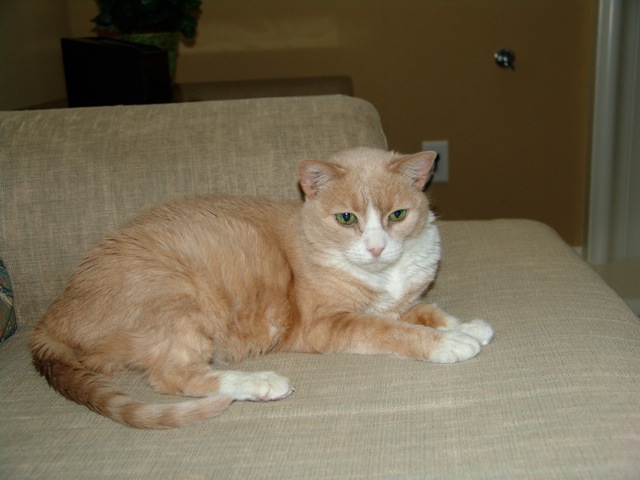
She was a far cry from the pitiful creature that had arrived in the middle of the night. Her muddy color had become a beautiful tortoiseshell, with shades of brown, red and gold. Her dull, matted coat was smooth and shiny. Her skeletal form had filled out and become sleek. Rippin woke and gazed up at me, blinking her big green eyes slowly and trustingly. That wary, watchful look was gone.

This cat was miraculously transforming. Did I dare hope that my son could do the same? Sam seemed to be making progress. He completed rehab and moved into a halfway house.

On Mother’s Day, Sam stopped by with a gift basket and terrible news: He’d relapsed and been kicked out of the halfway house. I numbly accepted the basket as he explained that he was living in his car and asked if I could look after Rippin for a little longer.

I had my own questions. Why haven’t you answered my prayers? I silently asked God. Where is Sam’s miracle?

It was only after Sam left that I looked at what he’d given me. The card was beautiful, signed simply, “All my love.” The gifts in the basket had been chosen carefully. They were all things Sam had known I needed: steak knives, a new can opener, a pretty dish towel. “Look closer,” God seemed to be telling me. “Sam hasn’t been lost to addiction. That thoughtful, loving son you raised is still there.”

Sam went to rehab several times. The fifth time was the one that took. He has been sober for almost two years and is working for a major health care provider. He and Rippin have an apartment of their own close to us.

Her “ripping” days are over. Now she’s a happy, healthy, affectionate cat—a reminder to me that with patience, determination and love, miracles do happen.

Did you enjoy this story? Subscribe to All Creatures magazine.
How a Cat Can Change Your Life

In my life “before Ginger,”  I never really cared for cats.

When I first met my future wife, she informed me that she had a cat—Ginger—that she had rescued several years earlier from a local animal shelter. When we started dating I rationalized that as long as the cat stayed at her home it would be fine.

Light for Life NASB Study Bible in Article

The time finally came when I asked my future wife to marry me, and luckily for me she accepted my proposal. During the time we were dating I hadn’t really been around Ginger. My wife had never pushed me to get to know her, knowing that I was not a cat lover by any stretch of the imagination. When my wife informed me that Ginger was going to be moving with us to our new home in another state, I put my foot down and said “over my dead body.” No way did I want that cat living in the same house as me—but we reached a compromise…and the cat came with. 

At first, both Ginger and I did everything we could to avoid each other. She hid under the bed and only came out when she thought I was asleep. If I happened to catch her looking my way, I would shoot her a mean look. But one day as I was sitting on the couch watching television, Ginger ventured out from her hiding place. She sat by the couch looking up at me, innocently.

She was probably calculating in her head that I wasn’t going anywhere—and the more I thought about it, I knew for sure she wasn’t going anywhere. I patted my hand on my lap. In less than a second Ginger jumped up on that couch and planted herself on my lap (which by the way is now her favorite place to take a cat nap).

I could go on and on about all the things I told my wife that the cat would never, ever be allowed to do—like sleeping on the bed or jumping on the couch; or the things that I would never, ever do—like cleaning her litter box or feeding her. Of course, that was then. 

Five years later I can tell you that I have never loved or cared for an animal as much as I love and care for that cat!

Ginger is quite the character. She has brought me much happiness and calmed me down in many ways. All those things I said she would never, ever do when she came to live with us, well, she is doing them. And I am doing all those things I said I would never, ever do…and more. Funny thing is, I don’t mind it one bit.

—Rudy Fourzan, Jr., Murrieta, California

Has your cat changed your life? Tell us your story!

How a Cat Became an Answer to a Mother’s Prayer

Eight o’clock on a May morning, and Micah, my 17-year-old daughter, had already retreated to our bonus room upstairs. It had been her makeshift eleventh-grade classroom ever since schools had moved to remote learning due to the coronavirus pandemic.

From the kitchen, I listened for the sound of her tapping on her laptop or her and her classmates talking in their Google Meet sessions with their teachers. Nothing. I resisted the urge to check on her. Way too often for my liking, Micah was texting friends and commenting on their Snapchat and Instagram posts about the fun they were having together. My husband and I felt safer erring on the side of caution. We’d barely left the house for 10 weeks straight.

Walking with Jesus L&E evergreen_in article ad

“Mom, everyone is hanging out today!” Micah’s voice echoed from upstairs. “Why can’t I?”

I trudged up the stairs. Micah was lying on the floor wearing pajama bottoms and a hoodie, her laptop, school iPad and cell phone in front of her.

“It’s not fair,” she said. “I have no one I can be with. I can’t wait until I’m 18 and can do what I want.”

We’d had this conversation before. Still, I couldn’t help but feel sorry for her. I was sick of isolating too. Even though Micah and I were home together more than we had been in years, we might as well have been living in separate worlds. 

“Wanna watch Netflix later?” I asked. “Bake some cookies?”

“No, thanks.” Micah shook her head, as if the idea of doing something together was beyond lame.

“In a few weeks you’ll be going to sports camp,” I added. “That’s something you can look forward to.”

I closed the door. I was used to Micah’s rejection, but it still stung. Teenage independence is healthy, but I worried if I didn’t find a way to bond with my girl soon, I might never be close with her again. She’d be 18 in the fall and had already convinced herself she didn’t need me anymore. Maybe she was right. No matter what I did, I couldn’t seem to reach her.

That evening, I logged onto Facebook and saw a friend’s children playing with their new kitten. My mind went back to when I was in high school and our family moved. It was hard making friends. Mom surprised me with an eight-week-old gray tabby that I named Miss Muffet. Having a kitten to love and train brightened my days and got me through that difficult, lonely time.

Micah’s sports camp was a month long, not a good time to take on a pet. As cautious as we were being, I was committed to her going to camp. Campers were required to quarantine two weeks before arriving. The protocol and regulations made me feel safe sending her.

The second weekend in June, I dropped her off. That Monday, June 15, I began praying for our relationship. God, change our hearts. Help Micah and me grow closer.

Within two weeks, the camp closed due to a coronavirus outbreak. Micah had mild symptoms and tested positive. She quarantined upstairs in the bonus room. I left her meals on a tray near the bottom step. I only saw her from six feet away. I couldn’t hug her. I felt her drifting further and further away.

More than three weeks later, Micah finally tested negative. We celebrated with dinner at the kitchen table together. I made her favorite—chicken tenders and mashed potatoes. I couldn’t wait to hear all about camp.

As soon as we sat down, she said, “When can I hang with my friends?”

My heart sank. We’ve been separated for weeks and all she cares about is being with her friends. I needed some way to make being home more fun for her.

“You want to get a kitten?” The words tumbled out of my mouth before I had a chance to think about them.

“Oh, my gosh! Yes!” she exclaimed. “I want an orange tabby. A male!”

A male orange tabby? Where did that come from? I chuckled as Micah rushed to her room after dinner and began making a list of names.

The next morning, I called shelters and rescue groups. No one had any kittens, let alone a male orange tabby. I’d gotten Micah excited over nothing.

Desperate, I posted on Facebook. A friend from church commented. Her cousin had a litter. Micah and I masked up and drove across town.

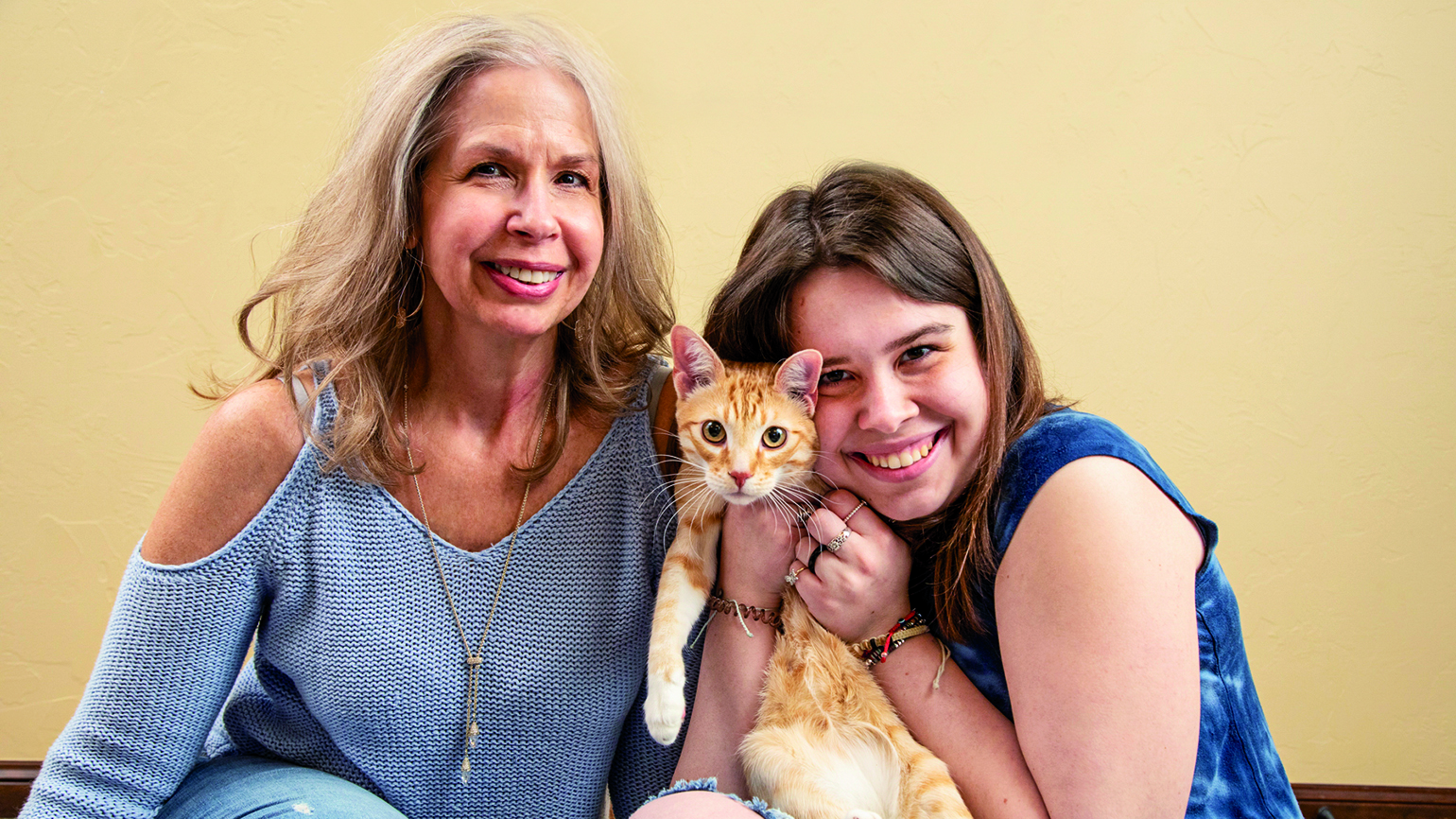
There were four kittens, two orange and two gray. Micah sat on the floor and tried to coax the more rambunctious orange male to come to her but he squiggled under a desk. The other one waited in front of her, tail curled around his body as if to say, “Hello! What about me?”

Micah picked him up. He started purring. “This is the one I want,” she said, smiling.

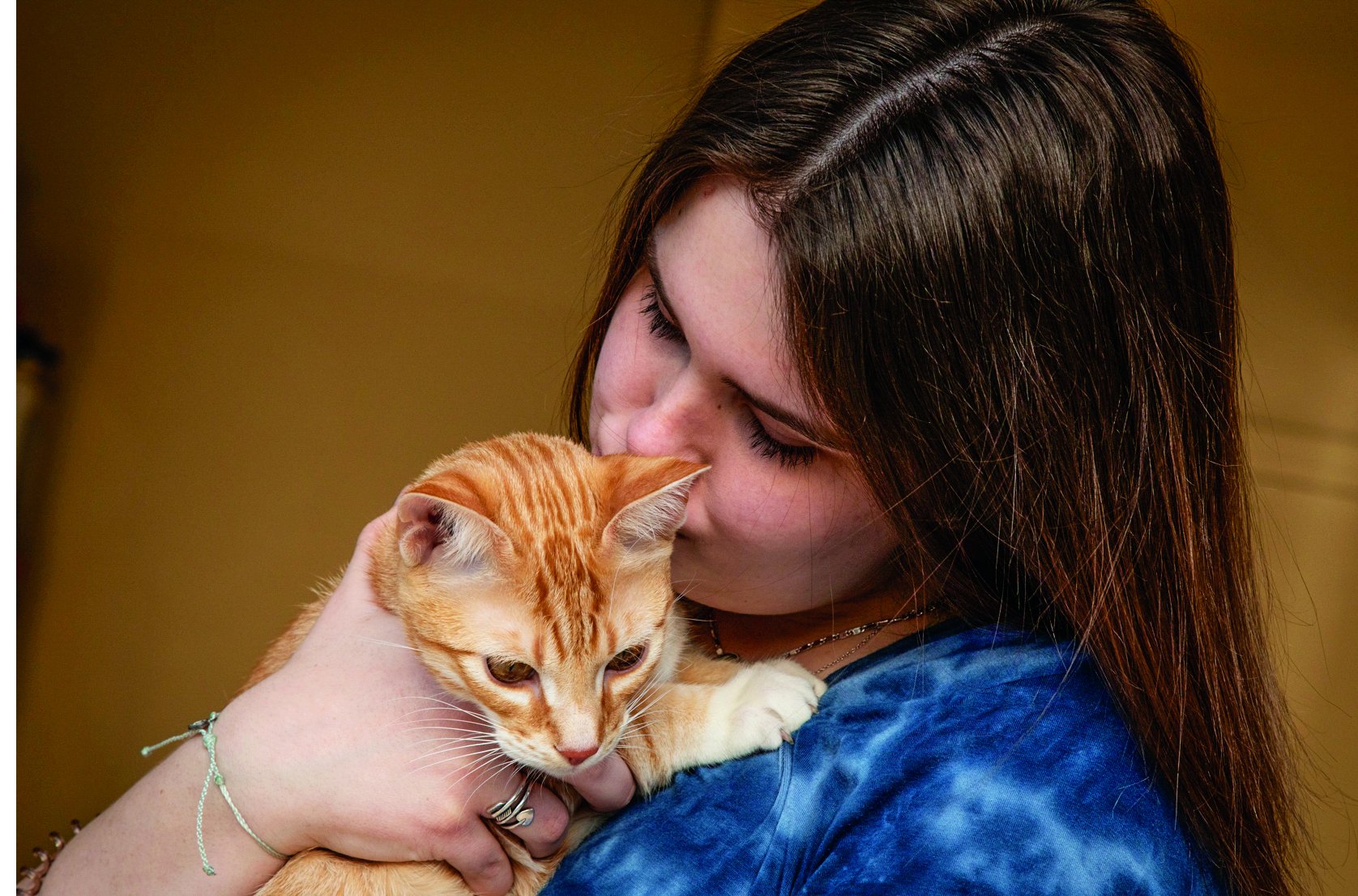
In the car, Micah nuzzled the kitten under her chin. I’d never seen such a tender look in her eyes. She posted selfies on Instagram as I drove to the pet supply store. Normally embarrassed to shop with me, she cradled the kitten and walked by my side down the aisles.

“I’m naming him Ron.” She said his red-orange coloring reminded her of two characters named Ron, from the Harry Potter movies and the sitcom Parks and Recreation.

Micah carried Ron into the house. I brought in the supplies and toys, and put them on the staircase. I headed to the kitchen to make dinner.

“Mom, aren’t you going to help me?”

I tried not to look surprised. I followed her upstairs and held Ron while she scurried about the bonus room kitten-proofing everything. She vacuumed, secured cords and stuck babyproof plugs in all the electrical outlets. Breakables or small objects were put away. Who knew she could be so meticulous?

Micah filled food and water bowls and poured kitty litter into the box. She set up a nylon play tunnel.

“I’ve got to get dinner ready,” I said.

“Mom, can I eat up here?” she asked. “I don’t want to leave him.”

I brought her dinner on a tray like I did when she was quarantined. “Will you stay and play with him while I eat?” she asked.

All these months Micah had made it clear the bonus room was her turf and I wasn’t welcome. Now, as she ate, I played peek-a-boo, the kitten waiting at one end of the nylon tunnel, eager to rush at my face when I looked through the other end. We couldn’t stop laughing at his antics.

“Oh, my gosh. That reminds me when our cabin went caving….” Micah launched into a story from camp, without my having to pry for information.

We spent the next five hours petting and playing with the kitten. Micah talked freely. The only time she picked up her phone was to take photos of Ron.

After the little guy ate, I suggested she put him in the litter box so he’d learn where to find it. “He needs you to teach him,” I told her.

A quiet knowing came over me. Just like the kitten needed training, so did Micah. She might be a legal adult in a few months, but my daughter still needed me. It was up to me to be creative—to find ways to continue teaching and reaching her. 

The next morning, I was about to make Ron’s first veterinarian appointment when I realized I’d forgotten to ask when the litter was born. I sent the owner a text. She responded: “Eight weeks old as of yesterday—born June 15.”

A shiver ran down my spine. June 15, the Monday after Micah left for camp. The day I began praying for our relationship.

More than a year later, Micah and I still bond over Ron. We play with him together and laugh and talk. I thought getting a kitten would help my daughter feel connected and needed. Only God knew that the male orange tabby Micah wanted would do the same for me.

For daily animal devotions, subscribe to All God’s Creatures magazine.

Hope for Your Children, Faith in Their Future

It is every parent’s fantasy—especially in today’s achievement-oriented culture—that their child will move joyfully and effortlessly through life, leaping from success to success, from one mountaintop experience to the next. 

As parents, it’s tempting to believe that if we simply improve on the parenting we received, our children will be protected from life’s hurts and troubles at least the kind of hurts and troubles we may have experienced as children. There’s a certain irresistible logic to this idea.

GP In Article Desktop

Because we love our children, we want to believe we somehow possess the power—through our parenting—to guarantee their happiness, wellness, and success in life.  

For example, the parent who grew up in a household where there was the stress of chronic debt and arguments about money will try to make sure their financial house is in order.

The parent who grew up in a household where education was not valued will want to make sure that their children study hard and do well in school. The parent who grew up in a household that was shattered by infidelity or divorce will do everything she or he can to create a sense of stability and security.  

In my case, because I lost my beloved father to alcoholism, I made sure that ours was a household where there was no parental substance abuse.

Because I grew up in a household where problems were sometimes denied, I worked hard to encourage open and transparent communication in our family. Because I grew up in a household where faith was not so important, I made a conscious effort to introduce our two children to God at an early age, and nurtured that faith throughout their growing up years. 

These were all well-intentioned efforts. But the older I get—or perhaps I should say the older our children get—the more humbled I am to discover that no matter how many steps my husband and I might take to insure our children’s smooth-going in life, they must ultimately find their own way. 

Despite all that we might do with the hope of inoculating them from life’s pain and troubles, they will still have their own hurtful experiences. They will still make mistakes. This is because our children—like we—are human. 

Because our children are human, we can be sure they will struggle with illnesses and accidents. They may become entangled in negative relationships. They may make poor choices, sometimes with serious and lasting consequences. They may even choose to reject God. 

When these things happen, our children will give us sleepless nights. They will anger and disappoint us. Sometimes they will break our hearts. But I am beginning to learn that it is in the pain of trying times that our children are also learning critical life lessons, and that their character is being forged. 

As a person of faith I am learning to trust that, even in the midst of the most difficult circumstances, God is working in our children’s lives. I am learning to internalize Paul’s message of hope to the early believers in Rome when he wrote, “All (Not some, but all!) things work together for good for those who love the Lord and are called according to his purpose.” 

Just the other day I was talking about these things to a good friend (and mother of four grown sons) when she suddenly turned to me and said, “Oh, Kitty. You worry way too much. Let me let you in on a little secret. Our kids really don’t belong to us. Our kids belong to God. He’s their true father, and he gave them to us on loan, for a season.” 

My friend went on to say that despite all our human flaws, God trusts us to do the best parenting we can until the moment comes—and it may very well be a dark and desperate moment—when all we can do is release our children in faith, with prayer, back to their Father Who loves them more deeply and more perfectly than we ever can. 

My friend is right. Letting go is so much easier when I remember that I am releasing my children to a deeply personal God who has every hair on their head counted. A loving Father who sends his angels to watch over them, and who has every day of their lives written in his book of life. Most importantly, I am surrendering my children to a God who knows far better than I what’s best for them. 

As the prophet Isaiah wrote thousands of years ago, “’For my thoughts are not your thoughts, neither are your ways my ways,’ says the Lord. ‘For as the heavens are higher than the earth, so are my ways higher than your ways and my thoughts higher than your thoughts.’”

To recognize that I don’t always know what’s best for my adult children, but to trust that their loving Father in heaven does…

That, I am beginning to learn, is the secret of letting go.

Hope for the Prodigal Teenager

Today’s guest blogger, Andrea Merrell, has written a powerful book for parents with prodigal children–Praying for the Prodigal. If you need hope for your kids, Andrea’s book is for you. Your children may be rebelling against God now, but stand firm in your faith. Stand in the gap for them and remember that God loves your children even more than you do. I hope Andrea’s blog will touch your heart as it did mine.

Blessings, Michelle

God's Constant Presence In Article Ad


Blue lights flashed as I made my way to the drive-thru line at a local fast-food restaurant. The gas station adjacent to the parking lot was roped off with tape and blocked by several police cars. I fought uneasiness and the urge to keep driving.

Andrea MerrellWhen I reached the window to pay for my food, I asked what was going on. Thinking there might have been a robbery, I was shocked to hear, “Young guy went in the bathroom, shot up, and OD’d.

As I drove away, my heart broke and the tears fell. I didn’t know the young man, but I grieved for him—for his friends and family—for all the young people caught up in this destructive lifestyle. Perhaps my tears were also tears of joy and thankfulness. Whenever there is a senseless tragedy like this, I always hear the words, “That could have been your kids.”

And it almost was.

For several years, both my son and daughter were caught up in a lifestyle of drugs and alcohol. My husband and I did everything we knew to raise them in a godly environment, and this was this last thing we ever expected to happen.

READ MORE: BIG PROBLEMS? GOD IS BIGGER

Statistics say that 88 percent of children raised in an evangelical Christian home will leave the church by the age of 18. Many will turn away from authority, parental values and biblical teaching, losing their potential, their health, and their destiny—sometimes even their lives. We just never thought it could happen to us. Suddenly we found ourselves dealing with not one but two prodigals, and we had no idea what to do.

During those dark, dreadful days, there were tears, anger, frustration, exorbitant expenses and many sleepless nights. It was only by God’s grace that my children survived. There were many times they could have gone to jail, been critically injured, or even died. Because I blamed myself, my guilt and condemnation caused me to doubt myself and even God. How could He possibly let this happen?

The truth is: Even good kids rebel—and even good parents can end up with a prodigal.

I learned that God loves my kids even more than I do, and He is well-able to take care of them. My responsibility is to love them and pray His Word over them daily. Before I could do that with faith and confidence, I had to get my relationship with Him back on track by forgiving myself, forgiving my kids, and by learning to trust God with my whole heart.

The road was long and filled with potholes, but God was faithful. He protected my son and daughter, delivered them from the drugs and alcohol, and restored them to a right relationship with Him and with their family. The lessons we learned along the way were numerous. He gave us practical survival tips to keep our sanity in the midst of the crisis and taught us how to stand firmly upon His promises.

If you or someone you love is dealing with a prodigal, know that there is always hope. Take it from someone who has been there—and survived.


Andrea Merrell is an associate editor for Christian Devotions Ministries and Lighthouse Publishing of the Carolinas. She is the author of Murder of a Manuscript, The Gift and Praying for the Prodigal.

Hope Arrives on the Wings of Doves

I sat in the breakfast nook with my four-year-old son, Matthew, trying to ignore the ache in my stomach. “Mama, want to play?” Matthew said, rolling his Tonka trucks up and down my leg. I shook my head. “Not today, baby.”

These days I could barely get out of bed. I was still recovering from an emergency hysterectomy to remove a benign tumor. Toys cluttered every room of the house. I hadn’t cooked in ages, relying on casseroles from the ladies at church. I prayed for strength and happiness. But the future seemed so bleak.

Light for Life NASB Study Bible in Article

“We don’t need a big family,” my husband reassured me. “You and Matthew are all I need.” I couldn’t get past it, though. I’d always wanted five or six kids, ever since I read Cheaper by the Dozen in high school. Three miscarriages and one surgery later, that dream would never come to be.

Matthew jumped up from his spot on the kitchen floor. “Birdie!” he squealed, rushing to the sliding glass door that opened onto our courtyard. Sure enough, there was a white dove perched on a rubber tree.

It sat there a few moments, then flew away. Strange. I’d never seen one in our neighborhood before.

When I dragged myself to the kitchen the next morning, the dove was back. This time with a mate carrying twigs. “Look, Matthew,” I said, pointing to the tree. “They’re going to make a nest.” The doves flew in and out of the courtyard all week, building on top of the rubber tree.

Matthew could hardly contain his excitement. Every morning, he’d run into the kitchen and take his spot by the sliding glass door, talking to the birds while they worked. His enthusiasm was contagious. As much as I was grieving, I couldn’t help but look forward to the doves’ visits too.

We watched their progress as if it was a real-life soap opera unfolding before us. I’d make breakfast, scoop Matthew up into my lap, and for a moment, my pain disappeared, replaced by joy.

Then it all went wrong. The courtyard was a safe enough spot for a nest, but the rubber tree’s broad, glossy leaves were far from stable. One night, a gust of wind blew through, flinging the doves’ nest to the ground. I heard the twigs snap apart.

I surveyed the damage. It figures, I thought, turning off the kitchen light and heading to bed. Nothing good ever lasts. I wouldn’t blame the doves if they never came back.

But they returned. And they paid no attention to the pile of sticks that had once been their nest. They started again from scratch. Again, though, the wind destroyed all their hard work. The next day, and the next, they renewed their efforts, as if immune to despair.

The evening I saw the fourth nest meet its doom, I knew I had to do something. The doves had given me something to look forward to, even on my darkest days. Now I was going to help them in return.

I woke up the following morning with a plan. There was only an hour before the time the doves usually made their visit. I rummaged through the garage for an old piece of shelving.

I leaned a stepladder by the sliding door, hammered the shelf to the wall next to the rubber tree and covered it with leaves so it looked like part of the tree.

Then Matthew and I huddled by the door. Waiting. Hoping.

“The birdies are back!” Matthew announced. There they were–sitting on top of the shelf, adding bits and pieces to the new nest. I danced Matthew around the kitchen. “It worked!”

Two weeks later, we watched three chicks break free from their shells. “Chirp, chirp!” Matthew sang. I held him close and kissed the top of his head, feeling more positive and hopeful than I had in months.

Maybe I didn’t have quite the kind of family I’d imagined. But, all around me, life went on. And it was filled with wonder and surprises, blessings God had in store that I couldn’t even imagine. Like a pair of white doves, building a nest on top of a rubber tree. And me. Waiting. Hoping.


Download your FREE ebook, Rediscover the Power of Positive Thinking, with Norman Vincent Peale

Mother of Five

I’d always wanted a daughter. I come from a family of girls. Each of my three sisters has a girl. Naturally, I thought I was meant to have a little girl of my own.

My husband, Lonny, and I had our first child, a beautiful baby boy. I figured our girl would come along later. Our second child was a son too. So was our third. And our fourth.

God's Constant Presence In Article Ad

My fifth pregnancy wasn’t a surprise. Lonny and I planned for a big family. But we did consider the likelihood that this baby would be our last. I loved my boys utterly. It was just time to have that girl I’d dreamed of.

I pushed back the first ultrasound to early January so the baby would be developed enough to identify gender. Being pregnant at almost 40 warranted the super ultrasound at the university medical school.

I lay on an exam table, Lonny standing beside me, as the doctor roved the transducer over my belly. The baby was healthy and strong. Only one question remained.

I closed my eyes and pictured my little girl. Wisps of blonde hair escaped her ponytail. Her eyes were wide and green. She wore cotton and crochet on top, and bare pink toes fringed out from frayed jeans.

Her gentle spirit was evident in the way she moved. She was mine to teach, mine to mold, mine to pour myself into.

A fresh squirt of goop on my belly jarred me back to reality. “Are you ready to know what you’ve got?” asked the doctor. Lonny drew my hand into his, and I nodded. Our eyes were fixed on the monitor. The marbled image on the screen moved closer.

I was pregnant with our fifth son.

Everything about the walk through the university parking lot was slow. Conversation was slow. Our pace was slow. Even the snowflakes that shook from the clouds were slow. “You know, Shawnelle, you are an awesome mom to our boys,” Lonny said. “No one could do better.”

“I adore our boys,” I said.

“They’ll be great men,” he said, “because of you.”

That I wasn’t so sure of. I was gentle, sensitive by nature. I loved books, not bugs and baseball. I worried that my boys would need more than I could give them, especially as they got older.

“Are you okay?” Lonny asked.

“Sure,” I said. But I wasn’t, and I was ashamed of it. We had lost a baby early in our marriage. We’d struggled through a time of infertility. I had friends who couldn’t conceive. I understood the fragile blessing of a baby. I just couldn’t control the tears.

That night I waited for Lonny’s breathing to fall into the even rhythm of sleep before I crept from our bed. I stepped around the action figures and dinosaurs in the hall and curled up in our wing chair in the family room.

God, are you sure you’ve got this right? I asked. I’m confident I can raise a daughter well. I have so much to teach her. But I’m not sure how to raise strong men. I just don’t feel qualified. I strained to hear a reply. Nothing except the tick-tock of our grandfather clock.

Winter–and my pregnancy–progressed. March brought a thick end-of-season snow that sogged through our mittens as my boys and I played at our friend Sue’s farm. Sue was the ultimate boy’s mom. An all-star. I admired and envied her.

I’d seen her wrestle her son to the ground and hold him for a 10 count. She could send a football soaring and wallop a baseball to next Tuesday. And she could nail a moving target with a March-heavy snow bomb.

“Over here, Mom,” my firstborn, Logan, called. He popped up from behind a snow bank.

Grant, my second son, bounded up. “Snow dogs unleashed!” Samuel and Gabriel, my two youngest, charged. All my boys were armed with snowballs. All fired at me. Slush snaked past my collar and down my back.

I wanted to call it quits then and there. If I had my way, we’d be snuggled under warm blankets, drinking hot chocolate and reading aloud from a great book.

Instead, my boys waited for payback. I knew they wanted to be chased down and attacked. I scooped up snow. I jogged toward my herd of boys. I aimed and fired. And I missed every single one. My belly, thick with baby, and my lack of natural athletic ability prevented proper retaliation.

Sue sprinted toward us, chasing her son. Her long stride narrowed the distance. She tackled him, pinned him and bounced back up. Then she ripped after my boys. She scooped and fired like a combat machine. One, two, three! Snow missiles exploded on bright parkas.

Only Gabriel, my toddler, was spared. He squealed with delight anyway. My boys peeled after Sue. I stood in the falling snow and watched, longing to be a fun mom for my boys, a wrestling mom. To be good at what they liked to do.

Spring came. Lonny and I took long walks along the Mississippi. One afternoon when the river was flat and smooth and the air heavy with rain, we walked hand in hand. Our two youngest ran ahead, filling their pockets with rocks, poking at anything they could with sticks.

“It won’t be long now,” Lonny said. We both looked at my swaying belly. “Are you settled with this, Shawnelle? Having another son?”

“I love this baby entirely,” I said. “Sight unseen. But I do still wonder.”

“About what?” Lonny asked.

“I wonder what God is doing. I want to be the best mom I can be. I just don’t know how to put what I’m good at into boys.” Lonny was silent.

“And I want to be what they need me to be. I want to teach them what they need to know. I want to be on the same page with them. Sometimes I feel like I’m not even in the same book.”

“You are exactly the mom our boys need, Shawnelle. One hundred percent. Why else would God keep giving you men to raise with me?”

Our conversation halted. Ahead lay a little boy’s dream. A puddle the size of a wading pool. Before I could stop them, Samuel and Gabriel peeled off their shoes and socks and leapt gleefully into the muddy water. I sighed. Puddle stomping. Another thing that would never come naturally to me.

Our baby’s arrival drew closer. We decided to name him Isaiah. I was waking up a lot at night. Often I’d make my way to the family room, curl in our wing chair and take my questions to God.

You made me quiet and gentle. You gave me the ability to be sensitive to others and care for their needs. How do I fold these things into my boys? I want to raise strong men.

At last it was time for Isaiah to join our family. That morning broke calm and clear. Because I was a repeat customer, my obstetrician let me choose where I wanted to be on the surgical line-up. I was scheduled to be the first C-section of the day.

Lonny and I loaded our sons into the Suburban and drove to the hospital. I went into the surgical prep room alone. Once I was fully decorated with tubes and monitors, the nurses stepped out and shut the door.

It creaked open again. One by one, my boys shuffled in. They assembled alongside my bedrails. Lonny stood near the headboard. “You’ll be okay, Mom. I know you will. We’ve prayed for you,” Grant said. His eyes were brimming.

“Thank you for doing this, Mom,” Logan said, his voice quivering. “Are you comfortable? Can I get you another blanket?”

“I have your slippers ready. For when you’re done. I love you, Mom,” Samuel said. His lower lip trembled.

“Love you, Mama,” echoed Gabriel. “Love you.”

My four strong boys. Two to my right. Two to my left. Eight hands rested on the white sheet that covered me. Some of the hands were nearly man-sized. Some were still small and could barely reach me. Their gazes, though, were what drew me.

My eyes locked on the wide green eyes of each of my sons. And what I saw there stirred my soul. Compassion. Mercy. Gentleness. Love.

These qualities, the ones that God had given me, were not lost. They were not bound by gender. And they did not flow into my sons as a weakness. These qualities helped make a man, just as Lonny told me–a man strong enough to care for others.

I am a wrestling mom, I thought. I wrestled with God over his plan for our family, and he showed me how he’d let me win. With Logan. Grant. Samuel. Gabriel. And now, Isaiah. I couldn’t wait to hold my fifth son in my arms and look into his wide green eyes.

For more, read Celebrating Mom: 7 Inspiring Stories about Mothers.

Honey to the Rescue!

My new dog, Honey, trotted after me as I walked to my Toyota 4Runner that morning. I’d had her only a couple of weeks, but we’d become nearly inseparable. I’d gone through heart surgery a few months back. I figured taking care of a dog would keep me active. Besides, my wife’s job took her out of town a lot, and I could use the company. So I went to the local animal-rescue center.

The little cocker spaniel quivering in a cage caught my eye right away. I leaned over to get a closer look. She had scared eyes. I could tell she longed to be picked up and hugged. I went to talk to the shelter worker. “She just came in,” the woman told me. “Her name is Honey. Five months old. The owner said she couldn’t take care of her anymore.” The worker opened Honey’s cage and let me pick her up.

I stroked her silky fur and cooed. She stopped shaking. The two of us went to the side yard, where I picked up a ball and tossed it. I sat down to watch Honey race after the ball, ears flopping all the way. She came flying back toward me, ball in mouth, and leaped right into my lap. That was that. I filled out the paperwork and took Honey home.

She followed me like a shadow from the very first day. She loved to snuggle on my lap.  The only thing better was when she kept my feet warm by sleeping at the foot of the bed.

That morning, I decided to take Honey with me while I ran some errands. My wife was away for a few days, and I hated the thought of leaving Honey alone. I grabbed my keys and made sure I had my nitroglycerin tablets. I opened the 4Runner’s door. “C’mon, Honey. Let’s go.”

She jumped into the cab and settled down on the passenger seat. I got behind the wheel and started the SUV. It’s always tricky turning around. We live in a remote area up in the hills outside San Rafael, California, surrounded by towering redwoods. You have to drive up the mountain in low gear to get to our driveway, which is barely wide enough for one car and ends at a steep drop-off.

I twisted around and backed up slowly. Just then, a flash of sunlight blinded me. I put my hand up to shield my eyes. I felt a jolt as the left rear section of the SUV dropped. Oh, no! The edge! The car slipped in the soft soil, and rolled. I hadn’t put on my seat belt yet; I was waiting to finish turning around. Now I tumbled inside the SUV as it somersaulted down the ravine. Branches snapped. The 4Runner rolled faster. Four, five, six rolls until I heard a horrible crunch.

A giant limb plunged through the roof, hit my leg and chest, then embedded in the dash. We landed upside down. I felt a searing pain in my chest. I was pinned. I looked over to find Honey. She was still in the passenger seat and, thank God, she was okay. Shook up, though.

“Sorry, girl,” I gasped. I tried to see if I could unpin myself from behind the wheel. I cried out from the pain. It was no use. Something was wrong with my leg. I grabbed my cell phone and dialed 911. Please, God, let the call go through. The phone beeped twice. Just as I’d feared, I couldn’t get a signal at the bottom of this ravine. Now what?

I figured we were at least fifty feet down. Robin, my closest neighbor, lived a quarter mile uphill from me and had her own driveway. There was no reason she or anyone else would drive up to my house. And even if someone did, they wouldn’t see the wreck. My chest hammered.

Calm down! I told myself. I had stents in my heart, after all; I couldn’t afford to panic. I groped in my shirt pocket and pulled out the nitro tablets. I took one out, slipped it under my tongue and took a deep breath. My heartbeat slowed. But I still had pain in my chest. Must’ve busted some ribs. Honey whimpered. At least I could get her out of here. There was a hole in the driver’s side rear window. It was small, but just maybe . . . “C’mon, girl,” I said.

Painfully, I reached over and picked her up. I gently put her head through the hole, careful not to get her too close to a jagged edge. I got her fanny through and gave her a pat. “Go home, baby.”

She jumped to the ground and raced up the side of the ravine. My heart pounded like a jackhammer, so I took another pill. Maybe the horn. I tried, but couldn’t reach around the tree limb. I shouted, but knew that wouldn’t make any difference. No one would hear. I sat there for hours. My ribs throbbed. By now I knew for sure I’d busted some. The pain was so bad. And I couldn’t feel anything in my left leg.

If I ever got out of this mess, I’d probably lose it. I’d be a one-legged guy with a bum heart. And a cocker spaniel. Honey. Had she made it up the ravine safely? Had she found her way home?

She hardly knew the area. What would happen to her? The last bit of light filtering through the leaves faded away. Now, with the sunset, the air turned cold. I shivered. Maybe Honey will get help. Who was I kidding? Stuff like that only happened in the movies. “What is it, Lassie? Is Jimmy in trouble?” Honey was probably lost in the woods. And I’d gotten her into this mess.

I felt my heart start racing again. Help me stay calm, Lord. You’ve given me a good life. A great wife. A great little dog. Watch over them if it’s my time. And, if not, please help me out of this. So tired. My pulse was weakening. All I had to do was close my eyes and . . . Slam! I jolted awake at the noise. Was that a car door? “Help!” I shouted with all my strength. “Help!” A voice answered, “Who needs help?” It was Robin. My neighbor!

“It’s me, Mike,” I yelled back. “Down here. Call 911!” It seemed only minutes later I heard the throb of helicopter blades overhead. The rescue crew landed and made their way down to me. It took them forty-five minutes to cut me out of the SUV and get me up the ravine.

We flew to the hospital in the helicopter. I had all sorts of tests, X-rays, an IV. I’d broken five ribs, and there was internal bleeding and some serious muscle damage in my leg. “It’ll take awhile to recover,” an ER doctor told me, “but you’re going to be okay.”

“What about Honey?” I asked Robin. “She’s fine,” Robin said before they wheeled me off to my room. I wouldn’t be going anywhere for awhile, so the next day a friend brought Honey to the hospital. She got right up next to me on the bed and snuggled close. With her there, it was like my pain disappeared. “It was the strangest thing,” Robin told me later. “I got home from work and Honey was waiting for me. She got all agitated and ran in circles, like she was trying to tell me something. She was frantic.”

Robin figured she’d bring Honey back to my house, and that’s when she heard me yell. How that little dog knew what to do and where to go is beyond me. She’d never been over to Robin’s house. And here’s the kicker, maybe. One day not long ago I was looking through her papers, which the shelter had sent to me. She had a different name originally. Can you guess? Angel. But I already knew that.

Home Grown Happiness

Barb Kline and Randa Shannon hadn’t planned on becoming farmers. They were nurses who wanted a home within Pittsburgh’s city limits with enough room for the dogs to run around. What they got in 1999 was all of the above and then some: a fixer-upper and five acres of land that had been farmed since the 1800s.

“We saw the land and knew we had to preserve it,” says Barb. She and Randa named their new venture in honor of their mothers, who had the same first name: Mildred’s Daughters.

You Got This In Article Ad

They had everything to learn about farming, so they interned with an organic gardening expert before starting to work their land. Still, they were a couple of farm hands short until they got a call from Pittsburgh Urban Leadership Service Experience, offering them interns.

Working with enthusiastic young people and meeting more of their neighbors (both buying and selling) at local farmers’ markets, Randa and Barb began to see they could grow more than beets, blueberries, leeks and lima beans. They could grow a community.

So they hosted a weekly Weed and Feed, rewarding garden volunteers with a dinner made of homegrown food. More people wanted to see the farm, learn and volunteer. “And not just environmentalists,” Randa says. “Church groups, schools, singles, mothers pushing strollers.” In 2003, Barb and Randa started Grow Pittsburgh to promote sustainable urban agriculture, joining other farmers in the area to offer produce subscriptions, farm tours, classes (Barb loves to talk about heirloom tomatoes) and of course, the chance to pitch in.

“What’s happened is different than our original vision, to make our concern for the environment and quality of life real,” says Randa. “Now we’re saying let’s create a space and a means for people to connect and see what happens.”

His Newfound Passion for Photography Changed His Life

I glanced over at the passenger seat. My 17-year-old daughter, Emma, was on her phone again. “I drive you to school every morning, and every morning you ignore me,” I said. “Can’t you put down that phone and talk to me?”

Emma shrugged. “About what, Dad?”

Light for Life NASB Study Bible in Article

“I don’t know. Your life?”

“Why would I tell you about my life? You’ll just get mad at me, like you always do.”

“I shouldn’t get upset when I see you making poor choices?” I said, my voice rising. “I only want the best for you. You should be grateful!” I pulled up to her school. Emma got out and slammed the door without saying goodbye.

When I got home, my wife, Sandi, took one look at my face and said, “You fought with Emma again.”

“She’s infuriating,” I said.

“She’s a teenager.”

“She gets under my skin.”

Sandi sighed. “Everything seems to get under your skin, Matt. It’s not normal to be angry all the time. It’s not healthy.”

It wasn’t the first time Sandi had brought up my anger issues. I had to admit, lately I’d been overreacting to every little problem.

I’d struggled with anger and negativity since I was a kid. I grew up in South Florida, the youngest of six boys. I spent my childhood trying to keep up with my brothers, and I always felt as if I was an afterthought, the last one picked for the team. Being an artist made me different, and awkward around others. Even at church, my connection to God seemed so different than other people’s. Was there a way to connect to God in my everyday and not just in a building on Sunday?

After high school, I got a degree in art and landed a job at an ad agency, designing logos and doing other commercial work. I was good at it and did well, but you know how some people look on the bright side? I couldn’t help looking on the dark side, bracing my-self for troubles I was sure would arise.

I was amazed when something—someone—wonderful came along. At 25, I met Sandi. She was born and raised in Hawaii and was working as a flight attendant. Miami was one of her airline’s hubs. Sandi and I clicked, so well that she canceled her request for a transfer to the West Coast to be closer to Oahu.

We married in 1992. Emma was born the next year. Two sons followed. For a time, having a family of my own helped me see the good things in life, but the stress of providing for them finally got to me. The graphic arts field was changing rapidly as software made things more automated. I developed fibromyalgia-like pain and digestive problems. I went to the doctor and detailed my symptoms. He said, “Have you ever thought about taking an antidepressant?”

How dare he suggest that my illness was in my head! My problems weren’t emotional; they were physical.

One day at work my fingers hurt so much I couldn’t even move my computer mouse. I went home feeling lower than ever.

I couldn’t work for a whole year. I saw different doctors. The only one who seemed to have any answers was an alternative medicine doctor. He linked my diet of processed foods to leaky gut syndrome, which he said can cause all sorts of symptoms, including depression and anxiety. He put me on vitamins and a strict, bland diet, which helped lessen the pain in my hands. Maybe I am depressed, I thought, and the emotional pain is causing the physical pain.

By the time I was able to return to work, the graphic arts field had changed even more. My old boss gave me some freelance assignments, but I couldn’t get enough other work to pay the bills. If I’d been more positive, I would have been motivated to figure out how to remain relevant in my field. Instead, I felt defeated.

Some days it took all my energy to get out of bed. During my darkest moments, I wondered, What is the point of living like this? I can’t even support my family. I’m a failure. We had to take out a home equity loan or we wouldn’t have stayed afloat. To make myself useful, I took over tasks like driving Emma to school.

If the blowup we had that morning was any indication, I was failing at that job too. Sandi was right. My anger wasn’t healthy for me. Or for my family. I had to find an outlet, some way out of this cycle of negativity.

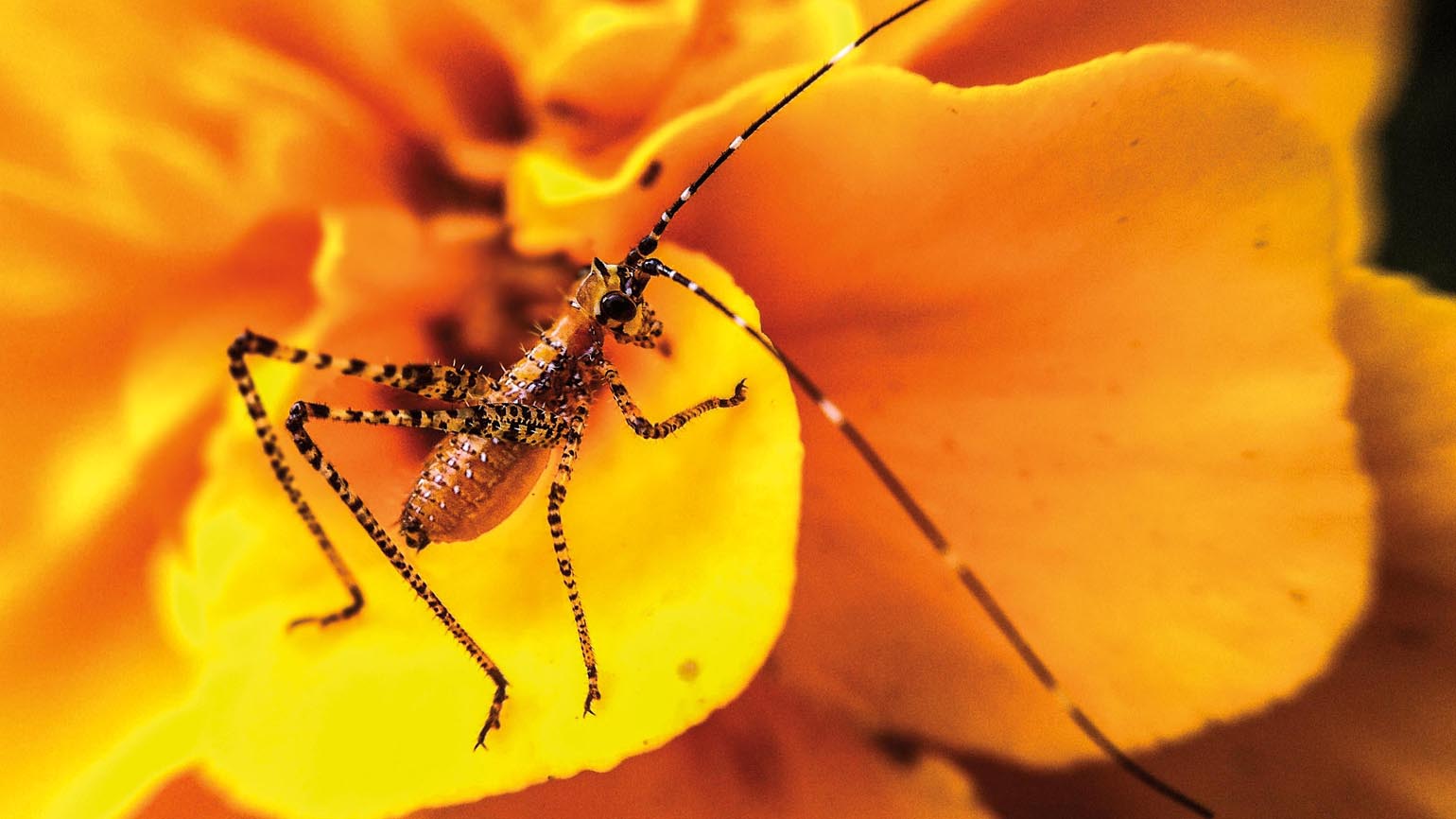
Not long after, a friend showed me his macro lens, which he clipped on his smartphone to take extremely close-up photographs. His photos made very small subjects look larger than life. I was captivated. I ordered a macro lens as a birthday gift to myself.

As soon as it arrived, I attached it to my phone and headed out into the yard. I spotted a tiny iridescent fly on the wall. Through my new lens, I could see how its eyes and body seemed to change color, depending on the angle of light. Beautiful. I crouched in the grass and took what seemed like hundreds of pictures of that fly.

Every morning after I dropped off Emma at school, I went out in the yard and looked for something interesting to photograph. Some insects flew away as soon as I got near them, so I trained myself to be still.

I spent hours kneeling in the grass with my phone. I would slow my breathing and relax my body. Anything that was bothering me would fade away. Looking through my macro lens was like getting a glimpse into an awe-inspiring hidden world. Amazing things that I had walked past my whole life without noticing. I’d capture the morning dew on a leaf, a spider spinning a web, a bumblebee on a flower. Focusing my energy—and lens—on something so small brought me the most peace I’d ever felt.

It was also the closest to God I’d ever felt. Where I used to see just an insect, now I saw a beautiful living being. If God created that bug so intentionally, he must have created me for a specific purpose, and he would help me find it.

I posted my photos on Instagram. People liked and commented on them. Some asked me for advice about photography. It felt good to teach them how to do something I loved. I was sort of a macro guru and even shared Bible verses that seemed to align with the images. Was God speaking through his tiniest creations? I had found my church outside the building.

Macrophotography became my outlet. Whenever I got into an argument with Emma or felt stressed out, I’d grab my phone and find something to shoot. One time, I came across a baby lizard sitting on a plumeria bush. He had a scar across his eye. Has your life been hard? I asked. Mine has.

My photography techniques filtered into other parts of my life. One day when Emma ignored me, I took deep breaths. Then I calmly explained why her behavior bothered me. “We’re so much alike that our relationship gets complicated,” I said. “We have a lot of the same struggles.”

Emma nodded. “Life is hard.”

I told her how photography was helping me with my depression, especially the anger that came with it. It was the most open conversation we’d had in a long time.

It has been 10 years since I discovered macrophotography. Our family has gone through some big changes. We moved to Hawaii in 2014 so Sandi could be closer to her family. I was offered a job teaching art in an elementary school. I love it. Hawaii doesn’t have as many bugs as Florida, but it does have an abundance of natural wonders to photograph.

As you can probably tell, I’ve made peace with depression. I can face those darker days now. I can feel my anger or sadness, then find a way out of it. It takes light and shadows to make an interesting photograph. I think the same is true of life.

One Father’s Day, Emma gave me a book she’d put together of my photographs with verses from the Bible as captions. Macrophotography has turned out to be an even greater gift from God than I thought.

Did you enjoy this story? Subscribe to All Creatures magazine.

His Grandmother Trained Him to Be a Gentleman

Every Wednesday when I was 16, I’d change into a nice button-down and my best jeans after school. Then I’d ride my bike on the path between our house and my grandmother’s outside Meadville, Pennsylvania. Exactly at four, Grandma Honeybunch—we always called her that, though I don’t know why except that it fit her sweetness—would pull her dark green Dodge Stratus sedan into the dirt driveway.

“Hi, Kyle!” she would call out, trying to hide how worn out she was from a long day on her feet at the chair factory. “It’s our date night! Give me a few minutes to get ready.” I waited in her living room, fiddling with the Nintendo console I knew she practiced on so she could beat me. Grandma Honeybunch loved her bragging rights!

Faithful Paws and Purrs In Article Ad

Out she’d come in a flowered print dress, her short, curly gray hair freshly brushed, wafting in a cloud of the perfume she wore just for the occasion. “Where’s my purse?” she’d ask, absentminded as usual, and I’d retrieve it from under the table or between the couch cushions.

Then we were off, with me behind the wheel of the Dodge so I could log 100 adult-supervised hours for my license. Our biggest adventure had been when I drove us to St. Louis for a family reunion, windows down, the wind blowing through our hair, as Grandma Honeybunch tried to navigate, something she wasn’t too good at.

Most Wednesdays we headed to Taco Bell or KFC in Meadville, me tootling along well under the speed limit. Sometimes we’d splurge and dine at Cracker Barrel in Union City.

I’d just started trying to woo the ladies, so one night I asked Grandma Honeybunch, the most ladylike of them all, to teach me to be a gentleman. Her generation was, after all, much more romantic and polite than my own. I hurried to open her car door, then escorted her to the restaurant, where I again held open the door. “Perfect,” she said.

I pulled out her chair, then took my seat. “Napkin in the lap,” she reminded me. “Then wait to hear what the lady is having before you order. That way you’ll know you have enough money for the bill.” I followed her instructions to a T. The waitress beamed at us. “Now on to the proper silverware etiquette,” Grandma Honeybunch said, “starting with the salad fork.” Over our meal, she teased me about girls. “I see you have your eye on Susan at church.”

I blushed. “What should I do to make her like me?”

“Be sure to ask her how she’s doing,” Grandma Honeybunch said. “And smile a lot. Let her see you’re a happy person.”

I paid the bill, leaving the tip Grandma Honeybunch instructed, and drove us to church, where I’d go to youth group and she to Bible study. Before we went in, she dug into her big black purse. She pulled out a pack of Wrigley’s Spearmint gum and offered me a stick, our ritual.

“Nothing is more important than fresh breath,” she said, holding out her hand for the wrapper, which she crumpled into her purse. Sometimes she’d pull out the gum at a random moment, never failing to take the wrapper, which cracked me up.

I did end up dating Susan from church, with Grandma Honeybunch’s full approval, though it didn’t last. Even after I got my license and my own car, my grandmother and I continued our Wednesday date nights, but once I graduated and got busy with college and a part-time job, I didn’t have Wednesdays free. I still spent as much time with her as I could, regularly losing at Nintendo by then.

The Thanksgiving I was 22 and she was 67, Grandma Honeybunch left my aunt’s house after dinner to go home. Hours later, the police called. They’d pulled her over hundreds of miles away, in Ohio. She had no idea how she’d gotten there.

It was a shock for all of us; she had always been so absentminded that we’d missed the early signs of her Alzheimer’s. We knew we couldn’t let her drive anymore; I took her car. Driving the Dodge was never the same, though, without my grandmother by my side, steering me right in more ways than one.

By the next year, Grandma Honeybunch was forgetting to eat. Our family made the difficult decision to put her into a memory care unit at a nursing home. It broke my heart to visit her there, as she went from knowing who we were to becoming totally unresponsive. She passed away 12 years ago.

I haven’t found the right woman yet, but when I do, I know Grandma Honeybunch will be with me in spirit to offer a stick of Wrigley’s. Sometimes the smallest things we remember make the biggest difference in life.

For more inspiring stories, subscribe to Guideposts

His Granddaughter Remembers Dr. Norman Vincent Peale

Hi Guideposts. I’m Katheryn Allen Berlandi, seventh grandchild of Dr. and Mrs. Norman Vincent Peale.

I am honored to be a member of the board of Guideposts, sitting here next to an original printing of The Power of Positive Thinking reminds me of the power of the legacy of Grandma and Grandpa Peale, and what an honor and a privilege it is for me to carry forth that legacy. I think about Grandma and Grandpa every day, as they taught me so many lessons about how to be present with people, and to do what possible to help enrich their lives.

Pray A Word a Day - 2023 In article

Grandma and Grandpa taught me and my cousins and siblings so many lessons, and truly those lessons were learned by us by observing Grandma and Grandpa and the way they conducted themselves throughout their lives.

Three of them stand out for me, and one is to be kind to others. Seemingly a very simple act, but it does take thought, and it takes time, and it takes opportunity, all of which we do have at our fingertips. So be kind to others.

Another lesson from Grandma and Grandpa Peale was to be a good listener. And I observed this in them every single time I was with them, whether we were amongst hundreds of people or whether we were just with our family, listening, looking the other in the eye and making them feel as though they’re the only person in the room.

And the third lesson is to be a part of something that’s bigger than yourself. And that could be anything from a volunteer opportunity or being on a prayer chain or contributing to your community in some simple or large way.

I find myself utilizing Grandpa’s lessons of positive thinking throughout my days, certainly as a mother and as a spouse and professionally. And again, we come back to choice, and that is life is going to hit us in all different places, and it doesn’t always feel good or feel right or fair. And it is in those moments that we can make a choice to think positively, which doesn’t mean it’s all going to turn out just the way one would hope, but having the attitude and hope there is part of positive thinking. The attitude of, I’m going to be all right or we are going to be all right.

The power of positive thinking or living with a positive attitude is an active way of being. We can have hopes and dreams, but we’ve got to work at them. And we have to figure out ways, constructive and positive and fruitful ways to navigate through our lives.

Grandma and Grandpa started a number of ventures, and one of them, of course, was Guideposts. Guideposts began as an inspirational magazine with inspirational first-person stories, and that exists today. And it’s a very, very successful magazine because the needs of people out there just like you and just like me need to hear inspirational stories.