Embrace God's truth with our new book, The Lies that Bind

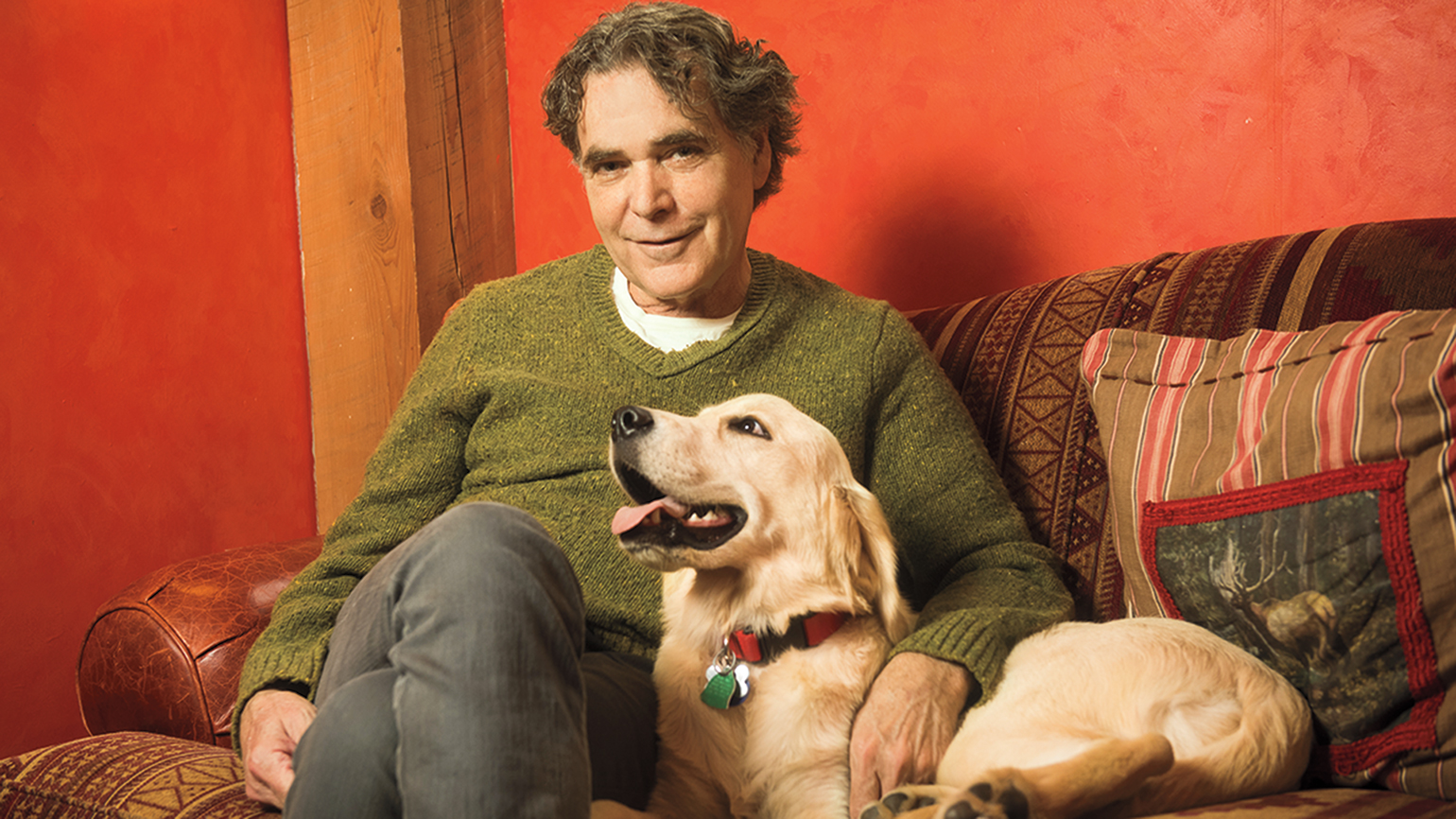
His Dog Taught Him a Lesson in Forgiveness

“Be kind and compassionate to one another; forgiving each other, just as in Christ God forgave you.”—Ephesians 4:32 (NIV)

If looks could kill, I’d have been dead twice over.

I’d taken Gracie to one of her favorite places—Tractor Supply Company. Gracie has trained the cashiers there to give her treats, planting her big paws on the counter. Smart girl. But I had a secret agenda, and when Gracie perceived my nefarious plan, I got the look.

A bath.

At the rear of the store is a little doggie spa with tubs, shampoo, towels, blow dryers, combs, everything you need to bathe your dog.

I’ve never understood how a dog who loves to roll in mud finds a bath so objectionable. I talk softly to her and ply her with treats, and she still acts as if she’s been led to the gallows.

At home, she retires to one of her several beds and shows me her back. Turning their backs is a way dogs sometimes demonstrate that they are upset with you. Today she was particularly adamant in her affect. Even when I brought her a peace offering—a bit of string cheese, her favorite—she snatched the treat from me without making eye contact.

So I settled in to watch the Yankees drop another game to the Rays. I was nodding off when I felt a cold nudge on my hand. Gracie. She looked up at me as if to say, “All is forgiven. Let’s be friends again.”

Forgiveness is difficult. I’m not always as magnanimous as my dog. I can cling to a grudge. Maybe I derive satisfaction in nursing a sense of injustice. Yet I know that forgiveness is a necessary ingredient in a strong faith. Jesus came to earth to forgive our sins. We are expected to forgive. I scratched behind Gracie’s ears, and she laid her head on my knee. It was nice to be friends again.

Lord, you know I have trouble forgiving a wrong. Today help me let go of a resentment and take a closer step toward you.

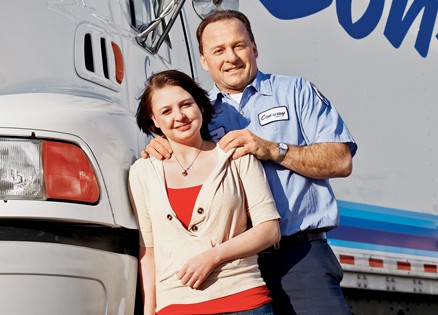
His Daughter Inspired Him to Talk the Talk

My wife, Lynette, was flipping through the pile of mail on the kitchen counter. “Why didn’t you tell me?” she asked, waving an envelope while she scanned its contents.

The letter.

extraordinary women of the bible

I’ve been a professional truck driver for 28 years and I’ve got more than a million-and-a-half miles under my belt without an accident–something my company, Con-way Freight, took notice of.

A couple months earlier they’d nominated me to become an America’s Road Team Captain, the highest honor for a truck driver. There are more than three million drivers in the country, and just 30 finalists compete in Washington, D.C., for a dozen Captain positions.

The winners travel across the country, talking to the public about transportation and road safety. It was a title I’d dreamed of for years–and that letter was my invitation to the finals.

When I read, “Congratulations! You’ve been chosen…” I can’t tell you how thrilled I was. Then I froze. A big part of the competition was public speaking. I’d never given a speech in my life! And I wasn’t sure I wanted to.

I’m the quiet type–which suits a guy who spends plenty of night-shift hours alone behind the wheel. I’m comfortable there. The only public speaking I’d ever tackled was on a CB radio.

Those long miles at night can get lonely–especially in a dark and frozen western New York winter–and it’s nice to hear another voice on the road. But chatting on my CB didn’t mean I was ready to get up in front of the industry’s leaders–the best of the best–and give a presentation, even if

it was my only chance at becoming a Captain.

Just imagining myself standing behind a podium, all eyes on me, sent my pulse into overdrive. So I’d put the letter aside. But I guess something in me couldn’t quite throw it away.

That’s why Lynette found it buried in a stack of mail. She finished reading the letter and turned to me. “This is so exciting, David!”

“I know, honey, but…”

“But what? This is your dream!”

“It’s just…I can’t do it. I’m too afraid to speak in front of all those people.”

Lynette wasn’t listening. She’d rounded up our kids. “Daddy has a chance to become an America’s Road Team Captain,” she announced. “Now he has to go to Washington and pre­sent a speech.”

I almost passed out hearing her say those words.

“That’s awesome, Dad!” said my oldest, Amanda. My son, Alex, gave me a bear hug. My youngest, my 10-year-old daughter, Amara, kissed my cheek. “I know you can do it, Daddy!” she said. Amara has a flair for the dramatic.

I wanted to tell them the truth…that I couldn’t do it. That there were a million other things I’d rather do. But those proud smiles wouldn’t let me. I’ve got to try, I thought.

But I needed help. Big time. I went to my employer. “I want to be a Captain,” I said, “but I’m not sure I’m cut out for it. I’m terrified of public speaking.”

I was signed up for our company’s media training program. I wrote a speech, and they videotaped me delivering it so I could play it back and learn how to improve.

The one thing I learned? I shouldn’t give any more speeches! My tape was painful to watch: trembling hands, sweaty brow, nervous stammer. I was a wreck. I walked out of the training, video in hand, and headed home feeling completely defeated.

What am I supposed to do now? I thought. If someone else had been struggling, I wouldn’t have hesitated to pray for them. But I was already keeping God busy watching over me on the road–I didn’t rack up all those miles without an accident on my own, that’s for sure. It just didn’t feel right asking him to help with a little speech. That was my problem.

“This speech thing isn’t for me,” I confessed to Lynette and the kids. “I’m terrible at it. I’m a driver, not an entertainer.”

I sat down on the couch with my daughters. Amanda looked me in the eye and said, “Dad, you can do this. You may have to find a way that’s more comfortable for you, but you can do it.” Amara squeezed my hand. “Dad, I’ll help you,” she said. “We’ll work on your speech together. I know a lot about this stuff, remember? Leave it to me.” She looked at me expectantly, insistently.

“Okay, it’s a deal,” I sighed.

Amara is outgoing, theatrical, animated. She shines in school plays. When I saw her in Who’s On First? I got choked up, I was so proud. Up there onstage, she was confident, cool, a natural actor–everything I wasn’t. She loved the audience and the audience loved her. Forget the selection panel; I would have to win Amara’s approval first.

The next afternoon I was napping before my shift. “Dad, wake up.” Amara was standing over me. “I need to hear your speech.”

My nerves started in all over again. I sat up, cleared my throat and began.When I was done, she smiled…kind of.  “Not bad, Dad, not bad. But…”

Uh-oh. “But what, Amara?”

“Dad, you’re speeding. You need to slow down. You talk like you can’t wait to get it over with. It’ll help if you remember to breathe.”

The next day Amara stopped me in the hallway. “Dad, your speech. Let me hear it again.”

This time I remembered to slow down and pause between ideas. When I finished, she was beaming.

“Dad, you’re getting better, you really are.” Then she said that word again, “But…”

“But what, Amara?” I asked. This was already much harder than the training class at work.

“It’s just, well, I’ve heard that story from your speech so many times, and you’re always so excited when you tell it. Now you don’t sound happy,” she said. “You need to get excited again! Just be yourself. And picture the audience as full of your friends, like you’re talking on the CB.”

That’s how it went for weeks–me giving my speech and Amara coaching me. The trip to Washington, D.C., drew closer. I practiced my speech all night long on the highway, trying to work on passion and enthusiasm like Amara told me (I bet the drivers passing by thought I was nuts). I still wasn’t sure I was getting any better.

Off the road, everyone became an audience: my wife, brother, sister, mom, even the weekend security guard at work. But it was Amara who must have critiqued that same speech at least 50 times.

I could tell by her expression whether what I was saying was effective, if I was speaking simply and clearly, if it was starting to come together. Amara was a 10-year-old taskmaster! When it stunk, she told me. And when I nailed it, she gave me a giant hug.

The day of the competition in D.C. I walked up to the podium. I looked out at the judges, their eyes trained on me. My heart felt like it would jump through my chest.

Then I pictured Amara’s wide smile, her confidence, her total belief in me. I could almost hear her voice: “Dad, I know you can do it. Just breathe, get excited and be yourself. Act like you’re talking to a bunch of friends.”

I cleared my throat, then started speaking. I imagined I was giving my speech for Amara, for my fellow truck drivers, for everyone who had ever encouraged me. I was actually having a good time!

After about five minutes, I stepped down off the podium. That wasn’t so bad, I thought. It didn’t matter if I didn’t win the title of Captain. I was still incredibly proud of myself, and of my daughter for being such a persistent teacher.

The panel of judges sent me out of the room and took some time to talk and jot some notes. I replayed my speech in my head while I waited. What would Amara have thought? Was I just fooling myself?

Not long after, I was named an America’s Road Team Captain!

I called home right away. Amara answered. “Dad, I miss you,” she said. The phone went silent for a second. “Well, did they pick you?”

“Yes, sweetie, they did.”

The next thing I heard was Amara’s feet banging on the floor, running down the hallway, yelling to Lynette, “Mom! Mom! Guess what? We did it!”

That was over four years ago, and I still feel like I’m on top of the world. These days I travel across the country, speaking on behalf of professional truck drivers.

I get a huge thrill when I teach the public about road safety. Sometimes though I get up in front of an audience and think, Why am I doing this? Yup, I still get pretty nervous. Yet whenever those moments come, I just remember all that my daughter taught me. Then I say a prayer of thanks to the One who helps us conquer our fears even when we aren’t brave enough to ask.

—–

Here are 6 tips to help you overcome your fear of public speaking

His Christmas Spirit, Restored

I admit, when it comes to Christmas, I can be a bit of a curmudgeon. Okay, maybe more than a bit. I can’t stand the rampant commercialization of the holiday. The forced good cheer. The profligate gift-giving.

I know Christmas brings joy to many. But I also know it leaves others feeling sad and lonely. Every year I wonder the same thing: How did the celebration of Jesus’ birth get wound up with all this other stuff? Why does God seem so far away to me at Christmas?

You Got This In Article Ad

Last December I was deep into my annual holiday funk when it came time for our family to attend a Christmas play. Actually, I’d been looking forward to this particular play. It was called La Pastorela, or The Shepherds’ Play.

It was a restaging by a Central California bilingual theater troupe of an ancient medieval mystery play about the journey of the shepherds to Bethlehem to see the newborn Christ child. Don’t let those words medieval mystery play fool you. This was no staged history lesson.

The theater troupe, called El Teatro Campesino (Peasant Theater), had been putting on modernized versions of ancient Christmas plays for decades, every year playing to audiences of mostly migrant farm workers from the nearby fields.

The troupe got its start during the United Farm Workers’ strike in 1965, when grape pickers in California’s Central Valley walked off the job to protest low wages and harsh working conditions. A few of the farm workers staged plays to keep strikers’ spirits up. A theater troupe was born.

La Pastorela seemed like a respite from the craziness of American-style Christmas. Teatro Campesino’s holiday performances take place inside the beautiful eighteenth-century sanctuary of Mission San Juan Bautista, one of California’s 21 missions founded by Spanish Franciscan priests.

The mission is still a working Catholic parish. It’s a holy place, with candlelit chapels and a simple main altar backed by statues of saints (including John the Baptist, the mission’s patron saint). No Black Friday sales here.

On a crisp December afternoon we drove south from our home in San Jose, past the sprawl of Silicon Valley and into California farm country. Less than an hour later we were finding a place to park in the tiny town of San Juan Bautista.

Our kids, Frances (age six) and Benjamin (three), were excited, especially because they knew we’d go out to dinner after the play. My wife, Kate, was glad I was in a good mood.

She’s a priest at an Episcopal church. On top of my annual holiday gripes, I also dread the stress and frenzy of Christmas service preparations. For now, walking toward the mission along streets dotted with historic adobe buildings, I was content to make a truce with Christmas. This was more like it.

We waited in line, then filed into the brightly lit sanctuary. The crowd was a diverse group. Sophisticated theater lovers from San Francisco sat beside lettuce pickers in their Sunday best. A bus parked outside had brought students from a high school in East Palo Alto, one of Silicon Valley’s poorest cities.

Everyone looked excited. For many, especially the local farm workers, Teatro Campesino performances are a Christmas ritual. The plays are staged in Spanish. But the troupe includes an English-language summary with the program. And the story is so well performed, anyone can follow along.

The lights dimmed. Benji grabbed my arm and pressed against me. “Daddy, are there monsters in this play?” he asked anxiously.

“No,” I said. “But there might be some devils who try to stop the shepherds from seeing Baby Jesus. Don’t worry. They’re not real. Just actors wearing costumes.” Benji scanned the sanctuary. Seeing no devils, he relaxed a little.

The play began. A group of not-too-bright-looking shepherds bumbled to the center of the sanctuary, where the pews had been arranged to face a raised stage.

Suddenly a spotlight shone on a figure in white standing at the altar. An angel, announcing to the shepherds that the savior of the world had been born in a manger in the city of Bethlehem. The angel told the shepherds to journey to Bethlehem to greet the newborn.

A shiver went down my back. Already the shepherds were comically misinterpreting the angel’s instructions and arguing over which direction to walk.

Like their medieval forebears, Teatro Campesino’s plays keep audience members of all backgrounds engaged with the story by mixing a steady stream of humor with the religious themes. I laughed with everyone else at the shepherds’ antics.

But I kept thinking about that brightly lit angel at the altar and its words to the shepherds: “A savior has been born in Bethlehem.” I looked down at Benji. He was transfixed. He couldn’t possibly understand the dialogue. Yet something in the play was quieting his normally fidgety self. I too felt quiet inside.

The devils arrived. They were mostly local schoolchildren dressed up in Halloween-like costumes, running around the stage trying to scare the shepherds away from their destination. A grown-up devil tried various temptations—beautiful women, riches, alcohol—to lure the shepherds off track.

Each time, angels swooped in to save them. Frances and Benji cringed at the devils and clapped when the angels rode to the rescue. I clapped too. Everyone in the audience could see Joseph and Mary cradling the Baby Jesus at the altar just a few dozen yards from where the shepherds wandered.

They were so close to God, and yet so far. Just like I felt sometimes.

At last the shepherds were almost to Bethlehem. The devils seemed to have run out of temptations.

All of a sudden, at the back of the church, there was a bang. Smoke poured from the main sanctuary doors opposite the altar. The light turned ghastly red. A terrifying voice boomed out and a dark, imposing figure appeared in the smoke.

It was Lucifer, riding a black steed (actually, actors in costume) toward the shepherds, who froze, petrified.

Lucifer dismounted and strode to the stage, carrying a huge wooden cross. To my astonishment, he set the cross upright on the stage, hoisted himself onto it and hung there like Christ himself.

He glared down. Then he told the shepherds with triumph that this so-called savior they were journeying to see was nobody special. “I am showing you right now what is going to happen to this pitiful Jesus,” Lucifer said, sneering.

“He is not going to save the world. He is not going to triumph over anything. He is going to end his life hanging on a cross like a common criminal.”

In his deep, terrible voice, Lucifer sang the shepherds a song: “Ay Jesús, solo Jesús/ Quiso morir en la cruz./Su dolorosa pasión, sí señor/Contempla y llora, dijeron.” (“Oh Jesus, Jesus alone wished to die on the cross. Yes, my friend, consider his pitiful death and weep.”)

The song ended and the mission sanctuary became utterly silent. Kate and I were silent. The kids were silent. Lucifer climbed down from the cross and carried it off the stage. The shepherds, defeated, began to follow him.

They knew he was right. Jesus would die on a cross. Everyone in the church, actors and audience alike, seemed weighed down by unbearable heaviness.

Then the light blazed forth again on the altar, and there stood Archangel Michael with his angelic army. The angels charged forward, routing the devils. The red light disappeared. The sanctuary grew loud and bright. The devils fled and the smoke evaporated.

The shepherds, blinking as if awakening from a bad dream, turned around and hurried toward the altar, where Mary and Joseph waited patiently—as they had waited all along—for the world to recognize the precious gift they bore.

It was a happy ending. I could see the looks of relief on Frances’ and Benji’s faces. I stood and applauded with everyone else as the actors took their bows. But I was still thinking about that astonishing moment when Lucifer climbed onto the cross like Jesus himself.

Though I had been a Christian for many years, I had never seen a person hanging from an actual cross like that. I’d seen countless paintings of the crucifixion. But never the real thing. And the real thing, I now understood, was horrifying, overwhelming.

This really happened, I kept thinking. Jesus really did that. He really suffered like that.

I remembered something I had learned in my high school art history class. In the Middle Ages, when the Pastorela was first written, many people were illiterate. The church devised various non-written ways to communicate the basics of the faith.

Stained-glass windows and carvings in churches were one way. The Eucharistic liturgy was another. Then there were the mystery plays, reenactments of Bible stories usually staged by everyday people. Just like Teatro Campesino, with its origins in migrant farm workers’ struggle for fairness and dignity.

These non-written ways of preaching were successful because at its heart Christianity is an incarnational faith. Jesus, the Son of God, was a real person, not some transcendent deity out there in the ether.

He was born like everyone else. He ate and slept. And he died on the cross. People who witnessed that death felt just like I felt all these centuries later watching it reenacted onstage.

We filed out of the sanctuary past the actors, who were now standing beside the doors smiling and shaking hands with the audience. At that moment—maybe for the rest of my life—my hostility to Christmas was gone.

I still resist the commercialization of it all. But the reality of Christmas—the reality I had seen, heard and felt in that mission sanctuary—overwhelmed the world’s best efforts to dilute it.

Our savior was born on this night. Born just like you and me to save people like you and me. Nothing could stop me from celebrating that.


Download your FREE ebook, True Inspirational Stories: 9 Real Life Stories of Hope & Faith

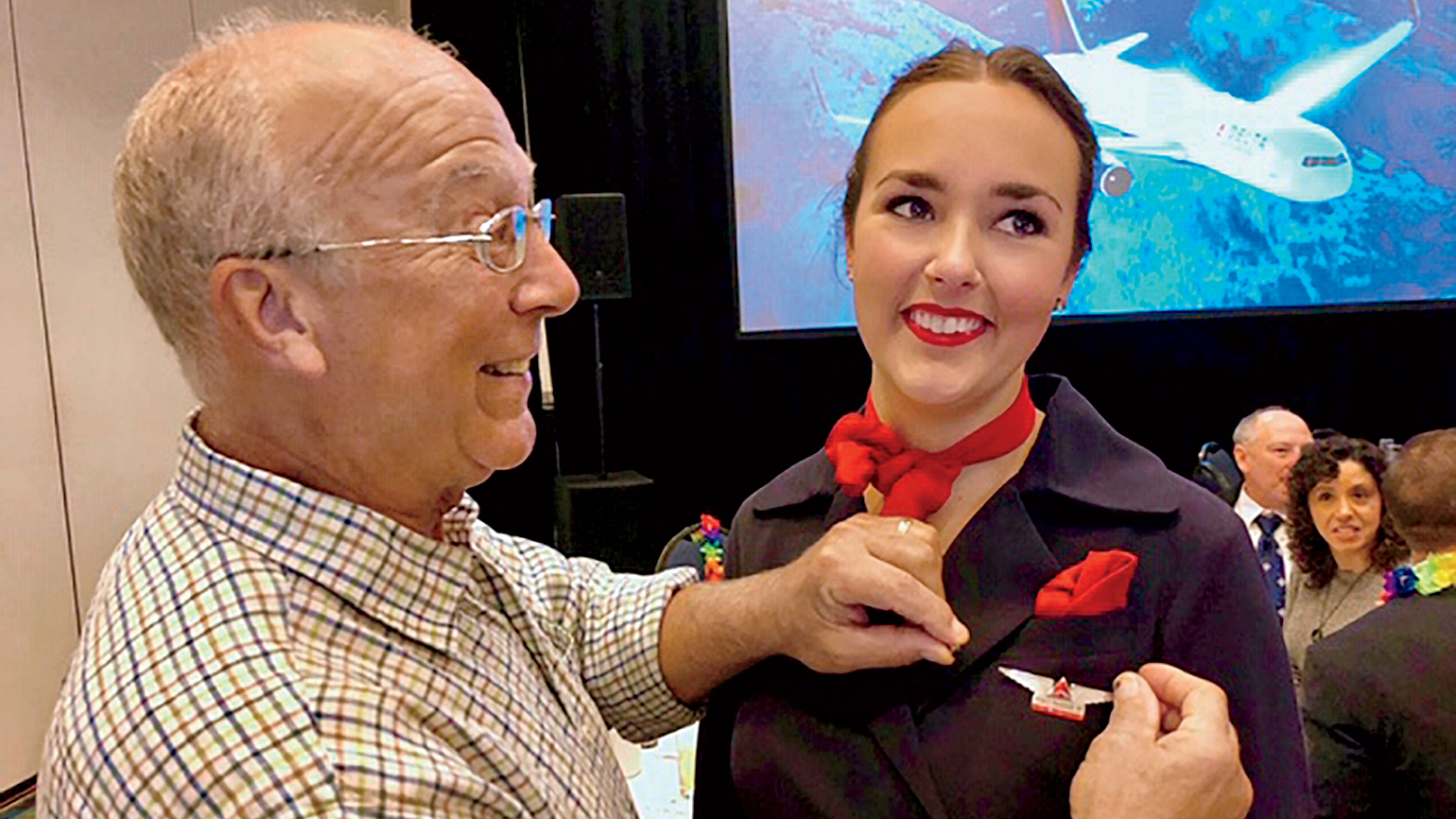
He Spent Christmas Flying With His Flight Attendant Daughter

Hal Vaughan became an internet sensation last year when he booked six flights for December 23 to 25 to be with his daughter Pierce, a flight attendant. They flew from New Orleans to Detroit to Fort Myers, back to Detroit, then Hartford and Atlanta and back to New Orleans.

PIERCE: My mom and dad and I have always been close. We always spend holidays together, and I go home whenever I can.

Daily Strength for Women in Article ad

HAL: Pierce was born when I was 40, the youngest of four. We fight like cats and dogs and we laugh the whole time. She treats me like I’m a crotchety old man.

PIERCE: Only when he acts the part. And we don’t really fight. It’s just that he doesn’t always appreciate my honesty.

HAL: Some have asked why my wife, Kimberly, Pierce’s mom, didn’t go on the trip at Christmas with us. But when the three of us are together, there’s too much of everybody talking at once. So for trips, I usually go with one or the other, or the two of them go without me.

PIERCE: Plus, someone has to stay home to take care of our three cats and two dogs.

HAL: Really, I’d never cared much for travel. But I’ve discovered the beauty of flying—partly because Pierce guilted me into it.

PIERCE: I did not!

HAL: She can’t stand to miss a good deal. So she found these flights that were too good to pass up, she said. A waste not to book. We’d been talking about going to all sorts of places thanks to her job, but we thought we had all the time in the world.

PIERCE: Until Daddy had a terrible accident three months after I started.

HAL: I broke my neck in June of last year. My neighbor and I were trimming tree limbs between our houses. I was on an eight-foot ladder in the back of a parked truck, which rolled a bit and dropped off the pavement. It catapulted me, and I landed headfirst. I was numb everywhere but my neck and shoulders, which felt like they were on fire. They took me to a trauma center and operated the next day. Then I couldn’t feel anything. The doctors said maybe after the swelling went down…but they really didn’t know.

PIERCE: I was working an international flight, and when I landed I got the terrible news. Mother could barely get the words out. They didn’t know if Daddy was going to live—or remain paralyzed. I felt helpless.

HAL: It took Pierce a couple of days to get to me, but when she did, she sent Kimberly home to rest. Every time I opened my eyes, she was right there. It did me good. She said, “As soon as you’re up and about, we’re getting those flights.” She told me about all the places she wanted us to see. I started to believe it was possible.

After three weeks, I moved to a rehab facility and got to where I could feed myself and use my hands and arms again, but I wanted to walk. I did in-home therapy for two months and got to where I could stand up and use a walker. Then I could walk with a cane, and then I threw that away. I’m a little wobbly, but I make do. By December, I was pretty well back to my old self. We found out Pierce had to work over the holidays and would be alone on a layover in Connecticut on Christmas. She tried to hide her disappointment, but I could hear it in her voice. And she’d spent all that time with me in a lonely hospital room….

PIERCE: I guess he could see through me. I’d come to accept that I had to work, but I’d never spent Christmas without my parents. I joked they could come with me, but I didn’t expect them to actually do it.

HAL: I told Kimberly, “One of us needs to go.” She said it ought to be me since I’d missed out on so much during my recovery.

PIERCE: And they were so casual about it, like, “Oh, your dad’s going to come hang out with you on all six of your flights during Christmas.” At first I laughed, but then when I saw it was for real, I worried that the flights would all be full, not unusual that time of year.

HAL: Well, I got six consecutive flights on standby—and on two of them, I got a first-class seat! Pierce had come home for a pre-Christmas Christmas, but when we got to the airport, it was all business. Pierce was merciless, kept telling me to hurry up.

PIERCE: As a flight attendant, I walk with purpose. You have to get to that gate on time. But I wasn’t merciless! I gave him ample time. The part that killed me was how we’d be on a plane for three hours with easy access to water and a bathroom, but then as soon as we got off, what did he want? Water and a bathroom.

HAL: On the plane, I was busy, though. Pierce had told me beforehand, “Whatever you do, do not film me when I am doing the safety demo,” and I was like, “Sure.” So naturally I not only filmed her but also made faces at her the whole time.

PIERCE: Imagine trying to complete a safety demonstration in front of hundreds with this flash going off every few seconds and passengers wondering why this guy is taking pictures. I couldn’t stop my presentation, so I stayed composed while signaling for him to cut it out.

HAL: I have a great picture of her giving me the evil eye. After, she came over and said, “Sir, you need to learn how to operate your camera so the light doesn’t come on when you’re filming,” and I replied, “Oh, I need to get my daughter to teach me that!” And the person next to me said, “That must be your daughter!”

PIERCE: On another flight, Daddy was sitting next to this guy Mike, who asked if he could take my picture. Daddy had told him what he was doing, and Mike wanted to post about it on social media. I never thought I’d see it. But I have a unique name, so it was easy for people to find me. Mike found me on Facebook and apologized. I was like, “For what?” I didn’t know the post had gone viral. I went to Mike’s page and saw how many comments and likes there were and how people were sharing it nonstop. It just blew up.

HAL: She said, “Daddy, 4,000 people have looked at this,” and I said, “Is that a lot?” Then it was 10,000, and then 40,000. Kimberly called and said we were getting calls from newspapers and shows. When I got home, we joked about how Hollywood we’d gotten because The New York Times called while I was on live radio with the BBC, and we told Fox News I’d have to call them back.

PIERCE: It showed me how fortunate I was to have parents who’d go to the ends of the earth to spend Christmas with me. People on social media said they’d give anything to spend Christmas with their dad, who’d passed away. Some said things like, “My daughter moved and I haven’t talked to her in years…” or “My dad walked out on us” or things like that. Daddy and I didn’t think we were doing anything out of the ordinary. But others pointing it out made me see how special our relationship is.

HAL: It changed how I see Christmas. A relationship like ours…well, it isn’t like that for everyone. One girl said, “What I wouldn’t give for my dad to do that for me,” and it hit me so hard because why wouldn’t he? I want to enjoy what I’ve got because I know it can go away suddenly.

PIERCE: That’s why I’m taking my parents as many places as possible. It’s so much fun to experience the world through their eyes. You should’ve seen them in Chile. Daddy assumed that everyone everywhere spoke English. I had to explain, “No matter how slowly you speak, or how loudly, it’s still not Spanish!”

HAL: My daughter doesn’t ever cut me a break, but I think we have quite a few more adventures in store. Where will we spend this Christmas? Let’s just say it’s up in the air.

Her Son’s Battle

Like most mothers, I’ve watched my share of hospital dramas on TV. A child rolled into the ER on a gurney. The frantic staff. The life-and-death tension. What if that were my Andrew? I’d wonder. I’d never been super religious, but I’d always felt I had a deal with God: I’d never ask for lots of money or a big house, and I’d always thank him for what he did give me. In return, all I wanted was for him to keep things on an even keel. Just don’t give me more than I can handle, I’d pray.

Then one terrible night, the six-year-old on the gurney was my little boy. He was rushed to Hasbro Children’s Hospital in Providence, Rhode Island, fighting meningococcemia, a deadly form of meningitis. And all at once it felt as if my deal with God were off the table.

New Every Morning Journal In Article Ad A

Andrew had been such a normal kid: frisky, athletic, the type of boy who wolfed down his lunch, itching to get back outside and play. The evening he got sick, he’d been running around outside with his sister and cousins. Later, we went for ice cream. That’s when it happened. “Mom, my legs hurt,” he said. “I feel so tired.” I felt his forehead. It was burning up. By the time we got home, he was shivering, with a 102-degree fever.

“Probably the flu,” I told Scott, my husband, and put Andrew to bed. I hoped it was just a 24-hour bug. The next day was July 4, and we had a big family picnic planned. But that night he threw up several times. By morning his face had taken on a grayish pallor. He was limp and didn’t feel like doing anything. I called our family doctor. He recommended we take him to the hospital for tests.

By the time we arrived at the hospital, red, pinprick-like dots had spread across his body. Hemorrhages. The ER nurse had seen these symptoms before.

“We’re going to take him to the trauma room,” the nurse said. Within minutes, the pinpricks had grown to purple splotches on his stomach, thighs and neck. The chief physician pulled us aside while the ER team pumped Andrew full of antibiotics. “We’re pretty sure your son has meningitis,” he said. “The antibiotics have probably killed the bacteria by now.”

“So he’s going to be okay?” Scott asked.

The doctor shook his head. “We got the bacteria, but not before it sent millions of toxins into Andrew’s system. He’s going to get sicker probably.” A chill went through me. Scott and I stared at Andrew. Our son was changing before our eyes. The emergency staff couldn’t stop the hemorrhaging. Bacterial meningitis is one of the most aggressive illnesses known to man. Andrew’s whole body grew puffy. Much of his skin turned almost blackish, as if from severe burns. “Scott,” I said, trying to hold back tears, “he doesn’t even look like our son anymore.”

We turned to the doctor for some positive sign. He didn’t give one. Only later would we learn that the mortality rate for a case this severe approached 80 percent. Gently, the doctor said, “You need to prepare yourselves. I can’t predict whether or not Andrew will survive.”

Andrew was moved to the ICU. We stayed up that night watching him. He was hooked to so many tubes, he looked more like a lab rat than our boy. You’ve got to fight, Andrew, I thought. You’ve got to fight hard. I closed my eyes. Lord, I prayed, I don’t know how much more I can take. I don’t know if I can handle this. I thought we had a deal.

Yet Andrew did not improve. Each day brought a new crisis: Andrew’s kidneys failed. He needed to be put on a ventilator. Finally, the doctors induced a coma to relieve his pain. Andrew’s hands turned cold, then curled into frozen claws. The hemorrhaging had virtually cut off circulation to his extremities. His toes and legs were literally dying. A week after Andrew entered the hospital, one of his doctors asked to talk to us. She led us to a consultation room down the hall from Andrew’s room. “Andrew’s blood vessels are blocked to the point where they may be ruined,” she said. “Once that happens, it’s hard to reestablish circulation. There’s a good chance we’re going to have to amputate.”

I held it together till the doctor left. I expected to break down. Instead, I flushed with anger. God wasn’t keeping his part of the bargain. My boy might lose his hands and legs. He might die. Why are you doing this to a child? I asked, bitterly. Why are you doing this to our family?

Nothing changed, no matter how angry I got. Andrew’s second week in the hospital, with his legs an awful purple-black, the doctors ordered a bone scan. Three hours later, the results came in: “There’s nothing. No circulation at all below the knees,” the orthopedist said. “We have to amputate his legs. If we don’t, it could jeopardize his life.” I couldn’t speak. I tried to picture Andrew—my active little boy—in a wheelchair. A wheelchair!

Following the operation, Andrew remained in a coma for days. All I could do was sit there and watch him, my heart filled with sorrow and bitterness. But that burden was nothing compared to the time I knew was coming: when Andrew would awaken and we’d have to tell him about his legs. If he awakened.

He did. He finally turned the corner. Scott and I walked into his hospital room. Andrew was watching TV. “Honey,” I said, “we really need to talk about what happened to you.” Scott and I stood on either side of his bed. “You were very sick. You’re getting better, but your legs didn’t get better so the doctors had to take them off. If they didn’t, hon, you wouldn’t have gotten better. But we’re going to get you new legs.”

Andrew started to cry. “I want my old legs back,” he repeated again and again, between sobs.

I wanted to cry too. But I couldn’t in front of him. All I could do was hold Andrew and say, “You can’t have them. They won’t work anymore.” And wonder again, Lord, how could you do this to a child? I’m at my breaking point. Can’t you see?

I was still fighting to keep from crying when Andrew asked a new question: “Mom, will I ever be able to walk again?”

“Oh, yeah,” I told him. “I’ve heard of kids who’ve done all kinds of things.”

“Will I be able to run?”

“It’s going to take some work, but I don’t see why not.”

“How will I ride my bike?

“We’ll figure it out,” I said.

Andrew fell asleep. But I couldn’t. Lord, won’t you finally help us? I asked.

At last, in early September, Andrew was well enough to come home. I was relieved and also worried sick. How would Andrew hold up emotionally when he saw how different life without legs would be?

It was tough. Andrew had been fitted with prosthetics right before he came home. It’s one thing to have one artificial leg. At least you can balance on the other, feel where you’re going. But two legs! Rehab was incredibly hard—and slow. The doctors warned that Andrew probably wouldn’t take his first unassisted steps till November—if then. I could see the frustration in his face when kids would zip past our house on their bicycles. As for myself, I was just worn out. I used to pray in anger at God. Now I didn’t even have the energy to do that. I wasn’t even sure where God was anymore. I felt abandoned, and it was worse, far worse than feeling simply angry. This was a cold, dark space in my heart, as if my faith had been taken away like my son’s legs.

Then one night at the dinner table, Andrew said out of nowhere, “I saw God, Mommy. I was sleeping at the hospital. He put his arms out and I thought he was going to give me a hug. But instead he just touched me on the shoulder.”

“Did he say anything?” I asked.

“No, he was just…there.”

A chill ran down my spine. He was just there. What did that mean? I looked at Andrew, wolfing down his dinner. For months all I’d seen was a handicapped child, a damaged child, fighting as hard as he could, failing more often than succeeding in his rehab. Falling down, unable to master his new legs. Yet, unlike me, never turning bitter, never giving up. “I’m going to walk, and I’m going to ride my bike,” he’d insist. “You just watch.”

Andrew has come through this better than I have. He was moving on. But I was stuck in my bitterness and sense of spiritual betrayal. He was just there. Had God been there all along for me too, and I was too angry to see? Was he there for me now? Lord, thank you for being with Andrew. Be with me now, too.

Andrew had been in therapy for a while, and three weeks before he’d managed a few cautious steps—but only with the support of parallel bars. Then one day in October, the family was sitting in the living room. Suddenly, with no warning, Andrew struggled to his feet. Without a word he walked slowly, awkwardly, across the living room on his own. And then back again. “Did you see that?” Scott asked. I was dumbstruck. The doctors had predicted he wouldn’t walk before Christmas. My eyes filled with tears. But in my mind’s eye, clear and unwavering, I saw my boy walking again with a strong hand on his shoulder—just there.

Andrew is 15 now. He rides his bike, he plays basketball, he’s even on a hockey team. Sometimes when I’m at one of his games, I’ll see him fall and I’ll think, Andrew, you shouldn’t be doing this. It’s too much. But then I catch myself. And I hear a voice whisper, Don’t be afraid. I’m here. I can handle that.

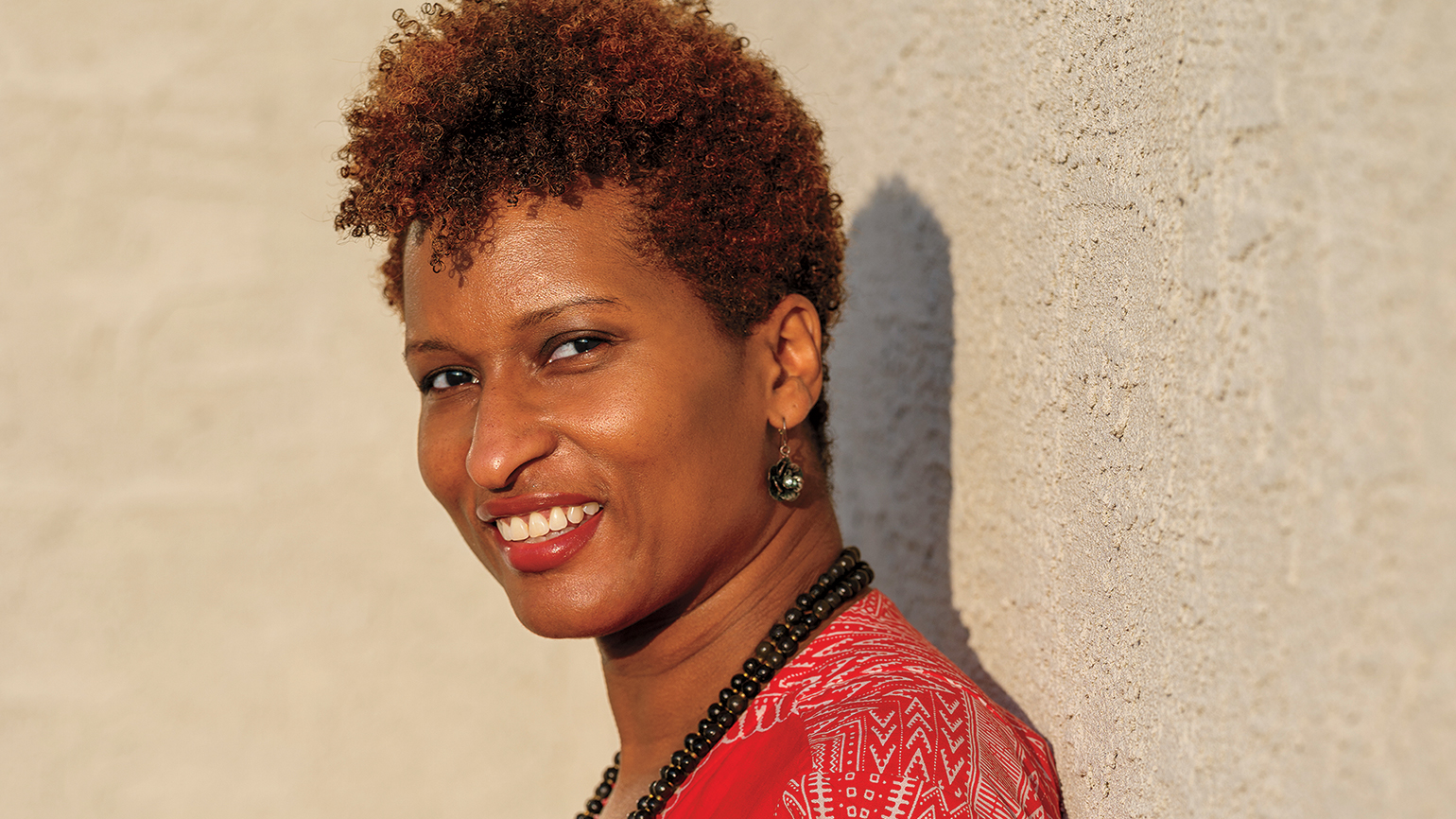
Her Search for Her Roots Reminded Her She Is a Child of God

I was 10 years old when I realized I couldn’t answer a simple question put to my fifth-grade class at The King’s Christian School, in Haddon Heights, New Jersey.

It was 1984. My teacher gave us a special assignment: drawing a flag depicting our family’s origin. I was excited. I wasn’t great at drawing, but this project sounded fun. First, I had to find out the answer to my teacher’s question: “Where does your family come from?”

The Lies That Bind In Article Ad

At dinner that night, I told my parents about the project.

“What flag should I make?” I asked them. “Which country does our family come from?”

An uncomfortable look came over my mother’s face. “I have no idea,” she snapped. “Our family migrated from Georgia. That’s all I know.”

Why did she sound mad? I knew from her tone not to press the issue.

I was one of a handful of Black students at my school, but that didn’t bother me even though I looked different from many of my classmates. I had friends at school and an even bigger social group at my church, Tabernacle of Faith, in nearby Camden.

I’d always assumed my ancestors came from somewhere in Africa, and I was hoping my parents could help me figure out which country. My mother’s abrupt response left me feeling mystified and a little anxious.

The next day, I told my teacher I could trace my family only back to Georgia. He seemed puzzled and told me to do my best with the information I had.

Georgia was a state, not a country, so to me, that flag didn’t count. I decided to draw a flag representing the Garden of Eden, since that’s where all people come from. I drew a green border with diagonal purple and yellow stripes and a star above the stripes. I can’t remember why I thought that design represented Eden. Like I said, I wasn’t a great artist.

Each student presented their flag to the class and talked about their family’s roots. When it was my turn, I was a little nervous but proud of what I had come up with. My confidence crumpled as my classmates stared at me in confusion. A flag for Eden? What was I talking about? Eden wasn’t even a country.

I sat down, embarrassed, and felt worse when the teacher hung all the flags above our desks. I recognized many of the flags from the Summer Olympics I’d seen on television earlier that year. Most were from Europe, a few from elsewhere. I was the only one with no country of origin.

Where did I come from? Why wouldn’t my parents tell me? Was something wrong with my family?

I have never been a target of outright racism. But like most African-Americans in the United States, I have always been aware that I am in the minority. Wherever I go, I often have to tell myself, You belong here. Not knowing how my family fit into the American story made that harder.

Church was my refuge. Growing up in a predominantly African-American church, I was reminded every Sunday that I was made in God’s image and that he loves me unconditionally.

Still, church could not answer my question about my family’s origins. It was not until college that I finally learned the reason for my mother’s reticence. That realization presented me with a whole new set of questions.

At the University of Delaware, I took a Black American Studies course and learned about the realities of slavery. Earlier school textbooks hadn’t left out slavery. But they did not go into detail about the cruelties of the transatlantic slave trade or the horrific treatment of enslaved people on American plantations.

My ancestors had been enslaved. That’s why my mother didn’t want to talk about it. It felt degrading. Probably she didn’t know many details. Enslaved families were forcibly separated and sold off. Records are spotty or nonexistent. Genealogy is a fun and enlightening pastime for many people. For African-Americans, it often leads to a void.

I tried to understand all of this disturbing information from a Christian perspective. But I kept coming back to an unanswerable question: Lord, how could you let this happen?

I also couldn’t help asking how God could love me so much that he gave his only Son to redeem me and yet many people in my own country regarded me as inferior. I lost count of how many times I’ve been subtly judged simply because of the color of my skin.

For years, I tried to put my difficult questions aside. I graduated from college, married a wonderful man named Kenny, pursued a successful career in information technology and gave birth to two beautiful baby girls, Kennedi and Kassadi.

Now that I was a mother, I faced the same decision that my mother had. What should I tell my daughters about their ancestry?

Kenny and I decided on a multipronged approach. First, we would raise our girls in church and give them a strong foundation in faith. At the same time, we would teach them that, because they were made in God’s image, they are beautiful just as they are and equal to everyone else.

Kenny and I agreed that we would be up-front with our girls about the realities of slavery and race relations in the United States.

We read books, had frank conversations and visited African-American history museums wherever we found them. I remember one particular exhibit at the Charles H. Wright Museum in Detroit. It was a full-size re-creation of the lower deck of a transatlantic slave ship.

None of us said a word as we stared at the rows of bodies stacked on top of each other like firewood. The exhibit continued to a slave-trading block and a branding station, where skin would be seared with a new owner’s mark.

I knew my daughters were asking the same question I had: Why, God?

I also wanted to celebrate signs of progress. My daughters were toddlers when the U.S. elected its first Black president. They were able to watch a Disney movie with a Black princess, something I had never imagined possible!

They were adolescents when the movie Black Panther was released. I was excited because I knew the movie offered a positive vision of a place filled with beautiful, accomplished, powerful, intelligent and resourceful people who looked like me.

I was not prepared for the intense emotions that washed over me when I heard the African accents and saw that vision come to life on-screen. It was as if the security and belonging I had always experienced at church now encompassed the entire world.

Was this the answer to my lifelong questions? An escape into another reality where I was accepted and valued? It felt like a homecoming. But to where?

Not long after Black Panther came out, my sister took a DNA test to determine our family origins. I couldn’t wait for the results. Everything seemed to be coming together. After all these years, I would finally know where I came from.

My sister shared the results as soon as she got them. My first reaction was puzzlement. Then disappointment.

There was no clear answer about our ancestry. The highest percentage, about one third, was Nigerian. The rest was a mix of seven other African and seven European ethnicities.

Our family had been scattered and sold off. It was likely women had been raped and bore children by white slaveholders. Customs, traditions, lineages had been blurred or lost. Even with access to historical records, there was no way I could have completed that fifth-grade flag project.

Watching the Summer 2020 Olympics, I tried to muster some excitement when I saw the Nigerian flag in the opening ceremonies. The emotion just wasn’t there.

Where did I come from? Where was God in my family’s painful story? After all these years, I still didn’t know.

Or did I? Maybe my question felt so impossible because I was looking in the wrong place for answers.

All my life, there was one place where I had felt like I belonged: church. And not just church. Every time I prayed, alone or with others, I felt at home.

My home was not in my ancestry. It was not anywhere on this earth. Not even in Wakanda, the imaginary land in Black Panther.

My home was with God.

I may never know why God did not prevent slavery and racism. What I don’t understand, I leave at the foot of the cross. I get on with the work of bringing God’s justice, mercy and healing to my corner of the world.

I am proud that I am a Black woman in America. A woman of strong Christian faith, a professional, a wife, a mother who has raised confident, faith-filled daughters. I serve at my church, volunteer in my community and, together with alumnae sisters from my college sorority, help with local voter registration drives and other projects to help promote social justice.

At the end of the day, what other people think or say about me does not determine who I am. When I stand before God at the end of my earthly journey, my lineage, citizenship, race or socioeconomic class will not matter.

What matters is that I am a beloved child of God.

It turns out I was onto something when I drew my fifth-grade flag. Family history is good to know about, but ultimately all people share a common origin: We are God’s own.

For more inspiring stories, subscribe to Guideposts magazine.

Her Girlfriends Helped Her Come to Terms with Being Newly Single

February 14 dawned cold and wet and gray. It seemed fitting. My husband, George, and I had separated after 35 years of marriage and were headed for divorce. For the first time in decades, I wasn’t part of a couple. For the first time in my life, I was living alone. My new house didn’t feel like home. How could it after only three weeks?

Why, oh why, had I said I’d go to my friend Pat’s Valentine’s party? “Celebrate with other singles at a girls’ night in,” the invitation read. “Food! Music! Games! Fun!”

Go For It In Article Ad

When I’d called to beg off, Pat wouldn’t hear of it. “I know you’re going through a tough time,” she said. “That’s why you need to come.”

“Nah, I should stay home. I’ll just be a party pooper.”

Pat’s voice grew softer. “Let me tell you why I host this party every year.” She told me her dad had died on February 14 many years ago. “And then on top of that, my husband delivered divorce papers to me one horrible Valentine’s Day.” I’d known Pat for a long time, but I hadn’t known that.

“Some of the women who’ll be at the party have stories sadder than mine,” Pat said. “But instead of moping around because we’re not coupled up, we get together and have a good time.” She wouldn’t take no for an answer. “And one more thing, Jennie—you have to wear pink or red. It’s a Valentine’s party rule!”

So at 6 P.M., I dragged myself upstairs to change out of my pajamas. (Yep, I’d been wearing pajamas all day.) Most of my clothes were still in boxes. I opened the one labeled “Sweaters” and pawed through it until I found the only red sweater I owned. It had a gaudy Christmas tree on the front, but it would have to do.

I couldn’t help thinking about Valentine’s Days past. George was a surgeon. He hadn’t been what you’d call the romantic type, but he did okay on that one day of the year. A bouquet from the floral counter at the grocery store. Chocolates in a heart-shaped box. Steaks on the grill. In my mind, Valentine’s Day was a holiday for couples, not girlfriends.

Before I left for Pat’s, I said a quick prayer. I hadn’t done a whole lot of praying since the breakup of my marriage. Sometimes I felt mad at God. Furious even. Did he care that I was suddenly single at 60, an age when most couples were looking forward to retirement and spending time with their kids and grandkids together? My prayer that evening was short and to the point: God, please show me how to be single.

Pat opened her door and welcomed me inside. The house was already filled with women, all dressed in red or pink. Some were friends from church I’d known for years; others I’d never met.

Katy came over to give me a hug. Her husband, Will, had died of colon cancer not long before. George had been his surgeon. “I’m sorry to hear you two have split up,” Katy said. “I’m so grateful for the way George took care of Will.” It had always made me proud that George was beloved by his patients and their families, but the long, hard hours he’d worked had been a constant strain on our marriage.

Pat’s living room was festooned with twinkling lights, crepe paper streamers and hearts. The dining table groaned with food—almost all of it red or pink. Ham. Meatballs in tomato sauce. Strawberries. Cranberry salad. And the desserts! Red velvet cake. Cherry pie. Sugar cookies with pink sprinkles.

We ate and chatted. I heard other stories. Suzanne’s children had grown up with mine. I’d been incredibly busy in those days. Maybe too busy. Between taking care of the kids and the house and being involved in the community, I was worn out.

Even on the nights when George was home, we were often too exhausted to talk. Too exhausted to kiss goodnight. Too exhausted to make any real effort to connect as husband and wife. But we put on our game faces in public, doing our best to look like a happily married couple that had it all together.

Suzanne and I had lost touch after the kids were grown. It turned out she was long divorced.

I met Jeannette, whom I’d known only by name until that night. Like me, she was 60. Unlike me, she’d never married. “I used to think it would be nice to have someone to cook for,” she told me, “and to snuggle with in front of a fire on a cold winter’s night.”

It sounded nice to me too, though it had seldom been my reality. After George and I became empty nesters, we usually ended up at opposite ends of the house in the evening, him in front of the computer, me reading or watching TV. Could it be that our breakup was just the final straw in what had been a deeper, decades-long problem of loneliness in our marriage? In a way, nothing was lonelier than being married but lonely.

After dinner came the games. I looked around at the women in Pat’s living room. Every one of them seemed to be having fun. It was partly the games we played, the songs we sang, the jokes we told. Mostly, though, it was that we were simply enjoying being together. Maybe I’d expected marriage to fulfill too many of my emotional needs and hadn’t appreciated my relationships with my friends enough.

At the end of the party, I stayed to help Pat with the dishes. “This was wonderful,” I told her. “Thanks for inviting me.”

“We do lots of other fun stuff,” Pat said with a smile. “You are always welcome to join us.”

I had no doubt that God had pushed me out my lonely door to this party filled with single women. Women who laughed instead of feeling sorry for themselves. Who propped each other up. Who embraced the joys that life had to offer. Women I wanted to be like.

And so I became part of a group that goes to brunch together after church most Sundays. We rent a big cabin in the Smoky Mountains in the fall when the leaves begin to turn. And we have other kinds of parties. Puzzle-working parties. Campfire-cooking parties. Ugly Christmas sweater parties—I already have the outfit for that one!

I won’t say that Valentine’s Day party suddenly made everything in my life okay. I still have a ways to go to being happily and confidently single. But I’m on the right road.

And with the help of God and my girlfriends, I know I’ll get there.

For more inspiring stories, subscribe to Guideposts magazine.

Her Dog Taught Her to Let Go and Let God

The call came one September morning, before I’d had my coffee. “Julie, he’s drinking again.” Our family member had relapsed. Not for the first time. I got off the phone and felt myself slipping too. Not by drinking, but by “stinking thinking,” the distorted thought patterns that had made my life unmanageable. Overanalyzing. Obsessing. Trying to control things.

Clyde, our four-year-old yellow Labrador retriever, came into the kitchen as I poured my coffee, prancing as much as a 100-pound dog could prance. He knew it was time for a walk. “You’re always happy, aren’t you, buddy?”

Sweet Carolina Mysteries In Article Ad

Get the new daily devotion for animal lovers!

I drank my coffee, imagining worst-case scenarios involving this family member who’d fallen off the wagon. One phone call, and my 20 years of Al-Anon recovery work went out the window. I didn’t want to think about the 12 Steps right now. I’d rather worry.

“Come on, Clyde. Let’s go on a walk.” He charged ahead of me to the back door.

Would I ever reach a point where letting go and letting God came naturally to me?

I got my iPod and decided to forgo Clyde’s leash. He never wandered off, not even to chase squirrels. And we live way back in the woods on several acres. You can’t see our log cabin from the road. Our gravel driveway is a third of a mile long, with plenty of space to walk. I stepped out into the stifling heat—that’s September in Georgia for you—slipped in my earbuds and cranked up my music, trying to drown out my thoughts.

I’d talked to B.J., my Al-Anon sponsor, a few months earlier about another situation I had to relinquish. “Julie,” she’d said, “you have no control over how the world turns. God does that all on his own. Your job is to let go and trust him.”

Besides being my sponsor, B.J. is an animal lover. She was thrilled when we got Clyde. The breeder let us have him at only six weeks old. I thought maybe we’d gotten him too young. B.J. assured me he’d be fine, and she was right.

Watching Clyde sniff the trees along the driveway, I remembered Cooper, our black Lab, who had died at 15. The two dogs were totally different in appearance and personality. Clyde didn’t have Cooper’s handsome show-dog body type. Barrel-chested with long skinny legs, he outweighed Cooper by 15 pounds. Clyde was top-heavy, a bit odd looking, but what a personality! Laid-back and loyal. A dog who wanted nothing more than to be with his people.

“Clyde, you don’t know how to worry, do you, buddy?”

He grinned at me and kept walking. We got to the mailbox at the end of the driveway and circled back toward home. Maybe 50 feet from the road, I noticed he wasn’t with me. How could that be? He always stuck close. I ripped out my earbuds. With my music playing so loudly, I wouldn’t have heard anything else. Not barking. Not a car horn or brakes squealing. I looked around. No sign of him.

“Clyde, come!” He wasn’t hard-headed. If he could hear me, he’d come running.

I rushed back down the driveway. Then I spotted him, limping toward me. His right hip swayed inward with each step. Blood covered his paws. He wagged his tail and collapsed at my feet. Must have been hit by a car.

He quivered. Breathed rapidly, in spurts. Gotta get him to the vet.

He was too big for me to carry. I had no choice but to try to get him to walk. “Clyde, come.” He gazed at me with his amber-gold eyes and unfolded his gazellelike legs. Then he stood. “Heel,” I said, patting my leg. Slowly, step-by-step, he walked with me to the car 250 feet away.

Each step of the way, guilt lashed at me. If only I had used a leash. Or watched him closer. Or not taken my iPod. Or been paying attention and not obsessing.

Finally, we made it to the car. I managed to get him into the back seat. I texted B.J. “Pray. On my way to the vet. Clyde got hit by a car.”

Minutes later, we were in an exam room. The vet made no promises. Clyde might have a pneumothorax, an abnormal accumulation of air between his lungs and his chest wall, making it difficult for him to breathe. She wanted to keep him for X-rays and tests.

“Some dogs don’t survive this kind of injury,” she said. “He might also have a fractured hip. If his breathing worsens, we’ll transfer him to a larger animal hospital, where they can monitor him overnight. Call around four this afternoon. I should know more by then.”

I glanced at my watch. Nine-thirty. Could I wait until four? Before I left, I kissed Clyde’s head. “I’m sorry, buddy. I love you.”

Back home, I replayed every detail of the morning—like I’d done for years with family members—wishing I could have a do-over. By lunchtime, I couldn’t wait any longer. I had to go check on him. On my way to the vet’s office, my cell phone rang.

It was B.J. “Hey, kiddo,” she said. “You doing okay?” I filled her in.

“You know what to do, right?” she said. “I shouldn’t have been so careless. If only I hadn’t…”

“Julie, things happen in life that are beyond our control. It was an accident. You need to let go. Trust God with Clyde. No matter what.”

Let go and let God. How many times had I heard this—about family members, work concerns, other worries?

“You’re going to be okay,” B.J. said. “God’s in control.” It felt as if she was preparing me for Clyde to die. We said goodbye and I pulled into the parking lot at the vet’s. Did I trust God? Really trust him? No matter what?

Just for today, could I let go of Clyde and everyone else in my life? I looked at my hands clutching the steering wheel. I loosened my grip, took my hands off the wheel and turned them over. Palms open, facing toward heaven.

Father, I don’t feel very strong right now. Will you help me release Clyde and my entire family to your care? You know best. I walked into the vet’s office and went to the front desk. “I’m early. I just wanted to check on Clyde.” The receptionist led the way to the same exam room. “The doctor wants to talk to you. Have a seat.”

Whatever she says, whatever the outcome, Lord, I trust you. The vet came in. “Clyde is such a sweetheart,” she said, holding X-rays and several bottles of medication. “He has a pneumothorax—a collapsed lung—but no broken bones. That barrel chest of his saved his life. He’s one tough dog. He needs lots of rest, but he’s going to be fine.”

“He’s okay? Really? He’s going to make it?” I could hardly believe it. “Oh, thank you! Can I see him?”

“You sure can. He’s going home with you.” A tech brought Clyde into the exam room. He took a few wobbly steps toward me, wagging his tail. He plopped his big head in my lap and licked my hands. I wrapped my arms around his neck.

In the car I called B.J. “Guess what? Clyde is all right. He’s with me now. Can you believe it?” “Sure I can! Give him a hug for me. And remember, any time you feel the urge to worry or try to control things, you know what that means.”

“Yep. I need to let go and let God. Again.”

“One more thing. No matter what had happened with Clyde, you’d have been okay, kiddo.” I believed her. With everything I had, I believed her. “We need to keep letting go every day for the rest of our lives,” she said. “There’s no other way.”

I glanced in the rearview mirror at Clyde, who was looking right at me. He’d wandered off, and I’d done the same thing. I’d taken a wrong turn, drifted from my Master’s side, but now Clyde and I were headed home.

Did you enjoy this story? Subscribe to All Creatures magazine.

Her Dog’s Injuries Taught Her a Lesson in Letting Go

The call came one September morning, before I’d had my coffee. “Julie, he’s drinking again.”

Our family member had relapsed. Not for the first time. I got off the phone and felt myself slipping too. Not by drinking, but by “stinking thinking,” the distorted thought patterns that had made my life unmanageable. Overanalyzing. Obsessing. Trying to control things.

You Got This In Article Ad

Clyde, our four-year-old yellow Labrador retriever, came into the kitchen as I poured my coffee, prancing as much as a 100-pound dog could prance. He knew it was time for a walk. “You’re always happy, aren’t you, buddy?”

I drank my coffee, imagining worst-case scenarios involving this family member who’d fallen off the wagon. One phone call, and my 20 years of Al-Anon recovery work went out the window. I didn’t want to think about the 12 Steps right now. I’d rather worry.

“Come on, Clyde,” I said. “Let’s go on a walk.” He charged ahead of me to the back door.

Would I ever reach a point where letting go and letting God came naturally to me?

I got my iPod and decided to forgo Clyde’s leash. He never wandered off, not even to chase squirrels. And we live way back in the woods on several acres. You can’t see our log cabin from the road. Our gravel driveway is a third of a mile long, with plenty of space to walk.

I stepped out into the stifling heat—that’s September in Georgia for you—slipped in my earbuds and cranked up my music, trying to drown out my thoughts.

I’d talked to B.J., my Al-Anon sponsor, a few months earlier about another situation I had to relinquish. “Julie,” she’d said, “you have no control over how the world turns. God does that all on his own. Your job is to let go and trust him.”

Besides being my sponsor, B.J. is an animal lover. She was thrilled when we got Clyde. The breeder let us have him at only six weeks. I thought maybe we’d gotten him too young. B.J. assured me he’d be fine. She was right. Watching Clyde sniff the trees along the driveway, I remembered Cooper, our black Lab, who had died at 15.

The two dogs were totally different in appearance and personality. Clyde didn’t have Cooper’s handsome show-dog body type. Barrel-chested with long skinny legs, he outweighed Cooper by 15 pounds. Clyde was top-heavy, a bit odd-looking, but what a personality! Laid-back and loyal. A dog who wanted nothing more than to be with his people.

“Clyde, you don’t know how to worry, do you, buddy?”

He grinned at me and kept walking. We got to the mailbox at the end of the driveway and then circled back toward home.

Maybe 50 feet from the road, I noticed Clyde wasn’t with me. How could that be? He always stuck close. I ripped out my earbuds. With my music playing so loudly, I wouldn’t have heard anything else. Not barking. Not a car horn or brakes squealing. I looked around. No sign of him.

“Clyde, come!” He wasn’t hardheaded. If he could hear me, he would come running.

I rushed back down the driveway. Then I spotted Clyde, limping toward me. His right hip swayed inward with each step. Blood covered his paws. He managed to wag his tail before collapsing at my feet. Must have been hit by a car.

Clyde quivered. Breathed rapidly, in spurts. Gotta get him to the vet.

He was too big for me to carry. I had no choice but to try to get him to walk. “Clyde, come.” He gazed at me with his amber-gold eyes and unfolded his gazellelike legs. Then he stood. “Heel,” I said, patting my leg. Slowly, step by step, he walked with me to the car 250 feet away.

Each step of the way, guilt lashed at me. If only I had used a leash. Or watched him more closely. Or not taken my iPod. Or been paying attention and not obsessing.

Finally, we made it to the car. I managed to get him into the back seat. I texted B.J.

“Pray. On my way to the vet. Clyde got hit by a car.”

Minutes later, we were in an exam room. The vet made no promises. Clyde might have a pneumothorax, an abnormal accumulation of air between his lungs and his chest wall, making it difficult for him to breathe. She wanted to keep him for X-rays and tests.

“Some dogs don’t survive this kind of injury,” she said. “He might also have a fractured hip. If his breathing worsens, we’ll transfer him to a larger animal hospital, where they can monitor him overnight. Call around four this afternoon. I should know more by then.”

I glanced at my watch. Nine-thirty. Could I wait until four?

Before I left, I kissed Clyde’s head. “I’m sorry, buddy. I love you.”

Back home, I replayed every detail of the morning—just the way I’d done for years with my family members—wishing that I could have a do-over.

By lunchtime, I just couldn’t wait any longer. I had to go check on him. On my way to the vet’s office, my cell phone rang. It was B.J. “Hey, kiddo,” she said. “You doing okay?”

I filled her in.

“You know what to do, right?” she said.

“I shouldn’t have been so careless. If only I hadn’t…”

“Julie, things happen in life that are beyond our control. It was an accident. You need to let go. Trust God with Clyde. No matter what.”

Let go and let God. How many times had I heard this—about family members, work concerns, other worries?

“You’re going to be okay,” B.J. said. “God’s in control.” It felt as if she was preparing me for Clyde to die.

We said goodbye, and I pulled into the parking lot at the vet’s.

Did I trust God? Really trust him? No matter what?

Just for today, could I let go of Clyde and everyone else in my life?

I looked at my hands, clutching the steering wheel. I loosened my grip, took my hands off the wheel and turned them over. Palms open, facing toward heaven.

Father, I don’t feel very strong right now. Will you help me release Clyde and my entire family to your care? You know best.

I walked into the vet’s office and went to the front desk.

“I’m early,” I said. “I just wanted to check on Clyde.”

The receptionist led the way to the same exam room. “The doctor wants to talk to you. Have a seat.”

Whatever she says, whatever the outcome, Lord, I trust you.

The vet came in. “Clyde is such a sweetheart,” she said to me, holding X-rays and several bottles of medication. “He has a pneumothorax—a collapsed lung—but there are no broken bones. That barrel chest of his saved his life. He’s one tough dog. He needs lots of rest, but he’s going to be fine.”

“He’s okay? Really? He’s going to make it?” I could hardly believe it. “Oh, thank you! Can I see him?”

“You sure can,” she said. “He’s going home with you.”

A tech brought Clyde into the exam room. He took a few wobbly steps toward me, wagging his tail. Then he plopped his big head in my lap and licked my hands. I wrapped my arms around his neck.

In the car, I called B.J. “Guess what? Clyde is all right. He’s with me now. Can you believe it?”

“Sure I can! Give him a hug for me. And remember, any time you feel the urge to worry or try to control things, you know what that means.”

“Yep,” I said. “I need to let go and let God. Again.”

“One more thing. No matter what had happened with Clyde, you’d have been okay, kiddo.”

I believed her. With everything I had, I believed her.

“We need to keep letting go every day for the rest of our lives,” she said. “There’s no other way.”

I glanced in the rearview mirror at Clyde, who was looking right at me. He had wandered off, and I’d done the same thing. I’d taken a wrong turn, drifted from my Master’s side, but now Clyde and I were headed home.

For more inspiring stories, subscribe to Guideposts magazine.

Her Animal Ambulance Has Helped More Than 12,000 Pets

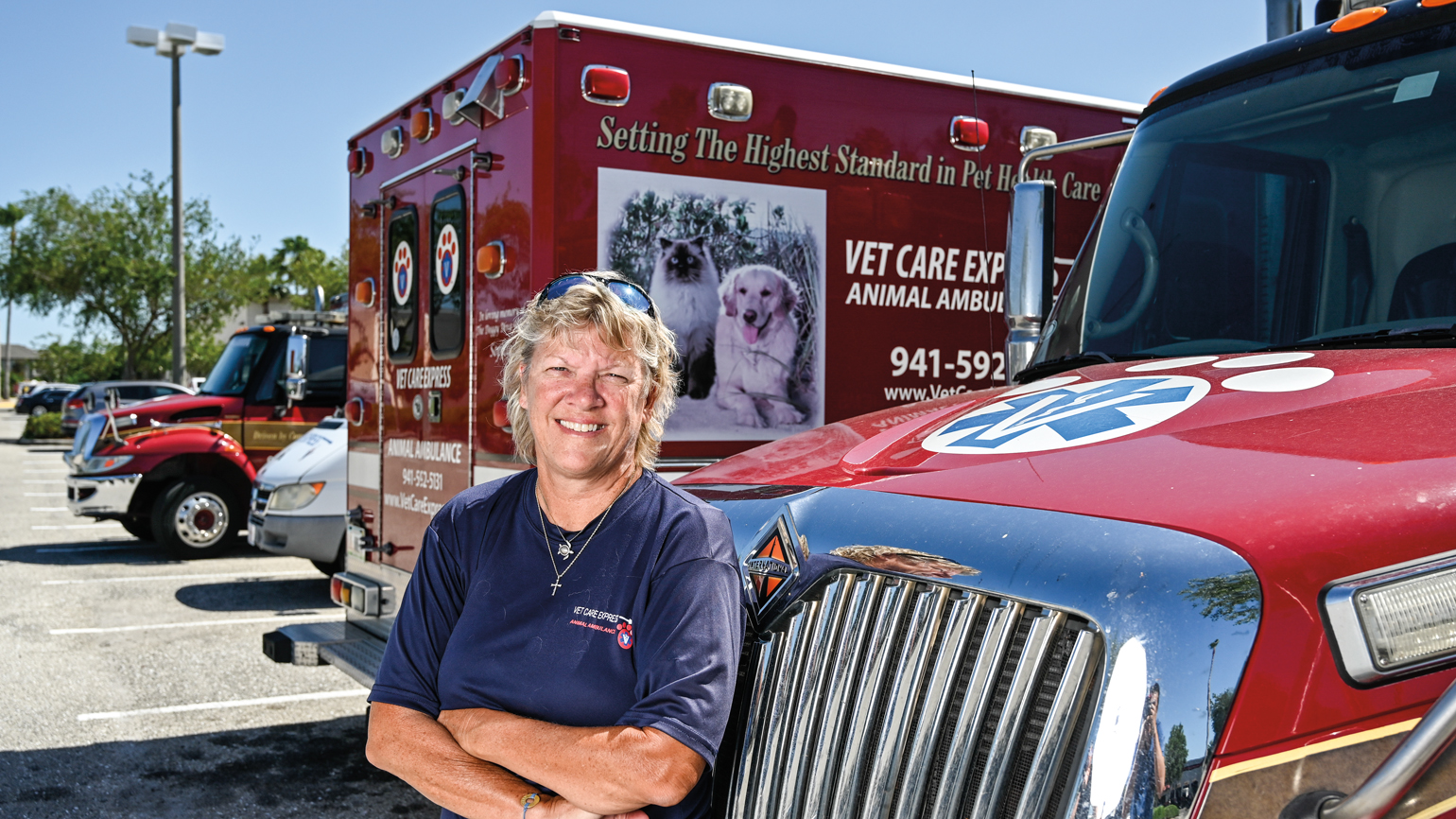
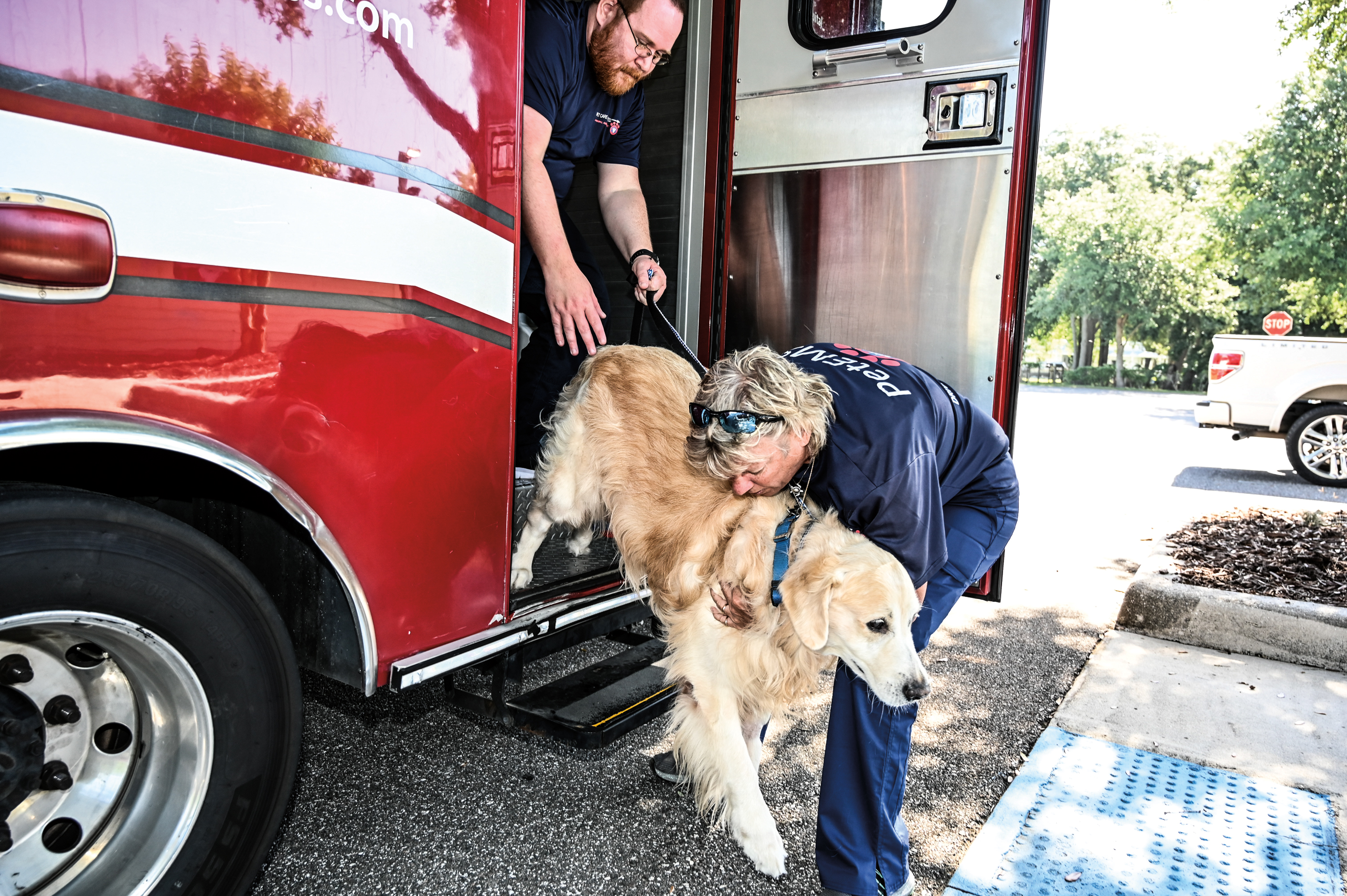
On a Monday afternoon in early May, a red retrofitted ambulance pulls up to Bill Barnack’s house in Bradenton, Florida. Cheryl Brady, the founder of Vet Care Express Animal Ambulance, walks to the front door with her attendant, Benjamin Reach. They’re here for Champ, Barnack’s golden retriever.

“Hey, buddy,” Brady greets Champ, who wags his tail despite the cone around his neck.

Daily Strength for Women in Article ad

This is a follow-up trip for Vet Care Express. They transported Champ to and from his neuter appointment the previous week. But the retriever is experiencing swelling, so the team is taking him back to the vet. Brady has learned a lot about post-op complications over the years because she always stays in touch with the folks that have used her service. She likes to know how the animals and families are doing, and sometimes they, like Champ, need her help again just a few days later.

Champ scoots onto the stretcher. He has no qualms about leaving Barnack. “Champ is a rescue,” Brady says. “I was worried that he would be scared of a big red ambulance, but he loves the ride. He knows we’re here to help.” 

In the back of the vehicle, the dog circles and lies down in one of the cages without a fuss. Brady hops in the front, and Reach gets in the back. Reach’s job is to watch over Champ as Brady drives. It’s easy for them to communicate as he monitors the animals because there’s no partition. Reach makes sure Champ stays comfortable and safe and shows no signs of distress.

“If there are any changes in a patient’s condition, he lets me know and we act accordingly,” says Brady, whose team can administer oxygen, first aid and manual CPR. Though many of the calls aren’t emergencies, there’s a substantial need for the pet ambulance service in the Bradenton area—since 2010 they’ve served more than 12,000 animals.

Brady has always loved animals. She grew up around dogs. She even studied pre-veterinary medicine in college, but there were so few veterinary graduate programs 35 years ago and most had lottery systems for admission. Very few people got in. So Brady went into corporate sales instead. She was successful, but didn’t find the work fulfilling.

Vet Care Express takes care of Champ.

“I was in my mid-forties, and I felt like I was wasting my time,” she says. She prayed often, asking God to guide her toward her calling. One afternoon she was sitting in her home office when her eyes caught that day’s quote printed on her calendar: “Allow your clouded mind to settle and your course becomes clear.”

Then the phone rang. It was a friend. She had just hit a dog with her truck and was distraught. Brady rushed to help. By the time she arrived on the scene, the dog had died. It got Brady thinking. Where was the closest animal hospital? What could they have done that might have saved that dog’s life? Then she had her light bulb moment. “It was God telling me that this was it. This was my calling.”

Later that evening, she remembered a college paper she had written about the need for animal ambulances. It still seemed like a good idea. She did some research and learned that there weren’t any in the United States. “Nothing that operated 24/7 and was medically equipped to respond immediately,” she says.

It took some time to get the business up and running. Brady continued her sales job while she developed Vet Care Express in her spare time. She interviewed staff members at veterinary hospitals and emergency clinics to figure out what kind of equipment she would need. She bought her first ambulance at an auction. Tearing out the benches in the back of the vehicle made room for cages. She bought oxygen and first aid kits. And she prayed. She prayed that she would be able to fulfill this calling.

That was nine years ago. Brady left her sales job. Now she and her team of five employees work every weekday and many weekends. They’re all certified in pet CPR and first aid. Brady is up at 5:30 in the morning. She calls the animal hospitals in the area to check if any pets need transport. Owners can also request her directly. “You call us for the same reasons you would call a human ambulance,” Brady says. “Medical emergencies, animals in distress, routine vet visits. Or if you can’t comfort your pet and drive safely.” They’ve had some difficult days, of course, consoling people who have had to say goodbye to their beloved pets. But that’s part of the job, and Brady feels grateful that she gets the chance to help in whatever way she can.

After they drop Champ off at the vet, Brady and Reach drive to pick up Eulie, a long-haired dachshund. “He goes crazy in the car and doesn’t let his mom drive safely,” Brady says. “That’s why she’s started using us.” Because Eulie can’t see outside, the ambulance is more soothing. This time the owner, Judy Elliot, comes along and sits in the back of the ambulance with Eulie.

At the vet, Brady accompanies Eulie and Elliot to their appointment. She sometimes stays for checkups to offer company and comfort, especially if the animal is particularly anxious at the doctor’s office, like Eulie. “I went to be a support for the owner,” she explains.

Vet Care Express takes Eulie and Elliot home. Then it’s back to pick up Champ. The vet drained some of the fluid causing the swelling. He’s a little dopey from the medicine but is otherwise in good shape. When they pull up to his house, Champ spots Barnack in the doorway and his whole body wiggles excitedly. Brady fills Barnack in on the details of Champ’s appointment. When she heads for the door, the retriever rubs right up against her as if to say, “Thank you.”

“We’re buddies now,” says Brady, smiling on her way back to the ambulance. She’ll check up on Champ in a few days, even though she’s sure he’ll be just fine. “He’s ready to get out there and live life to the fullest.” She knows exactly how that feels.

Did you enjoy this story? Subscribe to All Creatures magazine.

He Created a Million Dollar Business with Just a Cat Toy

One of the most popular cat toys is made of steel wire and rolled cardboard and can be purchased for less than three dollars. Simple but genius, right?

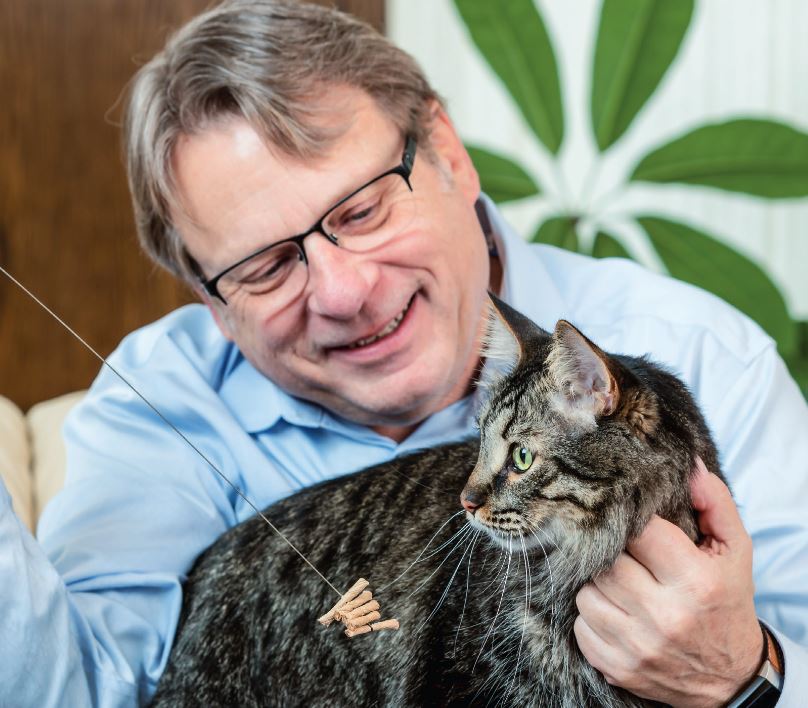
We got the scoop from Jim Boelke, who invented the Cat Dancer in college and turned it into a million-dollar business.

You Got This In Article Ad

What inspired you to invent a cat toy?

I was putting myself through college in the mid-1970s and had three part-time jobs, one of which was taking welfare recipients to different city departments in Oshkosh, Wisconsin. We would stop by the animal shelter to clean the cages and socialize the animals. It was so tiny, the size of a three-car garage. The cat room wasn’t much bigger than a closet. At that time there weren’t no-kill shelters, so a lot of animals got put down. One day a woman brought in two kittens with eye infections. I knew they wouldn’t find homes and would be euthanized. I had no money and my room-mates weren’t keen on the idea, but I couldn’t let the cats die. So I adopted them. I named them Jake and Elwood, after the Blues Brothers. They turned out to be the reason I came up with the Cat Dancer.

How was the idea born?

My evening job was sweeping up scrap metal at a factory. One night I picked up a piece of wire with cardboard strips attached to it and bent it around. I thought, ‘I bet my cats would like this.’ When I brought it home, they chased it and did back-flips until they were exhausted. I’d bring it out when we had parties. People began asking me for one of their own. I made those wire cat toys with pliers and tin snips and just gave them away.

How did you build the Cat Dancer into a business?

In the early 1980s, I suffered from cluster migraines. I was either debilitated by the pain or lethargic because of the medication. I couldn’t keep a job with a normal schedule, so I was looking for a business to start. I had about $1,500 in savings and thought, ‘Let’s see if I can get this cat toy into a store.’

What was the process like?

I went to as many stores as I could and finally found a distributor. I even bought an RV and drove from city to city, building my base. My customers were loyal. I’ve never found a cat that didn’t love this toy. People think it’s just a wire, but it’s a specific type of wire and lure. We also have good packaging and the best cat toy name on the market.

How did you come up with the name?

I originally called it Kitty Flip. Then my brother introduced me to a friend in marketing who was convinced the toy needed a new name. It came to him suddenly and he shouted out, ‘Cat dancer!’ I’ve tried to find him to thank him but never could.

Have you had other cats besides Jake and Elwood?

They’ve all been rescues. Before Jake and Elwood, was Buddy. Then I had Max for 19 years. When my daughter was young we got Spike and Otis. Spike is still with us, along with Cooper and Blue. I describe Cooper as the Robert Wagner of cats—he’s seriously handsome.

And Cooper inspired a new Cat Dancer product?

Yes, the Pro Model. When I adopted him, he was in a cage with no toys. We did some experimenting and made a Cat Dancer with a shorter wire and a handle with a clip that can attach to the bars of a cage. It vibrates when there’s any disturbance in the cage, making the lure dance so the cat can play.

Why is pet adoption so important to you?

There are more than three million cats in U.S. shelters. They need homes. We give away about half of the Pro Models we manufacture to rescue shelters to help keep their cats happy while waiting for forever families.

What cat-apulted the Cat Dancer to fame?

Leading up to the 1980s, dogs were the far more popular pet, but in 1991 Cat Fancy magazine said there were three things that improved America’s relationship with cats: the introduction of premium cat food, clumping litter, and the Cat Dancer, since we offered the first interactive cat toy. Before the Cat Dancer, the only cat toys were furry stuffed mice and balls with bells on them.

Tell us about the decision to make your factory solar powered.

I always wanted to be sustainable. We all need to give back to the planet. The solar panels will eventually pay for themselves. Since noting that we’re a solar-powered operation on our packaging, we’ve had a 20 per-cent increase in profits. I’ve never seen such a dramatic increase.

Why do you think cats like the Cat Dancer so much?

I consider myself a bit of a cat behaviorist. The lure is the cardboard. Cats love the smell of it. The wire we use is bouncy and springy—cats are attracted to the motion. The unpredictability of the wire makes the lure jump around, which reminds them of bugs and brings out their hunting instincts.

And their dance moves?

That’s the best part!

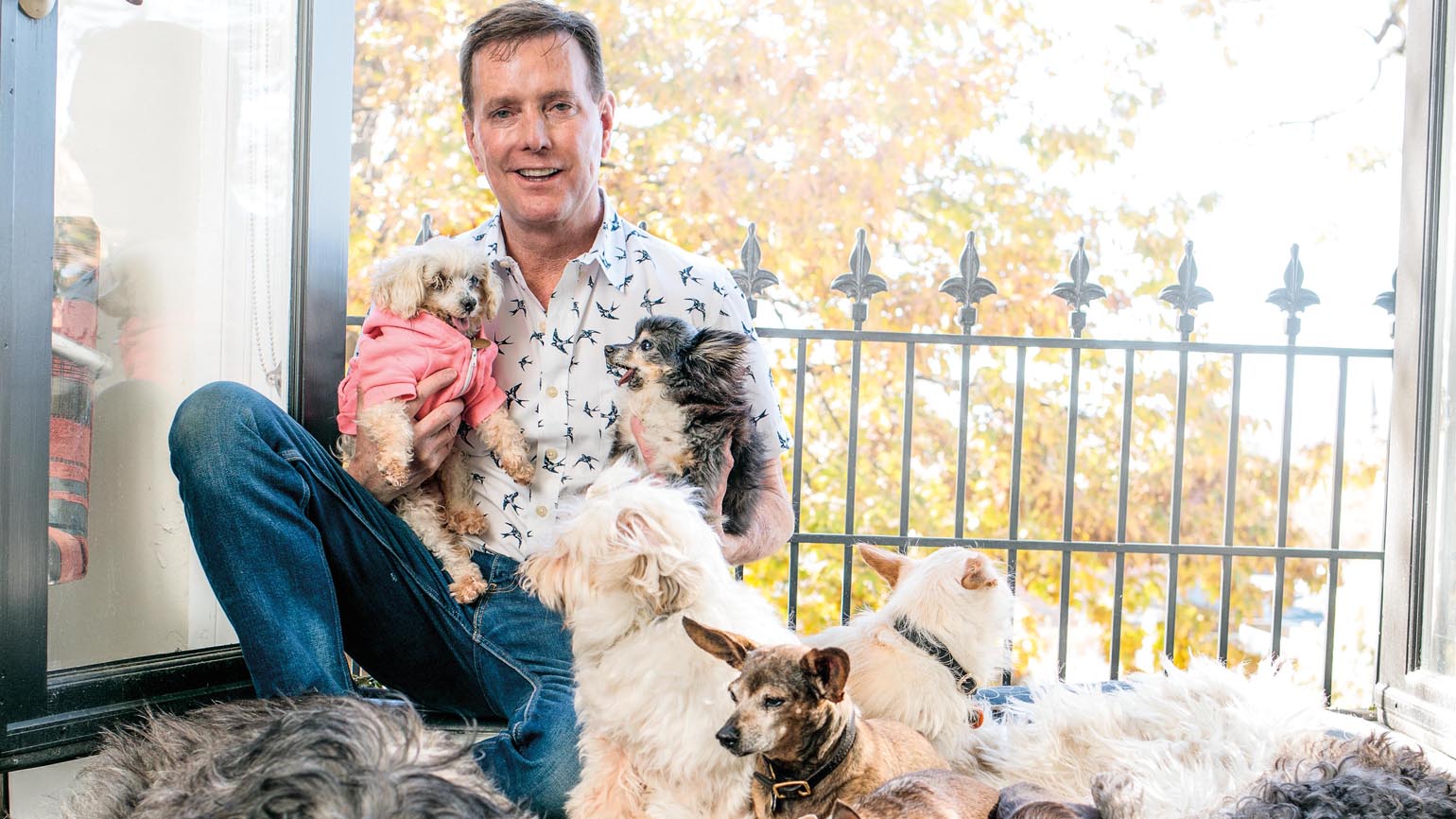
He Adopts Overlooked Animals

Accountant Steve Greig’s motley family of 16 animals has taken over his suburban Colorado home. Crazy? Not to him. The all-senior crew, which includes a moody 110-pound pig and a music-loving turkey, has helped him heal after his greatest loss and given the lifelong animal caregiver unexpected blessings of joy, fame and friendship.

Have you always had pets?

Walking with Jesus L&E evergreen_in article ad

I grew up in a little town in New Mexico. My parents were animal lovers and let me bring home any creature I wanted, as long as I could take care of it. We always had a dog. I also had hamsters, gerbils, rats, a duck. I’ve only ever known life with a bunch of animals.

Tell us about the special dog that came along when you were an adult.

I became an accountant and bought a house. I had three dogs at the time and loved them all. I’ve never met a dog I didn’t connect with. Then I got Wolfgang, a miniature pinscher puppy who I became especially close with. We did everything together; we went on vacation and even went horseback riding together. We could look at each other and know what the other was thinking.

What happened to him?

He was hit by a car and died when he was 12. I was 36 and devastated. It was the worst thing in the world. A month, then two months, then three months later, I was still not feeling any better. I thought, Something good has to happen. Something good has to come from this.

So what did you do?

My parents had instilled in me the importance of adopting shelter dogs. I decided to adopt the oldest dog I could find at the shelter. I went there and was just about to leave when a 12-year-old Chihuahua with bad knees and a heart murmur sat on my lap. I could just feel the joy radiating from this dog. I could feel him lifting my spirits. And I thought, I can help this dog live. He’d been at the shelter a long time. He had one ear pointing down and one ear sticking up. I named him Eeyore, and today he is 19 years old. He still has a bunch of issues, but he’s doing great.

How did adopting Eeyore change you?

Eeyore was the first senior animal I adopted. But from that moment on, I realized that was what I was supposed to do. It was the best way to honor Wolfgang. And the best way to heal after his death. I’ve only adopted seniors and animals with disabilities since then. It has felt so impactful. So I adopted another and another. Now I have nine senior dogs. That’s my magic number! I also have a pig named Bikini, a rabbit, two ducks, four chickens and a turkey named Tofu who gobbles along to Madonna tunes.

You essentially have a farm family but not on a farm…

Well, I’m in an area of Denver where there’s an exception to the pet maximum number. They all have plenty of space to roam and relax.

How do you juggle a full-time job and caring for such a large and diverse group?

During the week I get up at 5 A.M., before my day as an accountant begins, because it takes a couple of hours to feed everyone, give out medications and clean up. Luckily, I live close to work, so two days a week I come home at lunch to take care of them. Otherwise I have a great housekeeper who is just as crazy about animals as I am. I get home at 5 P.M. and do it all over again.

As seniors, are they able to exercise much?

There are five dogs who don’t walk. They have heart problems or are blind, so I pull them in a wagon while the others walk. I have a couple of doggie doors so they have access to the outdoors when they want some fresh air.

How does your giant Irish wolfhound deal with all these little old dogs?

I had Enoch before I started adopting seniors, and now he’s nine years old. He’s so low-key, he’s great with putting up with all these oldies.

And there’s a pig in the mix?

Bikini has been with me for five years. I was at a chicken swap in Denver and met this guy whose landlord wouldn’t let him keep his pet pig. The pig had already lived with dogs and had even used a doggie door. Of course, I had to have mine enlarged for her—twice. She’s 100 percent house-trained, moody at times and now, at eight years old, 110 pounds.

What do your friends and family say about your crew?

They’re so used to it by now. Besides, they thought I was crazy before all of this!

What do you say to someone who is worried that adopting a senior dog will mean expensive health care?

Animals will always have health problems, no matter their age. When I got Eeyore seven years ago, he had heart and knee issues, but he’s been on heart medication and is doing well now. With any pet, you need to be prepared for medical expenses—even a young dog can cost you. Older dogs are so much easier. They just want to be with you. They only need short walks. As you get older, you become the best version of yourself, and that’s true of dogs, too.

If someone loves older dogs but is worried about the responsibility, they should foster. Most shelters need fosters, and they’ll cover the costs. I get so many messages on Instagram from people who adopted senior dogs and are so glad they did. I’ve never received a negative response about it, actually.

How did your Instagram following become so huge?

I’m the last person you’d expect to have a social media presence. I joined Instagram because I liked sharing pictures of these animals I love. And the number of followers just kept growing and growing. It really is crazy that it took off like this. I think people like it because they get to see animals get adopted and happily live out their lives.

How did your book, The One & Only Wolfgang: From Pet Rescue to One Big Happy Family, get its start?

After you hit a certain number of Instagram followers, you get lots of offers. I received several to write books. When HarperCollins brought up the idea of creating a children’s book, I thought it was great. What a wonderful message for younger people: that seniors need to be cherished. Kids get so many messages about how the newest is the best, but not about the importance of loving people and animals and things that are old. So for me, that was a good reason to do it.

What was the process like?

It was crazy! There are real photos with the illustrations, so the publishers would tell me they wanted this or that pose. But working with a pig—you never know how cooperative they’ll be! Promoting the book for several months, traveling and doing author readings while still having a full-time job—it’s been busy but amazing. The book is dedicated to Wolfgang, so the experience was bittersweet. I’m grateful to be able to share what a loving senior animal family can be.

Did you enjoy this story? Subscribe to All Creatures magazine.