

Embrace God's truth with our new book, The Lies that Bind

Guideposts Classics: Jimmy Durante’s Four Gifts of Faith

It’s so tough down there on the lower East Side in New York where I was born we always think any kid who walks around with two ears is a hopeless sissy. In other neighborhoods the truant officer chases the kids; in our neighborhood we chase the truant officer. On the level, it’s a real rough neighborhood.

Later when I start playing the piano in Coney Island joints, I’m rubbing elbows with gangsters, gunmen, bootleggers and kidnappers.

Whistle Stop Cafe In Article Ad May 2023

None of that stuff dusts off on me hard enough to stick. For that I owe a lot to many people, but mostly to four special ones. To remind myself of what I owe them, and because I love them, I carry on a chain around my neck four little gifts they give me.

I wear them so long they’re like part of my flesh. I know they’re part of me that isn’t flesh. They’re like four commandments that aren’t listed with the big ten.

Every morning I put my fingers on the chain around my neck and I feel rich. I mean you can probably buy the four things and the chain for 50 cents and still get change. But I feel rich for what they give me in my heart.

One of these gifts is a medal of the Madonna. My pop give me that.

He was a barber, and when I’m a kid he lets me lather up the faces of his customers. It’s his hard-earned dollars, and there were never a lot of them, that learns me how to play the piano. Bartolomeo Durante, the barber, the kindest, gentlest man I ever know.

In giving me the medal he teaches me the art of giving. If his customers don’t have the price, he’d cut their hair anyway. To the day he died he wants to give away everything he has.

When he gets too old to barber he lives with my sister Lillian in Brooklyn, and he walks down the streets and passes out all the money he has to anyone who needs it. It gets so bad he can’t carry any money with him. So I send it to Lillian and make her his banker.

You know, I don’t think I ever see him mad a minute in his whole life. I’d like to be like him.

“Watch the friends you pick,” he always says to me. “Some will steal your heart and your thoughts. Avoid them. You only pick the ones to whom you can give your heart and your thoughts.”

READ MORE: LORETTA YOUNG ON THE POWER OF LOVE

I always try to.

The second gift on the chain around my neck is a medal of the Crucifixion. My wife, Jeanne, give it to me when we was married in 1921. We was married for 22 years. She died in 1943. Lord have mercy on her.

Her medal of the Crucifixion always reminds me of the art of forgetting and forgiving. Even how I met her reminds me of forgiving.

She came from Toledo, Ohio, and she’s a very pretty girl. Pretty inside as well as outside. And she’s a great singer. What a pair of pipes she has.

I’m working in an uptown joint in Harlem then, the Alamo, and she drops in looking for a job. The boss eyes her, and says:

“Let’s hear you sing. Go ahead, Jimmy, play the piano for her.”

I resent that because I’m busy—I don’t know what I’m busy about. But I feel busy. So I play a few blue notes and clinkers. She stops, and she’s real angry, and she says:

“You are probably the worst piano player in the world.”

“Them are the conditions that pervails,” I say.

First she busts out laughing, and then she lights up the room with the shiningest smile I ever see.

So what do I do? I marry her.

Jeanne knows people and how weak-minded they get, and watching her heart work I learn what forgiveness is. One day she entrusts an acquaintance with some money. A slight loan, you might say. And when it’s time to return it, the money isn’t there.

So the guy says he’s sorry and tells her why he hasn’t got it. Jeanne never asks him again.

“I feel resentment when I ask and he refuses,” Jeanne says. “I don’t want to feel resentment, so I’ll never ask him.”

READ MORE: DANNY KAYE ON THE GIFT OF LOVE

I never want to feel resentment, so if anyone owes me anything I never ask either.

Jeanne is always telling me: “If anyone does something wrong to you they’ll be more unhappy about it than you will. So forget and forgive.”

I’m not proud—it takes a lot of time and trouble to keep even the smallest nose in the air.

The third thing on my chain is a St. Christopher’s medal. To me it’s the art of friendship. Through the years I learn it from my friends Eddie Jackson and Lou Clayton. Lou is around us still even though he died. But a stranger I still don’t know and the St. Christopher medal keep reminding me of what friendship means.

I get the medal about six years ago. I’m ready to start a 17-day grind of one night stands across the country on a bond drive tour when Lou Clayton takes me to the doctor for a check-up. The last X-ray shows a polyp in my lower stomach.

So I’m elected for surgery. No tour. No radio. Nothing. But Al Jolson, Bob Hope, Red Skelton, and Frank Morgan took turns doing the radio show for me. That’s what success really is, to have friends of that sort. Do the best you can. Stick with your friends. Pray they’ll stick with you. The rest is in God’s hands.

If I don’t have that operation, that polyp could have gone malignant and I am in real trouble. God is really with me.

When they give me that shot in the arm, right before I go into the surgery, and I’m just about getting subconscious I feel someone touching my neck. When I wake up from the antiseptic I see this St. Christopher medal around my neck and I ask the nurse:

“Where does this come from?”

READ MORE: SHIRLEY TEMPLE’S HAPPIEST MOMENT

And she says: “Right before we took you up a nice lady with grey hair, dressed very nice, comes in, and kneels down, and says a prayer, and then slips this around your neck, and then she begs the doctor: ‘Please doc, take good care of him,’ and then she runs out.”

Anyway I can never forget this stranger with the St. Christopher medal.

Before my mother dies over 25 years ago she gives me a little beat-up cross. That’s the fourth gift on my chain. She wore it all her life, and when she gives it to me she says: “Never take it off, and God will always be with you.”

It isn’t true that I start each day with a song. That’s second. I start each day with a prayer. That I get from Mom. She teaches me the art of believing. That’s probably the greatest of the four commandments on my chain.

Oh, she teaches me all the commandments, all right, my mother. A saint. God have mercy on her soul. One time, I think I’m about five years old, I’m walking down the street with her, and we pass a vegetable pushcart. I just snitch a piece of corn; all the kids do.

Two blocks later Mona turns around and sees the corn and asks me:

“Where did you get it?”

“Off the pushcart,” I says.

She hauls me by the ear for two blocks all the way back to the pushcart and makes me explain to the peddler and give it back. I am highly mortified. But that’s her way of teaching me the commandments.

As a kid she tells us: “Without believing, you’re nothing.” And she points to one of the tough guys on the block: “He hasn’t got God in his heart,” she says. And she turns to a good guy like my father and says: “This one, he has God in his heart.”

And we always follow her to church, without her asking, to find where God is. Even after she dies I still follow her.

For a while there’s a time when I think I’m too busy to follow her, and during this time I’m helping Father James Keller; he’s head of the Christophers. I am helping him make a movie, and he asks me:

READ MORE: KATE SMITH ON THE POWER OF PRAYER

“Going to church regular?”

I got to admit I miss here and there. “I been very busy,” I alibi.

“You find the time,” Father Keller says. “You find time for everything else.”

He’s real severe about it. Would you believe it? And there I am doing a picture for him for free.

But after that, when I think I’m too busy, I touch the beat-up little cross on the chain around my neck, and remember to follow my mother to where God is.

And you know the nicest thing about following my mother to where God is? I always feel it’s like walking out of darkness into the sun.

For more inspiring stories, subscribe to Guideposts magazine.

Guideposts Classics: Jimmy Dean on Forgiving the Unforgivable

It’s strange how little, unexpected things can change our lives—like the telephone call I had a couple of years ago. I was at home when the call came. I picked up the phone and heard a voice that made something inside me tighten with anger and resentment. The voice at the other end of the line belonged to my father.

How can a son despise his own father? In my case, it wasn’t hard because I felt I had plenty of justification. To explain, let me go back through the years to the time when I was 11, my brother Don was nine, and we lived in Plainview, Texas.

Pause & Pray In Article Ad

That was a long time ago, but I can still see my mother’s drawn face as she tried to explain the grim fact that our father had left us. Had walked out. Had deserted us. I remember the deep hurt in her eyes and the numbness in our hearts as she told us we all would have to work hard just to eat and stay alive.

She was right: it was hard, brutally hard. Mama opened up a one-chair barber shop in our rented house and cut hair for our neighbors at 15 cents a head. Don and I did everything we could about town to earn money. We pulled cotton and cleaned out chicken houses and milked cows and helped build windmills.

My mother had a little garden, and we worked it with her. We needed the food we got from it.

I remember Mama tacking paper on the ceiling of the house we lived in. The ceiling was so thin that if she did not plug up the holes, dirt would fall on us and our food.

The only clothes Don and I had were bib overalls. At school we were kidded cruelly by our classmates. I hated those kids and the school and wondered in pain how my father could walk out, leaving us with this shame and this need.

One day, I finally came home and told my mother how we were being ridiculed and asked her why we couldn’t get some other clothes.

“Overalls are nothing to be ashamed of”, she said. “They’re something to be grateful for. Besides, it’s what you wear inside your heart that counts.”

If I knew then what I know now I never would have asked her that question. Imagine how much it must have hurt her.

Mania always told us, “Be yourself. If people don’t like you the way you are, they’re not going to like you when you pretend to be someone else.”

Our life was not all despair, though. On Sundays, we would walk the three-quarters of a mile from our house to the Sethward Baptist Church. Then, after Sunday dinner, the neighbors would drop in, and Mama would play our old piano, and we’d sing from the green-backed Boardman Hymnal.

Later we’d parch peanuts and eat them. Sundays weren’t bad at all.

We never heard Mania complain about being poor. There was never any doubt that we would outlast it. Hope was in all of us; deep hope because it was nourished by a deep faith.

Mama got this faith from her father and Don and I got it from both of them and it became part of our lives and our being.

We called Grandfather “Papa.” Maybe because for the brief time we knew him he was all the Papa we had.

He was a short man with tall beliefs who held that in times of distress you depended on your prayers. All that happened was God’s will, he would tell us, and if you couldn’t see the why of it at the time, it all would be clear later on.

Mama told us how a hail storm once destroyed half a section of Grandfather’s wheat. A section is 640 acres, and 320 acres supplies a lot of wheat; in fact, it is a year’s work.

The storm lasted less than 30 minutes. Grandfather stood on the back porch watching it and when the destruction was over he said, “The Lord giveth, the Lord taketh away.”

He went inside to thank God for what he had left—little as it was.

Then there came the day when the bitterness in me came out and I angrily criticized my father. Grandfather started to reprimand me, changed his mind, and picked up his Bible. He leafed through the pages quickly, and read this:

It is a very small thing that I should be judged of you, or of man’s judgment: yea, I judge not mine own Self…but he that judgeth Me is the Lord. Therefore, judge nothing before the time, until the Lord come, Who both will bring to light the hidden things of darkness, and will make manifest the counsels of the hearts. I Corinthians 4:3-5

But I was 16 then, and words from the old black leather-bound Book didn’t help the heartache I felt. Besides, for most of my years I had been trying to live down my father’s name.

It seemed that he had borrowed money from many people and never paid them back. They didn’t let me forget it. I felt I couldn’t ever forgive him for that. Or for leaving Mama to do his work and fight his fight. Or for the bib overalls.

After the 11th grade, I left Plainview, enlisted in the Air Force and was stationed in Washington, D. C. A quartet of GI’s who sang at night just for tips asked me to come along with my accordion when their fiddler took sick.

By the time I was out of uniform I was a solo singer and soon was making a nice living from personal appearances and records. I’d make about a dozen single records and three albums of prayers and hymns before I wrote and recorded Big Bad John, which became a surprising hit.

Suddenly, after a silence of 17 years, my father called me one day and asked for money to finance some crazy scheme. I turned him down cold. He called several more times with various requests. The conversations were quick and brief—a flat no. I’m sure he could tell how bitter I was; after a while the calls stopped.

My career moved along nicely, and one day I was surprised to receive an invitation to appear at a dedication of a new school in my home town of Plainview.

Remembering all the taunts about our bib overalls, I was tempted to say no. But my mother reminded me gently of the fine neighbors we had had. She said we owed them something.

When we arrived at the school, Mama was given a front row seat and she looked very proud and pretty sitting there waiting for the program to begin.

When I walked out on stage, everyone was standing and applauding. I was so moved that I couldn’t talk or sing or anything. Looking down I saw that Mama was crying, but they were tears of joy. At that moment I felt that all the years of poverty and the humiliation she suffered because of my father were wiped away.

The memory of this experience was still in my mind two years ago when my father called again. I began to harden myself against the usual request.

But this time his voice was different. There was an urgency in it.

“All I want from you this time is your forgiveness, Jimmy. I haven’t been much of a father, and I’m sorry. Please, will you forgive me?” There was a pause. “I have cancer. My time is nearly all gone now.”

For a moment everything came to a stop. Scenes from the past flashed before me in a matter of seconds. Suddenly I felt small and tongue-tied, because a man I hardly knew—my father—was dying and we had to bridge the long years of resentment and anger and hate quickly.

The silence was probably no longer than 10 seconds. Yet it was long enough for me to look back through time and see the futility and senselessness of any man trying to judge another. For a moment I felt set apart from life’s struggle; it was almost as though I was given some new insight into the mind of God.

I forgave my father, and I asked to be forgiven, too, for ever trying to judge him.

“Thank you for that, Jimmy,” he replied. A few days later he was dead.

I’m sure his last phone call to me helped my father leave this world with a peaceful mind. And I feel that it did something for me.

For today whenever I read of bad conduct in the newspaper, or see a drunk reeling about the sidewalk, or feel criticism rising inside me toward any human being, I try to stop myself at that very moment. And my memory returns, quickly to the words of St. Paul:

Judge nothing before the time, until the Lord come, Who both will bring to light the hidden things of darkness, and will make manifest the counsels of the hearts.

For more inspiring stories, subscribe to Guideposts magazine.

Guideposts Classics: James Stewart on a Father’s Strength

When I was a boy in the town of Indiana, Pennsylvania, Stewart’s Hardware Store seemed the center of the universe. It was a three-story structure filled with everything needed to build a house, hunt a deer, plant a garden, repair a car or make a scrapbook.

Even after I moved away and saw larger sights, the store remained with me. But then I realized that what was central to my life was not just the store but the man who presided over it—my father.

Pray a Day Vol 2 In Article Ad

Alexander Stewart was a muscular Irishman whose talk was as blunt as his face. The store not only provided his family a living but also was a forum where he pronounced opinions seldom tailored to the popular style.

GET THESE BOOKS FOR THE FATHERS YOU LOVE

If he ever heard the slogan about the customer always being right, he would have scorned it as toadyism as well as a falsehood. And yet his tone was never harsh, and he was never vindictive. If a man failed to follow his advice, Father merely made allowance for human frailty and felt no ill will.

Dad was a Presbyterian, strong in his religion as he was in all beliefs. He sang in the choir with a true but penetrating tenor voice, and someone once described the hymns as “solos by Mr. Stewart, with accompanying voices.”

Strangely, Dad never sang very loudly at home. We lived in a rambling house with a large front porch loaded with wicker furniture. The living room, high ceilinged and trimmed with dark woodwork, held a grand piano, around which we gathered for family sings.

My sister Virginia played the piano, my other sister Mary played the violin and I played the accordion—after a fashion.

During these sessions, Dad sang very softly, so as not to cover up Mother’s clear, sweet voice. Her name was Elizabeth, and he called her Bessie and adored her. Though small and gentle and not given to contention, she frequently had her way over him because she possessed patience and endurance.

Doing things with my father was always fun, for his imagination added a dimension to events. When, at 10, I announced that I was going to Africa to bring back wild animals, my mother and sisters pointed out my age, the problems of transportation and all such mundane and inconsequential facts.

But not Dad. He brought home books about Africa, train and boat schedules for us to study, and even some iron bars which we used to build cages for the animals I was to bring back.

READ MORE: TENNESSEE ERNIE FORD HONORS HIS FATHER

When the departure day approached and I was becoming apprehensive, my father brought home a newspaper that told of a wreck on the railroad that was to take me to Baltimore. This postponed my trip and, by the time the train tracks were repaired, he and I were off on a new and more exciting project.

When President Harding died, the funeral train was scheduled to pass through a town about 20 miles from ours. I wanted desperately to go and see this train, but Mother pointed out that there would be school the next day and that it would be a long trip. That ended the discussion.

But Dad did not forget. When the day arrived, he came to me and, in in a voice as near a whisper as his nature would allow, said, “Jim, boy, it’s time to see the funeral train.”

We drove along without talking much, bound together by the comradeship of our adventure. When we came to the railroad station, a half dozen people were talking in hushed tones and looking down the tracks. Suddenly the tracks gave off a low hum—the funeral train was coming!

Dad shoved two pennies into my hand and said, “Run, put them on the rails. Quick!”

I did as directed and jumped back to hold his hand as the engine thundered past, pulling a glass-windowed observation car in which we saw the flag-draped casket, guarded by two Marines, their glistening bayonets at attention. I could hardly breathe, so overwhelming were the sight and sound.

After the train had roared off, I retrieved the two flattened pennies from the track. Dad put one in his pocket and I kept the other.

As we drove home, I examined mine and found that the two feathers of the Indian headdress had become a great plume. On the other side two slender stalks of wheat had grown and burst, as if the seed had ripened and scattered.

READ MORE: WILL ROGERS JR. REMEMBERS HIS FATHER’S LESSONS

For years, Dad and I carried those coins flattened by the weight of history. And the knowledge of what we shared made me feel very close to him.

With his temperament, it was amazing how patient Dad could be, how subtle his discipline. I don’t recall a time when he stood across my path; he always walked beside, guiding me with his own steps./p>

When a neighbor’s dog killed my dog Bounce, I vowed to kill that dog in revenge. I vowed it day after day in the most bloodthirsty terms, almost making myself ill with my own hate.

“You are determined to kill the dog,” my father stated abruptly one evening after dinner. “All right, let’s get it done. Come on.”

I followed him to the store, to discover that he had tied the dog in the alley. He got a deer rifle out of stock, loaded it, handed it to me, then stepped back for me to do my bloody work.

The dog and I looked at each other. He wagged his tail in a tentative offer of friendship and his large brown eyes were innocent and trusting. Suddenly the gun was too heavy for me to hold and it dropped to the ground. The dog came up and licked my hand.

The three of us walked home together, the dog gamboling in front. No word was ever said about what had happened. None was needed.

During World War II, I enlisted in the Air Corps and became part of a bomber squadron. When we were ready to fly overseas, Dad came to the farewell ceremonies in Sioux City, Iowa.

We were very self-conscious with each other, talking in generalities, trying to conceal our awareness that, starting tomorrow, he could no longer walk with me. At the time of the greatest crisis in my life, he would have to stand aside. We were both afraid.

At the moment of parting, he studied his shoes a moment, then looked at the sky. I knew he was searching for a final word to sustain me, but he couldn’t find it.

READ MORE: MICKEY MANTLE HONORS HIS FATHER

He opened his mouth, then shut it hard, almost in anger. We embraced, then he turned and walked quickly away. Only after he had gone did I realize that he had put a small envelope in my pocket.

That night alone in my bunk, I opened it and read, “My dear Jim, soon after you read this letter, you will be on your way to the worst sort of danger. I have had this in mind for a long time and I am very concerned… But Jim, I am banking on the enclosed copy of the 91st Psalm.

“The thing that takes the place of fear and worry is the promise in these words. I am staking my faith in these words. I feel sure that God will lead you through this mad experience … I can say no more. I only continue to pray. God bless you and keep you. I love you more than I can tell you. Dad.”

Never before had he said he loved me. I always knew he did but he had never said it until now. I wept. In the envelope there was also a small booklet bearing the title The Secret Place—A Key to the 91st Psalm. I began to read it.

From that day, the little booklet was always with me. Before every bombing raid over Europe, I read some of it, and with each reading the meaning deepened for me.

I will say of the Lord, He is my refuge and my fortress… His truth shall be thy shield and buckler. Thou shalt not be afraid for the terror by night; nor for the arrow that flieth by day… For He shall give His angels charge over thee, to keep thee in all thy ways. They shall bear thee up in their hands, lest thou dash thy foot against a stone.

And I was borne up.

Dad had committed me to God, but I felt the presence of both throughout the war.

When Mother died in 1956, we buried her in the family plot in Indiana, Pennsylvania. With his wife gone, Dad could work up no new enthusiasms. Her quiet strength had sustained him, and with her gone he quickly withered away.

It was a bleak January day when I saw him placed beside his ancestors, men who had lived longer than he had but who were perhaps less demanding of life. Most of the town came to the funeral with respect and grief.

After it was all over, I went to the hardware store and let myself in with a key I hadn’t touched for 30 years. The interior smelled of metal, leather, oil and fertilizer, the odors of my childhood.

I sat at his scarred oak desk and idly pulled open the middle drawer. It held a clutter of pencils and paper clips and bolts and paint samples. Something glinted dully among them. I picked up the funeral-train penny with the flattened Indian face and the burst grain.

For a long time I sat there at his desk, fingering the Indian head penny and thinking. Then I put it in my pocket, took a last look at familiar and loved objects, and walked out of the store, locking the door behind me.

Did you enjoy this story? Subscribe to Guideposts magazine.

For more inspiring stories, subscribe to Guideposts magazine.
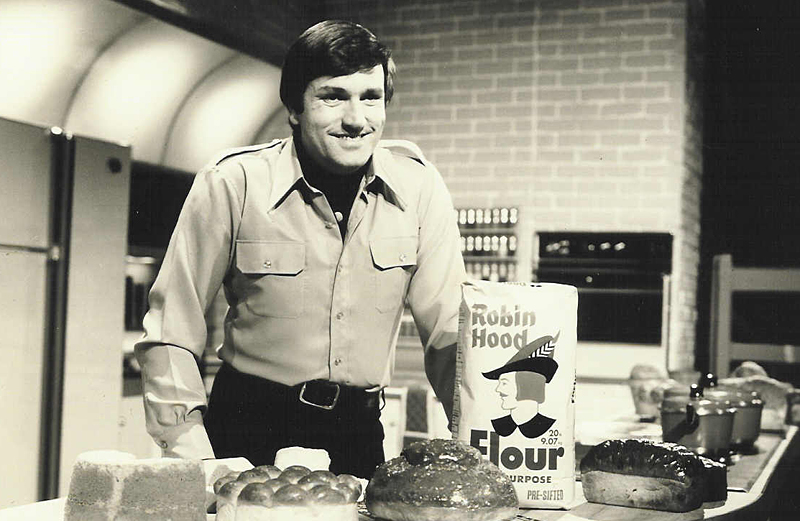
Guideposts Classics: Graham Kerr’s Spiritual Awakening

Scissors are a wonderful invention, two blades that pivot on a pin. God made man and woman in the same way–two blades. And He put them together with a union called marriage.

We were married, put together by God, on September 22, 1955, but our marriage scissors never worked. The only exposed edges were the points, and points are for stabbing, not cutting.

Pray a Day Vol 2 In Article Ad

We loved each other, we always have—ever since we were 11 years old and held hands briefly at a party where we had strawberries and cream and played badminton and listened to the bees.

Treena: My father was a genius, a portrait painter who alternately followed his own will and his clients’ whereabouts. We never knew from one year to the next where our home would be.

Graham: My parents ran a hotel and I grew up experiencing a “champagne existence on a beer income.” I never made a bed or had to wash a dish; the hotel staff managed all those incidentals. My parents were always busy. The holidays were working days, and we never shared with the community.

I was a loner when I first met Treena in England. She was the loveliest thing I had ever seen and we became close companions. She had younger brothers, but I was an only child.

We used to listen to the radio while the rain ran down the diamond-shaped leaded panes and debate the sinister motives of a bystander in a trench coat as he innocently waited for a bus.

We rang each other on the phone and read poetry or just listened to the other breathe.

Treena: My family finally left England and went to the Channel Islands. I used to write to Graham occasionally, and I daydreamed about our early “love.” I grew up in a difficult home. My parents were not loving parents, and I sought a release from painful reality by becoming an actress.

I was quite good, at least the critics used to say so. I loved the cameo parts where I could steal the show but still feign non-competitiveness with the rest of the cast.

I got love from the audience on my terms; when the curtain went down I was satisfied and didn’t have to trade love on a one-to-one basis.

Graham: While Treena was acting, I became a soldier. One day in camp, I opened a newspaper and there, spread over the center pages, were photographs of Treena, my first love. She had won a beauty contest and she looked radiant.

I wrote and she answered. The thread remained unbroken.

Treena: In 1954 I returned to England and wrote to Graham. He replied and within a month we had met and found that after nine years of separation our love was still alive.

Graham: Within ten hours of being with her I proposed, and Treena said yes. We were living our early love again, but this time there was drama, urgency, drive; we were adults, now. though we didn’t always act like it.

Treena: I had a violent temper and a very acid tongue. I was more seriously hurt by my early environment than I–or Graham–knew.

Graham: While Treena was the spark. I seemed to be the drive in our marriage. When her moods were electric I would “take it.” but also build resentment at the same time. I found release in working.

As the work element increased, my available time and attention for Treena decreased. I began to set my sights on possessions–Italian cars, homes by the water, luxurious yachts. And a burgeoning TV career in Australia provided the wherewithal to turn some of those materialistic dreams into reality.

Treena: By this time I was in the theater again, happy and contented, feeling I’d finally got things together. We had two children and I could manage the housework and the theater and Graham … when he was home.

Graham: Treena would try to time her stage work to coincide with my TV recording dates, but it never seemed to work. The plays she did always ran longer than expected and it seemed that we were never together. The theater became my rival; her work seemed to give her more joy and satisfaction than I could.

Finally we lost control. Success, exposure to luxury and to the smart show-business set, coupled with the pursuit of two separate careers, were too much. The time came when I sought sympathy and attention from another woman.

I cannot possibly express the absolute hell that followed that senseless, brutal act, the tearing at both our hearts with the points of the scissors.

Treena: I was filled with righteous anger; I felt dirty and ashamed. It was so unfair. “Why? Why? Why?” I demanded.

Graham: “I don’t know,” I would reply. All I knew was remorse for our lost love, and a furious desire to make up for it somehow. I would do things, buy things, go places; it was all external patching up when an internal healing was what was needed.

We were submerged in a sea of recrimination, unforgivingness and eventually retaliation. We hacked away at each other with separated blades.

In 1968 we were discovered by American television interests and brought from Australia to perform The Galloping Gourmet series.

In an effort to save our failing marriage we agreed that we would cooperate in the production. Treena would be the producer and I would be the clockwork cook. The pressure of the nonstop pace of 200 new shows a year was agonizing. The enemy now became the work load that we shared.

Professionally, we were a tremendously successful team. All the thwarted power of love was converted into drive and ceaseless competition to see who could do the most before collapsing. By April, 1971. we had well over a million dollars in the bank.

In that same month we were hit by a huge truck on Highway 101 outside of San Francisco. Our careers were ended.

Treena: I had violent visions and fell into deep periods of despair and fear. Eventually this depression induced illness–tuberculosis–and I had one lung removed.

Graham: I hadn’t suffered mentally but my neck and back had been injured and I couldn’t take the recording pace any more, especially without Treena producing the shows. Together we had managed, but on my own the burden became impossible.

So we walked away from that life and went to sea in a beautiful yacht called Treena. She was 71 feet long and flew 5300 square feet of canvas. She was one giant investment aimed at recapturing our family unity and our love for each other.

But the boat was too big and too fancy and nobody except its owner-skipper wanted to go sailing anyway! It was a 66-ton love-substitute that ate up all our reserves.

Treena: Twenty-five-thousand miles and twenty-two months later our fragmented family, strained even more by the isolation of shipboard life, came to rest in Maryland at the small port of Oxford.

There we purchased an 1814 white clapboard Southern colonial mansion with acres of lawn and graceful colonades and wide river views.

In this tranquil spot I finally hit rock bottom. Nothing had worked at sea and now there was no peace ashore.

I began to take pills–“uppers.” “downers,” painkillers, sleeping pills–anything to try to control the violent moods that had caused our doctor to discuss with Graham the possibility of my voluntary commitment. Our children were in serious trouble; life was unbearable.

We had a maid working for us at that time. Her name was Ruthie and she shimmered with joy everyday. I turned to her one day and said, “I just don’t know what to do, Ruthie.”

She simply said, “Why don’t you give your problems to God?” to which I brusquely replied, “Okay, God, You take them. I can’t handle them any more.”

God took them! Seven days later I went to Ruthie’s small church in Bethlehem, Maryland. As the singing, handclapping congregation prayed for their “new sister” I felt an undulation in the pit of my stomach that rose to nearly suffocate me; I screamed and fell to my knees, crying tears that flowed like waterfalls.

“I’m sorry, Jesus. I’m sorry, Jesus,” I repeated again and again.

I was baptized in water and felt glowingly clean. Then they asked me if I wanted to tarry for the Holy Spirit. I didn’t know who the Holy Spirit was, let alone what tarry meant.

“What do I do?” I asked.

Ruthie told me to say, “Thank You, Jesus,” so I did—over and over. The church was hot and I felt ridiculous. Really, I thought, you are a sophisticated woman of forty going right out of your mind!

Then a bright light fell on my face and I thought, Now they’ve turned up the church lights to make me think that I’ve got itwhatever “it” is!

I opened my eyes and there I saw a Man. He was dressed all in white and He had the most wonderful smile I have ever seen. It held all the love in all the world. He stretched His hand toward me and He touched my heart. He said, “You have it,” and I laughed tears of joy as I said, “I know … I know … I know.”

I believed in Jesus at that moment. He is alive; I’ve seen and spoken with Him, so I truly know.

I left that church a totally new human being filled with the great certainty that, if I just kept quiet, my husband and family eventually would share this love.

Graham: I had tried unsuccessfully to get our lives back together with everything that money could buy. But now Treena was utterly and completely changed. It was a miracle!

There were no more rows or recriminations. She forgave me and seemed to mean it. Our children were happier; the house was peaceful. But I still worried. How long would this last? When would this Jesus thing disintegrate? If I got too close, I’d get hurt when it blew, so I kept back and watched and waited.

Treena: While Graham waited. I prayed. I prayed everywhere, especially in the broom cupboard. (The Bible had said in Matthew 6:6 to pray in a closet!) I fasted and prayed, but never urged Graham to follow.

Graham: After three months I was totally convinced Jesus was real and that He was alive in Treena. It was then that I went on my knees and told Him, “Jesus … I love You.” And with that confession, He loved me right back.

Graham and Treena: When we pray together we hold hands, and through us now flows the love of Jesus. We are forgiven, so now we have the ability to forgive. There are no old hurts left, only the hunger to serve Him and His people with our lives.

We are a new pair of scissors put together by God. He, at last, is the pinion at the center of our marriage.

For more inspiring stories, subscribe to Guideposts magazine.

Guideposts Classics: Gale Sayers on the Power of Courage

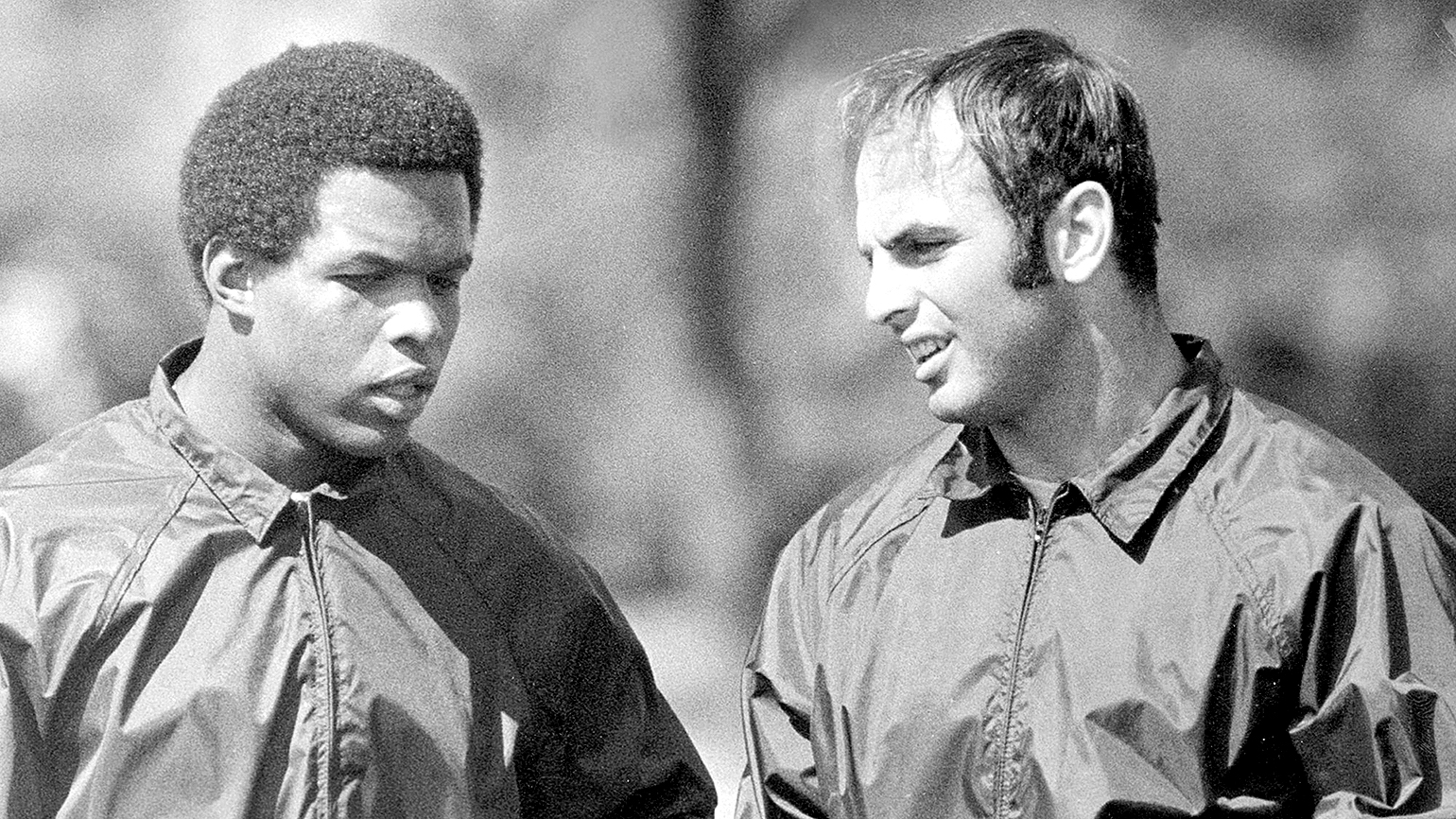
When I first saw Brian Piccolo at the Chicago Bears’ football practice back in 1966, I didn’t think he would make the team. “Pick” was not very big and not very fast, but he hung in there with determination and guts and became a solid all-around player.

The great thing about Pick was his sense of humor. When he was assigned a locker between me on one side and Dick Gordon on the other (both of us blacks), Pick, who is white, kidded us saying, “I feel like an Oreo cookie.” The fact that he was my substitute at running back didn’t bother him a bit. When the coaches graded his performance higher than mine during the 1968 season, he never let me forget it.

God's Constant Presence In Article Ad

The best thing about our relationship as it developed was that we could kid each other all the time about race. It was a way, I guess, of easing into each other’s world. So when in 1967 the coaches began pairing roommates who played the same position, it was logical that Pick and I room together. When sports writers began trying to make a big deal of the black-white angle, we just joked about it.

Another great thing about Pick was his unselfishness. He was never uptight about his secondary role on the field. He would fill in at any position, hardly ever missed a block, always gave 100 percent. When I began the 1969 season worried about a postseason operation on my knee, Pick always had an encouraging word at the right moment even though he knew he would get a chance to play more if I couldn’t.

It was during the ‘69 season that Pick’s cough began. It wasn’t much at first but got worse as the season entered the cold months. Despite the cough, Pick played well. After one game when he scored a touchdown, he started coughing, then laughed saying, “It’s nothing. I’m just having a coronary.”

Finally Pick went to a doctor to get a stronger cough syrup. The doctor took an X-ray of his chest. “Brian’s very sick,” he said. “He’s got a malignant tumor in his chest that has to come out.”

I was stunned. I just didn’t know what to say or think. After practice Saturday, I went over to the hospital to see him. He was in a fantastic mood. “I’m ready to play, man,” he said. “It’s just a little cough, you know.” His wife, Joy, was with him, and she was in good spirits too. We kidded around for a while and then I left.

That night, the night before the Baltimore game, Mr. Halas, the team’s owner, called me. He said, “Gale, I think maybe you ought to say something to the team before we go out tomorrow. Try to dedicate the game to Brian. I think it would be altogether appropriate.”

And I said I would.

I had never in my life talked to a team. I don’t consider myself a leader. All the leading I do is by the way I go out and play the game.

After our warm-up and just as we were getting ready to go back on the field, Coach Jim Dooley told the team, “Gale has something to say to you.”

I just said, “As you all know, Brian Piccolo is very, very sick. He might not ever play football again. So I think each of us should dedicate ourselves to winning this ball game and give the game ball to Pick. Then we can all sign the ball and take it up to him…”

About this time, they probably didn’t understand me, because I had started to cry. On the bench, I leaned over with my head down, sobbing. Jim Ringo came over and said, “Gale, I’ve been in football for twenty years and never heard anything like that before.”

And we went out and we played good ball, and we should have won the game. We had them by a touchdown with six minutes to go and John Unitas came in and drove them 80 yards for a TD. Then they got a field goal, and we lost it. I felt rotten.

After the game, my wife Linda and I went to the hospital to see Brian. He was still in fine spirits. Listening to him, I found it hard to believe this terrible thing had struck him down. But he just said, “It’s a tumor and it’s got to come out, and it’s got to come out now.” He was loose about it because that was his way. His only concern, he said, was for his wife and his three small daughters and their future.

What he was really doing, I think, was carrying through the “I am third” philosophy of life, which I had learned from my track coach at Kansas: “The Lord is first, my friends second, and I am third.” And I wasn’t really impressed by his courage because now I knew the man and I expected courage of him.

Pick flew into New York Monday, and Dr. Edward Beattie told Pick the tumor figured to be the size of a baseball. When they got it out-after a four-and-a-half-hour operation—it was closer to a grapefruit.

We had a Saturday game in San Francisco, and right after the game, I flew back to Chicago, then into New York. Sunday morning I went to see Pick.

Same old Piccolo. He had seen the San Francisco game on TV—and he chewed me out for not fielding a punt that went on to roll 70 yards. Considering everything he had gone through, he looked well, and he was in his usual good spirits. He had got thousands of cards and letters which had sort of overwhelmed him.

His attitude was so great, it made me feel all the worse about how I had acted after my knee surgery. The day after I was operated on, Pick had come to see me in the hospital. I just lay there and said nothing. Pick tried to make small talk, but it was like talking to a wall.

After coming home from the hospital, Pick naturally took it easy for a while. We talked on the telephone a lot, and Linda and I visited him a few times, and he seemed to be making terrific progress. He had got his weight back up to 188 and was getting ready to go out on the golf course and start working out a little in the gym.

The next time I talked to him he was going back to New York for more tests. There was a lump on his chest. They had to operate again.

When I flew into New York to see him, he was coughing quite a bit and all the medication had weakened him. But mentally he was as strong as ever. I thought to myself, If anybody can lick it, it’s going to be Pick.

As much as they cut into this man, as much as he was afflicted with terrible pain and discomfort, as much as he suffered because of this wicked disease, as much as he was faced with all these tortures, his spirits would not be destroyed. This was the beautiful nature of Brian Piccolo.

At the end of May, I came to New York to attend the Professional Football Writers annual dinner and receive the George S. Halas Award as the most courageous player in pro football, because of my comeback from knee surgery. I had wanted Brian to attend with me but he couldn’t. At least I could tell the audience about Brian Piccolo.

“He has the heart of a giant,” I said, “and that rare form of courage that allows him to kid himself and his opponent—cancer. He has the mental attitude that makes me proud to have a friend who spells out the word courage twenty-four hours a day of his life.”

I concluded by saying, “You flatter me by giving me this award, but I tell you that I accept it for Brian Piccolo. It is mine tonight. It is Brian Piccolo’s tomorrow. I love Brian Piccolo, and I’d like all of you to love him too. Tonight, when you hit your knees, please ask God to love him…”

Tuesday morning, June 16, Linda called me at the hospital in Chicago where I’d been sent with a strep throat, to tell me that Brian Piccolo had passed away. I couldn’t talk. I wasn’t able to say a word for the rest of that day.

I was discharged from the hospital that afternoon. When I came home, I found that my trophy had arrived from New York. I sat down and wrote Brian’s name on a piece of paper and pasted it over mine on the trophy. The next morning, I went to the wake with the trophy, gave it to Joy and told her I wanted it buried with Pick. Joy said no, she wanted to keep it because it meant so much to her.

The funeral was held that Friday, a clean lovely morning, and I went through it like a sleepwalker. The only thing I remember about the service was one line: “The virtuous man, though he dies before his time, will find rest.”

It was at the cemetery, as the priest was delivering his final words, that I broke down. He referred to the trophy and to our friendship, and it was too much for me.

As soon as the service was ended, Joy came over and put her arms around me, and I told her how sorry I was. “Don’t be sorry, Gale,” she said. “I’m happy now because I know Brian is happy, and I don’t have to watch him suffer anymore. He’s through suffering now.”

She comforted me, and I said to myself, “If she can be that composed, Brian must have really given her something.” And I thought, Well, he gave us all something, all of us who knew him.

For more inspiring stories, subscribe to Guideposts magazine.
Guideposts Classics: Eddie Albert on Letting God Lead

Someday, Maria, someone is going to say a silly thing to you. “Maria,” he’ll say, and he’ll be very solemn, “you must always be grateful to Mr. Albert for choosing you out of all those children.”

And the trouble is, Maria, that you just might believe him. Because you are beautiful, because I adore you, because your hair is long and your eyes enormous, because you are seven years old and have me completely wrapped around your finger, you might actually believe that I stepped into that orphanage, looked around at all the children, and selected you. 

Go For It In Article Ad

But I didn’t, Maria. I wasn’t the one who chose you at all.

It was three years ago that I had dinner in Paris with Art Buchwald. It was the first time I’d been away from Margo and young Edward and I missed them terribly. Only one thing cast a shadow when I thought of my family: there wasn’t enough of it!

Margo and I never dreamed of having just one child. After Edward’s birth, when no brothers or sisters came, we placed our name with adoption agencies all over the country. Years went by, but no child.

That evening in Paris I was sounding off to Art on the slow pace of adoption. He lay down his fork. “We have three adopted kids,” he said, “and we didn’t wait years and years to get them. We found one in England, one in France, and one in Spain–and you couldn’t ask for finer youngsters.”

He leaned across the table. “It would break your heart to see some of those orphanages. Why, we saw one in Spain that had over 2,000 children.”

It was one of those strange moments when everything seems to make sense: even the language. Margo was born in Mexico and speaks Spanish fluently. I went to the telephone and talked to her in California. The next day I was bound for Madrid and the orphanage with 2,000 children.

Once on the plane, the enormity of what I was doing swept over me. How was I going to pick the right child from 2,000?

Psychiatry, I thought. I’d pick a child that looked healthy and bright and then take him to a psychiatrist for tests. I lowered the seat-back, I was tired.

But sleep wouldn’t come. Suddenly I realized that psychiatry could not really define the special magic that makes one person belong with another.

I remembered what I’d long ago learned, that the only valid position for viewing a decision is eternity, that the only One who sees from there is God. I’d asked Him to guide me in lesser matters, why not in this one?

Did I really have more confidence in myself than in Him? The children in the orphanage were His children, just as Margo, and Edward, and I were. He knew which one belonged with us.

READ MORE: BUDDY EBSEN ON THE LORD’S PRAYER

But how would I know? How would I be shown His choice for our family? As soon as I asked the question I knew the answer too: God’s choice would be the first child I saw.

There in the plane seat I bowed my head. “Lord,” I said, “I’ll take that first child.”

This time, I got to sleep.

Early next morning I was sitting in the office of the director of the great gray-walled orphanage.

“And what kind of child do you have in mind?” he asked in English.

“I would not be so impertinent as to say,” I told him.

The director stared at me, then at the paper he’d been writing on. “You have one son, age seven. So I suppose you would like a girl?”

“A girl would be fine.”

The director scrutinized me for a moment. Abruptly he picked up the phone and spoke a few words in Spanish. I wondered if he heard my heart pounding as we waited.

The door opened and a nun led in a little girl. I stared at her, gulped, and closed my eyes.

“Lord!” I prayed. “You don’t mean it!”

For there in front of me you stood—the toughest, most defiant, dirtiest four-year-old I had ever seen. You stood with your feet planted wide apart, your eyes on the floor.

READ MORE: AGNES MOOREHEAD ON THE BIBLE

I looked from you to the director. He was watching me nervously, apologetically, retaining the nun to whisk you away when the American exploded. I suddenly knew that this was not the first time you had been shown to a prospective parent. Suspicions stabbed me. You might be a behavior problem…

“How do we go about adopting her?” My words came quickly.

The director stared at me as if he hadn’t heard right. Then he sprang from his chair so hastily he almost knocked it over and plunked you into my lap. And so, with your feather-weight on my knee, I heard the director outline procedures: the Spanish government required certain papers, the United States, others.

I hardly listened. For—was I imagining it or—was there a gentle pressure against my chest? I leaned forward half an inch: the tiny pressure increased.

My proud Maria, before you responded to me you were testing me to see if I would respond to you. It was a kind of unspoken proposition with no loss of face: “I could love you if you loved me.” My brave Maria!

I didn’t see you again for two whole weeks, while the slow, legal part of the adoption got started. My first job was to telephone Margo that we had a daughter. I’d talk about mechanics: she would have to deal with the immigration authorities, find a welfare agency to sponsor us…

Then there was Margo’s voice from California, asking the one question I’d been pretending she wouldn’t ask.

“Oh, Eddie, describe her to me!”

I suppose that was the longest pause ever run up on a trans-Atlantic phone call. Then I remembered a photograph I’d once seen of Margo as a child: She was all skinny arms and legs.

“Honey,” I said, “she reminds me a lot of you.”

One day, while we were waiting for final papers, the orphanage gave me permission to take you out for lunch. At the restaurant you scraped your plate clean while I was unfolding my napkin. Then you ate my lunch too.

In the taxi going back you sat close to me, studying my face. That is why you didn’t see the orphanage until we had stopped in front of it. You looked out at the gray walls, then back at me.

READ MORE: JAMIE FARR ON THE POWER OF PRAYER

Maria! How could I have known? How could I have guessed? Somehow no one in the orphanage had explained to you that this was only a visit, only out to lunch. So many children, overworked Sisters, and no one to read in your eyes that you thought this was the day of adoption, the final leave-taking.

And now I had brought you back!

You flung yourself, shrieking, to the sidewalk. And I, with my miserable lack of Spanish, could not explain. I knelt beside you, begging you to believe in me. “I’m coming back! Manana, Maria! Tomorrow!” When a nun came out to get you, we were both sitting in the middle of the sidewalk, crying our eyes out.

I did come back, the next day, and the next, until the unbelievable day when you were ours.

It was 24 hours from Madrid to Los Angeles. You sat on my lap the entire plane trip, you would not sleep.

We were a pretty groggy pair when we stumbled off the plane in California and into Margo’s arms. She let loose a machine-gun volley of Spanish, the only word of which I understood was “Mama.”

Going home in the airport car you sat in her lap, and for weeks afterward I was a lucky man if I got so much as a glance.

At home Margo tucked you into bed. And still you would not close your eyes. You’d been without sleep 36 hours, but you didn’t want to let Margo out of your sight. At last you pointed to her wedding band.

“Give me your ring,” you said.

READ MORE: DONNA REED ON FAITH IN HARD TIMES

Margo slipped off the ring and placed it in your hand. “Now you can’t leave me,” you said. A second later you were asleep.

And Edward–how did he feel about this possible competition for our love? We soon found out. You had lungs that could summon the fire department, but whenever I asked you to speak more quietly, Edward would give me a look of deep reproach.

“Papa! Of course she shouts! There were 2,000 kids making a racket; she had to yell to be heard.”

Any correction you received had to be while Edward was out of the room. And you felt the same way about him. I’ll never forget the day the school bully knocked Edward down and you knocked down the bully. They tell me you were banging his head on the floor when a teacher pulled you off.

I love the toughness in you. I love your loyalty. I love your quick mind. I even love your noise (but not while Papa’s napping, all right, honey?).

I think you are the most beautiful little girl in the world and sometimes, watching you, I think: “How in all the world did I find you?”

Then I remember: I didn’t find you. I didn’t do it at all.

For more inspiring stories, subscribe to Guideposts magazine.
Guideposts Classics: Dick Van Patten on Fatherhood

I felt a small tug at my shirtsleeve.

“Dadd-eee!” The exasperated tone in my son’s voice told me it was probably his third or fourth attempt to get attention. Seated at the dining-room table of our home in Bellrose Village, Long Island, I’d been absorbed in theater trade papers, desperately searching for an acting job. It was summer, 1963, and I hadn’t worked for three months.

Pray a Day Vol 2 In Article Ad

“What is it?” I asked irritably.

“Daddy,” he said, hopefully, “let’s go play catch, okay?”

ENJOYING THIS STORY? SUBSCRIBE TO GUIDEPOSTS MAGAZINE!

Nels was eight, blond, blue-eyed, the eldest of our three sons. Suddenly, from out of nowhere, his brothers appeared—surrounding me like a band of Indians.

“Yeah, Daddy,” said seven-year-old Jimmy, “let’s go out and play!”

“Come on, Daddy,” piped six-yearold Vincent, “Please!”

“Daddy’s busy,” I heard my wife, Pat, say, shepherding the kids toward the kitchen.

I returned to the papers, but couldn’t concentrate. My work had always meant everything to me. Everything. Besides, my idea of being a good husband and father was based upon being a good provider. I felt like a failure.

I stood up and walked over to the living-room window. Outside, the setting sun cast long shadows over the neat green lawns and white frame houses.

With sadness, I recalled how happy Pat and I had been when we moved here as a young couple six years ago. When I met Pat, she had her own successful career as a professional dancer; she’d given it all up to marry me and raise our family.

Back then I was still riding high on the wave of success following my long-running role as Nels on the popular I Remember Mama TV series, sure I’d go on to be a star. After all, I’d been acting since childhood.

I still recalled vividly my first audition. I was seven years old. My grandmother accompanied me to the neighborhood theater in Queens, where MGM Studios was sponsoring a child personality contest. Grandma Van Patten had lived with us for as long as I could remember. I guess at that time she was just about my best friend.

Now she remained by my side until I was called before the judges to recite my poem. “You can do it,” she whispered, squeezing my shoulder reassuringly.

When I won the contest, which resulted in a four-month contract, Grandma was the one who moved with me to Hollywood. I was 15 when she died. By then, I’d acted in numerous Broadway shows and was working and studying under Alfred Lunt and Lynn Fontanne.

I was always glad that Grandma had lived to see my success. But, I thought ruefully, good thing she isn’t around to see me now…

In recent years, I’d found myself having to accept smaller and smaller parts. There was no good explanation why, and I didn’t know what to do about it. Not even in church could I find comfort or guidance. My own prayers seemed flat, vague. As I grew increasingly irritable and impatient, my behavior was taking its toll on my family—especially my sons.

I felt the gentle touch of my wife’s hand on my shoulder. “Dick,” she said softly, “don’t worry.”

I gave her the same annoyed look I had earlier given my son. But Pat’s concerned expression remained unchanged. “Honey,” she said, “I think maybe we should pray about this.”

“Pray? Don’t you think I do?”

“I mean,” she said quietly, “let’s pray together. Let’s pray specifically. You know you’ve always said you’ve never prayed without receiving an answer.”

Pat was right. I did have faith in a personal God, and strong belief in the power of prayer. But this problem of a declining career and no money coming in was so big—I didn’t know how to pray about it.

Pat seemed to sense my thoughts.

“God knows what’s best for us,” she said. “Let’s simply ask Him to get us through this summer according to His will.” She paused. “Okay?”

“Yes,” I said dully. “Okay.”

Holding hands, we stood by the window and prayed.

I didn’t feel any better.

A few more weeks passed. Nothing changed. Pat asked if I would mind if she tried auditioning for some local dance productions. I wasn’t crazy about the idea. But, reluctantly, I agreed. We needed the money.

One muggy morning, I was seated at the dining-room table, scanning the trade papers, when Pat rushed in, breathless and smiling. She had just auditioned for a summer production of Hit the Deck, at Jones Beach.

“Guess what!” she gasped. “I got the job! They want me in the chorus! And the pay’s not bad!”

Instead of being pleased, I felt my stomach tighten into a knot.

“That’s great,” I said tersely. “That’s real nice, Pat.”

She came over and hugged me. “Rehearsals begin tomorrow.” she said. “I’ll be gone a lot during the days. You’ll be all right taking care of the kids, won’t you?”

“Yeah,” I said. “Fine.”

By this time, the three boys had found places around the table and were listening with rapt attention.

“Don’t you see?” Pat continued. “This is the answer to our prayer.”

“Yeah,” I said. “Right.” It was an answer, all right, but it sure wasn’t the one I’d been hoping for.

When Pat was working, I didn’t really mind taking care of the kids. That is, I didn’t mind the duties involved: fixing meals, doing dishes, enforcing naps and bedroom clean-ups.

What bothered me was the way God had chosen to answer our prayers. True, thanks to Pat’s income, we were “getting through the summer.” But what long-term good could ever come from this situation? It sure wasn’t helping my career.

One hot afternoon as I was putting away the last of the lunch dishes, Jimmy entered the kitchen.

“Daddy? …”

I stiffened, feeling a request coming on. I was in no mood for requests.

“Daddy, can we go to Greenwood?”

“Greenwood” was Brooklyn’s Greenwood Cemetery, where my grandmother was buried. The kids loved visiting Greenwood; with six square miles of wooded grounds, four lakes, lots of wildlife and great shady trees to climb, it was more like a park.

Only 20 minutes away, it was, for our family, a place of good times and happy memories. Why not? I thought. We haven’t been to Greenwood in ages.

“That’s not a bad idea,” I said. “Get your brothers, and let’s go.”

Once at Greenwood, we walked the familiar hilly path to Great-Grandma Van Patten’s grave. We talked a little about what a wise, loving lady Great-Grandma had been, about how happy she must be up in Heaven and watching us down here on earth. As we talked, I felt myself relaxing, forgetting the tensions of unemployment.

Then we sat cross-legged on the soft green grass and decided what game we’d play. “How about looking for the oldest marker?” I suggested.

“Yeah!” The boys agreed. The game was a family favorite.

“Remember the rules?” I asked.

Big brother Nels was quick to remind us. “Ten minutes to search; report back here when we hear Daddy whistle; then we see who wins.”

“That’s right,” I said, and we set boundaries for our area of play.

“Ready?” I asked. Three heads nodded. “On your mark—Get set—Go!”

A mad scramble, and we were off-running and stopping, peering and bobbing, as we hunted for epitaphs of long ago. Caught up in the game, I felt like a kid myself. The sun was warm and friendly on my back. The breeze rustled the leaves of the trees in soothing whispers.

Before I knew it, I was daydreaming about my own childhood—and about Grandma Van Patten. She was always there…her steady blue eyes shining, her voice encouraging, her gentle touch conveying her trust and love for a little boy.

I found a tall, leafy tree and leaned against its massive trunk. In the distance, I heard the whoops and hollers of my kids having a good time.

“1890! Here’s one from 1890!”

“Aw, that’s nothing. I found one from 1865!”

I shut my eyes, allowing my thoughts to drift…

Why, I wondered, had Grandma spent so many hours with me? Surely she must have had better things to do. But she’d always been so selfless, so generous with her time—as though being with me was genuinely important to her. Our times together had meant so much to me.

I’d been so self-absorbed lately—so wrapped up in worry about my career. Perhaps—I felt a twinge of guilt at the idea—perhaps, there was more to being a good father than simply being a good provider. Could it be that God was trying to tell me that my sons might need and benefit from the same kind of love and attention that Grandma had given me?

“Daddy!”

I opened my eyes to see my three sons standing over me with puzzled expressions.

“Daddy, we’ve been waiting for your whistle!”

“Daddy, it’s been over ten minutes!”

“Daddy,” said Vincent, accusingly. “you’ve been sleeping!”

“Come on, you guys,” I said gruffly, “I was just resting. Now, who found the oldest marker?”

But in the minutes that had passed, something had happened to me. Surrounded by my happily chattering boys, I felt my heart melting. How precious my sons were…how short was our time together…how much I loved them!

For the first time, I fully appreciated that, next to God, my family had to be the most important thing in my life—even more important than my career. And with that realization, a great imbalance was corrected in my heart. The weight of worry about getting work had lifted; God, I knew, would take care of that in His own time.

I was also beginning to understand a little better how God works. By keeping me home for the summer, He had shown me how to appreciate and love my family in a new way that otherwise would have been impossible.

This was a lesson worth more than all the jobs in the world. It was the kind of lesson—I smiled to myself—that Grandma Van Patten would be pleased to know I’d learned.

After that sunny afternoon in Greenwood, I considered each day an opportunity to grow closer to my family. My sons and I did everything together. Before summer’s end, neighborhood kids were coming to the door and asking if Mr. Van Patten could come out and play.

The rock-solid foundation of love and trust that was established proved to be invaluable later. In 1970, we moved to Hollywood, where the stresses and strains of show-biz careers have been known to destroy the strongest ties.

Today, we remain as close as ever. Nels still lives at home with Pat and me. Jimmy and Vincent live across the street. Nearly every morning we still manage to get together for breakfast. On Sundays when everyone’s in town, we enjoy going to church together.

Thousands of years ago it was written, “And he will turn the hearts of fathers to their children and the hearts of children to their fathers…” (Malachi 4:6). I’m convinced that even in this rapidly changing world, the family can work—that it remains God’s will for His children. It’s up to us to live in accordance with that plan.

Did you enjoy this story? Subscribe to Guideposts magazine.

Guideposts Classics: Dale Evans on Finding Time for God

The front door slammed as Cheryl ran for the high-school bus. “Three children off,” I made a mental note. “Four to go.”

In the bedroom I had finished the first braid in Dodie’s hair and was reaching for the rubber band when a shriek from the bathroom sent me running there. Debbie had cut her lip against the washstand.

Daily Strength for Women in Article ad

I was still dabbing with a wad of cotton when Sandy appeared in the doorway in his pajama pants.

“Mama, make Dusty stop throwing my socks!” he demanded.

ENJOYING THIS STORY? SUBSCRIBE TO GUIDEPOSTS MAGAZINE!

“Dale!” This was Roy from our bedroom. “The recording session’s at ten, you know!”

I dashed for the kitchen and started cracking eggs into a bowl. “After the kids are off, I’ll just have time to get that laundry sorted,” I promised myself. For two days my washing machine had been out of order and the soiled-clothes heap was now a mountain.

The phone rang and I jerked the skillet of eggs off the fire.

“Mrs. Rogers?” The lady’s voice was apologetic. “Could you and Mr. Rogers be at the studio at nine instead of ten this morning?” An especially hectic beginning to a day? No—just a very average morning at the Rogers’ house.

If you have children and a busy husband, it probably sounds a little like mornings at your house, too. And not only the mornings, but all day long the noise and the rush and the thousand little crises go on.

Most of us can rise to the really big emergencies; the problem we mothers share is how to get through a normal day.

And actually, I sometimes think my day is easier than other mothers’. I do have Mrs. Ordono to get most of our meals and to be with the children while I’m working. And a lady comes in to do the laundry.

READ MORE: ROY ROGERS ON FINDING FAITH

People ask me how I manage to raise a family and at the same time keep up with the fast pace of Hollywood. I tell them the pace of Hollywood is a vacation after the pace of a home with seven children in it.

I’ll never forget one perfectly run-of-the-mill Saturday when Mrs. Ordono was away for the weekend and the children had been yelling since dawn. If I can’t get off by myself for a moment, I thought, I’m going to be yelling too. I needed to sit down, compose myself, and ask God for a little patience.

But to talk to God, I believed, you needed silence—and there certainly wasn’t any of that in the house.

So I ducked a small plastic plane that was sailing through the air and headed for the big rocks in back of the barn. And there, I tried to concentrate on a prayer for strength.

But all I could think about was the children. Why didn’t Linda finish her lunch? Should I have left the boys alone with that rope? What was Dodie getting into? …

“It’s no use,” I said aloud. Prayer wouldn’t come and I walked slowly back to the mayhem in the house with the feeling that not even God had any help for mothers.

I felt the same sense of failure when I tried to read the Bible. I had the feeling that Bible reading had to be a thing set apart. So I put aside a special time for it: half an hour first thing in the morning.

But if your house is anything like ours, there isn’t really any “first thing” in the morning. You open your eyes, and the next thing you know, one child feels sick, another has lost his homework, and you’re snatched up into the whirl of the day. Then I wondered why I didn’t get my Bible read!

At last I decided I had to get away for a few days of peace. And so, with four other women from our church, I joined a three-day retreat at an Episcopal convent high in the hills near here. For three days none of us was allowed to speak a word.

And up there in the silence, I learned something about our noisy home in the valley. It was such a simple discovery I am almost ashamed to repeat it, but it’s made all the difference to me. I learned that our home is not a convent!

The orderly life that those holy women lead up there is the most beautiful and selfless in the world, but I suddenly knew it was not my life. I was a wife and a mother, and my religion had to be like my life—as spontaneous and spur of the moment as the little crises that keep me jumping.

READ MORE: TENNESSEE ERNIE FORD HONORS HIS FATHER

I still think Bible-reading is the best way to start the day. But now in my kitchen I keep a little box shaped like a loaf of bread. It’s called the “Bread Of Life” and in it are tiny cards with scripture verses on them.

Now, instead of trying to find an imaginary free hour, I need only a free second. While I’m waiting for the cereal water to boil, I have time to pick up one of the cards and learn it by heart.

The Bible itself I save now till the end of the day when the children are in bed and there are no—well, not so many—interruptions.

And I’ve found a wonderful place to pray, once I realized I didn’t need total silence in which to do it. It’s my car. Our ranch is so far from everything that I have lots of driving to do.

It’s a long way to the grocery store or the dry cleaner’s, and when one of the children makes a friend at school, he’s sure to live at the other end of the valley.

I used to fret over the wasted time I spent at the wheel. Now I drive just as slowly as I dare. I have time to think about each child and to pray for understanding and patience with him.

Bible lessons are different now too. We have a family altar in our living room—actually an old radio cabinet with a dresser scarf and candles on it—and our original plan was to gather around it each evening for prayers and a brief lesson.

But it was club night for one child or choir practice for another and somehow we didn’t get the lessons in very often.

Today, instead of having a set hour for religious teaching, I try to introduce my children to Jesus Christ in the little day-to-day things that happen all the time. Dodie has always been painfully afraid of the dark. One night she began to cry as I tucked her into bed.

READ MORE: MICHAEL LEARNED ON PRAYER

“Don’t turn the light out, Mama,” she begged.

“Would you be afraid if I were here with you?” I asked.

“Of course not,” said Dodie.

“Well, I can’t always be with you, of course. But, Dodie—the Lord can.”

Dodie was silent, so I tiptoed out, leaving the light on. In a few minutes—oh miracle of miracles—I heard the light click off. And, just audible, I heard Dodie’s little voice speak two words. She said to the dark, “Hello, Jesus.”

A week of lessons couldn’t have taught her—or me—as much!

Another time I was walking with Debbie on a lonely corner of the ranch when two vicious-looking dogs rushed at us. The little girl screamed.

Debbie had come to us from Korea where dogs were trained to kill during the war. She wouldn’t even come near our gentle old Bullet, and these dogs were really savage.

Then I remembered the lesson I’d read to the children about love casting out fear. I held out my hands to the dogs and put every bit of love I could into my “Nice dog!” The dogs slowed down, puzzled.

I kept on telling them what good dogs they were until they stopped growling and started sniffing my hands instead. Then suddenly they both tried to lick my face!

Never was a lesson in love so swiftly taught!

So I’m not trying to get away anymore to ask God’s help. I’m inviting God right in, to the most commonplace, troublesome times of the day—and finding that He makes them brighter.

READ MORE: JIMMY DEAN ON LEARNING TO FORGIVE

Take bickering at the dinner-table, for instance. The children used to come clamoring to the table bringing the afternoon’s quarrels with them and Roy and I would spend mealtime as an unwilling court of appeals.

Then a while ago I had an idea. During meals at the convent, the Mother Superior read aloud from the Bible. What if I read aloud at the dinner table, just long enough for the ruckus to quiet down?

The Bible itself, of course, was a little difficult for the five-year-olds. Then I discovered The Moody Bible Story Book, simple enough for Dodie and Debbie but complete enough for our teen-agers.

Each chapter takes about ten minutes to read, long enough for quarrels to be forgotten. And if my own potatoes are a little cold by then—why, the Bible has help for that too:

   Better a morsel of dry bread,
      and peace with it,
   Than a house full of feasting,
      with strife!

      Proverbs 17:1 (Goodspeed Bible)

Did you enjoy this story? Subscribe to Guideposts magazine.

Guideposts Classics: Art Carney on Friendship and Faith

Under a glass dome on my dresser is a gold pocket watch, not expensive, but very precious. It belonged to Rich. Whenever I look at it I see him, and I hear him. And I remember how he filled my youth with love and wonder and the special magic of hero worship.

His name was Philip Richardson. He was once the mayor of Woburn, a small Massachusetts city; he was an editor, and gave my father his first newspaper job. He and Dad became firm and life-long friends with an enduring affection for each other. My mother loved Rich, too. Everybody did.

Walking with Jesus L&E evergreen_in article ad

Rich had an unhappy and childless marriage, and when he was about 50 he was alone. Naturally he came to live with us. My parents wouldn’t have it any other way. He quit newspapering and, until he retired on a pension at 65, worked for the American Telephone and Telegraph Company.

READ MORE: CAROL BURNETT ON SECRET KINDNESS

Meanwhile, Rich gave all the love he wasn’t able to give elsewhere to the six Carney sons. I was the youngest, so the relationship between Rich and me was the longest, and I like to think, the deepest.

My parents were unstinting in their love for us but Rich added a new dimension to that love. My parents were the security, the authority, the insurance. Rich was the hero, the friend, the reassurance.

Our house was always full of frantic people. Any minor event could quickly reach the proportions of a major crisis. But Rich had this wonderful calm that always punctured any crisis. Once, after eating a lot of junk, I got a fierce stomach-ache. I yelped. My brothers yelped at me to stop yelping.

Amid the bedlam my mother and father sternly ordered me to take some milk of magnesia. That was for babies. Stubbornly I yelped back: “No! No! Never!” They appealed to Rich.

He silenced the din with his smile, then swallowed a spoonful himself, filled the spoon again, and held it out to me. It was the gesture of an equal to an equal. I took it without a word.

He had a way of leaving anyone, young or old, with his dignity intact.

You were never conscious of his age. He was never older than the person he was talking to. He looked like a medium-sized, gray-haired General MacArthur without the severe face, but with the same meticulous air of distinction.

Even when he played marbles with me he never lost that air. We had a crazy rug in our dining room with big colored squares in it and almost every day before dinner we’d play marbles on it. Then he’d go into the living room to read his paper.

READ MORE: ED SULLIVAN ON THE POWER OF PRAYER

While he read I’d comb his hair into weird hairdos, pulling it up to points from every part of his head. He’d just go on reading the paper until I asked him to look at the hairdo in the mirror.

Rich would get up, look, smile his approval, or frown his disapproval, then return to his paper. And I’d start another weird hair comb.

Rich got me my first ball, my first baseball mitt, my first two-wheeler, and my first dog. He was always at the games when we boys played baseball. He also took me to see the Woolworth Building. But mostly I remember walking with him. Long walks, in a lot of silence and always feeling his love.

It seemed that Rich never had any problems of his own. He did. Plenty. But he never burdened anyone with them. I suspect he eased his problems by being with kids, especially me. Or maybe with painting.

He was a good artist. He used oils, charcoal, water colors, or pen. And sometimes on our walks, we’d stop in a nice spot and sit, and we’d both paint or sketch.

Those walks. They were great. Every Friday we’d take a special long walk to Aunt Mabel’s, a cousin of my father. Once, on the way there, I thought I smelled gas coming from the ground. I yelled “Gas! Gas!” Rich didn’t think I was crazy. Anybody else would have. Not him.

He went over, bent down, sniffed very seriously. Sure enough, there was part of an old gas pipe there with a strong gas smell. From then on, every Friday night, when we got to that spot we’d both stop, bend down, sniff, look up knowingly, and walk on happily, sharing our great, dark secret.

READ MORE: DANNY THOMAS ON KEEPING HIS PROMISE

Then, coming to the hedges before Aunt Mabel’s house, I’d duck behind one, then dash up the steps before Rich would catch me. I don’t know if he started that or if I did. But like the gas-smelling it became a regular ritual on the Friday night walks to Aunt Mabel.

When I got older, much older, near 13, the walks got longer, much longer. I mapped them out to pass the house of the girl I was madly in love with at the time. Rich never protested. I knew that he knew, but he never let on.

He was at the heart of my world, really, but once, when I got articulate enough to tell him he was, he said: “I’m not the center of your universe or any universe. God is.”

And whenever there was any trouble, big or small, his calm hovered over us, and we’d hear him say: “God and time will take care of it. Just ask, ‘Lord Jesus, help me,’ and if you really mean it, He will.”

At school I spent more time in the principal’s office than in my classes because of this irreverent urge I had to mimic my teachers. In one class, off in a corner, there was this bust of Beethoven, very severe-looking, very cold.

One day I just couldn’t resist: I rushed up, pulled out my handkerchief, and blew Beethoven’s nose. The class broke up.

The principal didn’t. “Arthur William Matthew Carney,” she said, “you will never amount to anything.”

I believed her. Rich didn’t. Under his auspices I gave my first professional performance. I was nine when one day I got the idea of a one-man show.

It was Rich who promptly sat down and wrote 12 invitations in his own beautiful script, mostly to relatives: “You are invited to a special evening of entertainment by Mr. Arthur Carney called ‘Art by Art.’”

READ MORE: STEVE ALLEN ON THE VALUE OF GRATITUDE

I danced and had funny disguises, doodled on the piano as my father had taught me, and I got by on drums, slide whistle, and flexitone, a kind of musical saw.

I always wondered if I would make it in show business. Sometimes I still wonder. Rich never did. He was always there, through the years, even when out of sight, when I was knocking about the country with Horace Heidt, in night clubs, in vaudeville, when I couldn’t get work of any kind.

He was there in the early days of radio, and he was there when, as an infantryman, I set up my machine gun on one of the Normandy beaches and got a piece of shrapnel in my right leg before I could fire it.

And he was there, out of sight, when I drank. I once was able to drink pretty good as a young man. When I got older and had real responsibility, the remorse was worse than the hang-over. I told myself I was headed for that endless lost week end. I tried to quit.

It wasn’t easy. I could fool a lot of people about it. But when you talk to yourself or to Rich you have to tell the truth. He was gone when I dropped to the depths as a drinker. But at the lowest point I heard him remind me:

“Just ask, ‘Lord Jesus, help me’, and He will—if you really mean it.”

Hearing Rich say that, even when he wasn’t there, I learned to mean it.

I try hard not to drink any more. I don’t beat the temptation every time but, whenever I say “Lord Jesus, help me”, and mean it, I win, and the drink loses.

When Rich was 70 he was still playing tennis with me. When he was 81 he got a blood clot in his heart, and survived it. But he was never really right after that.

For a time he lived with my wife Jean and me, and one night, sitting by his bed, holding his hand, listening to his calm voice, he saw my worried look, and suddenly smiled reassuringly, and asked: “Do you think I’m going to make it?”

“Sure,” I said, “you always will.”

He died shortly after that. But he made it. He made it here, and elsewhere too.

For more inspiring stories, subscribe to Guideposts magazine.

Guideposts Classics: Arlene Francis on Listening Louder

Remember What’s My Line?, the TV program in which panelists quizzed a guest to discover his occupation? At the beginning of its 25-year run I couldn’t seem to get on the right track with my questions. Finally, I described the problem to my husband, Martin Gabel.

He nodded thoughtfully. “When I watch you on the show, I get the impression you can’t wait to ask a question,” Martin said. “My suggestion would be to listen carefully to what all the others say.” He grinned. “In other words, Arlene, learn to listen louder.”

extraordinary women of the bible

Though he put it to me in a joking way, Martin meant me to take his advice seriously. I did—and it worked.

READ MORE: STEVE ALLEN ON THE VALUE OF GRATITUDE

By turning up the volume on my listening power–concentrating on the questions my fellow panelists asked and the answers they got—I became somewhat adept at discovering how guests made their living.

In fact, ever since, the main thing I’ve had on my side in a lifetime of working has been the ability to listen.

But on a deeper level, I found close listening goes beyond the business of taking in information. A stranger in her 70s showed me that it can be a way to “love thy neighbor.”

I met this woman—I’ll call her Mrs. Kline—from time to time when I shopped for groceries near my apartment. Her dark eyes were alert and eager, and always, when she saw me, she chattered away.

Sometimes, busy with my own thoughts, I had to curb a feeling of impatience.

“I’ll be making my trip to Arkansas soon,” Mrs. Kline said one day in her chirpy voice. “The hot springs there are good for arthritis, you know. But I’ll be back before you have a chance to miss me.”

READ MORE: PETER LIND HAYES ON CARING FOR STRANGERS

As she reached for a can of food, I noticed for the first time that her fingers were stiff and bent. I wondered if they were very painful.

“Will you go by yourself?” I asked.

“Oh, yes,” she said, matter-of-factly. “I’ve been a widow for a long time. But I’ve found a lot of nice people like you along the way. It’s wonderful to talk with you.”

All at once I felt guilty. She was so cheerful—not the least bit sorry for herself! And she had the courage to brighten her quiet life by picking up conversations with people wherever she went.

All she asked was a chance to talk to hearing ears now and then.

Suddenly mine were much more available than they had been. And ever since, for Mrs. Kline and others like her, I’ve tried to listen louder.

Did you enjoy this story? Subscribe to Guideposts magazine.

Guideposts Classics: Archie Manning on Family and Faith

Because I travel a lot and because I have longish hair and am relatively young, I often get into conversations with other young people, many of them strangers. When I met one in a restaurant recently and asked him what he was doing, he said, “My own thing.” When I asked about his family, he told me something that really shook me. “Parents are a drag,” he said. “They just pull you down and tell you off.”

I wondered why this guy and others like him felt so different about life than I do. Maybe the difference had something to do with the way I grew up.

NIVFLB Inarticle ad

Drew, Mississippi, my home town, is a beautiful little place with the greatest people on earth, but it’s still a town where a kid growing up needs help in making the right choices. I remember one time when I was 12 I found the concession stand at the ball park unlocked. I stuck my, hand in and pulled out several sodas and drank them.

ENJOYING THIS STORY? SUBSCRIBE TO GUIDEPOSTS MAGAZINE!

I never thought about that being wrong, but when I got home and got caught, my mother disciplined me in a way I’ll never forget. It wasn’t a put-down but something to make me think.

“Only the foolish steal and cheat,” she said. “And if you do it again, you’ll be doing it for the rest of your life.”

My parents had other ways of giving advice. When I was 15, I weighed about 130 pounds and stood almost six feet tall. There was no other word to describe me except emaciated. And I developed a complex about it. I never took my shirt off in neighborhood basketball games, and nobody would ever catch me down at the swimming hole.

Because I wanted to be a football player more than anything, I got real hung up about being so skinny. I knew nobody as thin as I was would ever be used as anything—especially a pro quarterback. My dad, Buddy Manning, saw my problem and knew what a finicky eater I was. He didn’t browbeat me into eating, like I’d seen some other parents do. Instead he just told me calmly, “You better step a little closer to the dinner table or you’ll fall between the floor boards.”

READ MORE: FRANK GIFFORD ON FOOTBALL AND PRAYER

I also understood him when he told me, “Nobody’s going to make you bigger except yourself,” and suggested I go out and find a job that would help build me up. That summer I went to work as a bricklayer’s assistant. I pulled mortar and hauled bricks from six in the morning until six at night. It was backbreaking work and there were moments when I kicked myself for ever letting my dad talk me into it. Yet by the time I was a sophomore at Ole Miss, I was almost as big as I am now—six feet four inches and 210 pounds.

My parents also had a way with me at report card time. They never paid me off for good grades or whipped me when I slipped. When I did bring home an “A” they were proud of me and said so. If I brought home something less, they didn’t jump on me; they just asked why I didn’t get an “A” and then I would suddenly know. Too much television or too much fooling around.

My folks would put me on the spot for an explanation, and in doing so there could be very few excuses the next time.

My mom and dad started taking me to church as a small boy and taught me what it meant to be a Christian. I was soon to need those teachings.

At the end of my sophomore year in college, my dad backslid some from his faith, ran into some tough personal problems and as a result took his own life. For a while I was thrown into deep depression. As a Christian, how could my father do such a thing, I asked over and over. But then it gradually came through to me that what I had learned about Christianity from my father had actually prepared me for this blow.

I knew that Christ alone was the perfect Man, that He died for us on the cross, that He forgives us for our mistakes and that His strength can offset our weaknesses. Soon I was able to see Christ’s love and forgiveness in this terrible personal tragedy.

I discovered that sometimes you have to suffer to really know how to depend on the Lord. God helped me accept new responsibilities to my mother and my sister Pam. I came out of the depression, I believe, with my faith stronger than ever.

Even as a football player I have felt my parents’ influence. They never pushed me into the sport but said if I was going to do it, to be the best I could. As a professional player, I’ve known times of discouragement. In my three years with the Saints we haven’t won many ball games.

There was a period last year when week after week we would get clobbered by lopsided scores. After one humiliating defeat I was talking to my mom on the telephone and jokingly mentioned that maybe I should have been a farmer instead of a quarterback.

She laughed and said, “Don’t tell me you’ve never learned anything in all those games you lost?”

I had to admit I had. I’d picked up a lot about defenses, formations, staying in the pocket—and most important, that strength can come out of adversity. I knew immediately when I hung up that she thought I was serious and she had come through with some motherly advice.

There were times when I doubted my parents’ wisdom and times when I couldn’t see their way of thinking. But mostly they have been proved right. My parents always put principles behind the things they said and set goals down in front of me—something my wife Olivia and I plan to do with our own kids.

And so I’ve learned that the Bible’s commandment to honor your father and mother has much more meaning than first meets the eye. It’s not just an order that has been set down. It’s been for my own good. By following those words, I’ve come through a lot of troubles and have had something solid to fall back upon.

Did you enjoy this story? Subscribe to Guideposts magazine.

Guardian Angel Dog: Bear to the Rescue

My husband, Mike, and I live in a small rustic cabin above a flowing creek framed by California redwoods. An idyllic setting, but I wasn’t feeling at peace, not that winter. It had been unusually long and rainy. I’d been laid up with an injured hip. Mike traveled a lot for work so most of the time I was in the cabin alone with only my devoted dog, Bear, for company.

Now it was March and I was tired of being cooped up, weary of wondering if my hiking days were over. I’d prayed for healing, but despite months of grueling physical therapy, I still wasn’t fully recovered.

Pray a Day Vol 2 In Article Ad

Bear wasn’t in the best shape, either. I looked at him stretched across his soft orthopedic bed, conserving his energy for when he really needed to move. I had picked him out of a neighborhood litter 12 years earlier.

Inquisitive and energetic, he had appeared to be all Lab, like his purebred mama. But when he grew to a massive 105 pounds, I was forced to consider the possibility that his papa was a traveling man, an oversized mutt who’d managed to jump my neighbor’s tall fence.

My eager black pup had become a stately old gentleman, hard of hearing, with a silver muzzle and tender joints. Bear used to follow me everywhere and he was still watchful, but lately he’d been keeping an eye on me from his soft bed.

That March day sunshine streamed through the tall trees, warming our back deck perched high above the creek, and filtering into the cabin. The temperature, which had been lodged in the thirties and forties, shot up to 60 degrees. Warm enough for sitting outside with a good book. “What do you think, Bear?” I said. “Time to emerge from hibernation?” I felt his gaze following me as I went into the bedroom to change.

I put on a sundress and sandals and stepped out on the deck, book in hand. The deck was old and the wood was rotted in places, but Mike and I had put off repairs till summer. Carefully avoiding the trouble spots, I pulled a deck chair into the sun and sat down.

Bear must’ve been as starved for sunshine as I was because he rose and followed me outside. When I kicked off my sandals and settled in with my book, he ambled off to the front yard. I read for a while, soaking up the light and warmth.

Then the sun shifted, and I chased it. I pulled the chair to a spot near the deck railing that had always been solid and sat down. Crack! Before I could get to my feet, the planks under me gave way. The chair tipped and I crashed through the deck, the wood splintering around me.

I lunged for the railing. It just tore away. I watched, terrified, as it tumbled down the hill. Was I next?

Thump. My fall ended jarringly, painfully, with the upper third of my body above the deck, held up by broken planks digging into my armpits. My right leg, the one with the injured hip, was also still atop the deck, bent behind me in an awkward half-split, while my left leg dangled through the jagged hole.

I’m one of those people who get oddly calm and quiet in a crisis, so I hadn’t even yelled when I broke through the wood. Not that it would have done any good. Even if the rain-swollen creek hadn’t drowned out my screams, my closest neighbor lived too far away to hear.

I assessed my injuries. First, my left leg, the one dangling. I checked for feeling in my toes, then bent the knee slightly. No problems there. My right leg was a different story. The pressure on it was intense, being bent back like that, and any more twisting would probably damage my hip further. My sides and armpits were scraped and torn. My sundress had bunched up, exposing my hanging leg to the spiders that thrived in the dank dark under the deck. I shuddered. Spiders!

I took a deep breath, pressed hard with my arms and tried to get leverage to drag myself onto the deck. Nothing. My upper body wasn’t strong enough. I was trapped.

Who would rescue me? Mike was traveling and not due home for hours. My cell phone was inside. The occasional car passed on the country road out front, but how would a driver see me behind the cabin? I was alone out here. I had just one recourse. Lord, only you can hear me now. Please send help.

Out of the corner of my eye, I saw a black blur. Bear! He’d wandered back from the front yard. He padded onto the deck and edged as close to me as he could without falling in the hole. Then he extended his big head and licked my face.

“Aww, Bear, you sweet old dog,” I said. God must have sent him to comfort me. But Bear kept staring at me, concern all over his face. Maybe God sent him to do more, I thought, studying my dog’s thick neck. If I held onto his collar, maybe I could get Bear to pull me up enough so that I could roll onto my side and safely back onto the deck.

The problem was, Bear had never been trained to pull anything. In fact, Mike and I had taught him to stop moving and relax when he felt a tug on his collar. Could I get him to understand what I needed him to do now?
Lord, please help Bear help me.

First, I had to get my dog in front of me, otherwise I might pull him into the hole too. “Bear, come,” I said, patting the deck and coaxing him into position. I slipped my right hand under his collar and closed my fingers around it.

Using my dog’s weight to anchor me, I pushed off with my other arm and maneuvered up an inch. Then Bear relaxed his neck, making me slip back and let go.

“Let’s try again,” I said as much to myself as to my dog. I gripped his collar and slowly levered myself up again.

This time Bear caught on. He braced his legs, all 105 pounds of him rock solid. Inch by agonizing inch, I dragged myself up. His neck must have felt the strain, but Bear didn’t budge. He stood fast and mighty! One more time, I thought. I felt Bear dig in with his paws as I lurched forward and upward. I threw my upper body onto the deck and rolled.

Next thing I knew I was sprawled on the deck on my back, my face wet with tears of relief. Bear licked them away.
Gingerly I sat up. I hugged Bear close. My hero. Neither of us was as young and fit as we used to be, but God saw to it that my dog and I had the strength we needed, both in body and spirit.

“Good dog, Bear. Good dog.”

Bear wagged his tail wildly and gave me his best doggy grin, as if to say, Happy to help, like always.

Download your FREE ebook, Angel Sightings: 7 Inspirational Stories About Heavenly Angels and Everyday Angels on Earth