Embrace God's truth with our new book, The Lies that Bind

Grieving a Pet: How an Animal Chaplain Can Help You Heal

The loss of his beloved cat five years ago left Kaleel Sakakeeny reeling. “When Kyro passed away, my world fell apart,” he says. He stumbled through each day, enveloped in grief. Kaleel sought professional help, but most psychologists, he discovered, don’t specialize in dealing with grief related to losing an animal companion. His search led him to the animal chaplain training program—launched by Rev. Dr. Sandra Passmore Byland in 2003—at Emerson Theological Institute, headquartered in Oakhurst, California. “I realized that my broken heart was not a mental health issue, but a spiritual one,” says Kaleel, who wanted to not only heal from his own loss but also help others do the same. He is now an ordained and certified animal chaplain and pet bereavement counselor.

What do pet chaplains do? How did you become one?

The Daily Bible Large Print relaunch with digital free gift in article ad

Animal chaplains spread the message of kindness and compassion for all animals—both companion and wild—through spiritual outreach and support. They officiate memorial services for pets and visit animals in veterinary hospitals and shelters, as well as offer counseling and support for families undergoing loss and bereavement.

I live in Boston and studied through distance learning to receive my certification from Emerson Theological. I was ordained in Phoenix, Arizona, in 2019 as a nondenominational pastor and animal chaplain.

What does your work as a pet grief counselor entail?

Those who complete the animal chaplain program follow various paths—some work in homeless shelters, others work with faith-based organizations. I focus on helping people with the loss of beloved animal companions through online ministry support groups, as well as conducting counseling over the phone. Before Covid, I sometimes met clients in person.

How do you help grieving pet owners?

Everyone grieves in different ways, but there are many common denominators, such as feelings of emptiness, the inability to sleep and a desire to disconnect from other people. It’s important not to try to “fix” grieving pet parents by telling them that “everything is okay” and “this will pass.” Instead, I encourage people to accept their feelings. We are a grief-avoidance society, but grief is a natural response to having loved and lost. This is a natural process.

Once a month I hold a Zoom support group where I set a real table (plates and all!) and ask the onscreen participants to invite their feelings to the table. During the exercise I make place cards for their emotions—Mr. Anger, Miss Heartache, for example. As the grieving parents engage in conversation with each other, they realize those emotions are not their enemies and they begin to relax.

What can we do to help ourselves through the grieving process?

Listen to your feelings. Don’t judge yourself. It’s okay if your brain is fuzzy right now; there is nothing wrong with what you are feeling. I also encourage people to participate in active mourning, which includes crying, dancing, painting, journaling and writing a letter to your deceased pet.

What do you want people to know about pet chaplains and bereavement counselors?

We can help! It doesn’t matter how long your pet lived or how much time has passed since they died. The pain is real. Loss is directly related to the power of your love. You’ve loved this animal companion deeply so their absence will be deeply felt. There’s no time limit on grieving a pet and there’s no rule that says you can’t talk to someone about it.

Kaleel Sakakeeny is an ordained animal chaplain and credentialed pet loss and bereavement counselor with B.A., M.A. and M.S. degrees. He is also certified in animal communication. Connect with him at animaltalksinc.com.

For daily animal devotions, subscribe to All God’s Creatures magazine.

Gratitude and Grief: When a Loved One Dies on Thanksgiving

I walked into the hospice room. Dad was lying in bed—his eyes half-closed, his breathing barely audible. I’d rushed to Cleveland to be by his side. I’d been home in Alexandria, chopping vegetables for Thanksgiving dinner, when my sister, Nan, called.

“I got a call from the hospice,” she said. “Dad doesn’t have much longer.”

Daily Strength for Women in Article ad

Oh, no! Not on Thanksgiving Eve, I thought.

Dad had Alzheimer’s. He’d been relatively stable until a series of infections prompted moves from assisted living to hospitals, rehab facilities, nursing homes and finally hospice in early September. It was agonizing to make the decision to separate him from our mom, who remained in assisted living.

I knew Dad’s life was coming to an end. But did it have to happen so close to Thanksgiving? It seemed tragic to lose a loved one on a holiday, our future celebrations tainted by grief. God’s timing is perfect, I tried to tell myself.

I hung up with Nan. I can make the drive, I thought, hoping Dad could hang on until I got there. I was throwing clothes into a suitcase when something urged me to look up flights. I found two that night with seats. I booked a ticket.

Then there was the matter of getting to the airport. My husband, Hal, and I saw news reports of roads clogged with holiday traffic. But once we got on the road, cars sped along the highway, almost as if willed forward. We got to the Baltimore airport in record time.

Now here I was in dad’s hospice room on Thanksgiving morning. “Hi, Dad. It’s me, Barb,” I said as I leaned over to kiss him. I put on one of his favorite CDs and pulled a chair close to his bed. We listened to the gospel quartet The Jubilee Hummingbirds sing “Free at Last.”


I took Dad’s hand. “Father God, thank you for blessing me with a wonderful father,” I said. “Thank you for his life. Please welcome him into your kingdom.”

I repeated my prayer until Dad opened his eyes. We had been together only 20 minutes. Had the Lord given him a reprieve? “Dad?” I asked. He yawned and took a deep breath before settling back into bed. Then he didn’t breathe again.

I ran into the hall for an aide. Moments later, two nurses were at Dad’s bedside. They checked his heartbeat and pulse. “I’m so sorry,” one nurse said.

I bent over and wailed—in grief yet also in gratitude. “Thank you, Lord, that he was not alone in his passing,” I whispered.

It wasn’t long before Nan and Mom arrived. Tears welled in Mom’s eyes as she stroked Dad’s face. They had been married for more than six decades. I couldn’t imagine the sense of loss she felt.

We drove to Nan’s house. It felt surreal to carry on with Thanksgiving, but we knew Dad would’ve wanted it.

So we roasted the turkey, heated the ham and cooked collard greens. We even made Dad’s favorite dish, “sweet potato stuff”: mashed sweet potatoes with brown sugar, butter, vanilla and cinnamon. Our family gathered around the table, heads bowed. I led us in grace.

“Thank you, Lord, for allowing us to be together at this time. Thank you for Dad’s life and all that he meant to us. Be with us now, and grant us your strength in the days ahead. Thank you for the food and all who prepared it. In Jesus’ name, we pray. Amen.”

We passed the heaping platters of food around the table, from one family member to the next. It made me think of the full and wonderful life my father had lived, surrounded by people he loved—a life Dad had always been grateful for. Yes, it was fitting for God to call him home on Thanksgiving, even making it possible for me to be with Dad at the end. The timing was perfect indeed.

For more inspiring stories, subscribe to Guideposts magazine.

Grateful for Our Connections

I ran into a childhood friend today, one I haven’t seen in about 20 years.

We were in the same class from kindergarten through ninth grade, played on soccer teams together, visited each other’s homes often for play dates. We spent much of the early part of our lives together.

Journey With Jesus in article ad

Today we had time to catch up and I am so grateful for that. She shared with me a great deal about herself, her family and the challenging yet gratifying journey she has been on to feel whole as a person, physically, emotionally and spiritually. My take is that she has done a tremendous amount of personal work to be where she is today. I am so pleased for her.

This past week our minister shared the story of the woman at the well. He asked the congregation to think about our dearest friends, those for whom we feel a connection without judgment, strain or competition. A connection that is filled with unconditional love, respect and appreciation, where we can be ourselves completely. Our minister wanted us to consider how those values tied in with Jesus, who showed such concern, love and acceptance for the woman at the well.

I sat in my pew thinking about my friends who truly know me—my good and my not-so-good points, my strengths and my weaknesses, my insecurities and my accomplishments. I treasure these deep connections found in my richest friendships and do my best to nurture them. There are other relationships that might not run so deep, or be so transparent, yet give us energy, direction, focus, strength, pause or simply a good feeling. For example, the connections we have with the mail carrier, the UPS man, an acquaintance at the gym, a new friend from work. These lighter connections matter too. They remind us that we are a part of something bigger than ourselves. Without both of these kinds of connections, we can feel less rooted in our daily lives, less a part of our world around us.

We hope that you feel a connection to Guideposts and to the outreach ministries and inspirational messages we offer. We are grateful for the connection we feel to you. We are all in this together, trying to enrich lives and keep connected through our mission of providing hope, encouragement and inspiration to others.

Back to my friend this morning… Our chance meeting reminded me of the power of a long-ago connection. Even though we hadn’t seen each other in 20 years, the fact that we knew each other so well as kids allowed us to reconnect deeply today.

May we be mindful and grateful for the connections in our lives and how each and every one contributes to us feeling a part of something bigger than ourselves. We all need this. We all deserve this. This was the gift Jesus gave to the woman at the well.

Oh, and talk about feeling a connection! Last week an envelope arrived at my home with a homemade bumper sticker in it, from someone who’d read my last blog. Thank you to the thoughtful and creative person who gave me this bumper sticker. What a great message to live by! I’m grateful for our connection.

Grandparenting Teens: How to Stay Present and Engaged in Your Grandchild’s Life

Becoming a grandparent can be a fulfilling, often life-changing, role. The relationship between a grandparent and a grandchild has the potential to have great impact on the entire family, with many grandparents offering stability, a sense of security and unwavering support.  

But there’s one problem many grandparents eventually come to face: connecting with their teenage grandkids.  

Daily Strength for Women in Article ad

Communication barriers, differing cultures and generational gaps become roadblocks between grandparents and their teenage grandchildren. But according to teen behavior expert, Mark Gregston, this challenge can be overcome.  

“Wisdom is not prevalent in the culture today’s kids are in,” he told Guideposts.org. “That’s where grandparents get to step in and, most importantly, engage.” 

Thanks to his decades-long experience working with teens and their families, first as a youth minister and then as an area director with Young Life, Gregston knows what it takes to bring structure back into families. He and his wife, Jan, who have four grandchildren, started Heartlight Ministry, a residential counseling center for struggling teens and families in crisis, in Hallsville, Texas. 

A big issue many teens face today, according to Gregston, is the lack of relationships, which often leads to negative behavioral patterns—such as distancing themselves from their families.  

“Kids don’t communicate like they used to,” he said. “They yearn for somebody who will serve as a voice of encouragement and offer a place of rest.” Gregston encourages grandparents to not only become the voice of wisdom in their grandchildren’s lives, but to listen to them.  

“I tell grandparents their priority should be to listen to the heart of their grandchild with the intent of understanding—not with the intent of response,” he said. By doing so, grandparents will notice everything else will fall into place, Gregston adds. They’ll eventually have the opportunity to share their perspective because their grandchildren will naturally ask for it.  

Photo Courtesy Mark Gregston

This ability to connect is a topic Gregston discusses further in his new book, Grandparenting Teens: Leaving a Legacy of Hope, where he offers practical tips and resources that help grandparents genuinely relate and connect with teens.  

“The book tells grandparents how God can use them in the life of their grandkids to leave a legacy,” he said. “It’s not about what you put into their bank account but rather, what you deposit in their hearts during their teen years.” 

Although Gregston recalls demanding perfection and triumph as a parent, his grandchildren have taught him that the relationship he maintains with them is far more important than their performance in anything.  

“They’ve taught me to love differently—to love in a way that affirms who they are,” he said. He’s also learned to support his kids and their parenting methods or techniques,  whether he agrees with them or not.  

“I’m not going to work against my kids because I don’t want to become somebody who enables a child with constant provision,” he said. He’s committed to family time, which he believes gives grandchildren the chance to “see the example of Christ being fleshed out” in family relationships. 

For many grandparents, distance can be a challenge when trying to engage with grandkids. But thanks to technology, relationships can still be maintained. Gregston also believes “old school communication,” such as sending a hand-written letter, still holds significance. Traveling to visit grandkids can also show them their grandparents care and are willing to spend time and effort to see them.  

If there’s one thing Gregston wants grandparents to know, it’s that they play an important role in the lives of their grandchildren. “Whether they say it or not, your teen grandchildren need and want you desperately,” he said. “Being present in their lives makes all the difference in the world.” 

Grandma’s Depression Cake

The only thing that troubled me more than the pain in my back that morning as I climbed out of the guest bed at my sister’s house was my worries about money, the same worries that I fell asleep thinking about.

I’d been excited to visit Therese and see my nieces and nephews, but all I could think about was how I’d hurt my back and had to cut down on my hours at work. Even with my savings, I wasn’t sure I’d have enough to cover the bills. Slowly I pulled on my robe and limped to the kitchen.

Pause & Pray In Article Ad

“Are you okay?” Therese asked, handing me a steaming cup of tea.

“Yeah,” I said. “Just wish I could stop worrying about my finances.”

Therese put her hand on my shoulder. “Why don’t we make Grandma’s cake,” she said. “It’ll cheer you up.”

“We’ll help!” my nephews Patrick and Daniel chimed in.

After breakfast, I got the ingredients out of the pantry. Patrick and Daniel grabbed bowls from the cupboard. “My mom used to make this cake for all of us,” I said as I mixed the sugar and oil.

“Even though there wasn’t a lot of money,” Patrick added, having heard the story many times.

“That’s right. Especially then.” Daniel stirred in the raisins and Patrick added the spices. Then we stirred in the flour. I poured the batter into a pan. The boys watched while I slid the pan into the oven. “It’ll be ready in an hour,” I told them. They ran off to play.

I sat in the kitchen with Therese, sipping my tea. “Nothing ever stole Mom’s joy,” I said.

It wasn’t easy being a single mom, raising eight of us kids on a very tight budget, but that couldn’t bring her down. “She’d always say, ‘When you don’t have anything, you make do and the Lord will provide the rest,’” Therese said.

Mom got that spirit from her mother, Grandma Ethel, who never let the hardships of the Depression discourage her.

Mom was also a master at making food stretch. And she always found a way to include a special treat on birthdays or Christmas—a tasty cake with no eggs, milk or butter that Grandma taught her to bake. Eggless, Milkless, Butterless Cake, she called it.

“Remember how we’d all run around the living room chanting, ‘eggless, milkless, butterless cake’ once we caught a whiff of it coming from the kitchen?” Therese asked, laughing.

“Those were good times,” I said. We didn’t have money, but we sure knew how to have fun together. Just thinking about the eight of us gathered around the Formica table in the kitchen waiting for Mom to cut the cake made my worries fade.

Mom made that cake extra special for the Feast of the Epiphany. She’d toss a penny, a nickel, a dime and a quarter into the batter. “Whoever finds the prize (the quarter) in their slice of cake can keep it and they won’t have to do chores for a week,” she’d say. Boy, did we love that tradition!

My siblings and I are now spread out from coast to coast and cities in between. But that cake still connects us.
 

My brother Peter keeps Mom’s tradition for the Epiphany with his daughter. Therese’s daughter recently moved back home to save money while she finishes grad school. “When Genevieve and I make the cake together,” Therese told me, “it gives us time to sit and talk.”

Patrick sells the cake with his mom, my sister Lucy, at their church bake sales. He loves telling how the story of the cake stretches all the way back to the Great Depression.

“Cake’s done,” Therese said. I pulled it out of the oven then called everyone in. We gathered around the kitchen table, just like old times.

“Feeling better?” Therese asked.

“Much better,” I said. I looked at the faces around the table and breathed in the familiar aroma of cinnamon, nutmeg and cloves, reminded once again that whatever hardships come my way I can do more than simply get through them.

I can find joy in my life, even in a simple cake, and share it with the ones I love.

Try making Eggless, Milkless, Butterless Cake yourself!

Gram’s Faith

New Hampshire was where I had spent most of my life and where things had fallen apart–my marriage had dissolved, I’d lost my job, then my home.

I had come to Florida, thinking maybe I could start over. But here I was, camped out with my kids at a friend’s place. The only work I could find was part-time. I was 42 years old and had no way to support my family, no home, nowhere I really belonged.

Journey With Jesus in article ad

I’d made a mess of pretty much every opportunity I’d ever been given. And maybe I didn’t deserve another chance. Maybe there really was no hope for me.

Then Meredith called from New Hampshire. “Elizabeth? I’m sorry to be the bearer of bad news, but your Gram’s in a bit of a fix.” I caught my breath.

Meredith was the daughter-in-law of Minerva Beal, the woman who had taken me into her Manchester, New Hampshire, group home when I was an infant and basically raised me. She was the woman I called Gram. The one constant in my crazy life.

Recently she’d had heart surgery, and I had visited her just before I left for Florida.

“Are you still looking for work?” Meredith asked. Before I could answer she said, “Because Gram’s caregiver is moving away and we could really use you up here. You and your kids could live in Gram’s house.”

I felt like I’d been whiplashed–anxious for Gram, stunned at this sudden lifeline. “I–I need to run it by the kids first,” I replied. But inside I knew.

My birth mom, unmarried when she had me, frankly admitted she couldn’t care for me or my two older sisters when she dropped us off at Gram’s group home, Boylston Home for Girls.

Gram and her husband, Earl (“Grampy” to me), a minister, were my real parents, even after they retired from the group home seven years later and my sisters and I went to live with my father.

Whenever Dad’s depression got bad, he’d leave us at the Beals’ house in Londonderry. Gram still lived there. That house, with its simple antique furnishings and wall hangings stitched with Scripture verses, had always been a refuge for me.

Two days after Meredith phoned, my kids and I were on a plane to New Hampshire.

“Oh, Elizabeth, it’s so wonderful to see you!” Gram exclaimed when I arrived. No tsk-ing at the mess I’d made of my life. No embarrassment at being taken care of. Just smiles, hugs and kisses, especially for my son and daughter, 15-year-old Michael and four-year-old Siobhan.

The house had four bedrooms, so there was space for all of us.

“You should sleep in your old room,” Gram said to me. After settling the kids, I walked into the room. There was my twin bed with the wood headboard, the small bookshelf and dresser. I swallowed hard to keep from crying.

The old peace still inhabited this room, but I couldn’t help wondering whether I’d somehow put myself beyond its reach. I’d taken so many wrong turns since those childhood days.

Memories flooded in. Grampy striding purposefully through the house, whistling some hymn. Gram playing checkers with my sisters and me, serving up vanilla ice cream after dinner made with real vanilla beans.

I especially loved the way Scripture wove so effortlessly through Gram’s everyday conversation. Usually kids make fun of that kind of piety, but I never did. How could I when her faith so plainly infused her whole life?

She and Grampy could have let my sisters and me go the day we arrived at the group home. The other children were wards of the state receiving public assistance. Our parents were technically obligated to pay for us but never did.

The home’s board of directors encouraged the Beals to turn us out. Grampy refused, saying he’d quit before he did any such thing. Instead, he took on extra preaching jobs to afford our upkeep. “Love is for keeps,” Gram liked to say, her voice as strong and vital as she was.

It was hard seeing her so weak now. She often used a wheelchair. I was at her side from dawn until bedtime. I cooked, cleaned, got her up and dressed and brushed her hair.

Most days she spent in an old easy chair in the living room. There we read aloud–she loved a devotional called Daily Light–and talked about old times.

“You were such a thoughtful little girl,” Gram told me. “There was lots of turmoil in your life, but whenever you were here you were such a joy.”

Really? I couldn’t stop thinking about all the times I’d tested the Beals’ generosity. When I was 12 my mother suddenly reemerged and took me to live with her. Three years later I ran away. I was wild.

Two years after that, dumped by an abusive husband, I called the Beals collect. “Come home,” they said. It was what they always said–when I got pregnant at age 20; when my second marriage to the father of that child crumbled many years later; even now, at yet another of my numerous dead ends.

Why, I wondered, did Gram never seem to judge me? Why was her door always open, her peace ready to be shared? What had I done to deserve that?

One evening we sat talking in the living room. My self-recrimination must have been especially evident. “Elizabeth,” said Gram softly, “remember what I told you long ago–that I come from a broken home too. And believe me, if you think divorce these days is difficult, it was even worse back when my parents did it.

"I spent a lot of time alone as a child. That’s when I learned to seek Jesus’ companionship. Call on him, Elizabeth. He’ll never abandon you.”

I wanted to believe that. But of course God loved Gram. She was so good!

Days turned to weeks and Gram gradually declined. Four months after I arrived, she was put on hospice care. Christmas approached. Often the house was dark and silent when I put Gram to bed.

One night I wheeled her to her room and got her settled. “Let’s read from Daily Light,” she said.

I opened the devotional and read the day’s Scripture passage from Zephaniah: “The Lord thy God in the midst of thee is mighty; he will save, he will rejoice over thee with joy; he will rest in his love, he will joy over thee with singing.”

Gram lay against her pillows contemplating these words. Finally she asked me to turn out the light so we could pray. Gram’s prayers were formal and old-fashioned, full of thees and thous.

“Our Heavenly Father,” she began, her voice a little more tremulous than usual, “we thank thee; we know that thou art available, Lord, willing to hear us if we are to call upon thee. Let us be faithful in calling, receiving thy answers and in letting thee speak to us according to thy will.

"We thank thee for all things good that come from thy hand. In Jesus’ name, Amen.” The room was silent. I heard her wavering breath. She had fallen asleep.

For a moment I sat still, not wanting to make noise creaking across the floor. Suddenly I remembered another dark night years before, in the group home. It was one of my earliest memories.

I was a toddler, cradled in Gram’s lap late at night. For some reason I hadn’t been able to sleep and she had come in to comfort me. I looked up at her and saw, shining in the gloom, streaks of tears down Gram’s face. “Why are you crying, Gram?” I asked.

“Oh, Elizabeth,” she sighed, “I am tired, dear. But I will stay up with you.” And she began to sing me a lullaby.

Now I was the tired one sitting in the dark. And in a rush it came to me what had enabled Gram to love me all these years without stinting and without judgment.

It wasn’t some kind of spiritual heroism. It was that moment in her own childhood when she called out to Jesus and then sought his companionship ever after. Gram’s love was a gift of faith. It was God loving through her. God loving me.

I had thought that I was unlovable, especially by God. Here was Gram proving me wrong. And here I was proving myself wrong! I was taking care of Gram. I was returning that unstinting love. Gram was right. Love is for keeps.

Finally I got up and quietly slipped out of the room, shutting the door behind me.

The next morning I went to Gram’s room to wake her. I pushed open the door and was surprised to see her sitting in her chair. Her chin rested on her chest. Her body was slightly slumped.

It took me a moment to realize that she had somehow gotten up in the middle of the night to sit in her chair and passed away.

I didn’t cry. Not then, anyway. I knew God was rejoicing over her. She was resting in his love. And at last, I was too.

For more, read Celebrating Mom: 7 Inspiring Stories about Mothers.

Gracie’s Back! A Dog’s Positive Outlook on Life

Today’s guest blogger is Gracie Grinnan.

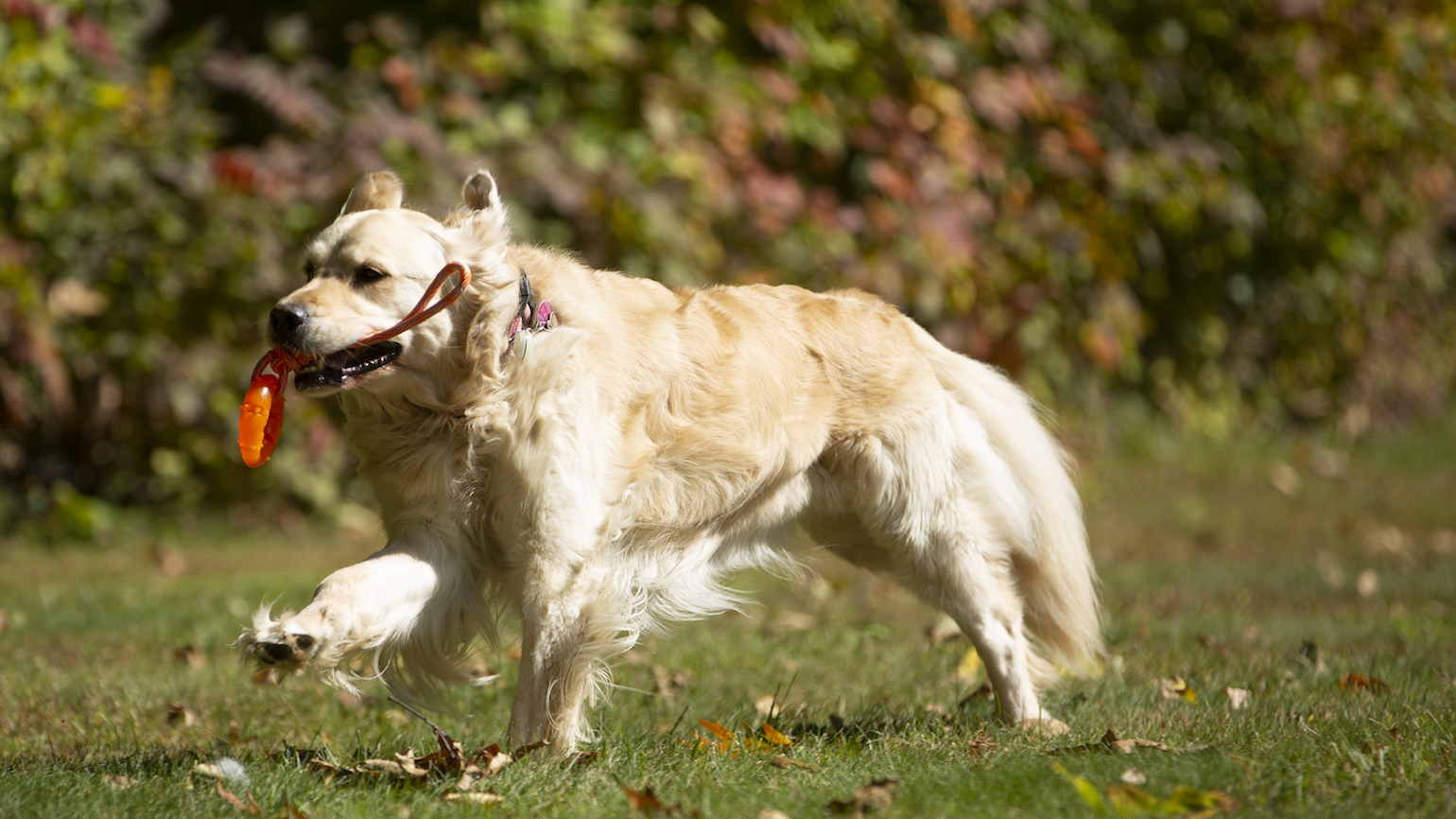
Good evening. It’s me, Gracie, Edward and Julee’s golden retriever, seven years old. Edward is watching a baseball game. I don’t think he will get to his blog so I thought I would take over. I don’t want him to get into trouble. I know what that’s like! 

New Every Morning Journal In Article Ad A

As I always say, I’m back by popular demand because, let’s face it, according to the numbers I’m more popular than he is. But don’t tell him! Humans have such delicate egos. 

I’m pretending to be asleep on the couch. It is a beautiful night after a cloudy day that was good for hiking. Now the stars are out. I know that they are far away, farther than I, Gracie, can imagine, and one is called the Dog Star. That’s funny. How can a dog be a star? Well, maybe me. 

I hear animals in the woods. Everyone is waking up after the cold time which makes me happy. I missed them, especially the chipmunks that live in the rocks. Today the tree man was out talking about cutting down some trees that are sick. The woodpeckers have hurt them, though I don’t think they meant to. That makes me very sad. I love my trees!  

Ssshhh. I think Edward might be snoring. Someone just hit a homerun that went all the way to heaven. Upstairs I hear Julee getting ready for bed. I’ll have to go out once more—I’ll be quick!—and get my bedtime treat. Right now, I want to enjoy this quiet time. So peaceful.

The world of humans is a crazy place. So much trouble! I try not to listen to the news and sometimes I leave the room when it is on. That thing that my humans do that I’ve mentioned before…praying? My people have been doing a lot of it lately. They ask for peace and understanding, for the world to get better. 

What I know is that right now I feel very safe. At peace. Sometimes these moments are all we can hope for. It’s that simple. I’m not exactly sure what a blessing is but I think this is one of them. When everything is still, especially on the inside, and we can close our eyes and breathe big and think about good things. Somehow everything else gets taken care of, even the stars. 

Oh, and don’t forget Mother’s Day. Everyone loves their mother! And if you do that praying thing, please pray for my trees. Thank you.

Gossip at the Dog Park

Gossip is a major social lubricant. There’s good gossip, where we say nice things about others. Bad gossip, when we don’t. And sometimes just wildly speculative gossip, when we don’t have the facts.

Gossip is as old as our capacity for speech, probably older. It is a basic currency of information (and often misinformation).

Pray a Day Vol 2 In Article Ad

I imagine most social animals have some form of gossip. For instance, I believe dogs gossip almost as much as their owners. Don’t believe me? Then join me and Millie at the dog park and judge for yourself. 

Edward Grinnan is Editor-in-Chief and Vice President of GUIDEPOSTS Publications.

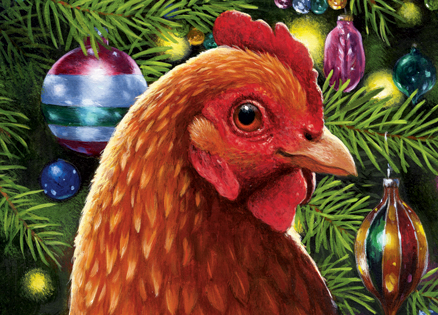
Goldie, the Christmas Chicken

There are two things I really love in life. One of them is music. As a boy my happiest moments were playing bluegrass on my Gene Autry guitar.

So fresh snow covering the ground wasn’t going to keep me from the Christmas Cantata at church. Stepping out into the night afterward with my wife, Carol Jean, I barely felt the cold I was so full of music.

Sweet Carolina Mysteries In Article Ad

Carol Jean got behind the wheel. The snow crunched under the tires as we pulled out. Tough travels to church were nothing new for me. Growing up my siblings and I had to cross a big Virginia mountain to get to church—two hours on foot. It was hard going, but then, everything was back then.

We didn’t have a bit of flatland to grow crops on, just small areas between the woods where we could grow vegetables here and burley tobacco there—a “patch farm” they called it. I liked to think the hard times made me tougher—I was now 78 and still going strong.

As the headlights swung toward the highway, I saw something in the road. “I’d better check it out,” I said. Carol Jean pulled over.

Up close I could make out reddish gold feathers sprawled in the slushy snow. Feathers with a big black grease streak running down the center. It was a chicken! I said there were two things I really love in life. Music was one. Chickens were the other.

“Poor thing,” I said, kneeling down beside the soggy heap. “Must have got hit by a car.” I hated to leave her by the road where a car might hit her again. I picked her up to take her away. To my surprise, she moved. It seemed impossible.

Cradling her in my hands, I took her back to the car. “What am I going to do with Goldie?” I said. The name just popped out. It suited her.

“Take her home, of course,” said Carol Jean.

Goldie didn’t struggle, just sat on my lap, squawking and clucking the way chickens do. Even though I still kept chickens the sound brought me back to my childhood in the mountains.

I always helped Mom with the chickens when I was a boy, when I wasn’t hitching the mule to the plow or chopping firewood for the stove or hunting squirrels and possums with my hound dogs. We had to be tough to survive back then. Goldie had to be tough to survive now.

By the time we got home it was close to midnight. I found a little bird cage and mixed up some laying mash and scratch feed. I stretched out Goldie’s wings—they were in good shape. But when I tried to stand her up, one leg crumpled beneath her. Nothing was broken that I could see, but she’d injured her left hip.

If there’s one thing a chicken needs to survive, it’s two good legs to scratch and peck, run and jump, or perch on a roost to sleep at night. She probably won’t make it, I thought. Surviving that kind of road accident was nearly impossible.

Almost as if she heard my thoughts, Goldie started gobbling up her feed. This little chicken was tougher than I thought. Maybe she could survive. Christmas was the season of impossible things, when the impossible becomes possible. Isn’t that what Jesus’s birth had taught us?

I drove around the area to see if anyone had lost a chicken. No one had. I guessed Goldie was here to stay. I moved her to a bigger bird cage and set her on a table in the basement. We had a full house for the holidays—all six of our kids and their families.

For a week nobody ever walked by Goldie’s cage without stopping to say hello. “You’re getting used to all this attention, aren’t you?” I said to her one evening as I cut up a little apple to feed her from my hand. “I might even call you spoiled.”

Goldie fluffed up her feathers, looking pleased with herself. She looked healthier every day. But Christmas passed, and then New Year’s Day, and she still couldn’t stand up. “She won’t survive if she can’t walk,” I told Carol Jean one day in early January.

I went down to the basement. Goldie cocked her head expectantly. I lifted her out of the cage and set her on the floor, supporting her weight in my hands. Little by little I let more weight rest on her leg. Goldie fell over. “I know you don’t like it,” I said, “but you have to tough it out to get better.”

Every day I tried out her leg again until one day she actually stood by herself. Come early February she even limped a couple steps. From then on, we practiced walking every day. I put Goldie on the floor and cheered her on. If she slowed down or tried to sit, I gave her a gentle nudge with a broom.

I couldn’t help but remember my old days on the farm when Mom would wake us up early for church. Some days I just didn’t think I could face that mountain. But I did it. And so would Goldie.

One night in bed I wondered if I was pushing too hard. Goldie had greatly improved since that December night I found her, but maybe she’d reached her limit. Maybe I’m too tough on the old bird, I thought. It was surprising she’d survived this long.

The following day when I went down to the basement I saw something i n Goldie’s cage. A perfect brown egg! It sure seemed like a sign—a promise of even better things to come. Goldie was still a Christmas miracle, a reminder that all things were possible.

In no time she was walking the length of the basement and back again.

“Are you going to move Goldie into the hen house now?” Carol Jean wanted to know.

“I’ve been thinking about it,” I admitted. “But chickens like to pick fights with a stranger. Goldie’s much smaller than the other hens, and she’s still weak from her accident. She wouldn’t stand a chance.” But life in a cage was no life for a chicken.

Suddenly I remembered a man I knew years before who raised a lot of roosters. He used to exercise them in his yard until they were really strong. Could I whip Goldie into shape too? It couldn’t hurt to try!

I cut out a piece of carpet and put Goldie on it. She dug into the pile, where she could get a good grip with her feet. “Okay,” I said. “Let’s go!”

I nudged Goldie to the right. Then back to the left. Then forward. Then back. She bobbed in all directions, never leaving the carpet. By the time we were finished Goldie’s mouth was hanging open and she was breathing hard, like an athlete.

We “worked out” every day. As the weeks went by, I could see Goldie getting stronger, more nimble. I would never have believed that soggy ball of feathers by the highway would turn out to be this tough boxer bird! Now, anything seemed possible for my Christmas chicken. Even the hen house.

On the first of April, I waited until dark when I knew the other chickens would be asleep. I carried her to the hen house and put her on a roost. I planned to wake up before dawn. I didn’t want to miss a minute.

One by one, the chickens woke up and noticed the stranger. Goldie hopped down to the ground. Another chicken followed. Then another. Everyone wanted to get a look at the newcomer. C’mon, Goldie, I thought. Here’s where that training pays off.

One of the bigger chickens strutted up to Goldie, itching for a fight. Goldie stretched her neck up until she looked about six inches taller than she really was. She gave a great squawk. The other hen jumped back. No one bothered her after that.

Today, Goldie has become queen of the hen house. She’s a tough old bird, just like me. And the best Christmas gift I ever got, proof that with God anything’s possible.

God Will Never Leave Us

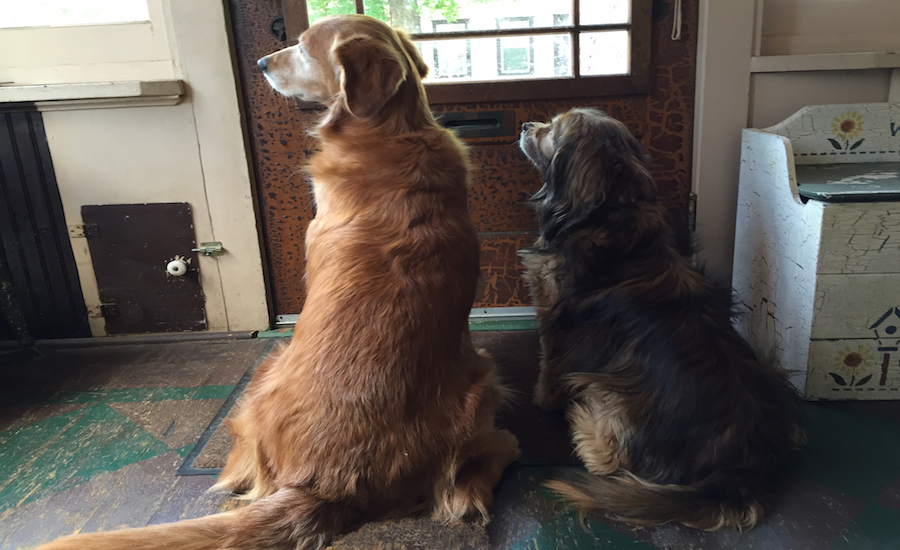
I pulled my rolling suitcase over the threshold and closed the front door. The last thing I saw was my dogs’ forlorn faces staring through the glass panes, big brown eyes seeming to grow wider and sadder by the minute.

My husband and I were on our way out of town for a week. We don’t vacation often, and when we do, we usually bring our dogs. This time, we couldn’t. But, despite what I imagined going on in my pets’ woeful minds, we weren’t abandoning them!

A Journey of Faith In Article Ad - Avail Now

We’d gone out of our way to provide nearly round-the-clock care for Kelly and Ike from a team of loving family members. My mother-in-law had even agreed to move in overnight so they wouldn’t feel lonely!

So why did I feel guilty as I walked away and hefted my luggage into the car? Did my dogs understand what was happening? And more importantly, did they know we’d be back? It must be a frightening feeling, watching a loved one walk away and not knowing if they’ll return.

Will you ever come back? That’s one question we never have to ask our Lord. He promises he will never leave us.

“Have I not commanded you? Be strong and courageous. Do not be frightened, and do not be dismayed, for the Lord your God is with you wherever you go.” (Joshua 1:9, ESV)

“Be strong and courageous. Do not be afraid or terrified because of them, for the Lord your God goes with you; He will never leave you nor forsake you.” (Deuteronomy 31:6, NIV)

We may leave God, but He will never leave us. At times when we are feeling particularly alone and lost, we can always turn to him, and He is there. We never need to fear being alone, because He is with us. He won’t abandon us. No, not ever.

As our car pulls out of the driveway, and we set off on vacation, I wonder how my dogs will fare. I remember their sweet faces, big eyes and adorable head tilts and assume they’re feeling sad or lonely.

I can’t really be sure what my dogs are thinking–most of us pet parents fall prey to anthropomorphizing, at least a little. But one thing I hope I can help them feel is security in the sense that when I do leave, I will return. I won’t abandon them, no, not ever.

God’s Pure Love

Watching her young son tackle the monkey bars with a parent’s tender and unconditional love, Shawnelle Eliasen is moved to realize how lavish and deep is God’s love for us:

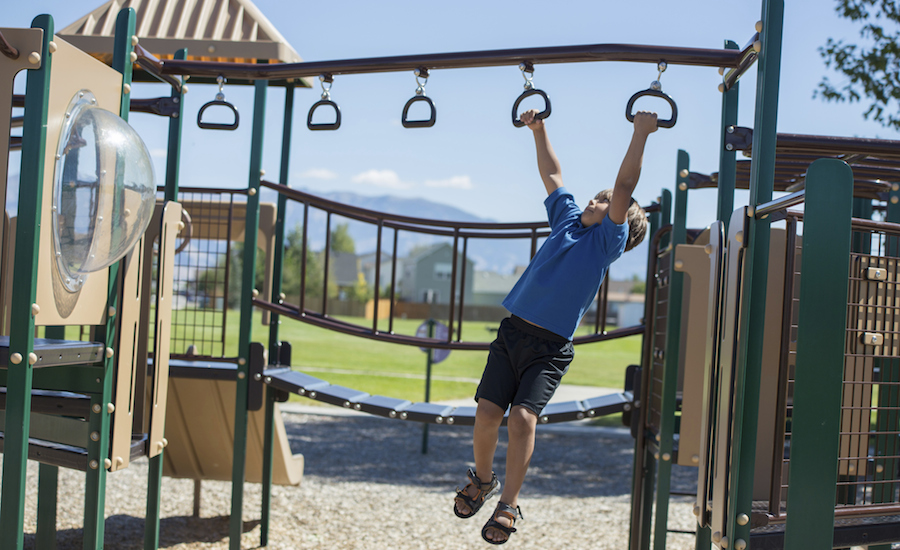
“Watch me, Mom,” eight-year-old Isaiah called. I looked up from weeding flower beds to see my son dangling from our time-worn playset. He was attempting the monkey bars that stretched from one side of the structure to the other.

The Daily Bible Large Print relaunch with digital free gift in article ad

“I can do it,” he said. “I’ve been practicing.”

I leaned back on my heels and pulled off garden gloves as Isaiah let go of the bar with one hand and reached for the next. His fingers curled around metal and a smile of triumph settled on his face.

“That’s one,” he said.

One down. Seven to go.

Some of my boys’ friends have the ability to master the monkey bars with a glide and grace. Swoop and swing. Down the line. With my boys it’s been mechanical. A concentrated effort. More of a lurch and grab.

It can be painful to watch.

“You can do it,” I called. “You’re doing great.”

Isaiah’s fingers uncurled and the security of the bar was no longer in his grasp. Hanging by one-hand, he swung his legs and caught the next bar.

“Hoorah,” I called. He looked my way. Grinned. And hit the dusty ground.

“I’ll try again,” Isaiah said. He brushed dirt from his backside, examined his tender palms for fresh bubbles of blisters, and started up the ladder again. And as he reached for the bar, trying with the strength and might that makes a little boy a breathtaking work, I was overwhelmed with tenderness. Tenderness that made my heart feel like it could swell out of my chest. Tenderness that was rich with hopes, dreams, compassion and desires.

And love.

A love both gentle and fierce and as it is simple and complex.

It made me think about God’s love for us.

How great is the love the Father has lavished on us, that we should be called children of God! (I John 3:1, ESV)

The magnitude of it moves me in a deep place–this lavished love that’s more than I can understand. I love my children with all that I have. All that I am. But I have a human spirit. It’s tainted and flawed and is limited by human capacity. But God’s love? It’s pure. Unblemished. Infinite.

I am a child of God.

“Here I go, Mom,” Isaiah called.

He looked my way and stretched his body to grasp the first rung. His feet left the ladder and the drive of determination was fresh again. I cheered him on, wanting him to make it to the end but knowing that a parent’s love isn’t conditional or performance based.

It just is.

Strong and powerful and set-apart in its rare, unique, beautiful form.

Just like God’s kind of love.

READ MORE: PARENTING IN THE MIDDLE OF A MESS

God’s Grace in a New York City Blackout

There was a power outage in New York City last Saturday. It didn’t affect my neighborhood, so I was unaware of it until Sunday morning when I got up and saw I had a message on my phone. It was from my 23-year old son, who works until 11 p.m.

“Hi Mom,” he said, “Just want you to know there is a blackout so the trains aren’t running, and I’ll be late. If you wake up at 2 a.m. and I’m not there, that’s why.”

Daily Strength for Women in Article ad

I was grateful he’d thought to call, especially since I often wake in the night. That night I hadn’t, but on hearing the message I peeked into his room. He was there, fast asleep.

When he got up around 2 p.m. to go to work I noticed he was walking kind of oddly. “I’m sore!” he said, “I walked all the way home.”

That’s eight miles. At the end of an eight-hour shift.

Aghast, I asked why he didn’t take a cab or a bus? Apparently there weren’t any. So he walked—through good neighborhoods and bad ones, and arrived home at 3:30 a.m. His phone ran out of battery halfway here.

I made my son a pot of coffee, and sent up profuse prayers of thanks as I made him a solid breakfast. How many times, I wondered, has God had stepped into my life to prevent crises and accidents, without my knowledge? I said thanks for those unknown moments of grace, too.

Then I brought food to my ravenous and tired son, and talked to him about alternative options should such a situation ever happen again.