Embrace God's truth with our new book, The Lies that Bind

A Dog Day for Mysterious Ways

There were some great Mysterious Ways stories in the news this week, and they all seem to have a similar subject: “man’s best friend.”

Puppy Power
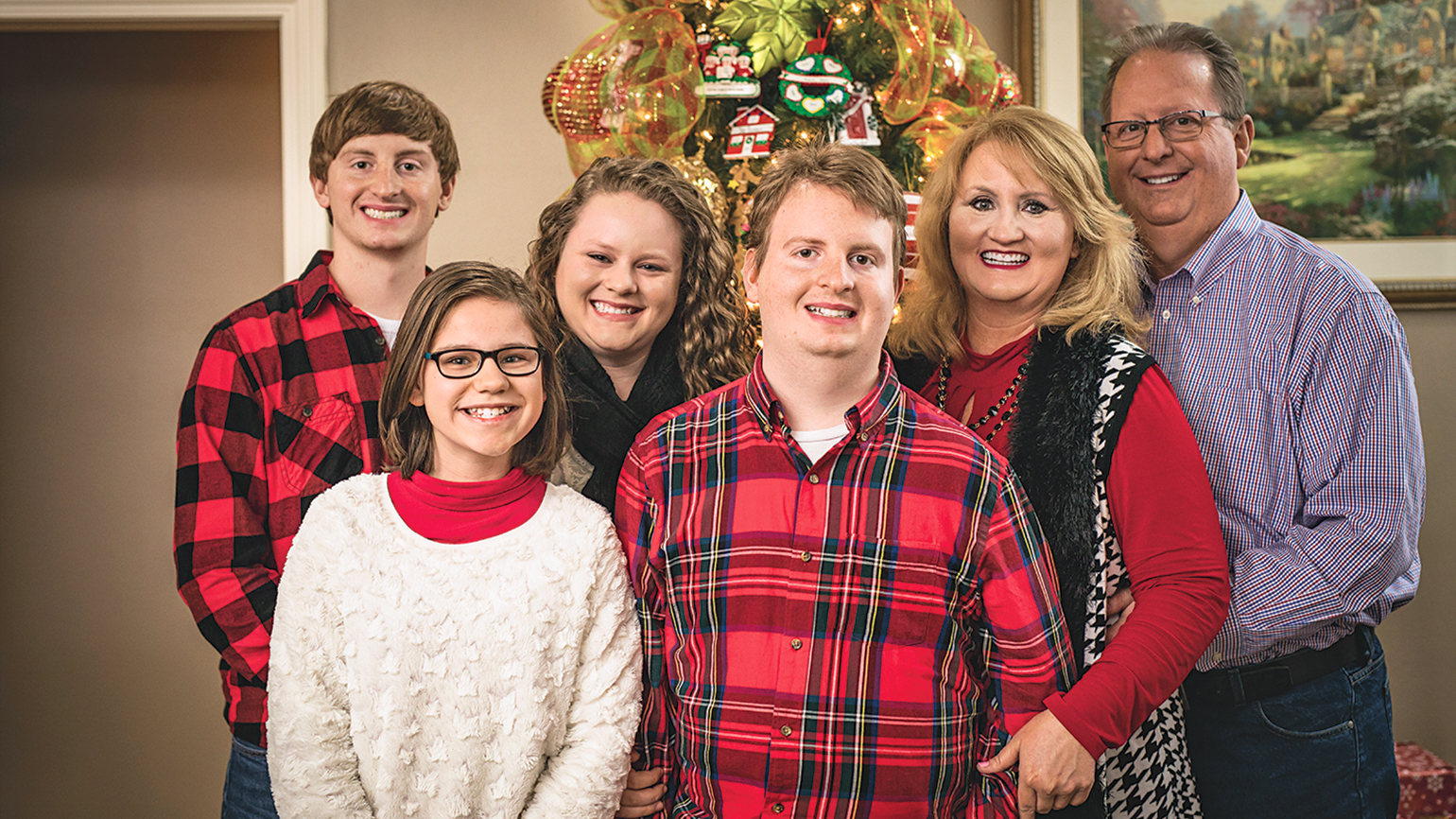
Ten-year-old Kyle Camp of Hackleburg, Alabama, has Down Syndrome, which made it especially terrifying when his parents discovered he had wandered away from their home. He’d left without shoes, without a jacket, and the weather was turning colder by the hour.

Dozens of volunteers and the police spent all night looking for the boy in the woods around his home but came up with nothing, according to local station WAFF.

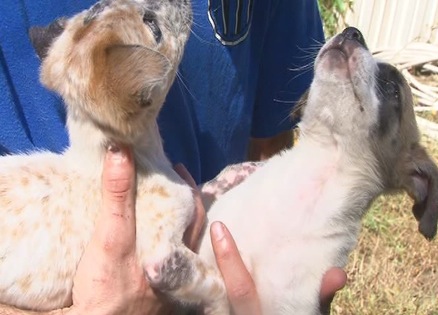
At 9:30 a.m., Jamie Swinney was out searching with his family dog along a creek when he heard the distinctive, tiny barks of his dog’s recent litter of puppies. What were the pups doing out in the woods?

Jamie followed the sound. He found the little puppies nestled around Kyle, who was unharmed. The puppies had apparently been with him all evening, cuddling with him, keeping him warm and safe until he was found. (Photo credit: WAFF.com)

Wherefore Art Thou, Romeo?
Austin, Texas, businessman Mike Stotts decided he finally had to accept the truth. Park rangers and fellow campers had been telling him he’d never find his dog, Romeo, who’d been missing for three and a half days in the mountains of Santa Fe, New Mexico’s Hyde Memorial State Park. A little house dog (a golden Nova Scotia Duck-Tolling Retriever), with no food or water, in the mid-August heat? With hungry coyotes known to be nearby? What chance did Romeo have?

Mike gathered up some rocks, arranged them in the shape of a cross on the mountainside, and said goodbye to his friend of 15 years.

“I didn’t want to picture him being torn apart by coyotes,” Mike told KXAN News, “I wanted to remember him up on the mountain, looking down at all of the scenery.”

An incredible 66 days later, local resident Eli Madrid was driving to work just before daylight. His headlights briefly flashed upon an animal near the side of the road. A coyote?

No, this animal was smaller. A dog. “It looked like it needed my help,” Eli told KXAN.

The dog’s collar said he’d been chipped, and when Eli brought him to the vet, they discovered the chip was still active.

Mike and Romeo were reunited the next day. What happened to Romeo in those 66 days? We may never know. But we do know what didn’t happen. “Everybody told me that coyotes were a real problem,” Mike said. “There were stories about them going after Lab-sized dogs on leashes. A little 33-pound dog wouldn’t have a chance.”

A Surprise Visitor
John Dolan was staying at the Good Samaritan Medical Center in Islip, New York, recovering from an illness. His dog, Zander, a white Samoyed-Husky mix, was despondent without him, moping about the house. He’d been adopted by John from a shelter, and since then, scarcely a day had passed without John taking him for a long walk around the neighborhood.

Early one morning, John got a phone call from an employee of the hospital. It wasn’t visiting hours yet, but the employee had run into an anxious visitor standing outside the hospital who refused to be denied entry. A dog. John’s name and number were on the collar.

It was Zander. Somehow, he had traveled two miles and crossed a busy highway to get to the hospital. A hospital he’d never been to before.

Wow. Man’s best friend, indeed!

Perhaps the biggest “Mysterious Ways” of my week? The amazing feat of closing our third issue of Mysterious Ways magazine! It should be sent out to subscribers toward the end of November. You can catch a glimpse of the cover on our Mysterious Ways Facebook page.

A Divorced Mom Overcame Her Fear of Being Judged

I set my paper plate of tacos on the folding table in our church fellowship hall and smiled at the woman who’d made them for the six families in our life group that Tuesday. “Thanks for cooking dinner tonight,” I said, hoping my words didn’t sound forced. “Fall is such a busy time.” My husband Eric and I had gone to this church for eight years now. We felt comfortable here. Yet we’d never joined any group, Bible study, nothing. We’d kept our distance in that respect. Or at least I had.

My 15-year-old son, Nathan, sat at a table with the other teens in the group. I overheard one of them say, “You have brothers and sisters?”

I held my breath, wondering how Nathan would respond. But he simply said, “I have two brothers and two sisters, but they’re older than I am. I’m the only one who still lives at home.”

I exhaled with relief. And yet that voice I could never completely silence persisted in whispering, What will people think if they knew? What will they say?

Eric and I had been happily married for 17 years after difficult first marriages. We’d each brought two kids to our marriage, then had Nathan together. Being divorced wasn’t some big scandal. I knew that. Unfortunately, it was all too common. And yet I lived in fear that if the people at church knew, they’d treat me differently. That I’d be judged. Found wanting. I wanted so badly to feel truly part of a church family, to feel as if I belonged. But there was part of me that just couldn’t risk opening up. And that was the whole point of a life group, wasn’t it?

I’d grown up in a church feeling accepted. Every week, we were one of the last families to leave after Sunday service. My father was a deacon. My parents’ closest friends were church friends. They were there for all of the big events in my life. All that changed after my parents’ divorce. I was then in my early twenties and living a few hours away, but I saw how people treated my mom. Our family used to be part of the “in crowd”—the ones who were always counted on to help with potluck dinners and Vacation Bible School. But no one called Mom after that. She was shunned. Judged. Mom drifted away from church and eventually stopped going altogether. I couldn’t blame her.

Then came my own divorce. I wasn’t about to let the same thing happen to me. I learned my lesson after I told a woman at a church I was attending how my marriage fell apart. She practically turned her back on me, at least figuratively. Judge not lest ye be judged. Right. If I really wanted that closeness I had known with my church family growing up, I would have to be vigilant about what I shared and not give people a reason to judge or reject me. Now I was asking myself what on earth had prompted me to join this life group.

“It’s about deepening our connections,” said the woman who’d reached out to invite Eric and me to the group. “It’s about growing closer to Christ and supporting each other.”

That’s what I had been wanting for years, to feel that connection. That closeness. I can share, I thought. It’s not as if I have to tell them everything. It was too late to back out. And besides, what would people say? I’d be judged for that too.

After that first Tuesday night, the life group met every week. We took turns bringing dinner for the group; after eating, the adults did a faith-based study—usually about parenting or marriage—while the teens hung out. Nathan loved it. It gave him a night with his closest friends. Eric and I enjoyed getting to know everyone, but we didn’t share anything about our past marriages. I never lied. The subject never came up directly, and I never volunteered more than necessary. That didn’t prevent me from feeling as if I were walking a high wire. Still, as the weeks went on, I felt myself growing closer to the other couples in the group.

That March, another couple, Brandon and Katie, invited us to go out to the Olive Garden for dinner. I was twirling spaghetti onto my fork when Katie said they’d be celebrating 17 years of marriage in June.

“Really? What day?” I asked. “Our anniversary is June 30.”

“We’re June 16th, but you and Eric have been married longer than 17 years.”

I shook my head, and Katie immediately apologized. “I just assumed because you guys are older than we are….”

Eric jumped in. “This is a second marriage for both of us. Our first marriages ended very painfully, but they taught us some important lessons. God helped us see these lessons. Diane and I appreciate each other so much more, and we work hard to keep our relationship healthy. Honestly, I think we have a better marriage now than we would have if we’d married each other fresh out of college.”

In all our years of marriage, I’d never heard Eric say these words, not quite like this. And while he was talking to Brandon and Katie, there was part of me that knew the words were meant for me too, maybe especially for me.

Brandon nodded thoughtfully. “That makes sense,” he said. “And it’s obvious that you guys are really happy together.”

“That’s the important part,” Katie added.

Eric squeezed my hand under the table, and the conversation moved on to a discussion about our kids, without a single awkward moment. We were just two couples sharing honestly with each other.

Afterward, when Eric and I got in the car, I said, “Thank you for saying what you did and how you said it. I didn’t feel judged at all.”

Eric glanced at me and smiled. “Did you really think you would be?”

His question stayed with me after we got home. Why did I care so much what people thought of me? Why did I always think I was being judged? My divorce was a major trigger, understandably, but it went deeper than just a failed marriage. Sometimes I feared being a failed person.

I didn’t get the most positive reinforcement as a kid, especially from my dad. I always felt that he found me wanting, not serious, that I just didn’t live up to the expectations he never actually articulated. I grew up in the shadow of his disappointment in me and feeling I was being judged and found inadequate without ever understanding why. After he left my mom, he made little effort to maintain a relationship with me.

Eric did not share my fear of being judged. I realized he knew that the only judgment that mattered was God’s—and God judged with love.

Now I wondered if, deep down, I feared I was a disappointment to God. As if when my first marriage failed, I had failed him.

And yet what Eric had said, that God had brought us together to heal us from our past was so true, I felt as if I were understanding it for the first time. How could I fear judgment when God loved me that much? I had to trust that love and be honest about myself and stop hiding. I could start with our life group.

At our next life group meeting, we watched a video on how to handle finances as a couple. During the discussion time, I asked a question I hoped would give me the opening I wanted. “Do you keep your money separate or together?”

Most of the couples said they combined their finances. Then it was my turn. I took a deep breath and said, “Keeping our money in one account was really hard for me, because this is my second marriage. It was hard to combine everything right away because I’d experienced so much loss. I really struggled financially when I was a single mom, and I was afraid of being in that situation again. I had to ask God to help me trust Eric and not hold my past hurts against him.”

I looked around the table and made eye contact with one of the men in the group. He had the kindest expression on his face. “I never knew you guys went through that,” he told us. “I bet that was really hard, and I’m so impressed you found the strength to trust each other.”

Everyone else was nodding in agreement. There was no judgment in anyone’s eyes. Just understanding and acceptance. It had taken me eight months of weekly meetings to trust that these people were the church family God had led me to and that I could trust them to love me, despite my very imperfect past and my very imperfect self. God didn’t want me to be perfect. He just wanted me to be who he made me to be.

In May 2024, our life group had to decide whether to continue our weekly meetings for another year or separate and join different groups at church. I prayed that everyone else would feel the way I did. We voted unanimously to keep our group together. The other couples asked Eric and me to lead the group. Tuesdays are my favorite day of the week.

Sundays are pretty great too. Our car is one of the last to leave the parking lot after services. There was an advertising campaign a few years ago for a national fitness chain that proclaimed its gyms were a judgment-free zone—so people wouldn’t feel self-conscious, I guess. That’s what I want church to be like and my life to be like too.

For more inspiring stories, subscribe to Guideposts magazine.

Add a Pinch of Prayer

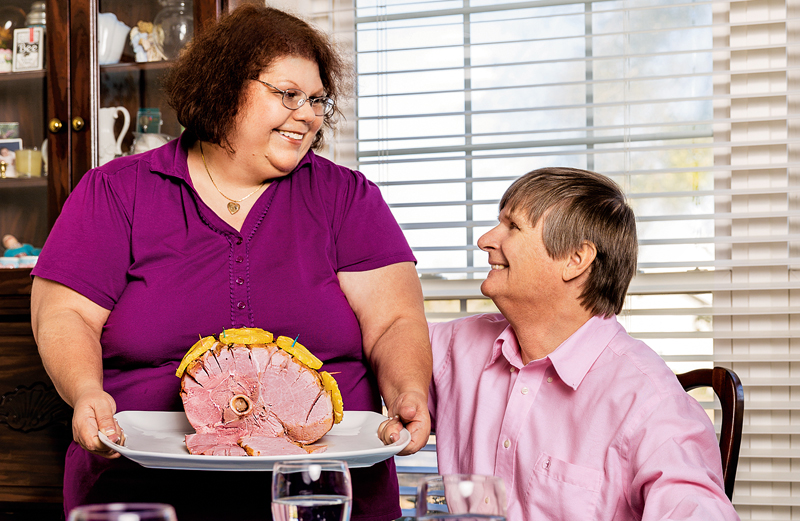
I stared at the sweet glaze, the evenly arranged pineapple slices and cloves, the straight crisscrossed lines. The ham, roasted to a tantalizing dark brown, was perfect. Picture perfect.

That’s because it was a picture–on a recipe I’d clipped from the newspaper the week before. My own ham, the one I was supposed to serve for Easter dinner the next day, looked nothing like it. The crisscrossed cuts I’d made on the ham’s surface were jagged and irregular.

Who am I kidding? I thought. I’m no cook!

Just then, my-five-year-old son, Russell, bounced into the room and nestled up beside me. “What’cha doin’?” he asked, a Ninja Turtles figurine in hand.

“Making our Easter ham,” I said. “Is it okay if John comes to eat with us after church?”

“Okay, sure,” Russell said, before skipping off to the playroom.

One less thing to fret over, at least. Ever since my first date with John, I’d worried about how Russell would take the idea of someone new coming into our life. I’d been divorced for two years now, and Russell and I had become our own little unit. I wouldn’t jeopardize that relationship for anything.

But John was different. He was good for both of us–which is why this ham had to be perfect. I wanted to impress him.

I’d met John when I was teaching a night course in business communications at the Kings Bay Navy base–I’m a high school English teacher by day, so I thought some interaction with adults might be nice.

I noticed I had a comedian in my class. John made all the other students crack up, even when I was trying to get them to concentrate. Frankly, he could be a distraction.

One night, as I sat at my desk grading papers, John approached me with a question about an assignment. And an agenda, as it turned out.

“It’s been a hard week,” he said, changing the subject. “I quit my job.”

“Oh, no!” I replied. “So sorry to hear that.”

“It’s okay,” John said, his blue eyes twinkling. “I went back to work the next day before I told anyone I’d quit.”

In spite of myself, I laughed. I mean, the joke wasn’t even funny. But something about John telling it was. I decided I had to know this man better.

He didn’t ask me out until the semester was over. On our first date, midway through the movie, John put his arm around my shoulders. It felt totally natural when I laid my head in the crook of his arm.

But I didn’t expect what came next. The strangest sensation, a jolt of electricity, shot through me. Was I ready for a new relationship? Was Russell?

We only saw each other on weekends. One Saturday night I got stuck chaperoning the junior-senior prom, something I never thought would appeal to John as an activity for a date. But he was game.

While I was inside the gym watching the students on the dance floor, he buddied up with one of my coworkers and monitored doors. John had my colleague in stitches the whole evening. He fit right in.

“I learned a lot about you tonight,” he said with a grin later on. “Insider tips.”

Then came a test for me: I accompanied John to his 15-year high school class reunion. I’m shy by nature, so he walked me around the room and introduced me to his classmates, people he’d known all his life. John gave my hand a reassuring squeeze with each introduction.

Then it came time for class awards, and John received a trophy–for Most Eligible Bachelor! My heart almost stopped. I looked all around. I wanted every woman in the room to know that he was no longer eligible. And that’s when I knew John was meant for me.

The feeling was only confirmed by how famously John and Russell got along–they played video games, watched movies, even went on “Boys’ Day Out” adventures when I was busy with work. John was more than just a good guy. He was a gift from God.

Now that picture of the Easter ham taunted me, seeming to say, Your ham is supposed to look like this. But it didn’t. It looked pathetic. Maybe my relationship with John wasn’t that perfect either. I’d been wrong before. Maybe I wasn’t ready for another serious relationship. Maybe I never would be.

Lord, if this relationship is your will, please let me know.

A feeling of peace inched through me, like the sun slipping out from behind the clouds. I was sweating the small stuff, driving myself crazy. I folded the recipe in half to hide the photograph. My ham might not be picture perfect, but I’d do my best.

A third of a cup of molasses, the recipe for the glaze said. I opened the pantry. No molasses! Only honey, and not even a third of a cup’s worth. My eye fell on a can of soda pop. I recalled a conversation I’d overheard in the teachers’ lounge.

“I add a little bit of soda to my glaze,” one teacher explained. “It intensifies the sweetness.” Intensified sweetness had sounded odd at the time, and pouring soda on a ham seemed completely nuts. I decided to go for it. I grabbed the can, popped it open, eyeballed the amount I thought best, poured and said a quick prayer.

The next morning, I woke up early and put the ham on to bake. I’d wait until we got home to heat up the glaze and add the pineapples. The doorbell rang. The butterflies in my stomach fluttered. I opened the door. It was John, there to pick Russell and me up for church.

“You look so pretty, Lori,” he said at the door. “And what’s that delicious smell?” He inhaled extravagantly, closing his eyes.

“Thanks,” I said, laughing at John’s typical antics. No wonder Russell liked him so much. No wonder I did.

When we got home from church, I rushed to the oven and took out the ham. It looked a tad awkward, with its oddly spaced cloves, but even so, it smelled delicious. I added the pineapple slices, tacking them in place as best I could with toothpicks. Perfect?

No, but not bad. When the ham was ready, the three of us sat around the table, holding hands for grace. “Thank you, Lord, for Lori and Russell,” John prayed, “and for the delicious meal we are about to eat. Amen.” I held my breath as John took his first bite.

“This is perfect,” John said. This time there were no antics. John was, well, genuinely impressed. I almost fell out of my chair with relief. And a reassurance that could only come from the One who looks out for us all, even struggling cooks.

“You’ll have to promise to make this for me again sometime, Lori.” I kept that promise, but not until the next Easter. And by that time, of course, we were already married.

Try Lori’s ham recipe for yourself!

A Day of Remembrance

At sundown on May 4th, Jewish families around the globe will begin a day of reflection and remembrance, honoring the victims of the Holocaust and those who struggled against the tyranny of Nazi Germany.

Many will light memorial candles and say the Kaddish, the Jewish prayer of mourning. In Israel, sirens will blare and, for two minutes, the entire country will come to a standstill in a moment of silence for the dead. The Yad Vashem Holocaust Museum in Jerusalem will host events featuring survivor testimonies and stories of Jewish communities that were lost.

Storytelling is a vital part of Yom HaShoah. Through the recollections of survivors and the painstaking work of historians, a portrait of the European Jews that the Nazis tried to destroy can be preserved. These stories are often hard to hear, but we need to hear them. As the philosopher George Santayana famously said, “Those who cannot remember the past are condemned to repeat it.”

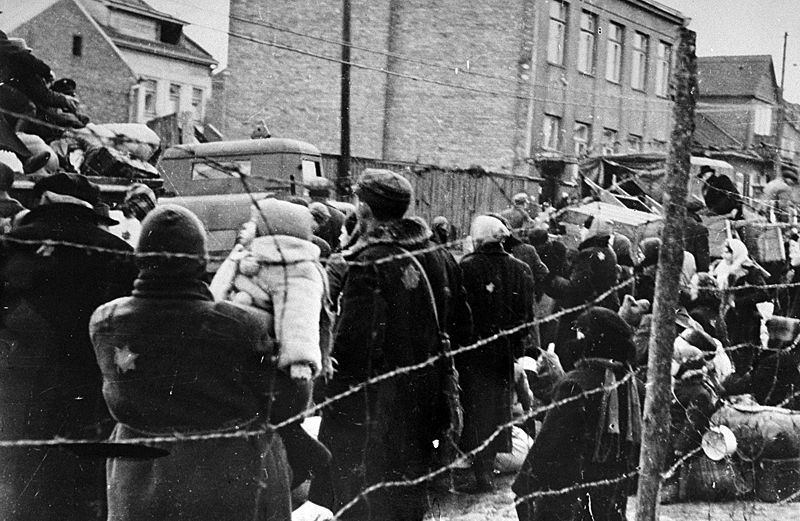
Through my wife, I was able to hear the story of one brave survivor, my wife’s grandmother, Miriam Gershwin. In the April/May issue of Mysterious Ways, my wife tells the remarkable story of how her grandparents–whom she affectionately calls Oma and Opa–found each other again after being torn apart by the madness of Hitler’s “Final Solution.”

That’s only part of Miriam’s story, however. Several years ago, a documentary film crew from the Survivors of the Shoah Visual History Foundation, an organization created by Academy-Award-winning director Steven Spielberg, asked Miriam about her experience before, during and after the Holocaust.

In the following clips from that interview, she tells the story of her harrowing time in the Kovno Ghetto in Lithuania, where she was forced to clean house for a Nazi commandant. She also tells of surreptitious–and illegal–exchange of goods for food, and ultimately the difficult decision she made that spared her life and that of her husband and father, while the rest of her family perished.

To read Oma’s full testimony, download this manuscript (PDF, 408k).
(To download, right-click on the link [control-click on a Mac] and save file to your computer.)

A Cowgirl’s Show Jumping Dream with Her Cow

Lots of little girls dream about having their own horse someday, especially if they live on a farm as Hannah Simpson did. Growing up in the Southland hills outside Invercargill, the southernmost city in New Zealand, Hannah loved being around and caring for animals. But without a horse, something didn’t feel quite right. She didn’t just want to trot around the barnyard; she wanted to gallop through meadows and compete in show jumping.

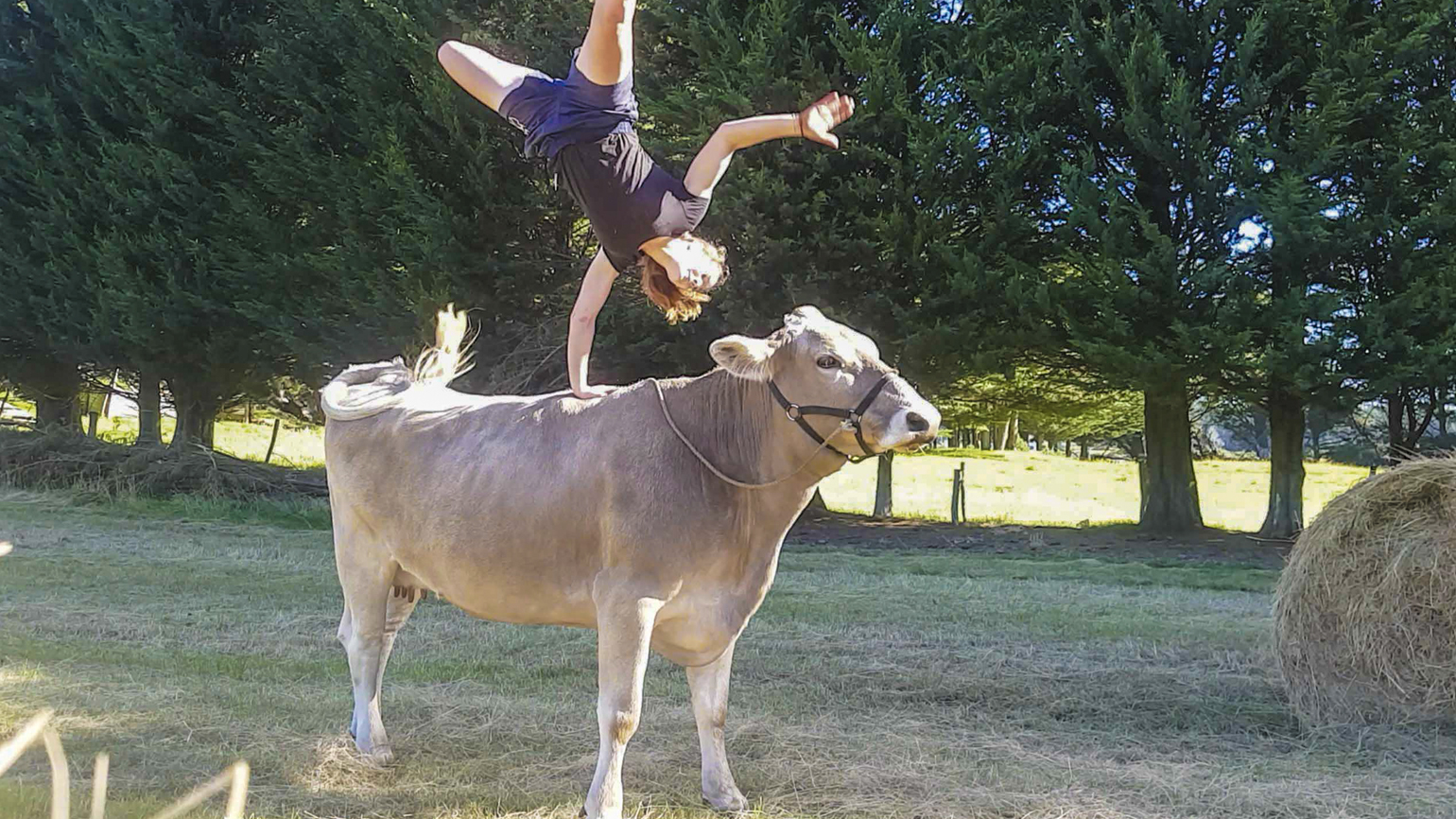
Unfortunately, the feed and other costs of caring for a horse were beyond her family’s budget, so she tried to put the idea of riding out of her mind. That is, until one day when she was tending her family’s small herd of cows and her younger brother dared her to hop on top of one. Little did 11-year-old Hannah know that his attempt to challenge her would turn into something special. She carefully slid onto the back of a six-month-old Brown Swiss calf named Lilac, who surprisingly didn’t try to buck her off.

For days after that, Hannah rode Lilac around the farm at a walk. Then they worked up to a canter. Before she knew it, Hannah had the calf stepping over logs, which soon turned into jumping over fallen tree trunks—some as large as three feet in diameter. “I have always loved jumping,” Hannah told The Guardian. “And Lilac was always jumping out of the cow shed when she was young, so I think she likes it, too.”

Hannah’s friends and family quickly got used to her unusual passion. New acquaintances tend to “think it’s a bit crazy,” she admits, “but cool.” In time, she discovered that a few of the other cows on the farm were willing to canter and jump as well. “Lilac wasn’t really into cantering, but one of my other cows, Honey, cantered all the time,” she says. “She was speedy!”

Hannah spends the most time with Lilac, though, whom she rides bareback holding just a halter (she learned that the cow wasn’t fond of wearing a saddle). Despite years of soaring over obstacles—some as high as three feet—atop Lilac, she never planned on fulfilling her show-jumping dream with a cow. Even if Hannah could enter Lilac in a run for a blue ribbon, she knows her bovine best friend can be stubborn at times and probably wouldn’t behave around crowds and all the action.

Hannah did eventually get a horse, when she was 16. In 2015, she started competing with Sammy, a Standardbred whom you can see occasional photos of on her Instagram feed. The star of her Instagram, though, is Lilac. The truth is, Hannah still prefers riding her faithful Brown Swiss. “We grew up together,” she says. “Lilac is a special cow.”

Hannah, now 20, is studying to be a rural animal technician at Southern Institute of Technology in Invercargill. But she always makes time for her longtime pal. “Lilac can be lazy when she wants, but she still loves jumping and river swims,” Hannah says. It’s been almost a decade since she made good on that dare to ride a cow—a challenge from which an enduring bond grew. Sounds like a pretty moo-ving friendship, if you ask us.

Did you enjoy this story? Subscribe to All Creatures magazine.

A Courageous Heart Like Molly’s

It was the first time I let myself cry since the diagnosis. Aggressive reproductive cancer. That was what exploratory surgery and biopsies had revealed two months earlier. The treatment had to be as aggressive as the cancer.

My mom came from Alabama to stay with me in Dallas through the eight rounds of chemotherapy and the doses of external radiation, 40 in eight weeks. Through it all–the tidal waves of nausea, the crushing fatigue–I hadn’t cried. I was afraid if I started, I wouldn’t be able to stop.

I wouldn’t allow myself to dwell on how I’d been robbed of ever bearing my own children, to give in to my fears. God, I know you’re with me. I’ll fight through this, I vowed, no matter how bad things get. For a while, I’d succeeded.

Then, today, the last, most barbaric part of my treatment began–the first of four megadoses of internal radiation. The physical pain was beyond horrific. It was the stuff of nightmares, the kind where you wake up soaked with sweat, your heart pounding. Only I couldn’t wake up from this nightmare.

Even worse was the pain that seared my soul. Because the radiation was so intense, Mom couldn’t sit with me. I was shut in a cold, lead-lined room by myself, the doctors monitoring me through the observation window. It was like I was in a cage. I’d never felt so isolated, so utterly alone.

That finally broke me down. At home I collapsed on the couch. All the tears I’d been holding back came pouring out. What made me think I could get through this hell? No one could possibly understand what I was going through, not my mom, not even God.

I felt a light weight settle on the couch next to me. I blinked through my tears and saw my little affenpinscher. “Oh, Molly, you didn’t know what you were getting into when you came to live here, did you?” I murmured.

I’d met Molly six months before my diagnosis. It started with a phone call from Linda, a volunteer at a local rescue center. “We have a dog who desperately needs a home,” she said. “I’ve tried everyone and no one will take her on. Can you foster her? Please?”

My heart sank. Don’t get me wrong, I love dogs. I’d raised Sadie, my miniature schnauzer, from puppyhood, and having her in my life was what inspired me to work with animal shelters. But I was so busy with my career as a regional manager for a medical company. One dog was plenty!

“Molly is a three-year-old affenpinscher,” Linda said. “She was saved from a puppy mill.” Her entire life, Molly had been confined to a cage and forced to birth litter after litter.

She walked in circles no bigger than the few feet of space she’d inhabited, her legs weak from never having been allowed outside her cage to run and play. She’d never been given a bath. Never known love. And now that no one had a use for her, she would be put down.

Unless I took her in. I’ll foster her, I thought, but only until Linda finds the right home for her.

At the shelter Linda was waiting, cradling a small gray dog. At least I thought she was gray–it was hard to tell what was fur and what was filth. Walking closer, I caught my breath. Molly smelled as bad as she looked, and that was saying something.

She was skin and bones, her fur matted. But it was her eyes that shocked me the most. There was no spark in them. No fight.

Linda set the dog in my arms. Molly looked up at me, trembling. The expression in her eyes grew even bleaker, as if she was asking, “What kind of pain are you going to inflict on me?”

“It’s okay, girl,” I said softly. “I’m not going to hurt you.” No response. She’s probably deaf, I thought.

I took Molly straight to the animal clinic. “She might not be deaf,” the vet said, examining her. “I’ve never seen a dog’s ears so full of waste. Leave her here overnight. We’ll give her a bath and get a better look at her.”

When I picked Molly up the next day she looked better and the vet said she could hear. But she was still terrified of human contact. Getting her to trust me would take a long time…maybe more time than I had before Linda found her a permanent home.

I was a little worried at how Sadie and Molly would react to each other. But they politely sniffed noses and fell into a companionable harmony. Sadie seemed to sense that Molly was too weak to be a threat, and Molly seemed grateful to share Sadie’s space.

Molly took to trailing Sadie, trying to do whatever she did. Soon Molly gained enough strength in her legs that she was able to follow Sadie through the doggy door to go outside.

The only thing that Molly wouldn’t do–or maybe she couldn’t–was show and receive affection. Sadie would run to greet me when I got home from work, her stubby tail wagging wildly while I petted her and tugged at whatever toy she’d brought me.

Molly hung back. When I tried to touch her, she cowered. It was as if she didn’t realize she deserved the kind of love Sadie got.

I’d have to take it slow. I got on the floor so I was at her level, put out my hand and let her approach me. I started with ever-so-gently rubbing her paws while I spoke softly to her. Once she got comfortable with that, I moved on to scratching her ears, then stroking her back and head. Sometimes she’d still tense when I reached my hand out, and I’d remind her, “It’s okay, Molly. You’re safe now.”

I knew I’d broken through when she started sleeping at the foot of my bed. It was her way of telling me, I feel safe with you. I trust you.

You can probably guess what happened next. I called Linda at the rescue center and told her I was keeping Molly. I loved her, and even if she might never be affectionate with me the way Sadie was, I could tell she was learning to love me. I could see that flicker in her eyes.

That must have been the reason God brought us together.

We’d settled into a happy routine together, my dogs and I, when my gynecologist noticed some irregularities during my annual exam. Then came the surgery and the diagnosis.

Adenocarcinoma, a complex reproductivesystem cancer. Survivable if my body responded to treatment, but I’d never be able to have children, and the intensive chemo and radiation meant that I’d need someone to take care of me.

Mom moved in. “Do you want me to find someone to take the dogs for a while?” she asked. She had a point. Taking care of two dogs when I needed help to take care of myself probably wasn’t the smartest idea.

Sadie would be fine with someone else. But Molly…if I sent her away, she’d go back to feeling like she didn’t deserve love. I couldn’t do that. “The dogs are staying,” I said. “They’ll be a comfort.”

And they were. When I came home from chemo feeling too sick to move, the girls were there to cuddle with me. Or they’d make me laugh with their antics, and I’d forget about cancer for a little while.

Now, though, as my body, my whole being, clenched with pain from the internal radiation, my tears soaking the couch cushions, I felt like I would never stop crying, never escape this agony. Had God forsaken me?

A wet nose touched mine. I opened my eyes. Molly.

“Hey, girl,” I said wearily. “What is it?”

She looked at me intently. Love in her soft brown eyes. And something else. Something I hadn’t noticed before.

“You understand, don’t you?” I whispered.

Molly knew what it was like to be alone, afraid, in terrible pain. Maybe more than anyone, she knew what it was like to be trapped in a hell not of your own making.

“But you’re here,” I said, stroking her wiry gray fur. “You’re strong. You survived.”

Molly licked my cheek, and I knew that I would survive too, the treatment and the cancer. I may never understand why I got sick, but I know why Molly and I were brought together.

Download your FREE ebook, True Inspirational Stories: 9 Real Life Stories of Hope & Faith

A Close Call and a Heart Full of Thanks

The text from my 13-year old son came in while I was heading home on a bus, an aggravating alternative to the subway, which had major delays.

“Was going downhill and shifted the wrong way.”

Stephen has been biking a lot lately, and his current routine is to head to Central Park, do a few circuits, and ride home. When the weather is good, he often logs 15-20 miles in a day.

“You okay?” I texted back. The good news was that whatever had happened, he was functional enough to text me. Not only that, he had bothered to text. That was far better than a call from the police saying he was on his way to the emergency room. I could be thankful for that.

I received a series of photos showing various cuts and scrapes in reply. They looked deep and painful. Then again, nothing but skin was broken. I could be thankful for that, too.

I asked my son where he was, and it turned out he was only half a mile from where I was on the bus. Since I hardly ever take the bus, and he’s usually much further downtown, the chances of this happening were extremely small. I got off and walked to meet him, sending up a short thank-you to God that the subways had been stalled.

Stephen was limping and sore and covered in dirt, but mostly he was shaken up and glad to see me. He’d flipped off his bike on Broadway, and narrowly missed being hit by a car (or three). My heart flipped a bit when I heard that, but I managed to save my commentary for a time when his brain wasn’t scrambled with adrenaline.

We walked the mile and a half home slowly, but with great thanksgiving.

A Christmas Pageant Script You Can Use

The Roark family’s Christmas Eve tradition is an at-home reenactment of the first Christmas. They use figures from the nativity scene, light candles and let family members, including the kids, take on the roles. Try their script at your house.

READ MORE: The Christmas Story in 5 Bible Passages

THE FIRST CHRISTMAS
A play in two acts

CHARACTERS

NARRATOR … Jerry
JOSEPH … Jerry
MARY … Diane
JESUS … Caleb
SHEPHERDS … Carly
ANGEL … Diana
KING HEROD … Carly
MAGI … Casey

PROPS

Candles
Bible
Nativity Figurines
Matches

ACT ONE

(A cleared dinner table. Wait until it gets dark out. Hand every
character a candle and Nativity figurine. Turn off the lights.
NARRATOR lights their candle and begins reading from Luke 2.
)

NARRATOR

In those days Caesar Augustus issued a decree that a census should be taken of the entire Roman world. (This was the first census that took place while Quirinius was governor of Syria.) And everyone went to their own town to register.

(NARRATOR lights JOSEPH’s candle using their lit candle.)

NARRATOR

So JOSEPH also went up from the town of Nazareth in Galilee to Judea, to Bethlehem the town of David, because he belonged to the house and line of David.

(JOSEPH lights MARY’s candle.)

NARRATOR

He went there to register with MARY, who was pledged to be married to him and was expecting a child. While they were there, the time came for the baby to be born, and she gave birth to her firstborn a son.

(MARY lights JESUS’ candle.)

NARRATOR

She wrapped him in cloths and placed him in a manger.

(MARY wraps Jesus figurine from the Nativity scene in
cloth napkin and places him back in the manger.
)

NARRATOR

Because there was no guest room available for them.

(JESUS lights one SHEPHERD’s candle. That SHEPHERD
lights the other SHEPHERDS’ candles.
)

NARRATOR

And there were SHEPHERDS living out in the fields nearby, keeping watch over their flocks at night.

(SHEPHERD lights ANGEL’s candle. That
ANGEL lights the other ANGELS’ candles.
)

NARRATOR

An ANGEL of the Lord appeared to them, and the glory of the Lord shone around them, and they were terrified. But the ANGEL said to them, “Do not be afraid. I bring you good news that will cause great joy for all the people.

(Everyone sings Joy to the World.)

NARRATOR

Today in the town of David a Savior has been born to you; he is the Messiah, the Lord. This will be a sign to you. You will find a baby wrapped in cloths and lying in a manger.” Suddenly a great company of the heavenly host appeared with the ANGEL, praising God and saying, “Glory to God in the highest heaven, and on earth peace to those on whom his favor rests.”

NARRATOR

When the ANGEL had left them and gone into heaven, the SHEPHERDS said to one another, “Let’s go to Bethlehem and see this thing that has happened, which the Lord has told us about.” So they hurried off and found MARY and JOSEPH, and the baby, who was lying in the manger. When they had seen him, they spread the word concerning what had been told them about this child, and all who heard it were amazed at what the shepherds said to them.

(MARY and JOSEPH blow out candles.)

NARRATOR

But MARY treasured up all these things and pondered them in her heart. The SHEPHERDS returned, glorifying and praising God for all the things they had heard and seen, which were just as they had been told.

(SHEPHERDS blow out their candles.)

End of Act One

ACT TWO

(NARRATOR lights the MAGI and KING HEROD
candles and reads from Matthew 2.
)

NARRATOR

After JESUS was born in Bethlehem in Judea, during the time of KING HEROD, MAGI from the east came to Jerusalem and asked, “Where is the one who has been born king of the Jews? We saw his star when it rose and have come to worship him.”

When KING HEROD heard this he was disturbed, and all Jerusalem with him. When he had called together all the people’s chief priests and teachers of the law, he asked them where the Messiah was to be born. “In Bethlehem in Judea,” they replied, “for this is what the prophet has written: “‘But you, Bethlehem, in the land of Judah, are by no means least among the rulers of Judah; for out of you will come a ruler who will shepherd my people Israel.’”

Then HEROD called the MAGI secretly and found out from them the exact time the star had appeared.  He sent them to Bethlehem and said, “Go and search carefully for the child. As soon as you find him, report to me, so that I too may go and worship him.”

(KING HEROD blows out candle.)

NARRATOR

After they had heard the king, they went on their way, and the star they had seen when it rose went ahead of them until it stopped over the place where the child was.  When they saw the star, they were overjoyed.

(NARRATOR lights MARY and JESUS’ candles.)

NARRATOR

On coming to the house, they saw the child with his mother MARY, and they bowed down and worshiped him. Then they opened their treasures and presented him with gifts of gold, frankincense and myrrh.

(MARY blows out candle.)

NARRATOR

And having been warned in a dream not to go back to HEROD, they returned to their country by another route.

(WISE MEN blow out candle, leaving only
JESUS’ candle lit. Everyone sings
Silent Night.)

End of Act Two

A Christmas Miracle in Bethlehem

STEPHANIE: Christmas City Village! I’d been dreaming of coming to this fabulous arts and crafts festival in downtown Bethlehem, Pennsylvania, for years. But December was always busy, and Bethlehem is a 90-minute drive from where we live. Marty and I had been particularly busy in 2016. Still, we planned a little getaway and finally made the trip.

MARTY: The SteelStacks building, once the heart of the Bethlehem Steel mill and now an arts center, was aglow with lights. The holiday spirit was all around. Yet Christmastime has been bittersweet ever since I lost my brother Mark in 2004. A lieutenant colonel in the Army, he’d been killed in Mosul, Iraq, a city he had taken pride in helping to rebuild. He was just 11 months older than me, and growing up, the two of us were as close as twins.

Mark was a big guy with a goofy sense of humor and a heart of gold. As adults, we’d never had enough time together, especially after his Army career took him far from home. Twelve years after his death, I still missed him every single day. At the holidays it hurt all the more.

STEPHANIE: I think Marty needed this getaway as much as I did. He’d gone through a lot the last several years. We strolled hand in hand through the rows of vendors at Christmas City Village. Marty bought me a gorgeous snowflake brooch. So romantic!

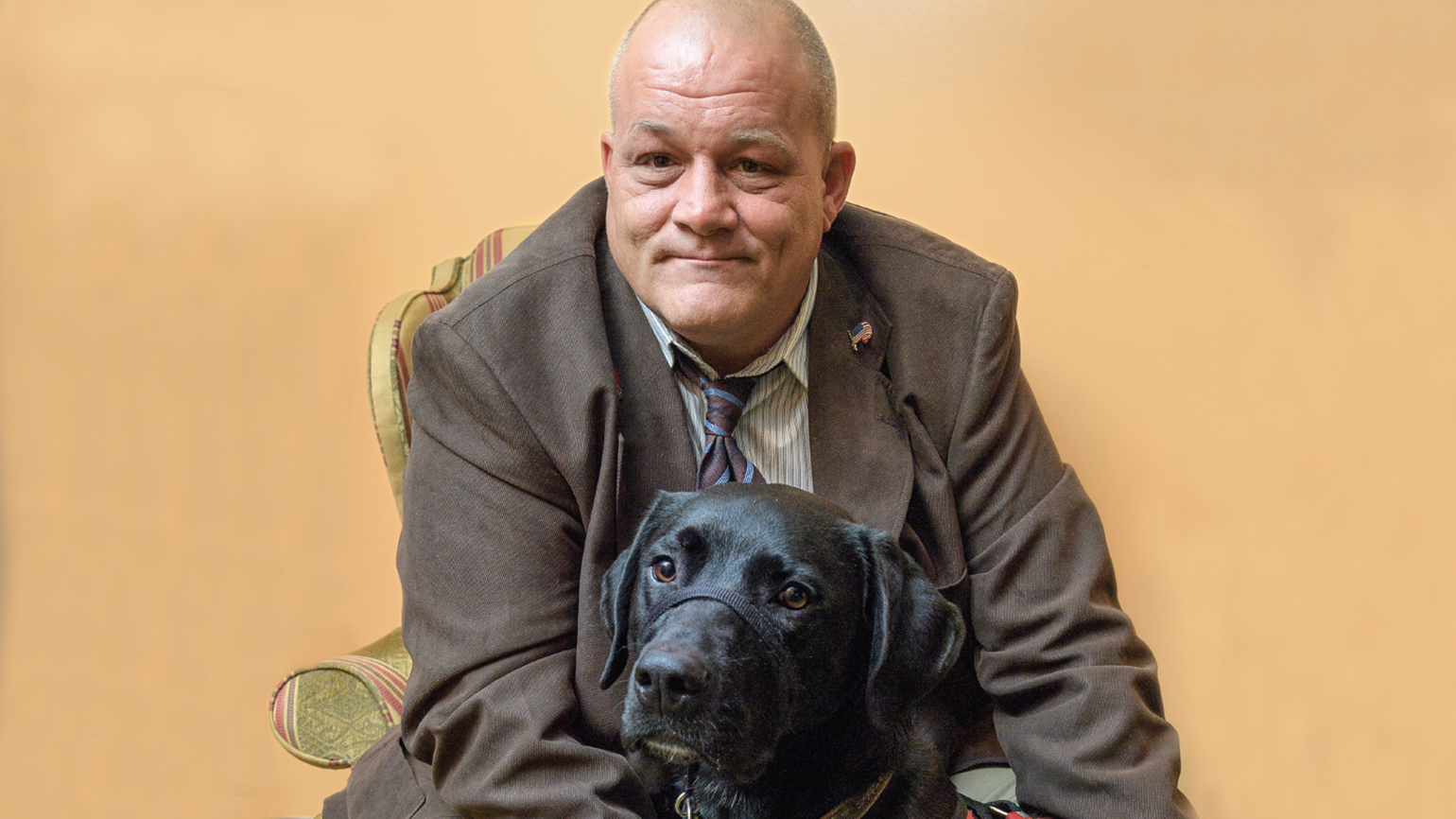
MARTY: After an hour or so we went to use the restrooms at the visitor center in the SteelStacks building. Just inside the center’s door sat two volunteers, a woman and a man, checking hand stamps to make sure people had paid admission. My eyes went to the big black dog lying at the man’s feet.

STEPHANIE: Marty and I love dogs. “What kind of dog is that?” I asked. “Is it okay if we pet him?” The dog was wearing a red service vest, so I knew to ask first.

HAROLD: “He’s a mix,” I said. “Black Lab, Great Dane and bull mastiff.” People were always asking me about my dog. I’d had him for six months, and I couldn’t stop talking about him. “Go ahead, he loves to be petted.”

MARTY: I bent down, stroking his fur. Funny, Mark had owned the same three breeds of dogs when he’d died. That was one of his passions, taking in rescue dogs. He was always trying to make the world a better place.

HAROLD: This dog saved my life,” I said. Somehow I felt as if I needed to tell this couple my story. “I joined the military out of high school. Never saw action, but those eight years were the best of my life. When I got out, I bought a truck and became a long-haul driver. I did well for myself. Then nine years ago I was driving through Ohio when I got a call. My dad had been in a motorcycle accident back in Pennsylvania. It didn’t look like he was going to make it.”

STEPHANIE: Our hearts really went out to him. I nodded, encouraging him to go on.

HAROLD: I told them more. “Dad lingered in the hospital for a year in a coma. Finally I made the decision to take him off life support. His wife fought me, said I’d killed him. The guilt ate at me. Then my truck died. I’d exhausted my savings on Dad’s medical bills and couldn’t fix it. I lost my job, my house. I tried to kill myself. I mean, what did I have to live for anymore?

Two years ago, I moved back to Allentown. I was angry at God, angry at everyone. A doctor diagnosed me with bipolar disorder and PTSD [post-traumatic stress disorder], and I went into therapy at the VA clinic. A homeless shelter took me in. They had a rule: You had to volunteer 10 hours a week. So I got involved with the arts center here. One day a woman came to give a talk. She was from Tails of Valor, an organization that places service dogs with vets struggling with PTSD.”

MARTY: “That’s how this guy came into my life,” the man at the visitor center said. His dog lifted his head as if he knew we’d come to his part in the story.

HAROLD: I told the couple about the first night my dog came home with me. I was having a nightmare when I felt him snuggling close, hugging me, like he was putting himself between me and my demons. I opened my eyes and the guilt and sadness had lifted. “Tails of Valor is an amazing program,” I said. “They name all their dogs after soldiers killed in action. Phelan means the world to me.”

STEPHANIE: “What?” I blurted. I was sure I’d misunderstood.

HAROLD: “Phelan. That’s my dog’s name,” I said. “The lieutenant colonel, the soldier he’s named after, was really something. A hero. He spearheaded the rebuilding of Mosul.”

MARTY: It was like I was dreaming. Phelan? Who names a dog Phelan? Then it hit me. He was talking about Mark! My brother! I stood, tears streaming down my cheeks. All of a sudden, Phelan leaped up too. Standing on his hind legs, he put his front paws around my neck and hugged me tight. I wrapped my arms around Phelan and hugged him back. In that moment, I felt so loved—it was as if my brother was there with me again.

STEPHANIE: “Mark Phelan?” I said. “That’s Marty’s brother. He was killed in Mosul, his convoy targeted, blown up just before he was to take on a new assignment in Baghdad. Wow! We had no idea he’d been honored like this.” I read the volunteer’s name tag. “I’m so glad we ran into you, Harold.”

HAROLD: You could have knocked me over with a feather. Off and on I’d thought about trying to connect with Lt. Col. Mark Phelan’s family, but I hadn’t known where to start. “The thing is, I never work this location,” I said. “I’m only here to help a new volunteer. I wasn’t even supposed to be working tonight.”

MARTY: Our meeting was no coincidence. That much I’m sure of. Stephanie and I spent the next hour talking with Harold, and we’ve stayed in touch since. I don’t have a logical explanation for it, but every time we get together, Phelan rushes to greet me. Harold says he doesn’t do that with anyone else. There are lots of plaques, even some buildings, that memorialize Mark, but I have to say Phelan, and the connection we share, is the honor that means the most to me.

HAROLD: In the year since we met, Stephanie and Marty have joined me in supporting Tails of Valor, sharing their story at benefits and educational programs around the region. I sometimes think about how alone I felt those years after my dad died, how my life seemed to have no purpose. But God had a plan all along.

STEPHANIE: After Mark passed, we were given a dog tag engraved with his silhouette and a statement about the difference his life had made. We never knew quite what to do with it until that December evening in Bethlehem. Now Phelan wears the tag as he serves his mission to help Harold. Some things are just meant to be.

Learn more about Tails of Valor.

For inspiring animal-themed devotions, subscribe to All God’s Creatures magazine.

A Christian Pastor and a Muslim Imam Find Friendship and Common Ground

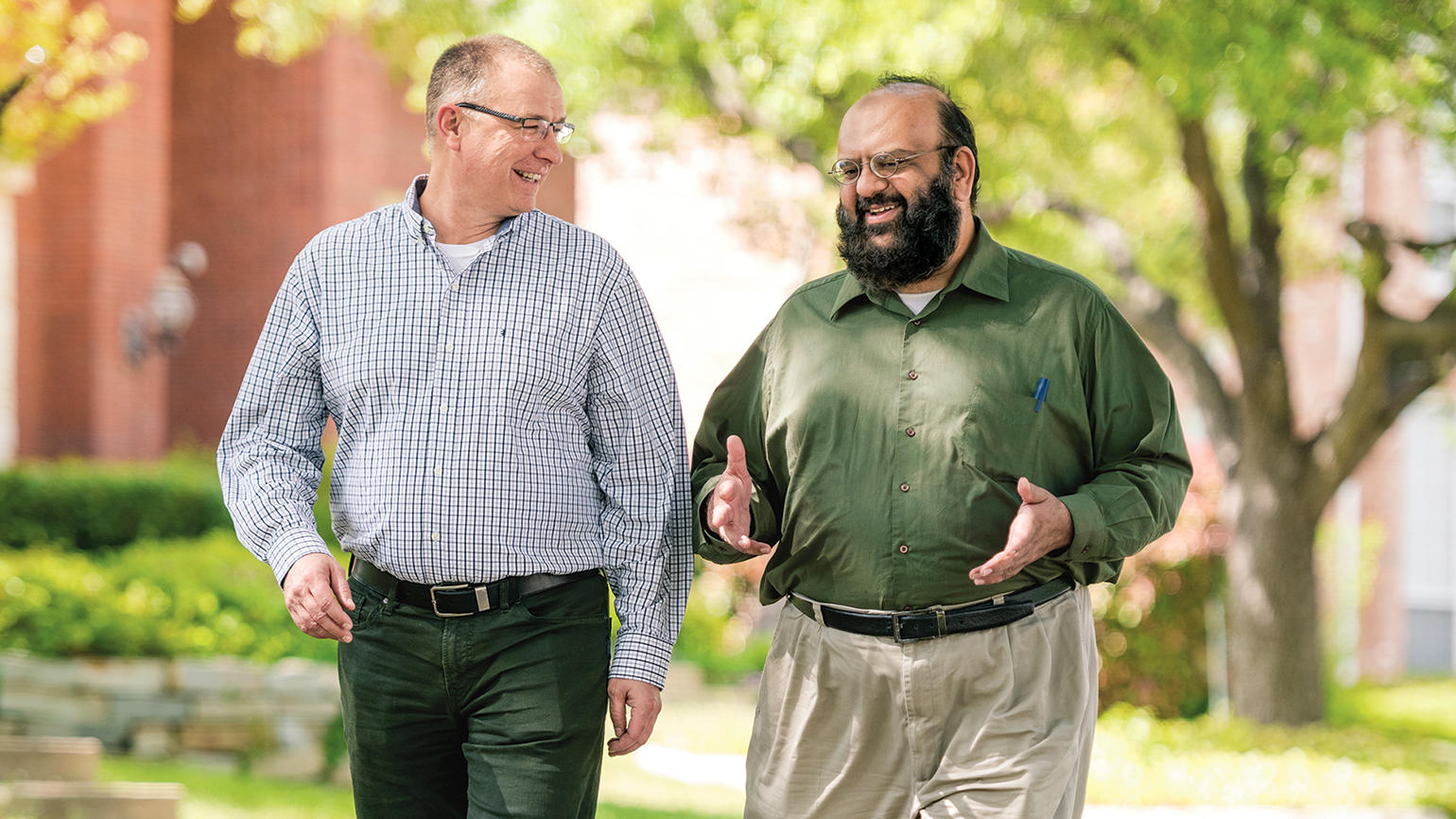
Pastor Jim Powell
Ten years ago, Richwoods Christian Church, where I’m lead pastor, needed a new home. At 450 members and growing, we could welcome even more people with a bigger facility. It was an answered prayer when we learned about a furniture store going out of business on a busy street in the part of the city where we ministered.

We began negotiations for the building and made an unexpected discovery. Behind the furniture store was the Islamic Foundation of Peoria, one of our city’s two major mosques. The mosque was easy to overlook, a pair of low-slung white buildings with a parking lot and a soccer field in front. Only a small copper dome over the main building suggested that it was a house of worship.

I have to confess, my first reaction to this discovery was fear.

I should have known better. Peoria is practically synonymous with Middle America, but these days our city shows just how diverse and dynamic Middle America has become. Close to half the city’s population is nonwhite—a mixture of African-Americans, Asians and Hispanics as well as people who have multiple ethnic heritages. Large multinational corporations, including heavy equipment manufacturers Caterpillar and Komatsu, have major facilities here. The city is home to the University of Illinois teaching hospital. High-skilled workers from around the world, including those from Muslim-majority countries, comprise a large part of Peoria’s population.

Given that diversity, what did I have to be nervous about? Did I worry worshippers at the mosque would try to bomb our church? Of course not. But I did make jokes about exactly that, I’m ashamed to say. Mostly I worried that members of the mosque would feel resentful we’d moved next door. That they’d be chilly toward us, or that we’d inadvertently offend them. I’d heard plenty of Muslims denounce acts of terrorism on TV. Still, I wondered whether, in their hearts, they secretly approved of religious violence. I’d always heard Muslims are commanded to spread Islam by the sword.

It’s not like me to make snap assumptions about people I’ve never met. Though Richwoods is a fairly conservative evangelical church, I’ve always had a heart for reaching beyond denominational boundaries. I grew up Lutheran, wandered away from church in my teens, then experienced a radical conversion one night when I was 21 and felt God call me out of my agnosticism into ministry. There’s nothing like a direct encounter with Jesus to make you realize that a lot of what people argue about when they argue about God is just petty and beside the point.

Despite all that, the minute I heard the word mosque, my mind filled with images from TV—radical imams, burning flags, terrorist attacks. I wasn’t sure what to do.

Thankfully, a member of our church was a doctor who worked with a doctor who attended the mosque. They arranged an informal Saturday get-together for leaders of both institutions.

I entered the mosque and found a group of guys hanging out in casual clothes playing ping-pong. We joined in, and any remaining nervousness was dispelled when one of the mosque’s board members joked that his wife wasn’t too pleased he was gone that afternoon and would have a lengthy to-do list waiting for him when he got home. We all cracked up at that. This just might work out, I thought.

Imam Kamil Mufti
I was hired as the imam at the Islamic Foundation of Peoria in 2009, one year after Richwoods Christian Church moved next door. I was born in Pakistan. I attended college and graduate school in Texas, and I’ve lived and worked in America for many years. I’ve met many Christians and spoken about Islam at churches. Having a church next door to the mosque didn’t worry me. What I wondered was whether there would be opportunities for a relationship between our two places of worship. Not all Christians I’ve encountered have been open to having conversations with people of different faiths. Mostly I expected we wouldn’t hear much from the church.

At first that was true. Apart from occasional phone calls about plowing snow or other practical matters, there was little communication. Then, in 2010, a pastor in Florida gained international attention for threatening to burn copies of the Quran on the upcoming 10-year anniversary of the September 11 terrorist attacks.

A letter arrived at the mosque from Jim Powell. “Let me assure you that the hate speech the media reports does not represent the majority of Christians, and it does not represent the mind-set of the leadership of Richwoods Christian Church,” Jim wrote. Members at the mosque were moved by that letter, which I shared with our congregation. Muslims in America know that some people do not welcome us here. It is easy to become afraid and retreat into a corner. It was heartening to receive an overture of peace and friendship from a Christian pastor. Two years later, Jim and I, along with a local rabbi named Daniel Bogard, were invited by a nearby university to co-teach a course about the three Abrahamic faiths—Judaism, Islam and Christianity.

The three of us met to talk about the course, then kept talking each evening after class, sometimes going out for dinner. We bonded right away. We all shared a passion for God as well as for the work of ministry. And we were of similar personalities—open to new ideas and confident enough in our own beliefs to listen to opposing viewpoints. After meeting Jim, I felt hopeful that my congregation could forge a close relationship with our Christian neighbors.

Jim
Teaching that university class was an eye-opener for me. I had no idea that, while Muslims’ understanding of God differs from Christians’ in many important respects, Muslims hold Jesus in high regard and share certain biblical beliefs with Christians.

Kamil and I hit it off right away. He encouraged my toughest questions and asked tough questions of his own. I realized how similar we were, both of us husbands and fathers, both of us wrestling with the challenges of leading institutions of worship.

I felt terrible about my initial reaction to the mosque. I had violated one of Jesus’ primary commandments: Love your neighbor. Jesus left no doubt what he meant by that. Throughout his ministry, he went out of his way to associate with people shunned by the religious establishment—the poor, criminals, lepers, even Samaritans, who were considered enemies by first-century Jews. Surely I could at least try to forge a stronger relationship with my church’s Muslim neighbors.

Kamil invited me to give a series of Wednesday evening talks at the mosque about Christianity. Though nervous, I tried to be as informative as possible, even sharing the Gospel. The first question I got from the audience just floored me. “Pastor,” someone asked, “do Christians really believe Jesus was born on December 25?”

I realized right there that all of us, Christians and Muslims alike, had a lot of false information about each other. What a shame if a bunch of dumb rumors spread online were preventing us from becoming friends.

I preached a four-week sermon series at Richwoods on loving our neighbor, especially our Muslim neighbors. One Sunday evening, I invited Kamil to do what I had done at the mosque, talk about Islam and answer questions. A couple hundred people showed up.

Kamil answered every question, even ones that were raw and challenging. Everyone who came walked away with a greater understanding that we have much in common.

Inviting Kamil to church was a bridge too far for some of our 1,400 members—we’d grown a lot since moving into our new building. Some churches in the area also criticized us, saying we were compromising our faith. Well, Jesus reached out to people who didn’t agree with him about everything. I’m going to keep doing the same.

Kamil
Reaching out to the wider religious community wasn’t always easy for our members either. On the plus side, some good friendships formed between our mosque and Richwoods as members got to know one another. A small group of women in both congregations began doing aerobics together. We welcomed members of Richwoods to attend Friday prayers to learn more about us. We also held open house events, inviting the whole community to visit and share fellowship.

But some members at the mosque worried we were gaining too much attention, especially after a series of public forums on tolerance held in Peoria following a terrorist attack in San Bernardino, California. Some Muslims feel it’s better to keep a low profile.

My friendship with Jim only deepened. Early on I could tell he was genuinely interested in friendship with me and members at the mosque. He did not see us as opponents or as objects of conversion. Instead he listened, looked for areas where we agreed and didn’t allow our disagreements to foreclose the possibility of a relationship. He approached our conversations with humility. I tried to do the same.

I remember once when we hosted an open house at the mosque and many members of Richwoods came to learn more about us, including Jim. The event was packed, and we ran out of chairs. Jim offered to bring some chairs over from Richwoods. He and a few others from the church went next door and returned with stacks of chairs. I noticed Jim carrying one of those stacks himself. Right then, I knew he was a true man of faith, not too proud to carry a stack of chairs.

Recently I took a new job as imam of a mosque in Texas. Jim and I don’t see each other these days as often as we used to, but we remain in touch. We will always be friends. Knowing Jim has helped me grow in my own faith, and it has deepened my conviction that there can be peace among people of different faiths if we set aside our false assumptions and take the time to get to know one another with open minds and open hearts.

Jim
My faith has grown too. I think it’s easy to underestimate the importance of those words Love your neighbor. Love doesn’t just mean be nice to someone as long as they don’t think differently from you. It definitely doesn’t mean avoiding people because you happen to read a bunch of nonsense about them online.

Genuine love means getting to know people, looking past the surface and being willing to open up and make yourself available. I’m glad Kamil and I, together with our congregations, took that step. Growing closer to one another, we grew in faith and love.

For more inspiring stories, subscribe to Guideposts magazine.

A Child’s Disability Meets a Mother’s Unending Love

From the way my pregnancy had gone there was no sign of anything wrong with the baby. I took care of myself, ate lots of fruit and vegetables, did my stretching exercises. I had every expectation things would go as smoothly as they had when my first son, Jamaal, was born. An easy delivery and a perfect child.

But that May day, when I was in the delivery room, squeezing my husband’s hand as we heard our baby’s first cry, the nurse lifted the boy up in a receiving blanket and exclaimed, “Mrs. Gardner, something is wrong here!” The doctor shot her an angry glance. I looked in horror as the nurse pulled back the blanket to show us our son.

One eye was sealed shut. The other was a milky mass. He had no bridge to his nose and his face looked crushed. Although I knew I should take him in my arms and hold him, I couldn’t. I just couldn’t. The nurse whisked him away and a few minutes later I was wheeled to the recovery room.

There I lay, the curtain pulled around me. My husband, James, had gone to make some calls. On the other side of the curtain I could hear other new mothers whispering to their babies, cooing as they coaxed them to nurse. I even heard one mother complain to her husband, “Not another boy,” and I was so filled with a jealous rage that I almost trembled. God, I prayed, why have you done this to us? I was furious.

I thought of all the dreams I had had for this child: How I would cuddle up with him and read from brightly colored picture books, his finger idly tracing the page; how I had hoped he would sing or paint or play the piano like his older brother, his eyes studying the keys. Instead, my baby was blind and painful to look at. I was in shock.

Slowly, deliberately, I walked to the phone and dialed my mom. She was home taking care of Jamaal. My agony and confusion poured out between sobs: “It’s a boy. His eyes won’t open. His face is deformed. I don’t think I can handle this. What am I going to do, Mom?”

My question hung in the air. Then Mom said in quiet, measured tones, “You will bring him home. These are the children we hold dear. Bring him home and nurture him.”

After I hung up, the postpartum nurse led me to a private room. I sank down on the sofa, my mother’s words echoing in my head: “These are the children we hold dear.”

“Nurse,” I said, “I need to fix myself up.” I unzipped my flowered cosmetic case and took out a comb and my brightest lipstick. In my suitcase I found my green satin robe and gold high-heel slippers. I sprayed on my favorite perfume. Maybe my son couldn’t see me, but I wanted to look my best for him.

I made my way down the polished hospital corridor, past the brightly lit newborn nursery to a darker room where special cases were kept. The incubators seemed like tiny space capsules tethered to flashing green screens. Machines whirred and whooshed softly. A nurse appeared at my side and led me to a rocker. “Sit here, Mrs. Gardner,” she said. “I’ll bring him to you.”

She placed a small, blanketed bundle in my arms. Taking a deep breath, I looked down at my son. I had hoped he would look different. But he didn’t. His forehead protruded. Under the sealed eyelid the eyeball was missing. The other was spaced far from it. His bridgeless nose was bent to the side of his face. The doctors called it hypertelorism. I didn’t know what to call it.

But even as anger at God surged through me I began to see things I liked about this baby. He had beautiful black curly hair. His tiny mouth was like a perfect rosebud. His skin was silky. I moved my finger into his soft brown palm and his long and tapered fingers closed around it. Gently I unwrapped him. Except for the face he was perfect in every way. He turned his head and nuzzled. I opened the green satin robe and soon he was nursing.

As we rocked I began to talk to him. “Hello, Jermaine,” I said. “That’s your name. I am your mommy and I love you. I’m sorry I waited so long to come. Please forgive me. You have a big brother and a wonderful father who love you, too.”

“I promise to work hard to make your life the best it can be. Your grandpa had a lovely voice and could play the piano and sing. So what if you can’t see? I can give you music. That I can do.”

Over the next few months, my husband and I poured our energies into filling up the darkness in Jermaine’s life. One of us carried him in his Snugli or backpack at all times. We talked and sang to him constantly. We inundated him with music, mostly classical interspersed with some Lionel Richie and Stevie Wonder. Four-year-old Jamaal was already taking piano lessons and when he practiced I sat next to him on the piano bench with his little brother in my lap.

But I still couldn’t let go of my anger. I wouldn’t go to church. I stopped reading the Bible. I hardly ever prayed. Because I couldn’t stand anyone staring at my baby, I avoided going out of the house. I didn’t want to hear people’s comments. What really hurt was not getting any smiles from Jermaine, which is common in blind infants—they can’t mimic a smile because they don’t see anyone smiling at them. But it felt like another slight from God.

Every day my younger sister Keetie called me. “Jacqui,” she said, “you’ve got to pray to God to forgive you. You’ve got to come back to him. He has a plan.” Still I resisted.

Then one day when Jermaine was 6 months old, my sister called me while I was fixing dinner. The baby was strapped to my back, toying with my hair. Music blared from the stereo. Cradling the phone between shoulder and ear, I stirred the spaghetti sauce. And for some reason I found myself crying. I put the spoon down and repeated the words Keetie was praying, “Lord, forgive me. I have been angry at you. I’m sorry. Help me trust in your wisdom. I know you have some plan in this. Help me see it.”

“Hallelujah!” Keetie shouted.

Two months later God’s plan was revealed. Jamaal had been practicing the piano in the family room, playing “Lightly Row” again and again. (By then I had taken to leaving Jermaine strapped to his high chair next to the piano while his brother played.) He had just finished, and came downstairs to the bedroom where James and I were sitting.

Suddenly a familiar plink plunk-plunk, plink plunk-plunk floated down the stairs. I looked at James; James looked at me. It couldn’t be Jamaal. He was jumping on the bed in front of us. We stared at each other for a second, then tore upstairs.

At the piano, his head thrown back, a first-ever smile splitting his face, Jermaine was playing “Lightly Row.” The right keys, the right rhythm. It was extraordinary.

“Thank you, Jesus!” I cried, and gave Jermaine a huge hug. James ran to the phone to call almost everybody we knew. In the next hour the house filled up. I sat Jermaine at the piano in his high chair and we stood around expectantly. Nothing happened. I hummed “Lightly Row” and played a few notes. Jermaine sat silent, his hands motionless.

“It was just a fluke,” James said.

“No,” I said, “it couldn’t have been.” Our 8-month-old son had perfectly replicated a tune.

One morning two weeks later as I was washing dishes, he did it again, this time playing another piece Jamaal had practiced. Dripping suds, I ran into the family room and stood listening as the notes became firmer and the tune melded into its correct form. Jermaine had found the incredible gift God had given him.

There was no stopping him. He demanded to be at the piano from morning until bedtime. Often I fed him there, wiping strained applesauce off the keys as I thanked God. At first he only played Jamaal’s practice songs, then he played Lionel Richie’s “Hello” after hearing it on the tape recorder. At 18 months he played the left-hand part of Beethoven’s “Moonlight Sonata” while my sister played the right-hand. When he gave his first concerts I crawled under the piano to work the foot pedals for him.

By the time he was out of diapers I was desperate to find him a good teacher. I heard about a man at the Maryland School for the Blind and called him. I explained that Jermaine was already playing the piano. “How old is he?” the teacher asked.

“Two and a half.”

“A child that age is too young to start,” he said disapprovingly, just as strains of the “Moonlight Sonata” filtered in from the other room. “By the way, Mrs. Gardner, who is that playing in the background?”

“That’s my son!”

“Bring him in!”

Soon invitations for Jermaine to perform came from far and wide. He appeared on national television. He played for two first ladies in the White House, and Stevie Wonder asked him to play with him at his studio in California. Thanks to a pair of Texas philanthropists who saw Jermaine on TV he was flown to Dallas, where he had special surgery to rebuild his face. Now with his dark glasses on, he looks like any 13-year-old kid.

Today he attends a public school and excels in reading Braille, math and spelling. He has added clarinet to his repertoire. He says that when he grows up he would like to start a music school for the blind.

One afternoon recently I watched Jermaine play a few selections for friends. He had come downstairs barefoot, his long legs protruding from green Bermuda shorts. As his fingers flew across the keys I thought of my sister Keetie’s words. God had a plan for our son. He did indeed.

Accompanied Minors

“We’ll be alright, Mom,” my 13-year-old stepdaughter Sarah said. “Honestly, Mom, nothing’s going to happen,” my 10-year-old stepdaughter Laura echoed. But the worry on my wife Geri’s face didn’t go away as she stood near the gates at the Dulles International airport. She was sending the girls off on a flight to visit their father, who’d recently moved to Denver. They would be flying as unaccompanied minors for the first time. Geri insisted on going with them as far as security would allow before turning the kids over to airline personnel. Now it was time to say goodbye, and she didn’t want to let go.

Geri had been worried about the flight for weeks. The two girls were sitting in a row of three seats. Who would sit next to them? Some creep? She had called the airline multiple times to make sure the girls would be looked after. She confirmed and reconfirmed and confirmed again that the girls’ father would be there to meet them on the other side. But none of it gave her peace.

I had reminded Geri it could be worse. My nephew, Nathaniel would be traveling by himself all the way to Japan for an English teaching program. He’d be alone in a place where he didn’t even speak the language. But he was older. An experienced traveler. For Geri, it was no comparison. The girls still needed someone with them. Someone we could trust.

“Really, it’ll be okay,” Laura reassured her mother. She looked towards the long line of people entering the boarding area. Just then, Laura did a double take. “Mom, look over there. Is that…”

In line, his head down, examining his ticket, was Nathaniel.

“Nate!” Geri called. He looked up, surprised. “Aunt Geri?”

“What are you doing here?” Geri asked him, running up and giving him a hug.

“My flight to Tokyo,” he said. “It goes through Denver.”

Geri was thankful the girls wouldn’t have to travel alone. Nathaniel was happy to see some friendly faces too. He kept an eye on the girls all through the flight. It was easy to do. His ticket was for the seat right next to them.